






The v0 × Sanity Builder Challenge ran January 8-22. We asked developers to build apps where structured content powers a feature users actually care about. Not blogs. Not portfolios. Features that only work because the content has shape: types, relationships, queryable fields.
The constraint: build exclusively through v0's chat interface, with Sanity's MCP server handling the content infrastructure. No manual code editing.
Here's the projects that impressed us the most.
Triplesense GmbH (App · v0 Chat)
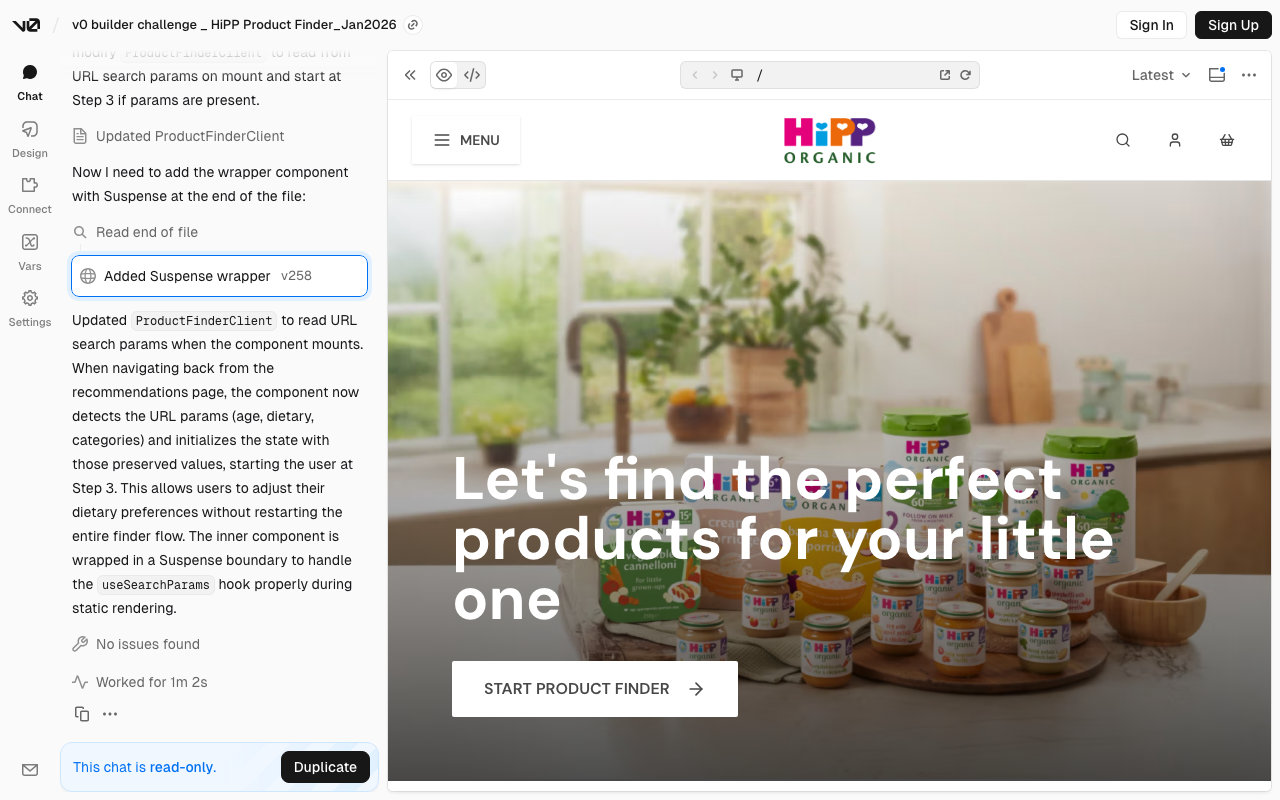
The winning entry came from a team working with a real client: HiPP, the baby food company. They built a guided product finder that walks parents through age, dietary needs, and product preferences, then surfaces relevant recommendations.
The structured content does the heavy lifting here. Each product in Sanity carries age ranges, dietary flags, and category tags. The UI doesn't just display products; it queries them. Select '6+ months' and 'dairy-free' and the options narrow automatically. That filtering logic lives in the content model, not hardcoded in the frontend.
Built on HiPP's existing Sanity content from the UK market. Real client, real products, real constraints.
@RaillyHugo (App · v0 Chat)
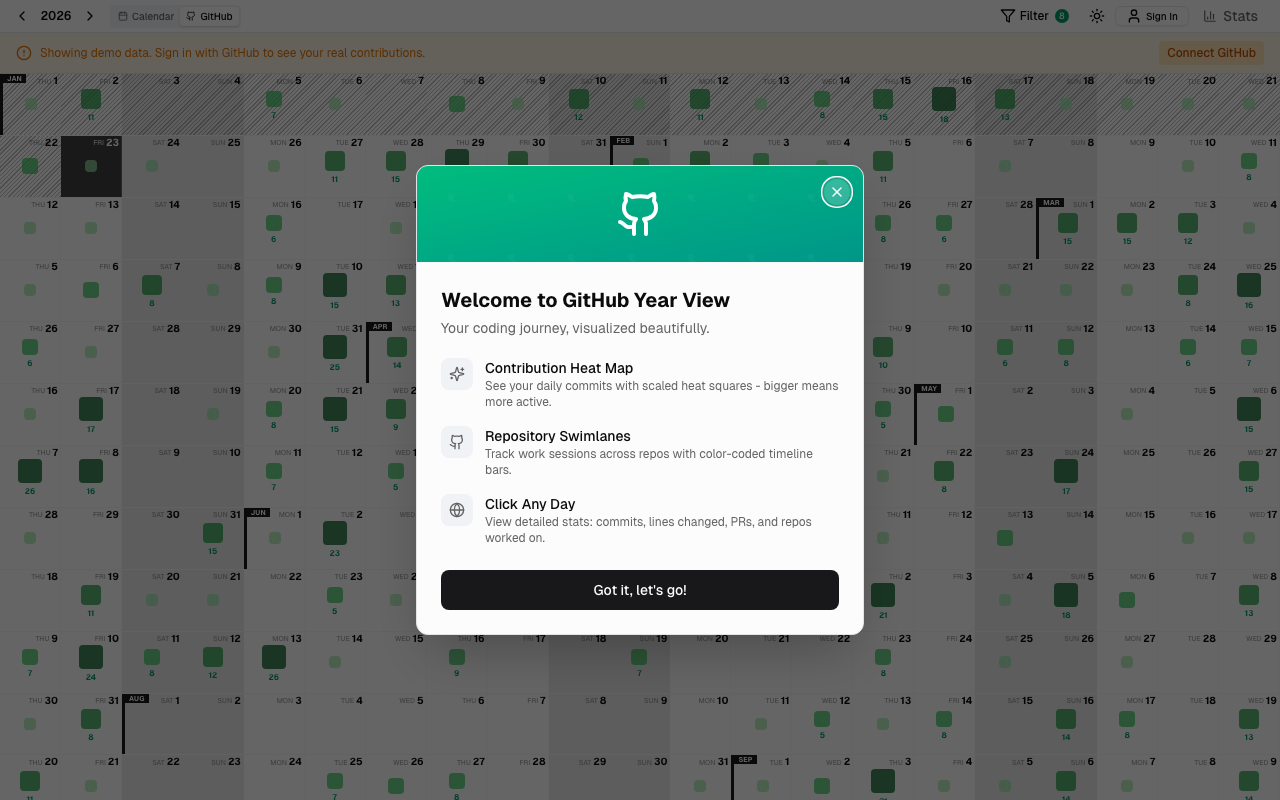
A personal calendar that doubles as a coding life tracker. The standout feature: GitHub contribution-style heat maps integrated with a year-view calendar. Click any day to see detailed stats, notes, and photos.
The content model connects events to tags, and tags to colors and categories. That's what makes the heat map work. The visualization isn't just pretty; it's driven by structured relationships between calendar entries. Events link to projects, projects have status, status maps to color intensity. The whole thing supports Google Calendar sync.
It's the kind of tool a developer builds for themselves. That authenticity shows.
Ryan Murray (App · v0 Chat)
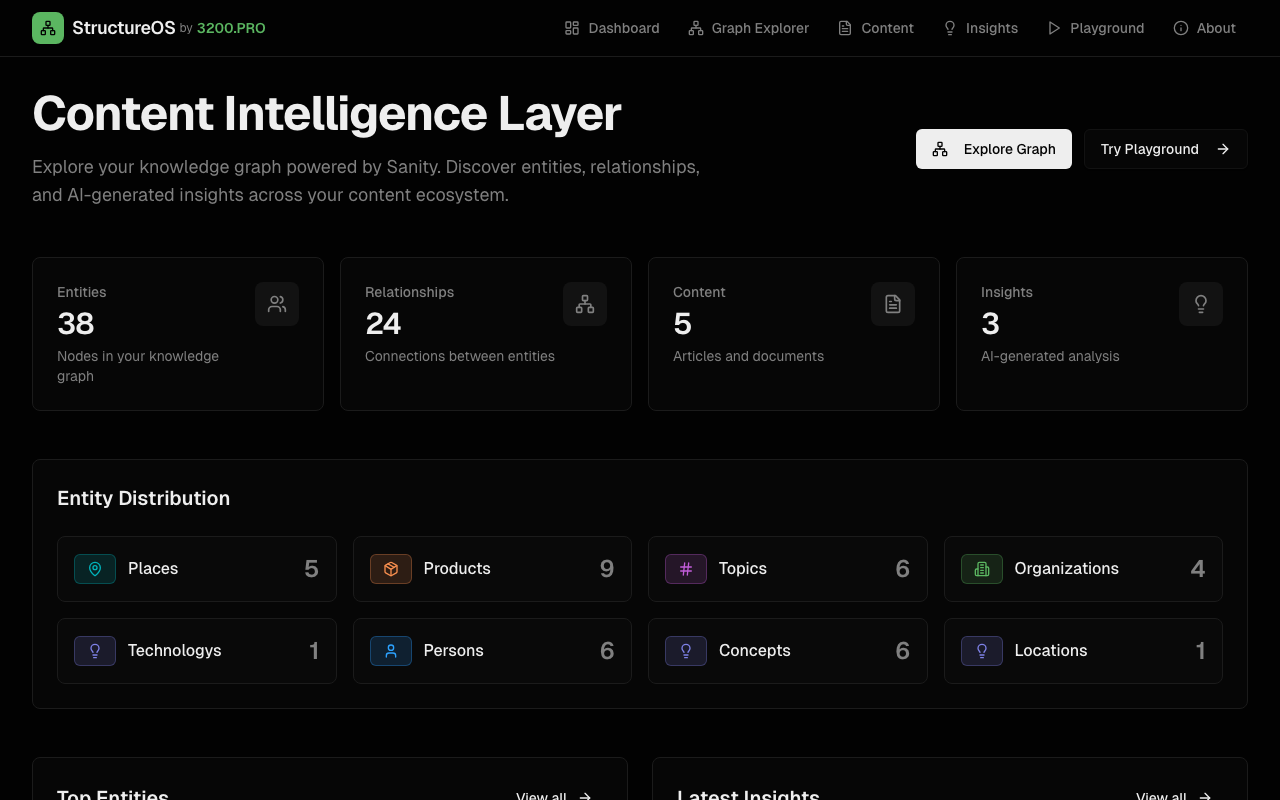
The most ambitious content model in the challenge. StructureOS treats Sanity as a 'programmable content graph': 38 entities (people, places, topics, organizations) connected by 24 relationships, with AI-generated insights derived automatically through queries.
Instead of manually curating pages and links, the system derives them from meaning. It's a glimpse at what content infrastructure looks like when you stop thinking in pages and start thinking in relationships.
@thespadhiyar (App · v0 Chat)
108 dishes. Each one tagged with dietary restrictions (vegetarian, Jain, vegan), spice levels on a 1-5 scale, and allergen warnings. The MCP server ingested the full menu and made it queryable: 'Show me mild dishes without nuts that are Jain-friendly.'
This isn't a menu. It's a decision-support tool for diners with restrictions who are tired of flagging down waiters to ask about ingredients. The content model does the work.
Vincent Florio (App · v0 Chat)
The wildest concept in the challenge: a Minecraft-inspired interface for learning. You drag concept cards onto a 'crafting table' and the system shows how ideas combine. Drop 'recursion' and 'data structures' together, get an explanation of tree traversal.
Vincent reported getting the core mechanic working in essentially one MCP interaction. The content model (concepts, relationships, combination rules) was clear in his head before he started typing. Sometimes the fastest path is knowing exactly what you want.
Structured content enables features that flat content can't. HiPP's product finder doesn't work with a list of product descriptions. It needs age ranges, dietary flags, categories as queryable fields. The Restaurant Menu needs spice levels as numbers, not adjectives. StructureOS needs entity types and relationship definitions. The winning entries all treated content as data first, display second.
The content model is the feature. In every winning submission, the interesting functionality emerged from how content was structured, not from frontend code. Filter products by dietary needs? That's a GROQ query against structured fields. Visualize coding activity as a heat map? That's calendar entries linked to tags linked to colors. Derive page relationships from meaning? That's a knowledge graph in Sanity.
MCP made the content modeling accessible. Developers described what they wanted ('I need a field for spice level, 1-5') and the agent translated that into working Sanity schemas. The submissions that pushed hardest on content modeling (StructureOS with 38 entity types, Restaurant Menu with its dietary metadata) got there through conversation, not documentation.
That's the bet with this workflow: if the AI handles the implementation details, developers can focus on what their content should do.
Thanks to everyone who submitted, we’ll reach out to the winners via email. The Sanity MCP server is available now if you want to try this workflow yourself.
此内容由惯性聚合(RSS阅读器)自动聚合整理,仅供阅读参考。 原文来自 — 版权归原作者所有。