








When people ask me if I miss being a full-time software engineer, I usually say the same thing: I do miss the dedicated focus time, that flow state you're in when you're solving hard problems and seeing it come to life in front of you.
As I transitioned into a more generalist role, I realized something. I like to create things, whether that's creating experiences for the community, creating content, or coding. For the past year and a bit, I've been learning a lot about developer and product marketing, but I haven't carved out as much time for coding as I'd like.
So when Vercel invited Knut and me to do a community session on "Build smarter prototypes with v0 and Sanity", I saw a chance to reconnect with that side of myself properly. Not a quick fix, but to work on an actual project end-to-end. Although, it did end up looking a little different from what I'm used to (more on that later).
If you've built with v0 before, you've probably seen it put your content in markdown files or JSON files in your project. That works for something simple like a blog. But when you want filters, a map, a quiz, and a custom pub crawl builder all pulling from the same data, you start to hit the limits of that approach. Agents struggle to keep things in sync across files, and you end up spending tokens coaxing them instead of building cool things.
Here's the framework (including some of the prompts) I used to tackle this project.
Back when I was a full-time engineer at loveholidays, I wrote a blog post about my journey from Bootcamp Grad to Software Engineer. In it, I laid out a four-step framework for how I approach building things:
That framework still holds. But what changed this time was the speed between steps two and three, and the speed of three (as I didn’t manually code anything at all). I wasn't overthinking the plan because I could just iterate so quickly. And honestly? That unlocked new ways of thinking and better features than I originally planned for. I went from "let me make sure this is perfect before I start" to "let me try it and see what happens."
The problem. I wanted to deliver on the talk’s title, but I also wanted to push it further. Not just a demo for the session, but something I could actually keep building on afterwards. A real application, not a throwaway prototype.
The plan. I used Claude to iterate on my initial prompt before going into v0. You could just say "build me a pub guide with these colors" and go from there. But I wanted to be more specific: the stack I prefer (Next.js, shadcn/ui), the look and feel (on-theme colors, the right language), and most importantly, connecting the Sanity MCP from the start. That way, all the content would be structured data in Content Lake from day one, reusable across every page and surface I'd build.
I've lived in London for six years. I know my pubs. (Well, maybe not the South London ones as much, but I have my South London friends to help me curate those). And Sanity also just opened an office in London - making this the perfect time to create something like this.
I timeboxed the whole thing: three hours on a Friday, three hours on a Monday. Six hours total, and I didn't write a single line of code by hand. Everything was built through v0 with the Sanity MCP connected. You can check out Pubcrawlr here if you want to poke around before reading how it came together.
Here's what Pubcrawlr does:
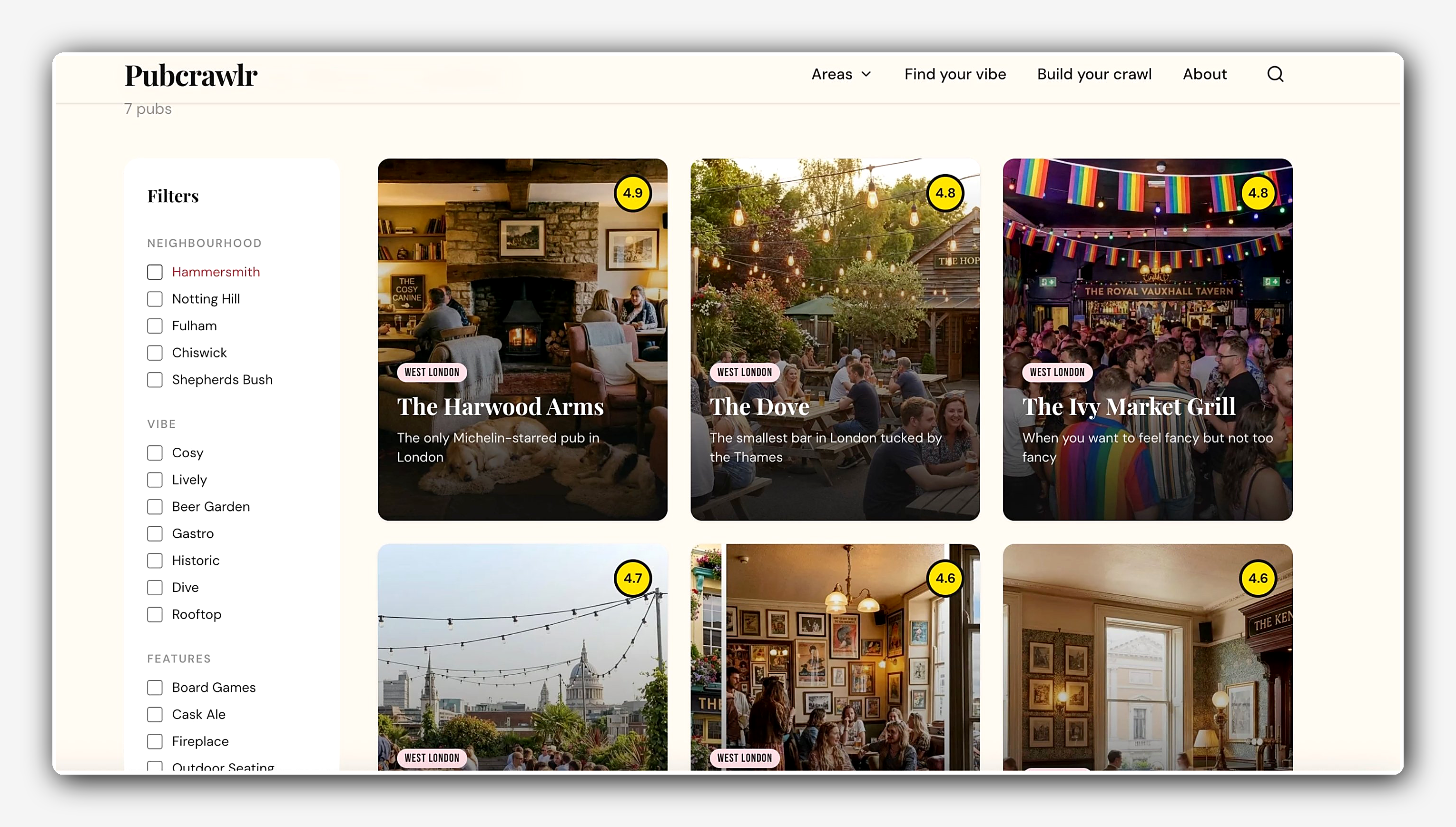
Explore by area. Browse pubs across London neighborhoods (East, West, Central, North, South). Each area has its own page with filters for vibes and features.
Filter by what matters to you. Dog friendly? Beer garden? Board games? Live music? The filters pull from structured fields in the pub schema, so they're not hardcoded lists.
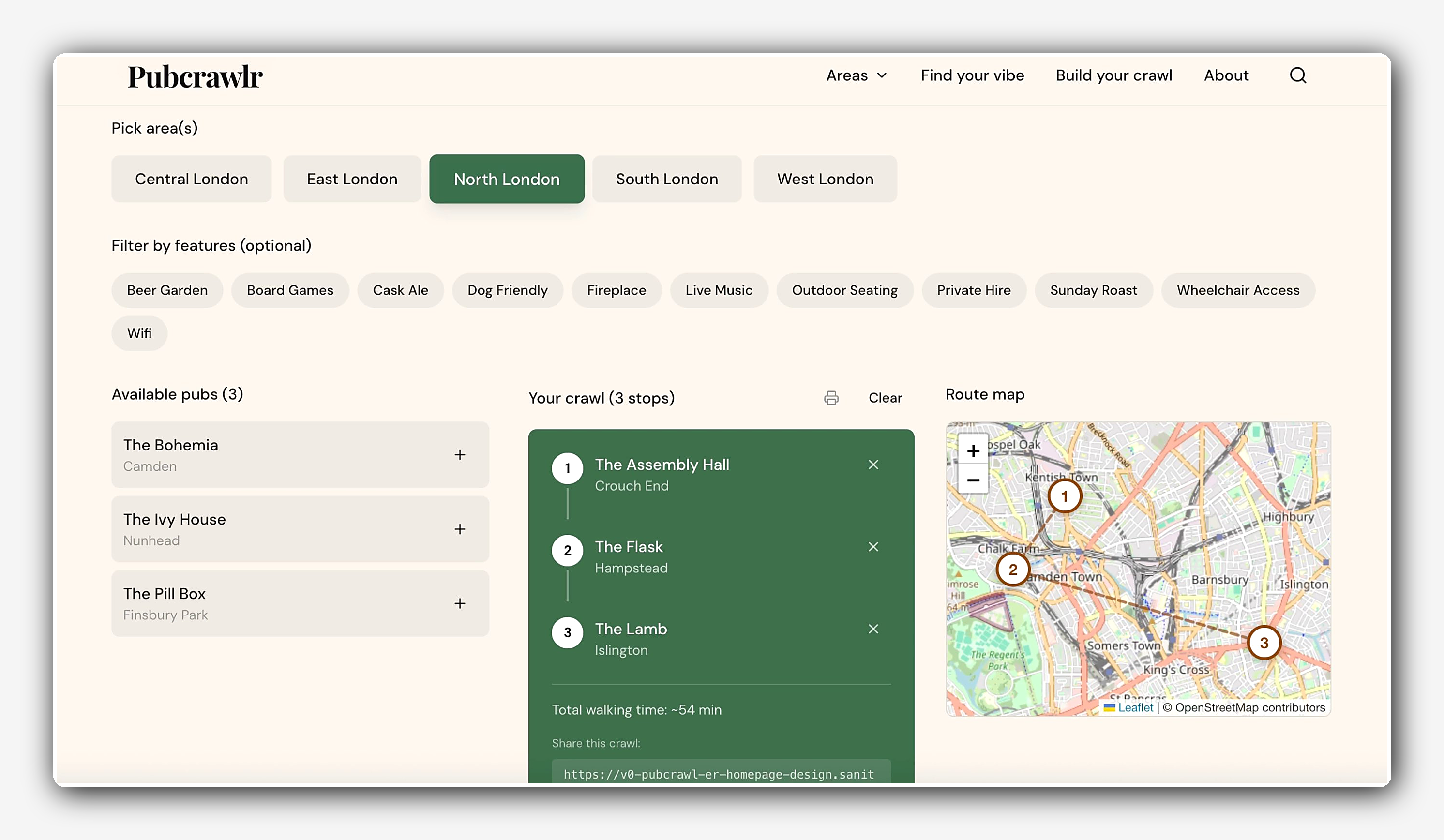
Build your own crawl. Pick your pubs, get a route, and print it. Every pub has geolocation data stored in Content Lake, so the crawl builder can plot your route on a map. (I only really added the print feature because I thought people like my dad might want something on paper instead of digital).
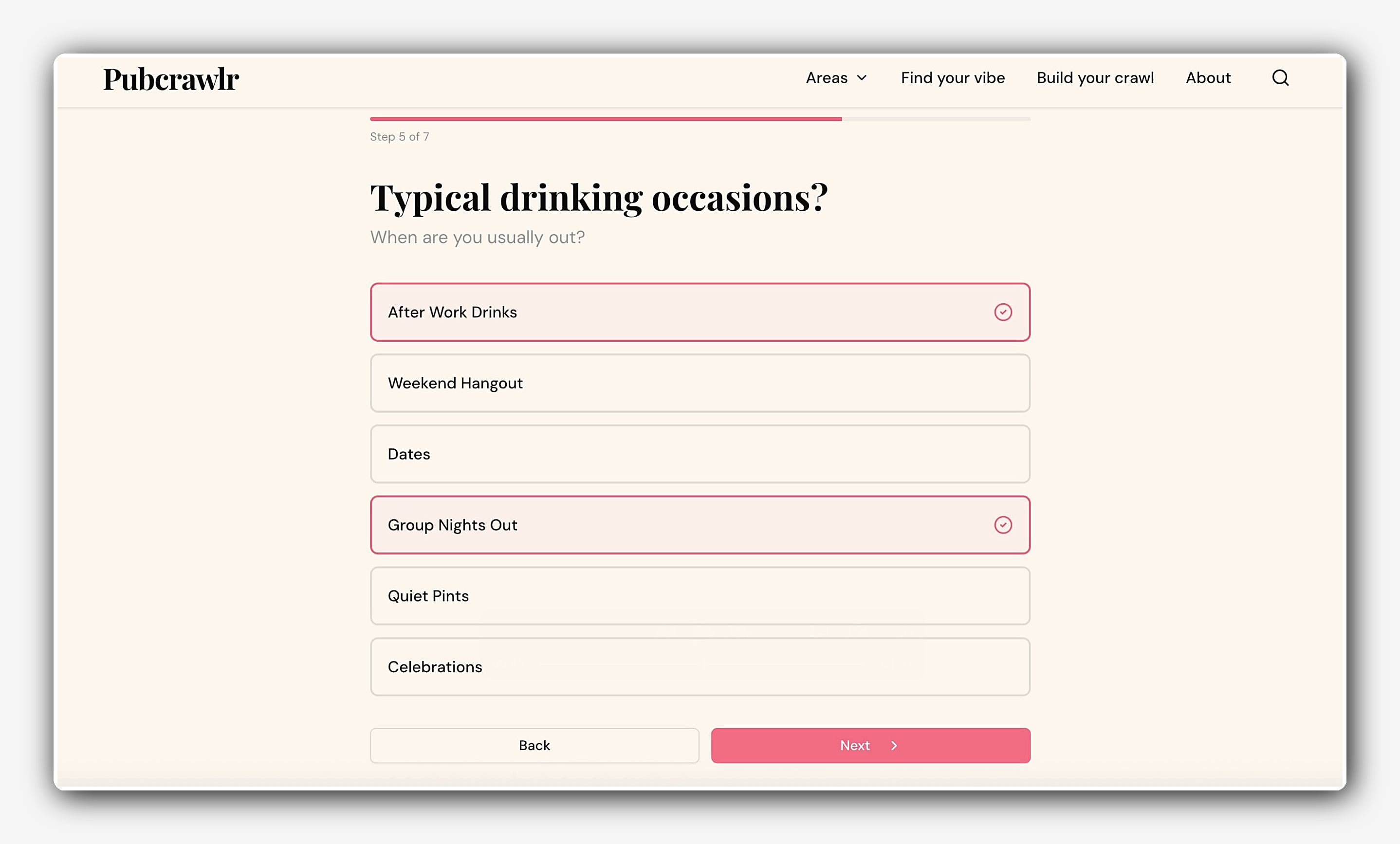
A quiz. You answer a few questions about your vibe and get personalized pub recommendations. This one's more of a "setting up for the future" feature. I'm capturing structured data upfront so I can do more editorial things with it later.
Getting started is straightforward. In v0, open the chat box, tap the plus icon, select MCPs, and add Sanity from the list. Authorise with your Sanity account, and you're connected. The MCP can now create projects, content models, and documents for you. (Full setup details in the Sanity MCP docs.)
From there, the MCP created schemas for pubs, areas, and the homepage. A pub has a name, slug, area references, features (as an array), coordinates, and more. Some fields are required, some aren't. The agent followed Sanity best practices automatically, so I didn't have to think about whether I was setting things up "the right way." I could just ask it to implement best practices and it did. That meant I could reuse the same content across all the different surfaces (the listing pages, the quiz, the crawl builder) without duplicating anything.
In the Vercel Community live session, Knut suggested we add a rich text description field to the pub schema on the spot. The agent updated the schema, installed the Portable Text package, generated the TypeScript types, deployed it, and populated the content. I didn't touch a single file.
As you can see in the prompt, I decided to test this out by just adding a detailed description to one pub for now, but this can be applied to all pubs.
I'm someone who likes to plan. I like to feel in control. Letting go of that, letting the agent do its thing while I focused on what to build instead of how to build it, was honestly a weird feeling at first. And then it got addictive.
A few specific things I took away:
Iterate small, then scale. I started with hardcoded placeholder content just to keep things simple. Once one feature worked, I'd move to the next. Only when the structure felt right did I go back and say "okay, now make sure nothing is hardcoded, use the Sanity best practices, clean it up." That small-then-scale approach meant fewer errors and a quicker feedback loop. It also showed me where I was overengineering things (which, knowing me, happens).
Ask it to teach you. One thing I'd recommend regardless of your experience level: ask the agent to explain things back to you as you go. Ask it why it structured something the way it did. Whether you're letting the agent write the code or you want to do some hands-on coding yourself, you're always learning.
Iterating was the fun part. Most of my six hours weren’t spent fixing things. It was spent iterating on features / unblocking myself quicker to find fun ways to reuse the same content. "What if I add a quiz?" "What if this filter also works here?" "What if there's a printable version?"
I'll keep using different AI coding agents. I used v0 for this project. I’ve been using Claude Code for a while and building prototypes in Lovable, too.
For Pubcrawlr, the next natural step would be to add Sanity Studio for a proper editing interface where my editorial friends could help me send out personalized recommendations. You can set up Studio separately today (it doesn't require the MCP), but MCP support for Studio setup is coming soon, and when it does, I'll be able to go from prototype to full collaborative app without ever leaving v0.
That's the whole point of this project: start with structured content, and keep building on it. I'd also make sure to populate the project with real data (copy and images) because if this is going to be a proper London pub guide, it needs to be highly editorial.
Other features I'm thinking about:
Want to try it yourself? Head to the Sanity MCP docs to get set up, connect it to v0, and start building with structured content from the first prompt.
If you want to chat with me directly, I’m only a DM away in our Discord Community 👋🏻
此内容由惯性聚合(RSS阅读器)自动聚合整理,仅供阅读参考。 原文来自 — 版权归原作者所有。