







Both Gmail and Yahoo have revamped their bulk sending requirements. The new guidelines are scheduled to start being enforced as of February 2024 and are specifically targeted towards bulk senders, which Gmail defines as anyone sending 5,000 emails a day.
These updates are driven by Gmail and Yahoo Mail emphasizing sender responsibility when it comes to user protection and brand integrity. Many of their users are receiving upwards of 95% spam, and they are looking to reduce this number.
These guidelines are particularly pertinent to marketing and promotional emails, while transactional messages like account notifications or password resets generally don’t fall under this classification.
Breaking down these updates, here are the important changes:
The list-unsubscribe header, rooted in RFC 2369 and refined by RFC 8058, introduced a one-click mechanism, ignored by anti-spam crawlers, that simplifies opting out for users.
As of February 2024, your bulk messages must include a URL version in your list-unsubscribe header.
This header allows email clients to offer an easy “Unsubscribe” option in their UI, enhancing the user experience and spam complaints.
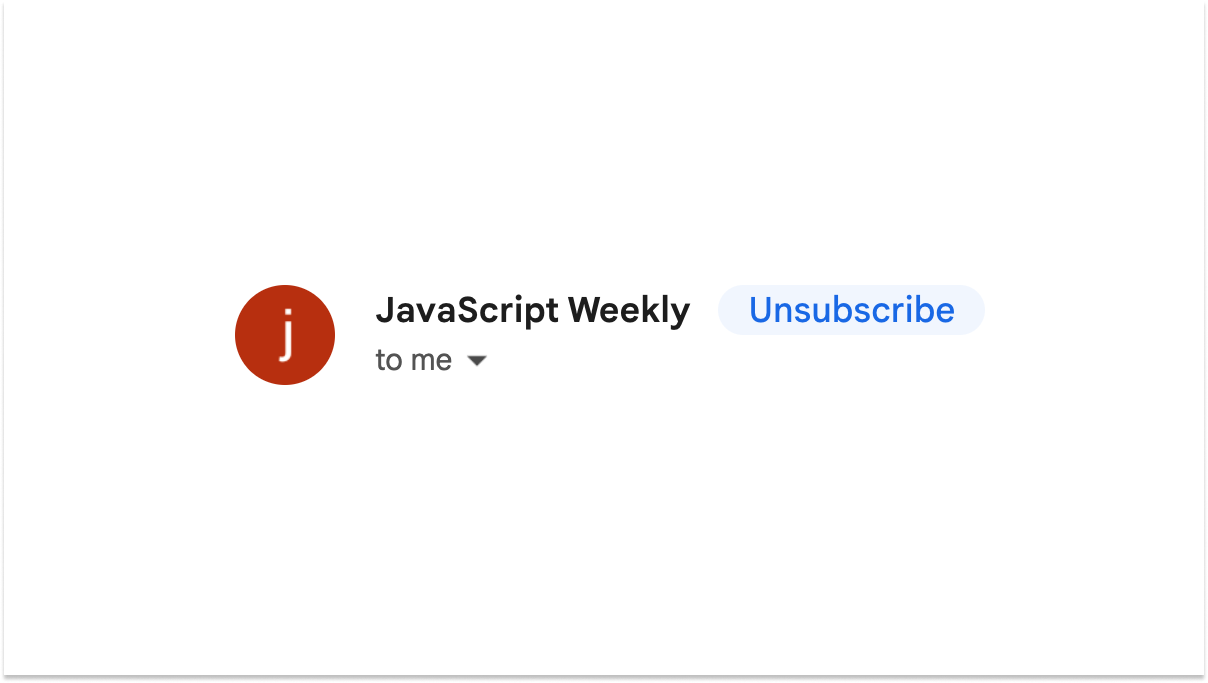
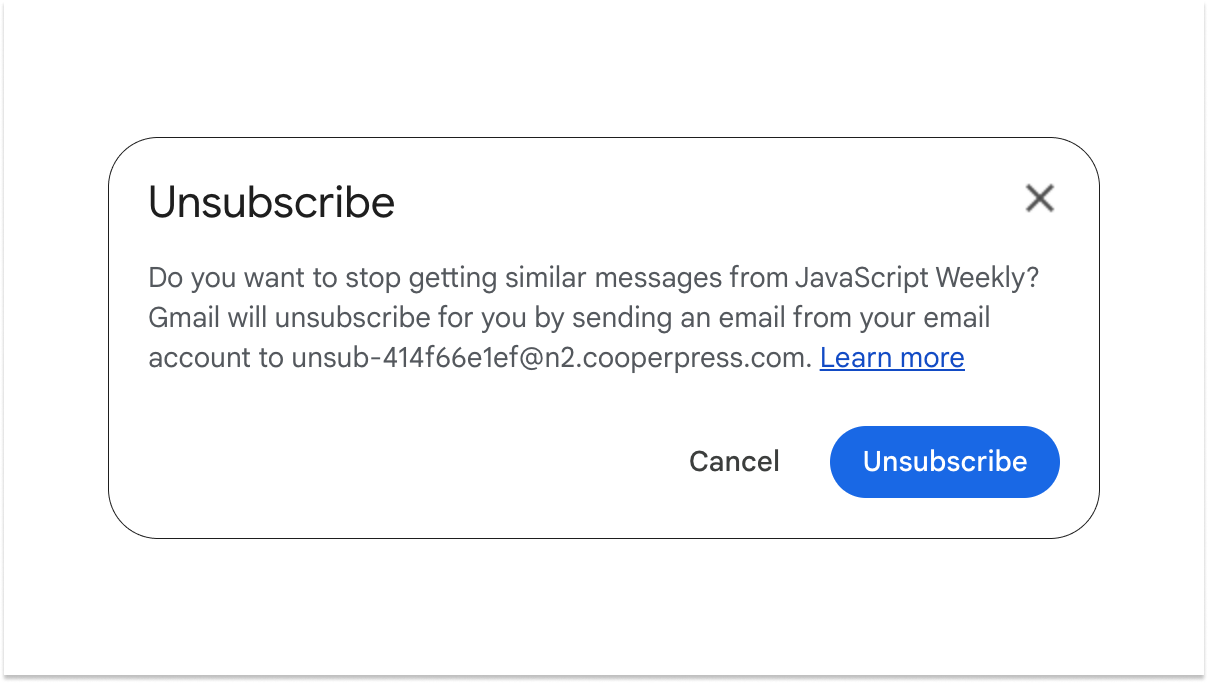
Once the user clicks the button, the email client will display a confirmation popup.
In order to achieve true one-click functionality:
1) Add unsubscribe headers to your email headers
This allows that the unsubscribe action is initiated by the email client.
2) When receiving a POST request with the key-pair above
Return a blank page with a 200 (OK) or 202 (Accepted)
3) Show the regular unsubscribe page on GET method
It’s also a good idea to incorporate a unique identifier in your list-unsubscribe requests, linked to the message ID, to track user interactions without sharing personal data.
Processing unsubscribe requests immediately shows proactive effort to honor user preferences beyond Google and Yahoo's two-day guideline.
Next Steps:
Note: both of these headers are handled automatically when using Resend Broadcasts. No action is needed from you.
Gmail and Yahoo now demand DMARC alongside SPF and DKIM. This trio strengthens email security and allows receiving servers confidently verify your legitimacy, not just protect from spoofing and phishing.
DKIM and SPF are already taken care of by Resend, and DMARC is now crucial. Start with a "none" policy to gather insights from DMARC reports (rua/ruf tags) and then troubleshoot non-compliant sending so you can move your domain to a "strict" policy.
Next Steps:
Gmail and Yahoo's latest updates call for improved list management by bulk senders, focusing on emails that recipients want. Both providers want senders to closely monitor spam complaints, a key metric in identifying undesirable emails for their filtering algorithms.
The magic complaint number is 0.3% and anything above this is consider unacceptable to Gmail and Yahoo. Complaints can be monitored via the Resend Dashboard or through Postmaster tools of the inbox provider. Resend also offers a webhook to notify on complaints (code example).
Next Steps:
Gmail and Yahoo Mail updates in 2024 prioritize improved email authentication and compliance, making SPF, DKIM, and now DMARC, essential for maintaining email integrity and trust. SPF and DKIM are handled by default by Resend. Be sure you checkout our guide for DMARC.
For bulk senders: implement one-click unsubscribe, keep spam rates under 0.3%. Track spam with Google Postmaster Tools; Yahoo complaints can be monitored via Resend dashboard or notified via webhook.
此内容由惯性聚合(RSS阅读器)自动聚合整理,仅供阅读参考。 原文来自 — 版权归原作者所有。