



惯性聚合 高效追踪和阅读你感兴趣的博客、新闻、科技资讯
阅读原文 在惯性聚合中打开

推荐订阅源

D
DataBreaches.Net
有赞技术团队
有赞技术团队
Jina AI
Jina AI
H
Help Net Security
D
Docker
钛媒体:引领未来商业与生活新知
钛媒体:引领未来商业与生活新知
Blog — PlanetScale
Blog — PlanetScale
Hugging Face - Blog
Hugging Face - Blog
罗磊的独立博客
MyScale Blog
MyScale Blog
N
Netflix TechBlog - Medium
B
Blog RSS Feed
Martin Fowler
Martin Fowler
WordPress大学
WordPress大学
T
The Blog of Author Tim Ferriss
U
Unit 42
Cyber Security Advisories - MS-ISAC
MongoDB | Blog
MongoDB | Blog
美团技术团队
M
MIT News - Artificial intelligence
阮一峰的网络日志
阮一峰的网络日志
博客园 - 司徒正美
Microsoft Security Blog
IT之家
IT之家

Microsoft Security Blog

Microsoft named a Leader in the 2026 IDC MarketScape for MDR/MXDR for the Enterprise  | Microsoft Security Blog DeadLock ransomware: Breaking down a Rust-based encryptor with decentralized recovery infrastructure | Microsoft Security Blog ​​Microsoft named a Leader in the KuppingerCole Leadership Compass for Cloud Native Application Protection Platforms (CNAPP) | Microsoft Security Blog From open lures to cloaked gates: How a macOS ClickFix campaign learned to hide | Microsoft Security Blog ChainDrop supply chain compromise: Anatomy of a self-propagating worm | Microsoft Security Blog Advance Zero Trust for AI: New tools and guidance to secure AI agents and DevSecOps | Microsoft Security Blog 128 Seconds to disruption: Microsoft Defender stops ransomware at QNET  | Microsoft Security Blog CaptiveCrunch: Midnight Blizzard targets travelers worldwide for malware delivery and credential theft | Microsoft Security Blog ​​​​What’s new in Microsoft Security: July 2026 | Microsoft Security Blog ​​Better security starts with better questions | Microsoft Security Blog Rethinking security for the age of AI - The Official Microsoft Blog Enhancing AI security through global AI red teaming | Microsoft Security Blog Email threat landscape: Q2 2026 trends and insights | Microsoft Security Blog Real world incident response: Microsoft and AXA XL strengthen cyber resilience | Microsoft Security Blog Microsoft at Black Hat USA 2026: Defending trust in the age of AI and supply chain attacks | Microsoft Security Blog ACR Stealer: Two observed intrusion chains amid increased threat activity | Microsoft Security Blog Least privilege for AI agents: Identity, access, and tool binding | Microsoft Security Blog Unpacking the AsyncAPI npm supply chain compromise and import-time payload delivery | Microsoft Security Blog Turning threat intelligence into decisive action with Defender Experts | Microsoft Security Blog Defending SaaS-based applications against ShinyHunters OAuth abuse | Microsoft Security Blog Microsoft Entra ID security updates: Passkeys are the default authentication method in Entra ID | Microsoft Security Blog Securing our future: July 2026 progress report on Microsoft's Secure Future Initiative | Microsoft Security Blog GigaWiper: Anatomy of a destructive backdoor assembled from multiple malware | Microsoft Security Blog Protecting Microsoft at AI speed: How SFI proactively hardens our cloud   | Microsoft Security Blog 5 insights from Frost & Sullivan’s 2025 Frost Radar™ for Cloud Security Posture Management | Microsoft Security Blog Improving security posture across the Microsoft partner ecosystem | Microsoft Security Blog Microsoft named a leader in the Frost Radar for cloud and application runtime security | Microsoft Security Blog Accelerating the quantum-safe timeline | Microsoft Security Blog ​​What’s new in Microsoft Security: June 2026 | Microsoft Security Blog Securing AI agents: When AI tools move from reading to acting | Microsoft Security Blog
CNAPP evolution: How Microsoft aligns with leading cloud ...
Microsoft Security Team · 2026-06-25 · via Microsoft Security Blog


Cloud security is shifting from visibility to context-aware risk reduction, helping security teams understand which exposures matter most, prioritize what can be exploited, and reduce risk across the application lifecycle. As organizations continue to expand across multicloud environments, Kubernetes, APIs, and AI-powered workloads, security teams are overwhelmed with signals. The challenge is no longer identifying individual risks, but determining which combinations of vulnerabilities, identities, and data exposures are most critical to address at the source.
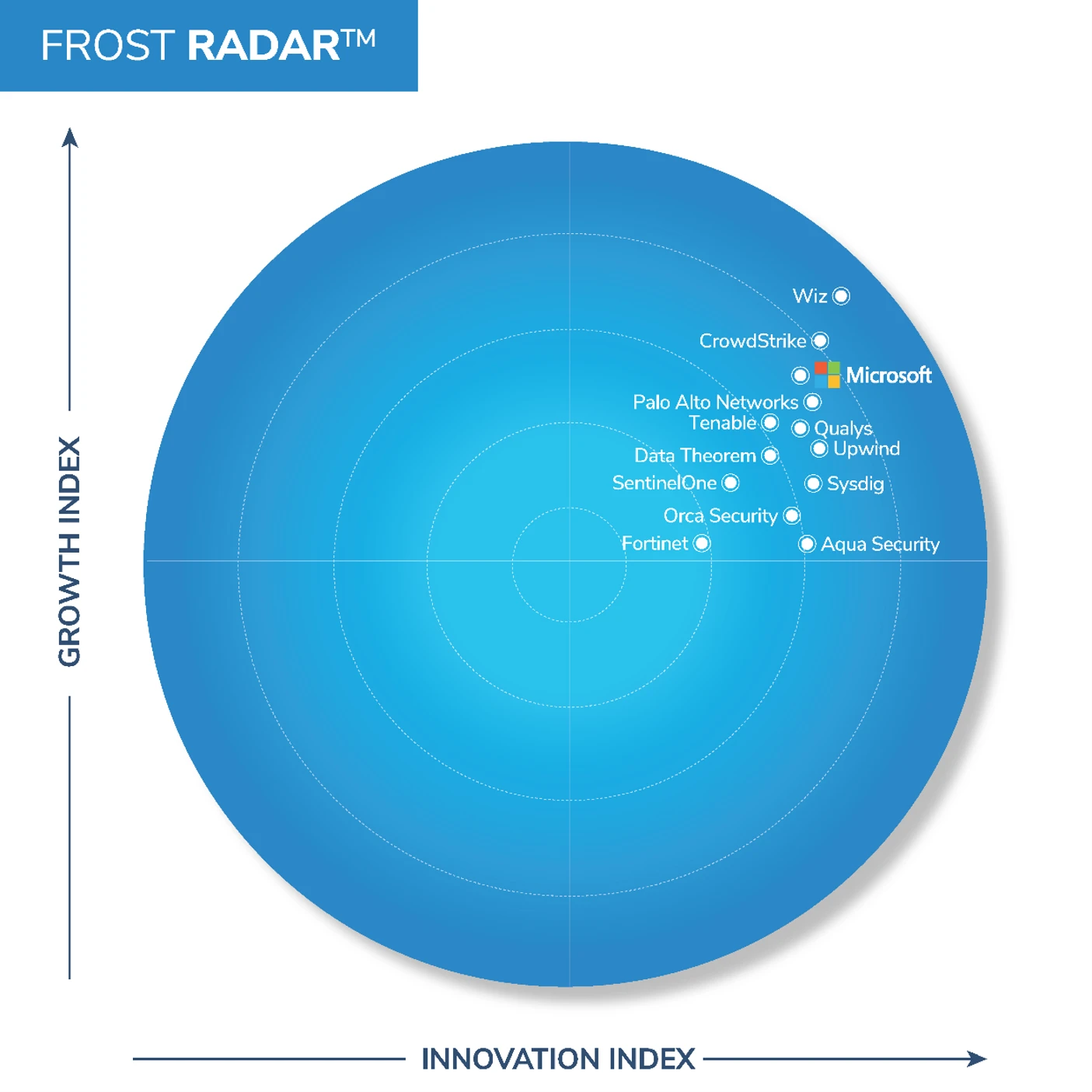
Frost Radar Infographic plotting Microsoft against competitors

Frost & Sullivan’s 2026 Frost Radar™ for Cloud-Native Application Protection Platforms (CNAPP) reflects this shift. The report highlights how CNAPP is evolving from a collection of posture and workload capabilities into a unified cloud risk operations platform—one that correlates signals across code, cloud, runtime, and SOC workflows to prioritize and reduce risk continuously. Within this evolving market, Microsoft is positioned among leading CNAPP vendors—reflecting alignment with where the category is heading.

Why CNAPP is being redefined

The Frost Radar makes a clear point: CNAPP is no longer about visibility or compliance—it is becoming an operational platform for reducing risk.

Modern environments introduce complexity across:

  • Multicloud and hybrid infrastructure.
  • Rapid development and continuous deployment.
  • Containers, serverless, and APIs.
  • AI-powered workloads.

This complexity exposes the limits of traditional tools.

Organizations now require platforms that can:

  • Correlate posture, runtime, identity, and data signals.
  • Prioritize risk based on exploitability—not severity alone.
  • Integrate security across development and operations.
  • Support faster investigation and response.

This is the shift: from detecting issues to operationalizing risk reduction across the application lifecycle.

What distinguishes leading CNAPP platforms

Frost evaluates CNAPP providers based on growth and innovation—but more importantly, on how effectively they help organizations manage risk.

According to the report, five themes define the next generation of platforms:

  • Platform unification over point solutions.
  • Code-to-cloud-to-SOC integration.
  • Risk prioritization based on exploitability.
  • Correlation across identity, data, and application context.
  • Expansion into AI-powered workloads.

These capabilities represent a shift from fragmented visibility to connected, contextual risk management.

How Microsoft aligns with CNAPP’s next phase

1. Correlating risk across identity, endpoints, data, and cloud

Most security tools surface findings. Fewer connect them meaningfully. Modern attacks exploit the combination of misconfigurations, excessive permissions, and data exposure—not isolated issues. Microsoft Defender for Cloud correlates posture findings with identity, data, and runtime signals—helping surface risks that are exploitable. A misconfigured storage resource on its own may not appear critical. But when combined with excessive access permissions and the presence of sensitive data, it can create a clear attack path.

What this means: Security teams can prioritize real attack paths instead of individual findings, reducing alert fatigue and improving remediation speed and precision.

2. Extending security from code to cloud to SOC

Security must operate continuously across development, runtime, and operations.

Defender for Cloud connects:

  • Code and infrastructure-as-code scanning.
  • Cloud posture and runtime protection.
  • Security operations and response workflows.

A vulnerability identified in infrastructure-as-code before deployment can be tracked through to runtime—where it is validated against real-world behavior and surfaced in security operations if actively exploitable.

What this means: Organizations move from fragmented workflows to continuous risk validation and response across the lifecycle.

3. Reducing complexity across fragmented security workflows

As environments scale, tool sprawl limits visibility and slows response. Microsoft delivers CNAPP capabilities as part of a connected platform—integrating posture management, workload protection, identity, data, and threat detection across multicloud environments. Instead of switching between separate tools, security teams can investigate a single incident across initial misconfiguration, runtime impact, and identity exposure, enabling a more connected experience.

What this means: Security teams can investigate faster, prioritize risk more consistently, and reduce exposure across fragmented cloud environments.

Where security leaders focus next

The Frost Radar offers a signal for where cloud security is headed: toward platforms that connect context across cloud environments so teams can prioritize the risks most likely to be exploited and reduce exposure faster.

Security leaders should now ask:

  • Can the platform correlate signals across identity, end points, data, cloud, and runtime?
  • Does it span the full code-to-cloud lifecycle?
  • Can it prioritize risk based on exploitability—not just severity?
  • Does it integrate with SOC workflows for faster response?
  • Can it scale across multicloud and AI environments?

These are the capabilities that define the next generation of CNAPP.

Bottom line

Frost & Sullivan’s 2026 CNAPP analysis reinforces a clear shift: Cloud security is moving from fragmented visibility to unified, contextual risk management across the entire lifecycle. Microsoft’s position in the Frost Radar reflects this shift—bringing together posture, runtime, identity, end points, and data signals into a connected platform that helps organizations prioritize and reduce risk continuously.

Learn more

To learn more about Microsoft Security solutions, visit our website. Bookmark the Microsoft Security blog to keep up with our expert coverage on security matters. Also, follow us on LinkedIn (Microsoft Security) and X (@MSFTSecurity) for the latest news and updates on cybersecurity.