

惯性聚合 高效追踪和阅读你感兴趣的博客、新闻、科技资讯
阅读原文 在惯性聚合中打开

推荐订阅源

博客园 - 司徒正美
大猫的无限游戏
大猫的无限游戏
Scott Helme
Scott Helme
CTFtime.org: upcoming CTF events
S
Secure Thoughts
Google DeepMind News
博客园_首页
Hacker News: Ask HN
Hacker News: Ask HN
量子位
Jina AI
Jina AI
I
InfoQ
V
V2EX
Martin Fowler
Martin Fowler
Y
Y Combinator Blog
H
Hackread – Cybersecurity News, Data Breaches, AI and More
人人都是产品经理
人人都是产品经理
B
Blog
IT之家
IT之家
云风的 BLOG
云风的 BLOG
奇客Solidot–传递最新科技情报
奇客Solidot–传递最新科技情报
博客园 - Franky
博客园 - 【当耐特】
N
Netflix TechBlog - Medium
Cloudbric
Cloudbric
H
Heimdal Security Blog
TaoSecurity Blog
TaoSecurity Blog
S
Security @ Cisco Blogs
U
Unit 42
Project Zero
Project Zero
Webroot Blog
Webroot Blog
The Register - Security
N
News | PayPal Newsroom
Microsoft Security Blog
H
Help Net Security
Forbes - Security
Forbes - Security
宝玉的分享
宝玉的分享
Last Week in AI
Last Week in AI
C
Check Point Blog
博客园 - 聂微东
M
MIT News - Artificial intelligence
有赞技术团队
有赞技术团队
D
DataBreaches.Net
Cyberwarzone
Cyberwarzone
N
News and Events Feed by Topic
N
News and Events Feed by Topic
Simon Willison's Weblog
J
Java Code Geeks
G
Google Developers Blog
GbyAI
GbyAI
T
Threatpost

Microsoft Security Blog

​​What’s new in Microsoft Security: June 2026 | Microsoft Security Blog Securing AI agents: When AI tools move from reading to acting | Microsoft Security Blog Chromium extension uses AI‑related branding to redirect browser search | Microsoft Security Blog Photo ZIP campaign targeting hospitality industry delivers Node.js implant for persistent access | Microsoft Security Blog Microsoft a Leader in The Forrester Wave™ for Endpoint Management Platforms | Microsoft Security Blog StealC and Amadey: Breaking down infostealers and the cybercrime services that deliver them | Microsoft Security Blog Guarding AI memory | Microsoft Security Blog One intrusion, two cyberattackers: Uncovering parallel threat activity | Microsoft Security Blog AutoJack: How a single page can RCE the host running your AI agent  | Microsoft Security Blog New Forrester study shows customers who unified with Microsoft Security benefited from 124% ROI | Microsoft Security Blog From package to postinstall payload: Inside the Mastra npm supply chain compromise | Microsoft Security Blog Crypto Clipper uses Tor and worm-like propagation for persistence and control | Microsoft Security Blog Beyond the benchmark: Advancing security at AI speed  | Microsoft Security Blog ​​Forrester names Microsoft a Leader in the 2026 Extended Detection and Response Platforms Wave™ report | Microsoft Security Blog AI is accelerating cyberattacks—here’s how to stay ahead Microsoft Defender email security benchmarking: Key insights from one year of data | Microsoft Security Blog Reconstructing AI activity in investigations AI brands as bait: How threat actors are using the AI hype in social engineering Securing CI/CD in an agentic world: Claude Code Github action case Updating the taxonomy of failure modes in agentic AI systems: What a year of red teaming taught us Preinstall to persistence: Inside the Red Hat npm Miasma credential-stealing campaign Turn specs into evals for any agent with ASSERT Microsoft Build 2026: Securing code, agents, and models across the development lifecycle Malicious npm packages abuse dependency confusion to profile developer environments Microsoft is named a Leader in the 2026 Gartner® Magic Quadrant™ for Endpoint Protection Typosquatted npm packages used to steal cloud and CI/CD secrets The Gentlemen ransomware: Dissecting a self-propagating Go encryptor From poisoned search results to GPU mining: A cryptojacking campaign abusing ScreenConnect and Microsoft .NET utilities Microsoft recognized as a Leader in The Forrester Wave™ for Workforce Identity Security Platforms From edge appliance to enterprise compromise: Multi-stage Linux intrusion via F5 and Confluence Microsoft Security success stories: How St. Luke’s and ManpowerGroup are securing AI foundations What’s new in Microsoft Security: May 2026 Mini Shai Hulud: Compromised @antv npm packages enable CI/CD credential theft Securing the gaming culture of cultures Introducing RAMPART and Clarity: Open source tools to bring safety into Agent development workflow Exposing Fox Tempest: A malware-signing service operation How Storm-2949 turned a compromised identity into a cloud-wide breach How to better protect your growing business in an AI-powered world Defense in depth for autonomous AI agents When configuration becomes a vulnerability: Exploitable misconfigurations in AI apps Accelerating detection engineering using AI-assisted synthetic attack logs generation Defending consumer web properties against modern DDoS attacks Undermining the trust boundary: Investigating a stealthy intrusion through third-party compromise Active attack: Dirty Frag Linux vulnerability expands post-compromise risk When prompts become shells: RCE vulnerabilities in AI agent frameworks World Passkey Day: Advancing passwordless authentication ​​Microsoft named an overall leader in KuppingerCole Analyst’s 2026 Emerging AI Security Operations Center (SOC) report ​​ ClickFix campaign uses fake macOS utilities lures to deliver infostealers Breaking the code: Multi-stage ‘code of conduct’ phishing campaign leads to AiTM token compromise CVE-2026-31431: Copy Fail vulnerability enables Linux root privilege escalation across cloud environments Microsoft Agent 365, now generally available, expands capabilities and integrations What’s new, updated, or recently released in Microsoft Security Email threat landscape: Q1 2026 trends and insights 8 best practices for CISOs conducting risk reviews Simplifying AWS defense with Microsoft Sentinel UEBA AI-powered defense for an AI-accelerated threat landscape Detection strategies across cloud and identities against infiltrating IT workers Making opportunistic cyberattacks harder by design Cross‑tenant helpdesk impersonation to data exfiltration: A human-operated intrusion playbook Containing a domain compromise: How predictive shielding shut down lateral movement Building your cryptographic inventory: A customer strategy for cryptographic posture management Dissecting Sapphire Sleet’s macOS intrusion from lure to compromise Incident response for AI: Same fire, different fuel The agentic SOC—Rethinking SecOps for the next decade Investigating Storm-2755: “Payroll pirate” attacks targeting Canadian employees Intent redirection vulnerability in third-party SDK exposed millions of Android wallets to potential risk Inside an AI‑enabled device code phishing campaign Storm-1175 focuses gaze on vulnerable web-facing assets in high-tempo Medusa ransomware operations Threat actor abuse of AI accelerates from tool to cyberattack surface Cookie-controlled PHP webshells: A stealthy tradecraft in Linux hosting environments Mitigating the Axios npm supply chain compromise Critical Infrastructure at Risk | Security Insider
CNAPP evolution: How Microsoft aligns with leading cloud risk management platforms | Microsoft Security Blog
Microsoft Security Team · 2026-06-25 · via Microsoft Security Blog


Cloud security is shifting from visibility to context-aware risk reduction, helping security teams understand which exposures matter most, prioritize what can be exploited, and reduce risk across the application lifecycle. As organizations continue to expand across multicloud environments, Kubernetes, APIs, and AI-powered workloads, security teams are overwhelmed with signals. The challenge is no longer identifying individual risks, but determining which combinations of vulnerabilities, identities, and data exposures are most critical to address at the source.
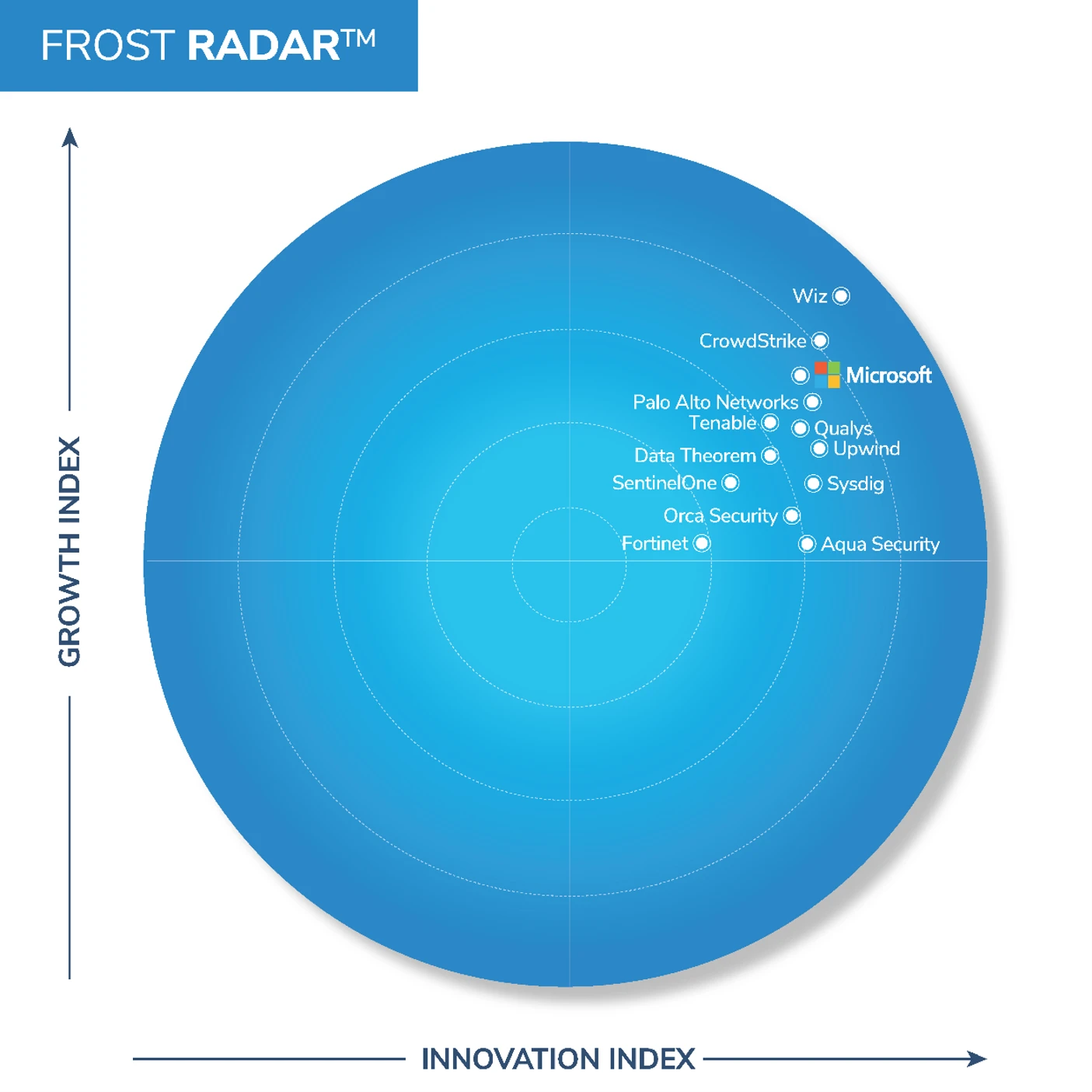
Frost Radar Infographic plotting Microsoft against competitors

Frost & Sullivan’s 2026 Frost Radar™ for Cloud-Native Application Protection Platforms (CNAPP) reflects this shift. The report highlights how CNAPP is evolving from a collection of posture and workload capabilities into a unified cloud risk operations platform—one that correlates signals across code, cloud, runtime, and SOC workflows to prioritize and reduce risk continuously. Within this evolving market, Microsoft is positioned among leading CNAPP vendors—reflecting alignment with where the category is heading.

Why CNAPP is being redefined

The Frost Radar makes a clear point: CNAPP is no longer about visibility or compliance—it is becoming an operational platform for reducing risk.

Modern environments introduce complexity across:

  • Multicloud and hybrid infrastructure.
  • Rapid development and continuous deployment.
  • Containers, serverless, and APIs.
  • AI-powered workloads.

This complexity exposes the limits of traditional tools.

Organizations now require platforms that can:

  • Correlate posture, runtime, identity, and data signals.
  • Prioritize risk based on exploitability—not severity alone.
  • Integrate security across development and operations.
  • Support faster investigation and response.

This is the shift: from detecting issues to operationalizing risk reduction across the application lifecycle.

What distinguishes leading CNAPP platforms

Frost evaluates CNAPP providers based on growth and innovation—but more importantly, on how effectively they help organizations manage risk.

According to the report, five themes define the next generation of platforms:

  • Platform unification over point solutions.
  • Code-to-cloud-to-SOC integration.
  • Risk prioritization based on exploitability.
  • Correlation across identity, data, and application context.
  • Expansion into AI-powered workloads.

These capabilities represent a shift from fragmented visibility to connected, contextual risk management.

How Microsoft aligns with CNAPP’s next phase

1. Correlating risk across identity, endpoints, data, and cloud

Most security tools surface findings. Fewer connect them meaningfully. Modern attacks exploit the combination of misconfigurations, excessive permissions, and data exposure—not isolated issues. Microsoft Defender for Cloud correlates posture findings with identity, data, and runtime signals—helping surface risks that are exploitable. A misconfigured storage resource on its own may not appear critical. But when combined with excessive access permissions and the presence of sensitive data, it can create a clear attack path.

What this means: Security teams can prioritize real attack paths instead of individual findings, reducing alert fatigue and improving remediation speed and precision.

2. Extending security from code to cloud to SOC

Security must operate continuously across development, runtime, and operations.

Defender for Cloud connects:

  • Code and infrastructure-as-code scanning.
  • Cloud posture and runtime protection.
  • Security operations and response workflows.

A vulnerability identified in infrastructure-as-code before deployment can be tracked through to runtime—where it is validated against real-world behavior and surfaced in security operations if actively exploitable.

What this means: Organizations move from fragmented workflows to continuous risk validation and response across the lifecycle.

3. Reducing complexity across fragmented security workflows

As environments scale, tool sprawl limits visibility and slows response. Microsoft delivers CNAPP capabilities as part of a connected platform—integrating posture management, workload protection, identity, data, and threat detection across multicloud environments. Instead of switching between separate tools, security teams can investigate a single incident across initial misconfiguration, runtime impact, and identity exposure, enabling a more connected experience.

What this means: Security teams can investigate faster, prioritize risk more consistently, and reduce exposure across fragmented cloud environments.

Where security leaders focus next

The Frost Radar offers a signal for where cloud security is headed: toward platforms that connect context across cloud environments so teams can prioritize the risks most likely to be exploited and reduce exposure faster.

Security leaders should now ask:

  • Can the platform correlate signals across identity, end points, data, cloud, and runtime?
  • Does it span the full code-to-cloud lifecycle?
  • Can it prioritize risk based on exploitability—not just severity?
  • Does it integrate with SOC workflows for faster response?
  • Can it scale across multicloud and AI environments?

These are the capabilities that define the next generation of CNAPP.

Bottom line

Frost & Sullivan’s 2026 CNAPP analysis reinforces a clear shift: Cloud security is moving from fragmented visibility to unified, contextual risk management across the entire lifecycle. Microsoft’s position in the Frost Radar reflects this shift—bringing together posture, runtime, identity, end points, and data signals into a connected platform that helps organizations prioritize and reduce risk continuously.

Learn more

To learn more about Microsoft Security solutions, visit our website. Bookmark the Microsoft Security blog to keep up with our expert coverage on security matters. Also, follow us on LinkedIn (Microsoft Security) and X (@MSFTSecurity) for the latest news and updates on cybersecurity.