





Datadog’s AI Research Lab team is building the foundation models and autonomous agents that will change the future of observability. The team operates internationally, with researchers, engineers, and scientists in locations like New York City and Paris, France.
In 2024, Datadog partnered with France’s CIFRE program (Conventions Industrielles de Formation par la Recherche), a government-funded initiative that enables companies to collaborate with academic institutions to recruit and hire doctoral candidates for three-year research projects. Through the ongoing partnership, Datadog began to invite PhD students to join the Paris-based Lab team, giving them the unique opportunity to pursue academically rigorous research grounded in real industry problems.
PhD students Viktoriya Zhukova and Salahidine Lemaachi had little knowledge of Datadog before applying to the program. They were drawn by the opportunity to engage in research that doesn’t stop at the paper, but instead moves from the page to production. Today, they work on Datadog’s AI Research Lab team, collaborate with engineering and product teams across continents, and contribute to Toto, Datadog’s open source timeseries foundation model that has been downloaded over 9 million times.
In this post, we’ll explore how:
Viktoriya’s newfound access to diverse datasets influenced her research on timeseries forecasting
Salahidine’s passion for real-world application inspired him to create world models
The Paris tech ecosystem has enhanced their experience at the Datadog AI Research Lab
Viktoriya Zhukova earned a bachelor’s degree in mathematics from Novosibirsk State University in Russia and a master’s degree in computer science at Télécom Paris, an engineering grande école within the Institut Polytechnique de Paris. She chose to pursue a PhD due to her genuine interest in research.


Viktoriya’s research explores how enriching timeseries values with other modalities can improve prediction accuracy. “The applications are practical,” she says. “If you measure GPU consumption over the past few months, timeseries forecasting enables you to estimate how much you’ll need tomorrow.”
Viktoriya splits her time between Datadog’s Paris office and Université Paris-Saclay, where she meets with her academic supervisor once a week. Her days mostly consist of reading research papers, running experiments, and preparing her own publications.
The sheer scale of Datadog has influenced her research in ways that would not be possible in a purely academic setting. “Datadog has access to a vast amount of observability data, which is a key resource for any data science research,” Viktoriya affirms. “Many of the problems we work on are inspired by real-world use cases and real production data. Even my research on the topic of multimodality is largely because of the diversity of data that is available at Datadog.”
She also points to the size of her team of research scientists as a key factor in her experience. “There are about 20 people who work on the same or related projects across Paris and New York. In an academic setting, it would be significantly fewer.”
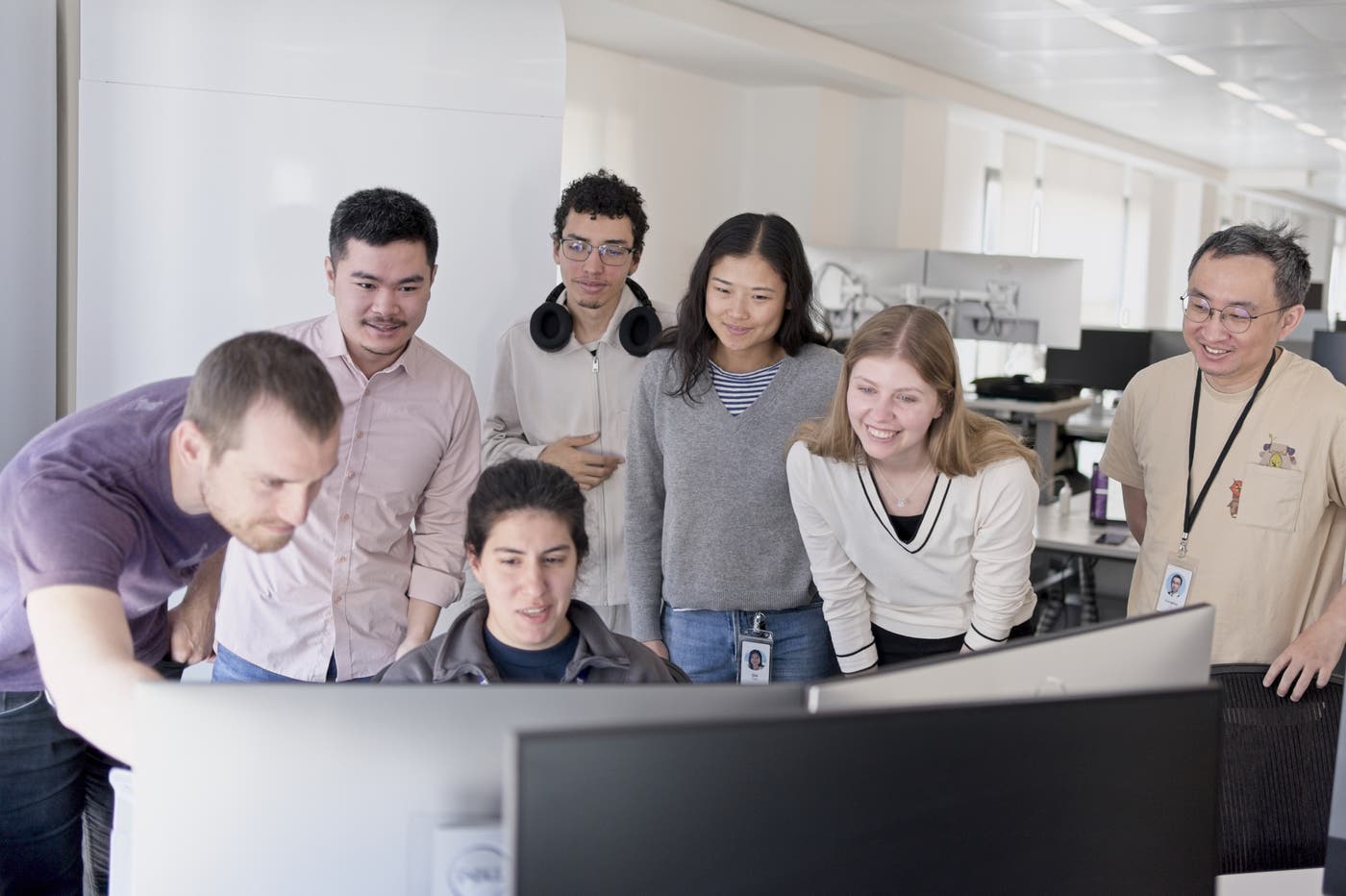
Her work on Toto has been particularly formative. “I learned how to build a foundation model from scratch, manage resources, and work with massive amounts of data.”
While Viktoriya builds on top of Toto, her Datadog mentor focuses on the core of Toto itself. Their conversations regularly spark ideas for her next experiment. She intends to continue her timeseries research in an industry lab environment after completing her PhD.
Salahidine Lemaachi’s academic journey started in Morocco, where he completed the Classes préparatoires aux grandes ecoles (CPGE), a rigorous post-baccalaureate program designed to prepare top students for admission into France’s most selective engineering and business schools. He subsequently earned a master’s degree in engineering at CentraleSupélec, an engineering grande école within the Université Paris-Saclay, and specialized in AI during his final year.
Looking back, his research internships are what inspired him to pursue a PhD. While interning at an aerosystems company, he used AI to control the design of engine components, enabling models to predict production quality significantly faster than classical invasive control methods. During his time with a multinational IT services company, he researched semantic realism augmentation, aiming to generate synthetic images realistic enough to efficiently train AI models. Both projects were patented. “Pursuing a PhD felt like a natural next step for me,” Salahidine says, who is also splitting his time between the Datadog Paris office and Université Paris-Saclay.


He knew Datadog would be the ideal setting for his continued growth. “My internships had shown me how exciting it was to watch my research applied to real-world environments,” Salahidine recalls.
Salahidine’s research focuses on the intersection of foundation models and world models. He is investigating how AI models can progress from recognizing temporal patterns to achieving a genuine understanding of the environments in which they operate. In an observability context, this involves using complex topological data to enhance timeseries forecasting and anomaly detection.
Joining Datadog redirected Salahidine’s entire research track. Although he never specialized in observability, the foundational principles still applied. “The way I trained foundation models in other modalities is very similar to how I train them now, despite the application being totally different,” he reflects.
Like Viktoriya, Salahidine is especially proud of Toto. He worked with the Datadog Cloud Cost Management product team to deploy Toto into production for cloud cost forecasting, where it outperformed the previous model.
“My experience at Datadog has been eye-opening in terms of what high-impact research really looks like in practice,” says Salahidine. “Working on problems that are not only technically challenging but also directly useful at scale confirmed my interest in applied research, especially in settings where models interact with real-world systems and constraints.” After completing his PhD, he intends to pursue research that is both ambitious and aimed toward tangible real-world impact.
Paris has successfully positioned itself as one of the world’s leading tech ecosystems. Between its prominent academic institutions, the proliferation of VC-backed startups, and its willingness to welcome innovative foreign companies, Paris is now recognized as a global AI hub. Viktoriya and Salahidine agree that being based in Paris is part of what makes the Datadog experience unique. “There is a huge research community in Paris,” says Viktoriya. “And France is extremely supportive of its students.”
The Paris research community is decades in the making, sustained by France’s consistent investments in higher education and engineering. France offers R&D tax credits to incentivize companies to conduct research domestically, and champions national initiatives, such as the France 2030 program, which allocated €30 billion to foster the next generation of technology leaders. The Paris region leads Europe in research talent, employing approximately 120,000 professional researchers and educating more than 20,000 doctoral candidates across its universities.
For PhD students like Viktoriya and Salahidine, Paris provides convenient access to seminars, conferences, and a steady intake of new research from peers in related fields. “I regularly read the theses and work of other PhD candidates in the Paris AI research network. They’ve truly inspired me in my own academic pursuits,” Salahidine confirms.
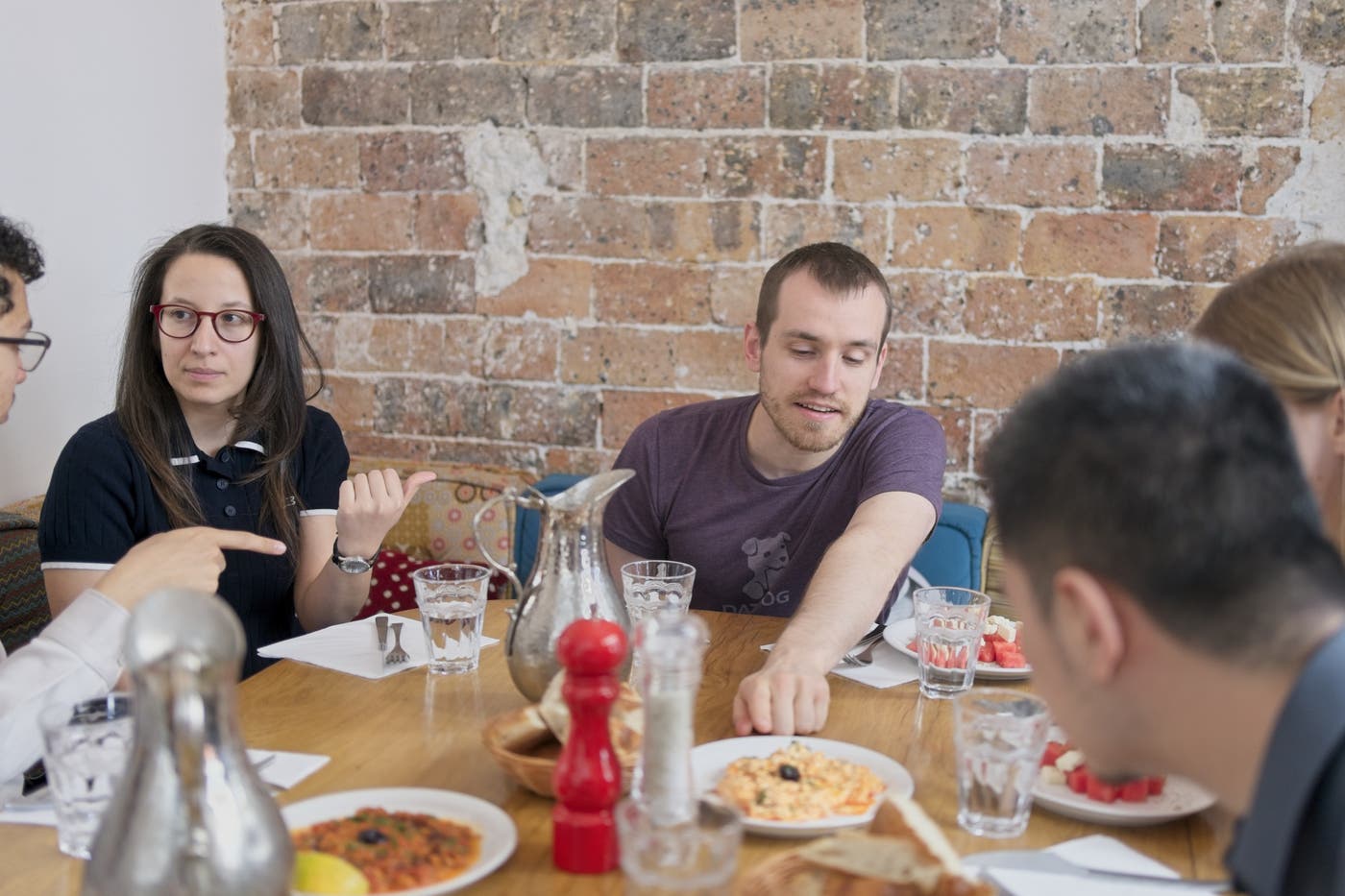
Beyond the work, both researchers value France’s rich culture and the number of activities there are to experience. Viktoriya plans to travel to the 79th Festival de Cannes this month.
Viktoriya and Salahidine are from different countries and academic backgrounds, but both joined Datadog for the opportunity to pursue research that solves real problems at scale. They are credited contributors to the Toto paper that Datadog presented at NeurIPS 2025—a model that has since been adapted by practitioners across diverse industries, including finance, energy, and retail.
For PhD candidates considering an industry environment, Salahidine says, “Real-world data can be messy, noisy, and sometimes frustrating to work with. But if you’re drawn to complexity and motivated by impact, that’s exactly what makes it rewarding.”
Datadog is growing and looking for researchers, scientists, and engineers to join our teams worldwide. Explore open roles and learn more about #DatadogLife on the Datadog Careers page.
此内容由惯性聚合(RSS阅读器)自动聚合整理,仅供阅读参考。 原文来自 — 版权归原作者所有。