

惯性聚合 高效追踪和阅读你感兴趣的博客、新闻、科技资讯
阅读原文 在惯性聚合中打开

推荐订阅源

Cyberwarzone
Cyberwarzone
V
Vulnerabilities – Threatpost
T
Tenable Blog
Forbes - Security
Forbes - Security
Simon Willison's Weblog
AWS News Blog
AWS News Blog
G
GRAHAM CLULEY
Know Your Adversary
Know Your Adversary
S
Securelist
C
Cybersecurity and Infrastructure Security Agency CISA
Project Zero
Project Zero
C
CXSECURITY Database RSS Feed - CXSecurity.com
V
Visual Studio Blog
WordPress大学
WordPress大学
Latest news
Latest news
K
Kaspersky official blog
T
Tailwind CSS Blog
T
Threat Research - Cisco Blogs
B
Blog RSS Feed
C
Cisco Blogs
博客园 - 聂微东
Martin Fowler
Martin Fowler
T
The Blog of Author Tim Ferriss
小众软件
小众软件
L
LangChain Blog
阮一峰的网络日志
阮一峰的网络日志
L
LINUX DO - 热门话题
Stack Overflow Blog
Stack Overflow Blog
罗磊的独立博客
P
Proofpoint News Feed
CTFtime.org: upcoming CTF events
P
Privacy International News Feed
Cyber Security Advisories - MS-ISAC
C
CERT Recently Published Vulnerability Notes
Cisco Talos Blog
Cisco Talos Blog
S
SegmentFault 最新的问题
Security Latest
Security Latest
Y
Y Combinator Blog
爱范儿
爱范儿
aimingoo的专栏
aimingoo的专栏
P
Privacy & Cybersecurity Law Blog
L
LINUX DO - 最新话题
月光博客
月光博客
The GitHub Blog
The GitHub Blog
博客园 - 三生石上(FineUI控件)
S
Security Affairs
P
Proofpoint News Feed
D
DataBreaches.Net
有赞技术团队
有赞技术团队
云风的 BLOG
云风的 BLOG

Replicate's blog

How to make remarkable videos with Seedance 2.0 – Replicate blog How to prompt Seedream 5.0 – Replicate blog Recraft V4: image generation with design taste – Replicate blog Run Isaac 0.1 on Replicate – Replicate blog Run FLUX.2 on Replicate – Replicate blog How to prompt Nano Banana Pro – Replicate blog Retro Diffusion's pixel art models are now on Replicate – Replicate blog Replicate is joining Cloudflare – Replicate blog Extract text from documents and images with Datalab Marker and OCR – Replicate blog How to prompt Veo 3.1 – Replicate blog IBM's Granite 4.0 is now on Replicate – Replicate blog Which image editing model should I use? – Replicate blog Introducing our new search API – Replicate blog Torch compile caching for inference speed – Replicate blog Announcing Replicate's remote MCP server – Replicate blog How to prompt Veo 3 with images – Replicate blog Open source video is back – Replicate blog Generate consistent characters – Replicate blog Bria is now on Replicate – Replicate blog How we optimized FLUX.1 Kontext [dev] – Replicate blog Compare AI video models – Replicate blog The FLUX.1 Kontext hackathon – Replicate blog How to prompt Veo 3 for the best results – Replicate blog Get the most from Google Veo 3 – Replicate blog FLUX.1 Kontext from the community – Replicate blog Use FLUX.1 Kontext to edit images with words – Replicate blog Generate incredible images with Google's Imagen 4 – Replicate blog Run OpenAI’s latest models on Replicate – Replicate blog NVIDIA H100 GPUs are here – Replicate blog Run 30,000+ LoRAs on Hugging Face with Replicate – Replicate blog Ideogram 3.0 on Replicate – Replicate blog Run MiniMax Speech-02 models with an API – Replicate blog Easel AI is now on Replicate – Replicate blog Stylized video with Wan2.1 – Replicate blog Creative roundup: avatars, lightsabers, and LoRA tricks – Replicate blog Wan2.1: generate videos with an API – Replicate blog Wan2.1 parameter sweep – Replicate blog You can now fine-tune open-source video models – Replicate blog Generate short videos with the Replicate playground – Replicate blog AI video is having its Stable Diffusion moment – Replicate blog FLUX fine-tunes are now fast – Replicate blog FLUX.1 Tools – Control and steerability for FLUX – Replicate blog NVIDIA L40S GPUs are here – Replicate blog Ideogram v2 is an outstanding new inpainting model – Replicate blog Stable Diffusion 3.5 is here – Replicate blog FLUX is fast and it's open source – Replicate blog FLUX1.1 [pro] is here – Replicate blog Using synthetic training data to improve Flux finetunes – Replicate blog Fine-tune FLUX.1 with an API – Replicate blog Fine-tune FLUX.1 to create images of yourself – Replicate blog Replicate Intelligence #12 – Replicate blog Replicate Intelligence #11 – Replicate blog Fine-tune FLUX.1 with your own images – Replicate blog Replicate Intelligence #10 – Replicate blog FLUX.1: First Impressions – Replicate blog Replicate Intelligence #9 – Replicate blog Run FLUX with an API – Replicate blog Replicate Intelligence #8 – Replicate blog Run Meta Llama 3.1 405B with an API – Replicate blog Replicate Intelligence #7 – Replicate blog Replicate Intelligence #6 – Replicate blog Replicate Intelligence #5 – Replicate blog How to get the best results from Stable Diffusion 3 – Replicate blog Run Stable Diffusion 3 on your Apple Silicon Mac – Replicate blog Push a custom version of Stable Diffusion 3 – Replicate blog Replicate Intelligence #4 – Replicate blog Run Stable Diffusion 3 on your own machine with ComfyUI – Replicate blog H100s are coming to Replicate – Replicate blog Run Stable Diffusion 3 with an API – Replicate blog Replicate Intelligence #3 – Replicate blog Replicate Intelligence #2 – Replicate blog Replicate Intelligence #1 – Replicate blog Shared network vulnerability disclosure – Replicate blog Run Snowflake Arctic with an API – Replicate blog Run Meta Llama 3 with an API – Replicate blog Run Code Llama 70B with an API – Replicate blog How to create an AI narrator for your life – Replicate blog Clone your voice using open-source models – Replicate blog Businesses are building on open-source AI – Replicate blog How to run Yi chat models with an API – Replicate blog Scaffold Replicate apps with one command – Replicate blog Using open-source models for faster and cheaper text embeddings – Replicate blog Generate music from chord progressions and text prompts with MusicGen-Chord – Replicate blog Generate images in one second on your Mac using a latent consistency model – Replicate blog How to use retrieval augmented generation with ChromaDB and Mistral – Replicate blog Fine-tune MusicGen to generate music in any style – Replicate blog Jet-setting with Llama 2 + Grammars – Replicate blog How to run Mistral 7B with an API – Replicate blog Make smooth AI generated videos with AnimateDiff and an interpolator – Replicate blog Fine-tuned models now boot in less than one second – Replicate blog Painting with words: a history of text-to-image AI – Replicate blog We're cutting our prices in half – Replicate blog A guide to prompting Llama 2 – Replicate blog Streaming output for language models – Replicate blog Fine-tune SDXL with your own images – Replicate blog Run Llama 2 with an API – Replicate blog A comprehensive guide to running Llama 2 locally – Replicate blog Fine-tune Llama 2 on Replicate – Replicate blog What happened with Llama 2 in the last 24 hours? 🦙 – Replicate blog Make any large language model a better poet – Replicate blog
Run SDXL with an API – Replicate blog
2023-07-26 · via Replicate's blog

SDXL 1.0 is a new text-to-image model by Stability AI. Stable Diffusion XL lets you create better, bigger pictures, with faces that look more real. You can add clear, readable words to your images and make great-looking art with just short prompts.

Like Stable Diffusion 1.5 and 2.1, SDXL is open source. You can modify it, build things with it and use it commercially.

Replicate lets you run generative AI models, like SDXL, from your own code, without having to set up any infrastructure.

An astronaut riding a unicorn

What you can do

You can use the SDXL model on Replicate to:

  • make images from your prompts
  • make an image from another image (img2img)
  • inpaint using a mask
  • use a refiner to add fine-detail to your images

View examples

Use a client library for Replicate

We maintain official Python, Node.js, Swift, and Go clients for Replicate. And the community has made more.

You need to sign up for Replicate, then you can find your API token on your account page.

Then, you can run SDXL with one line of code:

You can use the API for free for a bit, but eventually we’ll ask you to enter your credit card. We only charge you by the second for the amount of time your requests are running, so it works out much cheaper than running your own GPUs.

Refiner

You can use a refiner to add fine detail to images.

The refiner is a new model released with SDXL, it was trained differently and is especially good at adding detail to your images. It functions alongside the base model, correcting discrepancies and enhancing your picture’s overall quality.

You can use the refiner in two ways:

  1. As an ‘ensemble of experts’
  2. As an extra step after the base model has finished

In this example, using the ‘ensemble of experts’ mode, the SDXL base model will handle the first 80% (0.8) of the generation, before handing off to the refiner to add fine detail for the last 20%:

You can alternatively run the refiner model after the base model using the ‘base image refiner’ mode.

In this example the base model will run for 50 steps and produce an output. This will be passed into the refiner which will run for a further 20 steps:

For comparison:
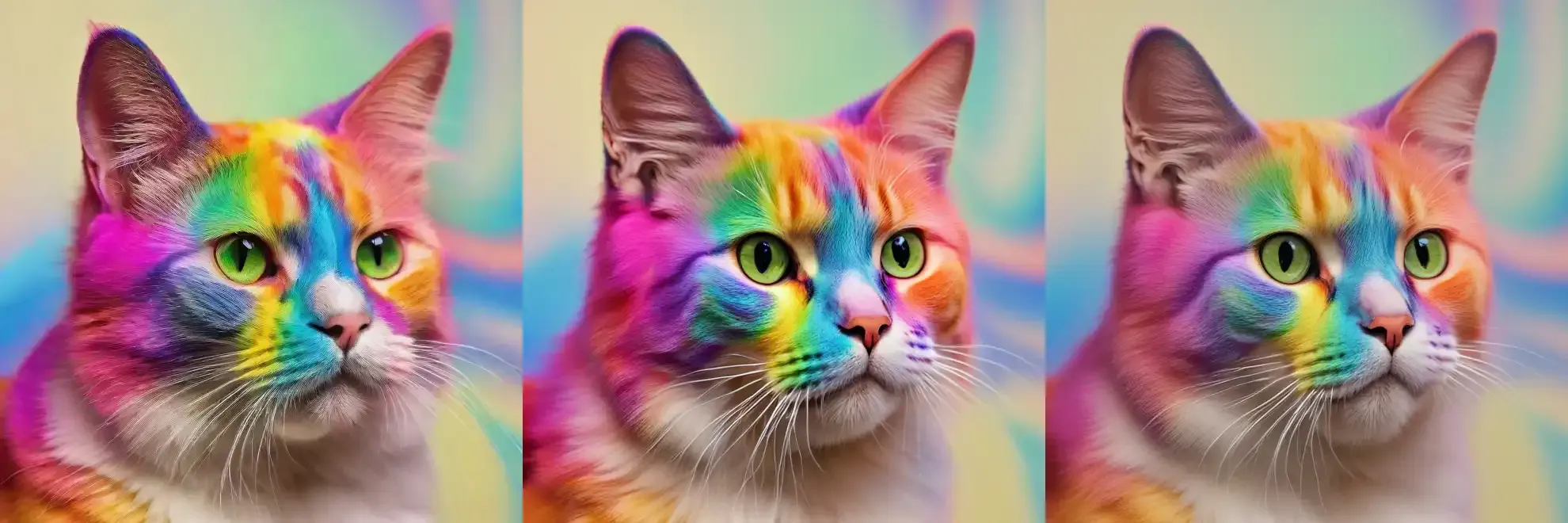
  • Left: Base model without a refiner
  • Middle: Base model plus refiner
  • Right: Ensemble of experts refiner

A comparison of cat images using the SDXL refiner

Image to image

You can pass an image to the model to create a new image based on it. Change the prompt_strength to alter how much of the original image is kept. 0.6 to 0.8 is a good starting range.
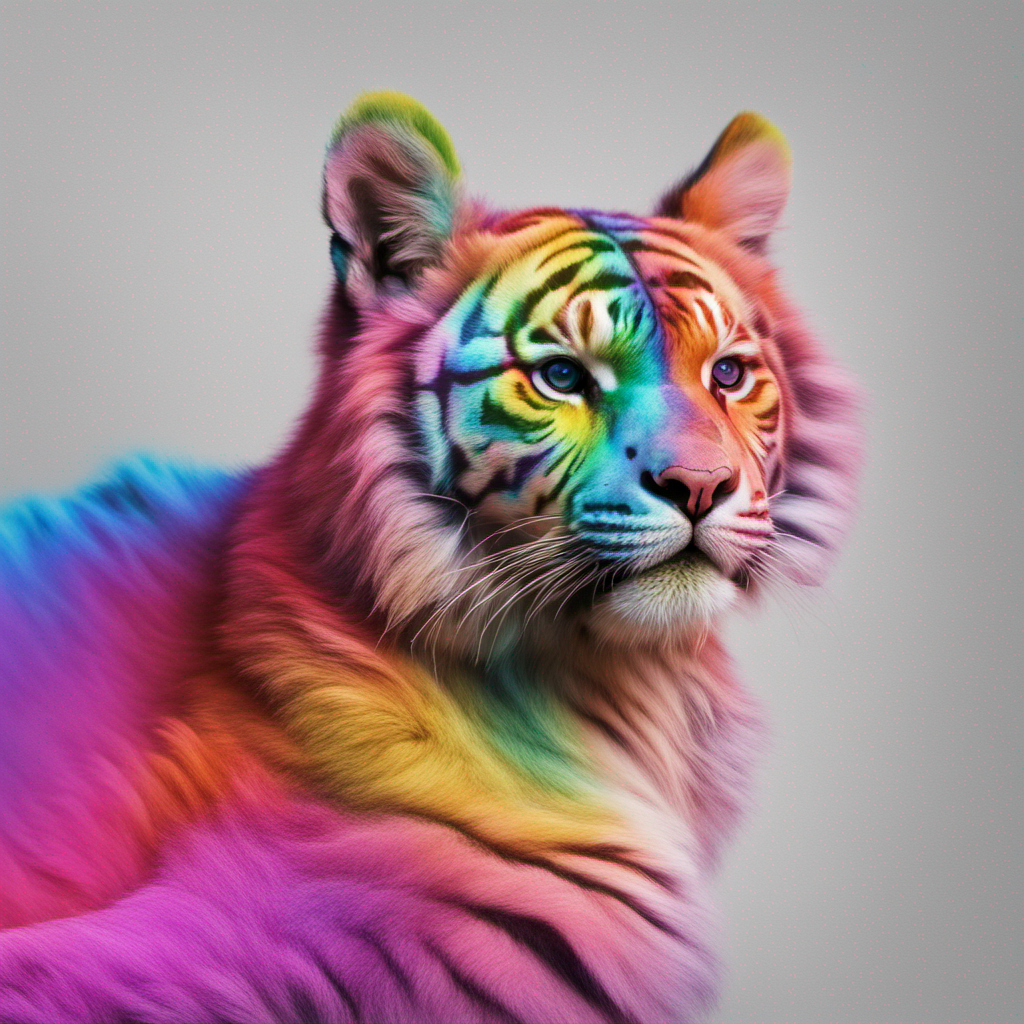
View image to image example

A rainbow colored tiger

Inpainting

You can include a mask with your prompt and image to control which parts of your input image will be updated. Use a black and white mask, where black pixels are kept and white ones will be updated.
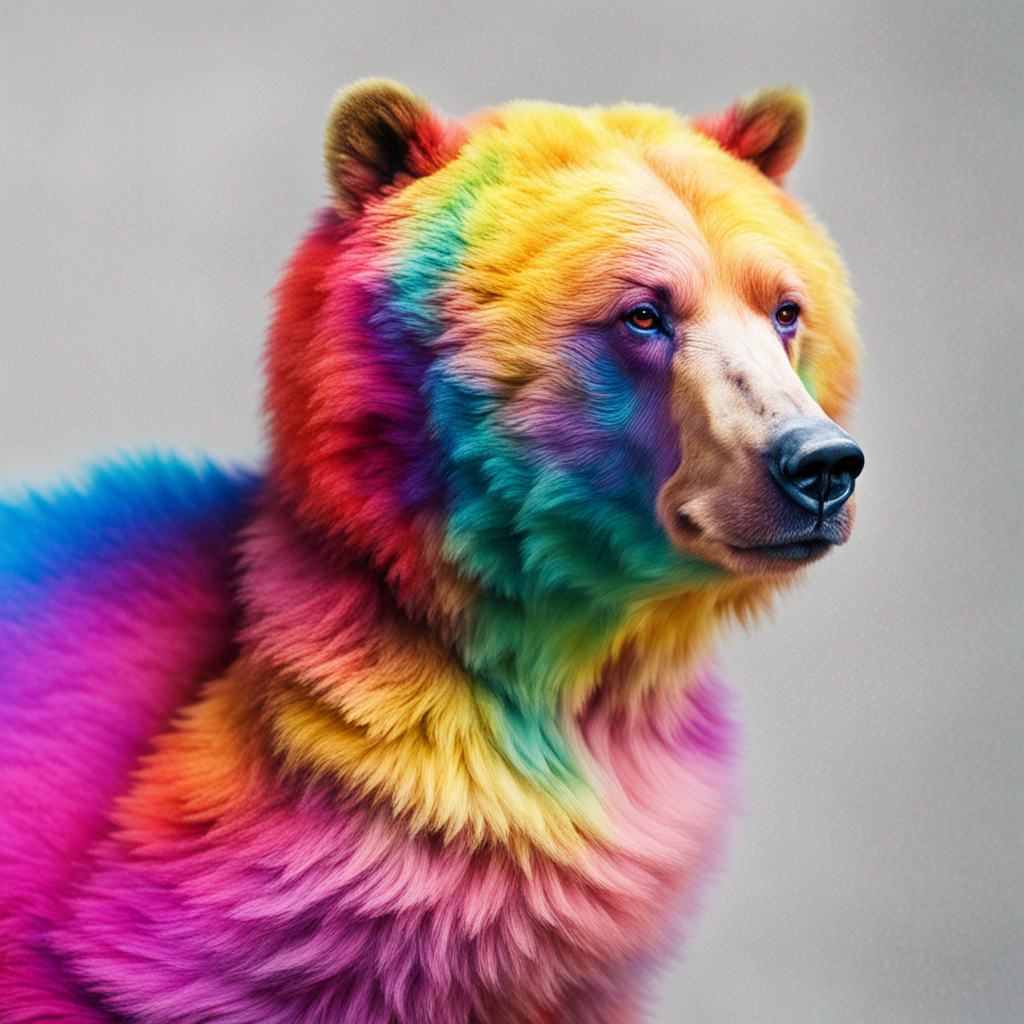
View inpainting example

A rainbow colored bear

Keep in touch

Follow us on Twitter for more SDXL updates.

Join us in Discord to show us what you’ve made, or if you need any help.

Happy hacking! ✨