

惯性聚合 高效追踪和阅读你感兴趣的博客、新闻、科技资讯
阅读原文 在惯性聚合中打开

推荐订阅源

H
Help Net Security
The GitHub Blog
The GitHub Blog
F
Fortinet All Blogs
cs.CV updates on arXiv.org
Simon Willison's Weblog
D
Darknet – Hacking Tools, Hacker News & Cyber Security
Cisco Talos Blog
Cisco Talos Blog
P
Privacy & Cybersecurity Law Blog
I
Intezer
Y
Y Combinator Blog
Threat Intelligence Blog | Flashpoint
CTFtime.org: upcoming CTF events
N
Netflix TechBlog - Medium
The Hacker News
The Hacker News
AWS News Blog
AWS News Blog
aimingoo的专栏
aimingoo的专栏
A
About on SuperTechFans
Exploit-DB.com RSS Feed
Stack Overflow Blog
Stack Overflow Blog
Hacker News: Ask HN
Hacker News: Ask HN
酷 壳 – CoolShell
酷 壳 – CoolShell
量子位
K
KPMG report finds enterprise disconnect between AI and its ROI | CIO
B
Blog
T
Tor Project blog
C
Cybersecurity and Infrastructure Security Agency CISA
云风的 BLOG
云风的 BLOG
博客园_首页
V2EX - 技术
V2EX - 技术
T
Threat Research - Cisco Blogs
腾讯CDC
宝玉的分享
宝玉的分享
博客园 - 叶小钗
罗磊的独立博客
S
Securelist
The Last Watchdog
The Last Watchdog
Google Online Security Blog
Scott Helme
Scott Helme
博客园 - 司徒正美
W
WeLiveSecurity
有赞技术团队
有赞技术团队
OSCHINA 社区最新新闻
OSCHINA 社区最新新闻
S
Secure Thoughts
NISL@THU
NISL@THU
N
News and Events Feed by Topic
Cyber Security Advisories - MS-ISAC
雷峰网
雷峰网
大猫的无限游戏
大猫的无限游戏
K
Kaspersky official blog
IT之家
IT之家

Replicate's blog

How to make remarkable videos with Seedance 2.0 – Replicate blog How to prompt Seedream 5.0 – Replicate blog Recraft V4: image generation with design taste – Replicate blog Run Isaac 0.1 on Replicate – Replicate blog How to prompt Nano Banana Pro – Replicate blog Retro Diffusion's pixel art models are now on Replicate – Replicate blog Replicate is joining Cloudflare – Replicate blog Extract text from documents and images with Datalab Marker and OCR – Replicate blog How to prompt Veo 3.1 – Replicate blog IBM's Granite 4.0 is now on Replicate – Replicate blog Which image editing model should I use? – Replicate blog Introducing our new search API – Replicate blog Torch compile caching for inference speed – Replicate blog Announcing Replicate's remote MCP server – Replicate blog How to prompt Veo 3 with images – Replicate blog Open source video is back – Replicate blog Generate consistent characters – Replicate blog Bria is now on Replicate – Replicate blog How we optimized FLUX.1 Kontext [dev] – Replicate blog Compare AI video models – Replicate blog The FLUX.1 Kontext hackathon – Replicate blog How to prompt Veo 3 for the best results – Replicate blog Get the most from Google Veo 3 – Replicate blog FLUX.1 Kontext from the community – Replicate blog Use FLUX.1 Kontext to edit images with words – Replicate blog Generate incredible images with Google's Imagen 4 – Replicate blog Run OpenAI’s latest models on Replicate – Replicate blog NVIDIA H100 GPUs are here – Replicate blog Run 30,000+ LoRAs on Hugging Face with Replicate – Replicate blog Ideogram 3.0 on Replicate – Replicate blog Run MiniMax Speech-02 models with an API – Replicate blog Easel AI is now on Replicate – Replicate blog Stylized video with Wan2.1 – Replicate blog Creative roundup: avatars, lightsabers, and LoRA tricks – Replicate blog Wan2.1: generate videos with an API – Replicate blog Wan2.1 parameter sweep – Replicate blog You can now fine-tune open-source video models – Replicate blog Generate short videos with the Replicate playground – Replicate blog AI video is having its Stable Diffusion moment – Replicate blog FLUX fine-tunes are now fast – Replicate blog FLUX.1 Tools – Control and steerability for FLUX – Replicate blog NVIDIA L40S GPUs are here – Replicate blog Ideogram v2 is an outstanding new inpainting model – Replicate blog Stable Diffusion 3.5 is here – Replicate blog FLUX is fast and it's open source – Replicate blog FLUX1.1 [pro] is here – Replicate blog Using synthetic training data to improve Flux finetunes – Replicate blog Fine-tune FLUX.1 with an API – Replicate blog Fine-tune FLUX.1 to create images of yourself – Replicate blog Replicate Intelligence #12 – Replicate blog Replicate Intelligence #11 – Replicate blog Fine-tune FLUX.1 with your own images – Replicate blog Replicate Intelligence #10 – Replicate blog FLUX.1: First Impressions – Replicate blog Replicate Intelligence #9 – Replicate blog Run FLUX with an API – Replicate blog Replicate Intelligence #8 – Replicate blog Run Meta Llama 3.1 405B with an API – Replicate blog Replicate Intelligence #7 – Replicate blog Replicate Intelligence #6 – Replicate blog Replicate Intelligence #5 – Replicate blog How to get the best results from Stable Diffusion 3 – Replicate blog Run Stable Diffusion 3 on your Apple Silicon Mac – Replicate blog Push a custom version of Stable Diffusion 3 – Replicate blog Replicate Intelligence #4 – Replicate blog Run Stable Diffusion 3 on your own machine with ComfyUI – Replicate blog H100s are coming to Replicate – Replicate blog Run Stable Diffusion 3 with an API – Replicate blog Replicate Intelligence #3 – Replicate blog Replicate Intelligence #2 – Replicate blog Replicate Intelligence #1 – Replicate blog Shared network vulnerability disclosure – Replicate blog Run Snowflake Arctic with an API – Replicate blog Run Meta Llama 3 with an API – Replicate blog Run Code Llama 70B with an API – Replicate blog How to create an AI narrator for your life – Replicate blog Clone your voice using open-source models – Replicate blog Businesses are building on open-source AI – Replicate blog How to run Yi chat models with an API – Replicate blog Scaffold Replicate apps with one command – Replicate blog Using open-source models for faster and cheaper text embeddings – Replicate blog Generate music from chord progressions and text prompts with MusicGen-Chord – Replicate blog Generate images in one second on your Mac using a latent consistency model – Replicate blog How to use retrieval augmented generation with ChromaDB and Mistral – Replicate blog Fine-tune MusicGen to generate music in any style – Replicate blog Jet-setting with Llama 2 + Grammars – Replicate blog How to run Mistral 7B with an API – Replicate blog Make smooth AI generated videos with AnimateDiff and an interpolator – Replicate blog Fine-tuned models now boot in less than one second – Replicate blog Painting with words: a history of text-to-image AI – Replicate blog We're cutting our prices in half – Replicate blog A guide to prompting Llama 2 – Replicate blog Streaming output for language models – Replicate blog Fine-tune SDXL with your own images – Replicate blog Run Llama 2 with an API – Replicate blog Run SDXL with an API – Replicate blog A comprehensive guide to running Llama 2 locally – Replicate blog Fine-tune Llama 2 on Replicate – Replicate blog What happened with Llama 2 in the last 24 hours? 🦙 – Replicate blog Make any large language model a better poet – Replicate blog
Run FLUX.2 on Replicate – Replicate blog
2025-11-25 · via Replicate's blog

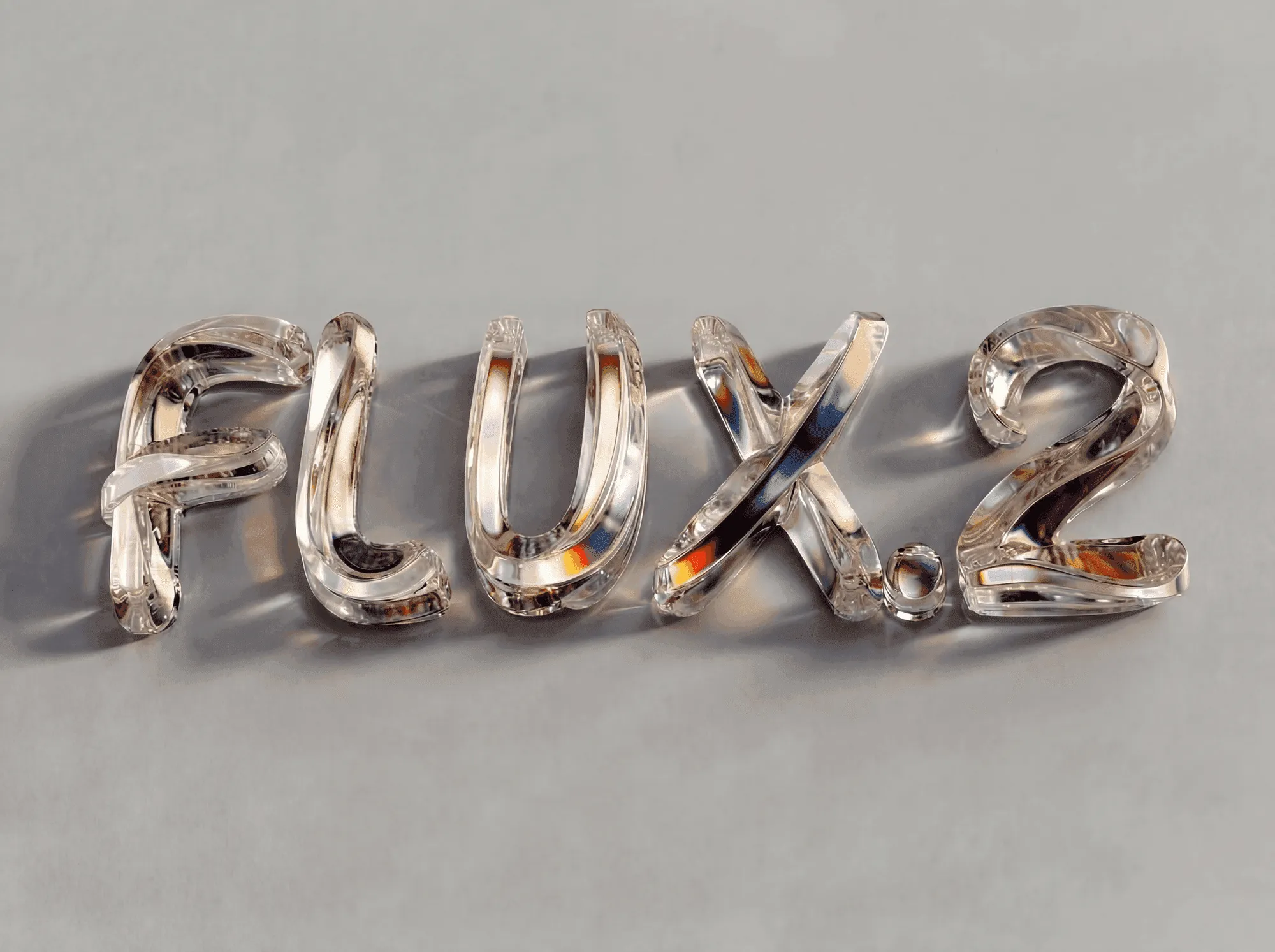
FLUX.2 generated image

Black Forest Labs has released FLUX.2, their most advanced image generation model yet. This release brings significant improvements in image quality, editing capabilities, and enterprise-grade efficiency. FLUX.2 is available to run on Replicate today.

FLUX.2 comes in three variants:

FLUX.2 [pro] generates images in 6 seconds, or 9 seconds with an input image. It accepts up to 8 input images, and costs $0.015 + $0.015 per input and output megapixel.

FLUX.2 [flex] generates higher quality images, especially typography and fine-grained details. It generates images in 22 seconds, or 40 seconds with an input image. FLUX.2 [flex] accepts up to 10 input images, and costs $0.06 per input and output megapixel.

FLUX.2 [dev] is an open-source, distilled version of FLUX.2 [pro] that we have worked with Pruna.ai to optimize. It generates images in 2.5 seconds, or 5.5 seconds with an input image, and costs $0.012 per input and output megapixels.

What makes FLUX.2 special

Details that close the gap between generated and real

FLUX.2 produces realistic image details up to 4MP resolution. The model excels at rendering accurate hands, faces, fabrics, logos, and small objects that other models often miss. This level of fidelity makes it ideal for creative photography, e-commerce product shots, marketing materials, interior design, and image restyling.

Enterprise-grade efficiency

FLUX.2 delivers state-of-the-art visual intelligence at low latency and predictable cost. Whether you’re generating new images or editing existing ones, the model handles complex visual problems efficiently, making professional-quality AI accessible even at large image volumes.

Multi-reference editing with character consistency

One of FLUX.2’s standout features is its ability to reference up to 8 images simultaneously while maintaining consistent identities, products, and styles. This means you can create 50 ad variants using the same face, generate product mockups in any context, or produce dynamic fashion editorials where the model stays consistent across all shots.

Professional precision

FLUX.2 offers direct pose control for exact positioning, hex-code color accuracy for brand guidelines, and the ability to combine visual cues with input images for localized editing. The model handles clean background replacement and object insertion that match perspective, with localized edits that leave the rest of the image intact. All of this is available at any aspect ratio.

Built to scale

The model includes structured prompting for programmatic workflows, 32K prompt tokens for detailed creative direction, and generative expand/crop capabilities for post-generation edits. Speed and quality tiers adapt to your specific workflow needs.

Great for internet content

FLUX.2 understands context, tone, and trends well enough to create engaging posts, memes, and editorial visuals from short prompts in a single generation.

What’s better than FLUX.1

FLUX.2 brings several key improvements over its predecessor:

Multi-reference support: Reference up to 8 images simultaneously with improved character, product, and style consistency.

Image detail and photorealism: Higher fidelity on skin, hair, fabric, materials, and hands, with fewer artifacts and more stable lighting. The gap between generated images and real photography has never been smaller.

Text rendering: More reliable rendering of complex typography, infographics, and UI mockups. The model generates clean, legible text for memes and designs from pure text prompts or input images.

Enhanced prompt following: Significantly better accuracy and responsiveness to complex instructions.

World knowledge: The model is more grounded in real-world knowledge, lighting, and spatial logic, resulting in more coherent scenes.

Higher and flexible output resolutions: FLUX.2 can edit images up to 4MP and can be used to resize or extend images.

Who it’s for

FLUX.2 is designed for anyone generating professional visual content at scale: marketing teams, product designers, content creators, social media managers, e-commerce brands, agencies, developers building visual applications, publishers, and educators.

Getting started with the API

Here’s how to run FLUX.2 using JavaScript and the Replicate API:

Or with Python:

Try it now

FLUX.2 represents a significant leap forward in AI image generation and editing. With its combination of photorealistic detail, multi-reference consistency, and enterprise-grade efficiency, it’s ready to handle professional visual content creation at any scale.