





Jonny Marshall breaks down the upsides and limitations of the Burnham Government’s first new policy.
Andy Burnham has promised to lead a ‘cost-of-living Government’, and the millions of households struggling to balance the books each month will be hoping he means it. His first big policy move at least points the right way: it accepts that energy bills are too high, and that bringing them down needs action from the top.
So, was cutting VAT on electricity the right call?
A clear benefit to a tax cut is speed. VAT is straightforward to remove and the savings will take effect from October 1st, worth around £45 per year for the typical household.
A second attraction is the focus on electricity rather than gas. Nudging down the relative cost of power is, in the long run, a good step for a country trying to electrify its heating and transport.
Many, including us at RF, have been calling for action on levies to make electricity cheaper. And indeed a similar saving could have been delivered by funding some of these implicit taxes (the Feed-in-tariff and remainder of the Renewables Obligation are worth £42 per year, for example). This would have delivered a similar (but not identical – around 10 per cent of the VAT cut will apply to electricity standing charges) boost to electrification.
So far, so good. The trouble comes when we look at who gets the money.
Virtually every household is on the electricity grid, so a VAT cut goes to essentially everyone, regardless of whether they are struggling with energy bills or not.
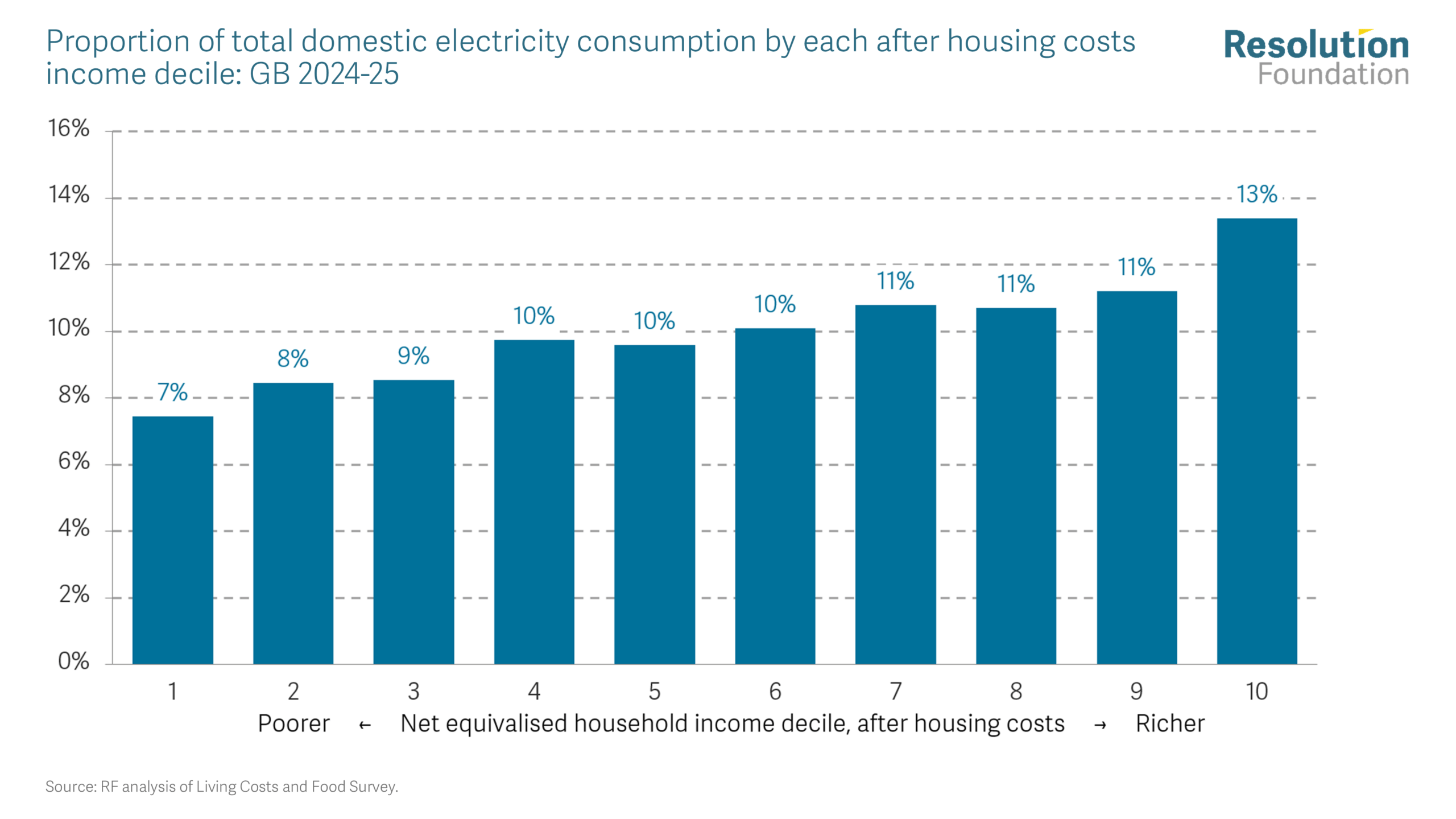
And because better-off households, on average, use more electricity, they pocket more of the cash saving. The highest-earning tenth of families spend close to twice as much as the lowest-earning tenth on electricity.
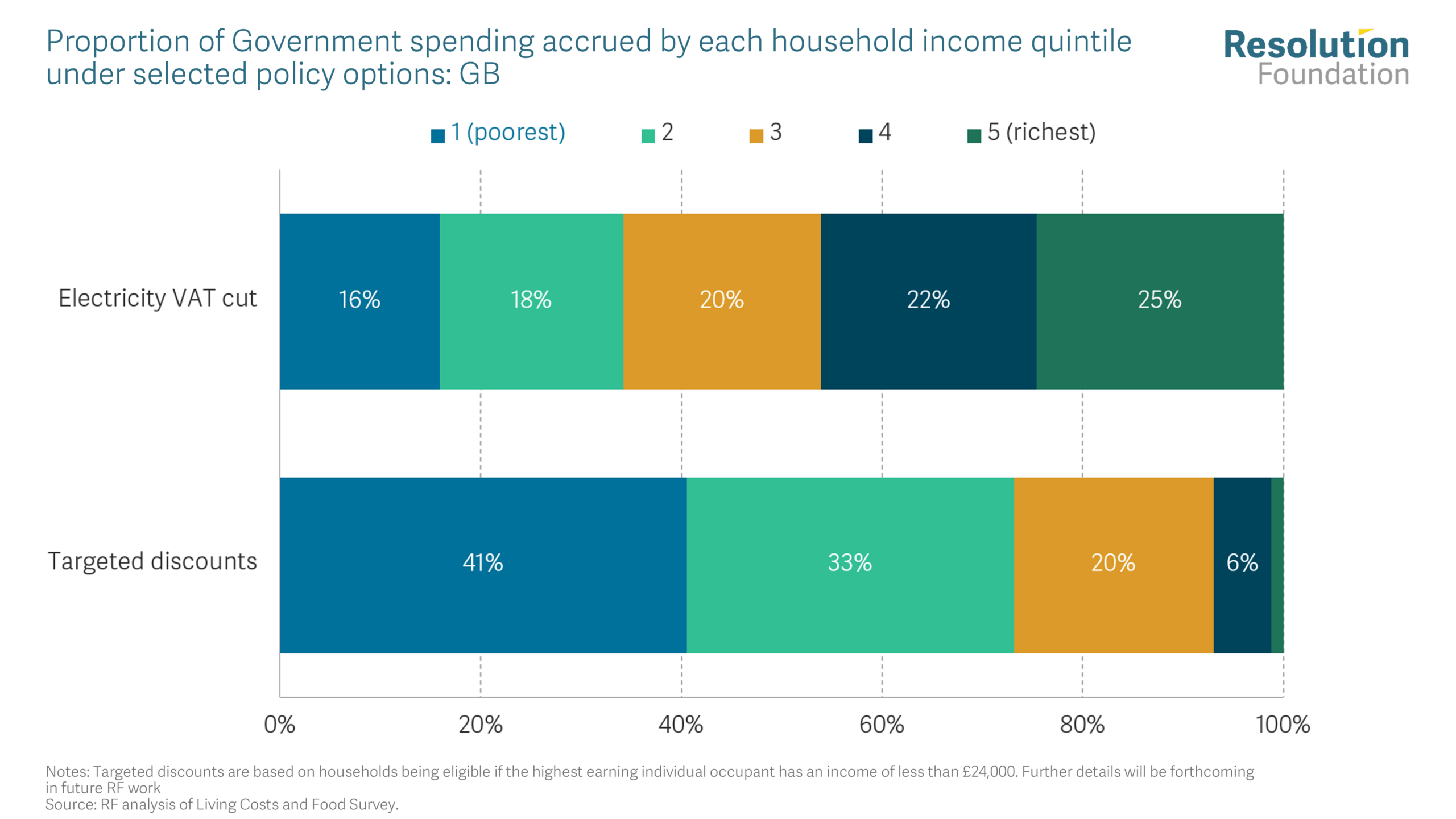
As such, of the £850 million the Government says the VAT cut will cost, 25 per cent (£213 million) will flow to the richest fifth of British households, against just 16 per cent (£136 million) for the poorest fifth.
Further, most of the current price shock is feeding through to households via gas bills (unit prices up 28 per cent in July, compared with 6 per cent for electricity) and higher gas use in winter as the temperature drop is when the real crunch comes.
So if this cost-of-living measure is designed to help those most in need, it could do better.
Indeed, it did not have to be this way. A persistent criticism of the 2022 energy crisis was that the then-Government spent more money supporting households than it needed to as it didn’t have an effective way of distinguishing between those struggling and not.
And four years later, as another war-fuelled energy crisis rolled into view, ministers were again stuck at square one, having squandered time that could have been spent setting up a system to target spending on those who most needed it.
Had it been able to target discounts at 40 per cent of households (making them available both to those in receipt of a means-tested benefit and to those where the highest earning individual has a salary of below £24,000, for example) then it would have handed the lowest-income families more than twice what they will get from the blanket VAT cut.
When every pound of public spending is fought over, and the need to reduce bills is most acute for those on lower incomes, such a gap becomes hard to defend.
And especially so when warnings of another squeeze are flashing red. Energy bills already jumped by 13 per cent in July, but the recent re-kindling of hostilities in the Middle East is very much making itself known on wholesale energy markets.
NBP gas futures contracts for the final quarter of this year and the first quarter of the next are back in the 140 pence per therm region, touching the highest levels seen since the war in Iran started. This means that lower energy bills this winter are far from a given, even with the VAT cut.
Therefore, today’s announcement should only be seen as a start. Energy bills will likely continue to pile pressure onto family finances, and (new) ministers need to plan for the worst and prevent future waste.
This means upping the pace on designing and delivering a targeted, responsive system.
Finally, the Government should be clear about how it’s going to pay for this and other policies to help with the cost of living. The context here is Britain’s long-running struggle to deliver sustainable public finances which has been made harder by an estimated £14 billion hit
from the renewed tensions in the Middle East, along with unfunded policy announcements, including from the Defence Investment Plan. The Government has apparently paid for the £850million that the VAT cut costs this year by cancelling a digital ID scheme that was due to cost an average of £600 million over the next three years. Moreover, the cost of that scheme was not actually funded. In effect, today’s announcement is funded by departmental savings that have not been specified this year and is unfunded in future years (at an annual cost of £1.7 billion).
This article was amended on the morning of the 22nd of July to reflect more recent price cap forecasts.
Jonny Marshall is Principal Economist at the Resolution Foundation. You can read more of his research here, and follow him on Bluesky here.
此内容由惯性聚合(RSS阅读器)自动聚合整理,仅供阅读参考。 原文来自 — 版权归原作者所有。