






Afternoon all,
Even after two thousand years, “bread and circuses” has not gone out of fashion as a political strategy. Having discovered that fixing the price of bread is not so easy, the Chancellor has taken 50p off a happy meal and £4 off a ticket to Chessington World of Adventures with her feel good British summer (assuming full passthrough).
It makes sense not to splurge on energy bills now, given it’s the winter that matters. Equally, while fuel duty “delays” and theatre ticket giveaways are targeted on some, it’s hard to argue they’re the people most acutely exposed to cost of living shock round two. On average the bottom fifth of the income distribution spend 3 per cent of their budgets on eating out, compared to 7 per cent for the top fifth. If the money spent this week on petrol and summer-fun had gone on targeted energy bill support instead, it could have meant £44 off bills for the poorest two-fifths of households.
But hey, we’re here to kick off your British summer feel good factor with a veritable literary festival. There are three great book launches coming up at RF towers with Soumaya Keynes, Sarah O’Connor and Rupal Patel and Jack Leslie. See you at all three!
Plus, the latest episode of High Resolution is out now wherever you get your podcasts – I got to have a fascinating conversation with the Guardian’s Heather Stewart and Professor Jane Green about the link between living standards and electoral success.
Have a great weekend,
Ruth
Chief Executive
Resolution Foundation
The kids are not alright. The IFS have published their take on the rise in NEET rates, and they find, like us, that it is at least partly structural – not just a cyclical blip. They do some great digging into the admin data, especially on the question of whether rises in youth minimum wages are to blame. Their central estimates say no but with big uncertainties. Employer NICs look unlikely to be the primary culprit either, given that employment was already falling two years before the change was announced. And graduates aren’t being hit harder than non-graduates, meaning any AI related effects are not ones disproportionately hitting graduates. When you’ve got your nerdy data-fix balance it out with this report collating young people describing their experiences – and the barriers they’ve faced – in education and work.
Enforce for good. The Government’s Employment Rights Act is a step in the right direction – but rules only work if they’re enforced. What luck, then, that a major new government-commissioned report on labour market enforcement just dropped. It draws on surveys, interviews and focus groups to understand non-compliance – from paperwork failures to serious exploitation. Between 2023 and 2025 one-in-seven workers experienced at least one of: being paid below the minimum wage (6 – 11 per cent), not getting a payslip (5 per cent), not getting a contract before starting work (23 per cent of new starters), and being charged illegal fees by agencies (7 per cent of agency workers). Workers experiencing one type of violation are significantly more likely to experience others, with migrant and low-paid workers most at risk of exploitation. So, where do we go from here? The creation of the Fair Work Agency is welcome – now the Government must ensure it has the funding and the teeth needed to succeed . If this is your bag, do join us next week for a great conversation about worker power.
Euro Vision. Paul Krugman has been busy recently arguing that Europe isn’t really falling behind America. According to him, the gap is a statistical artefact of US tech distorting GDP and anyone who’s walked around France and Mississippi can see who’s actually doing better. Spanish economist Luis Garicano is pushing back hard. ECB data shows labour productivity per hour rose 6.7 per cent in America from late 2019 to mid-2024, against just 0.9 per cent in the EU. Tech wealth, far from being a phantom, spills into pension pots for American households while tech wages bid up the non-tradable economy around them, so hairdressers and baristas earn more too. And roughly half of the old US-Europe workings hour gap has closed since the 1990s, meaning it can’t all be brushed off as Italians lounging on the beach half the year. Walking around European cities is nice, but even better on an American salary.
The nose knows. You might think a glowing smile or furrowed brow are vital to non-verbal communication, but there is another factor right under our noses. Dutch researchers carried out a survey to determine how apt people are at noticing bad breath or clocking perfume and used it to develop a body odour awareness scale. Reader, I am unable to explain to you why they did this. I’d highly recommend scoping out the survey questions on page 12 so you can determine your own level of stink-awareness. Women tend to score higher than men on the awareness of their own body odours, something I hope my male readers will take under consideration as we head into sweaty season.
Note to self. It’s one of positive psychology’s most beloved findings: spend a few minutes each evening writing down three good things from your day, and within a week you’ll be happier and less depressed. This study puts it to the test: participants were told to spend time either writing down three good things, three good things in nature specifically, or three plain old facts. The nature and fact groups both reported positive results, while the classic version did zilch. What’s more, its participants reported significantly higher perceived stress than at the baseline after two months, which the authors attribute to people writing overwhelmingly about work, achievements and themselves, dragging the office into the diary. Don’t always count your blessings.
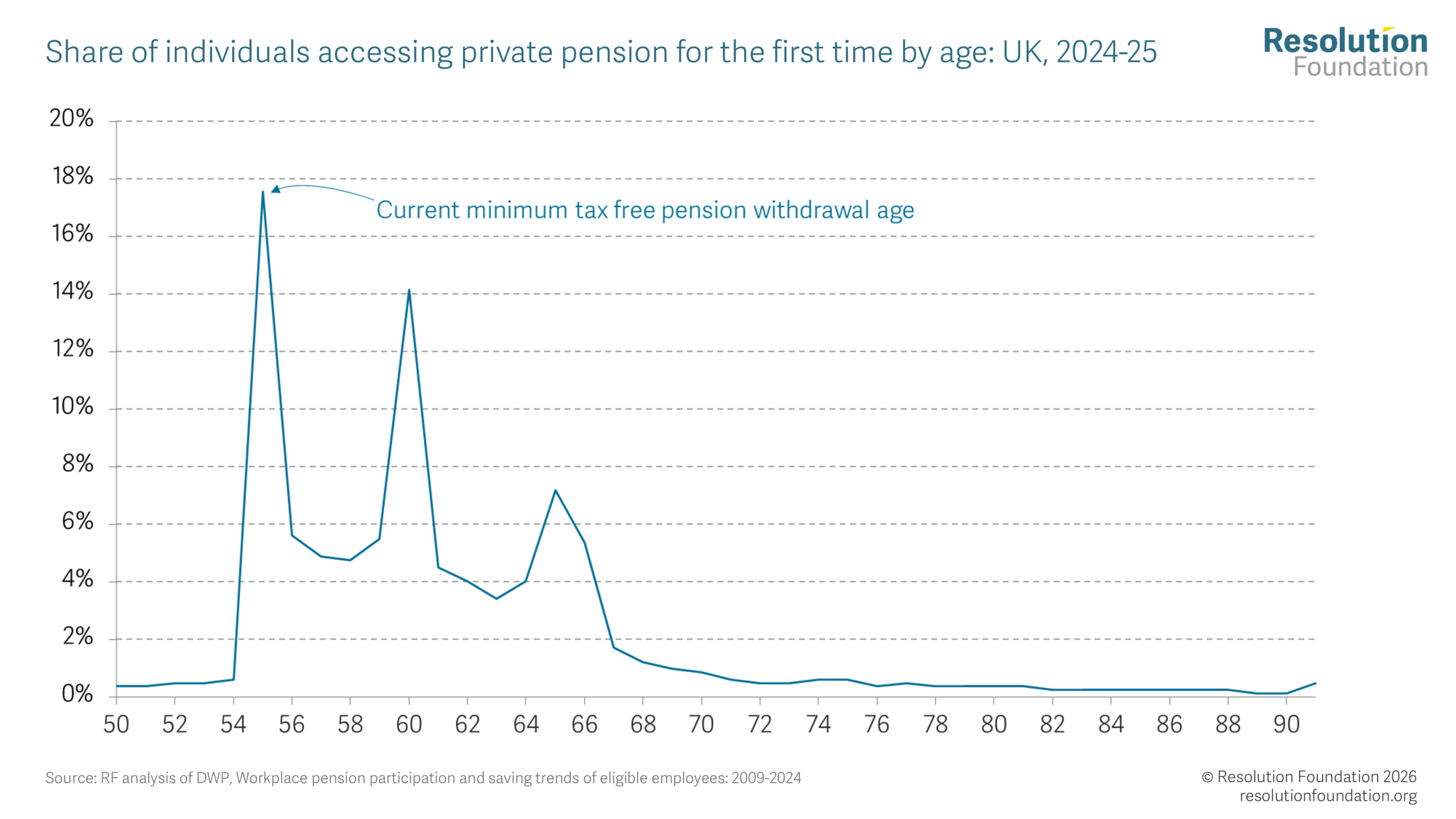
The long-awaited interim report of the Pension Commission dropped this week. It rightly warns of growing pension inequalities, from the self-employed to the gender pension gap, and the growing uncertainty which the Triple Lock is creating for long-term pension planning and analysis. For what it’s worth, we think that the Government should set an end date for the Triple Lock determined by a target level. But there’s another issue the Commission has been considering: the age when people first dip into their pension pots. As COTW shows, the most popular ages are 65,60 and 55 (which, in 2024-25, was the earliest date funds could be accessed) – with one in six accessing funds at the earliest possible age. From April 2028, that minimum age will rise to 57, but that is still a full decade before the State Pension kicks in. Setting aside the prudence of sports car acquisition, early pension access enables earlier exit from the workforce. That’s a counterintuitive incentive for the Government to provide given our ageing population and the challenging demographic skewing that will entail. With the old age dependency ratio rising and the State Pension age under review, we should be focused on how we can encourage people to work longer, rather than giving people a reason to hand in their P45 a decade early.
此内容由惯性聚合(RSS阅读器)自动聚合整理,仅供阅读参考。 原文来自 — 版权归原作者所有。