






Auto credit stress is no longer confined to the subprime tail. By the first quarter of 2026, 5.60% of outstanding auto-loan balances were at least 90 days delinquent — the highest reading in the New York Fed’s series — and lenders had let the median FICO origination score on new loans slip from 724 to 716 in a single quarter to hold volume — the first drop since 2021. The delinquency line is climbing across every credit band, not just the bottom one.
Under that pressure, most lenders in the lending industry are shopping for speed. The category they are evaluating — “ai loan approval” — promises to move applications from submission to decision-making faster and with fewer manual touches. That promise is real, and it is also beside the point.
Accelerated loan approval operates the current loan underwriting model at an increased volume. If this model inaccurately prices a segment, the speed of processing amplifies the mistake rather than rectifying it. The subsequent discussion distinguishes the loan automation capabilities of an approval process platform from the limitations of the underlying model — highlighting why these represent distinct acquisitions that are often conflated in a single software evaluation scorecard.
AI loan approval — also sold as AI loan underwriting — uses machine learning models and artificial intelligence to execute a lender’s compliance rules and underwriting guidelines to approve, deny, or price applications faster and more consistently. It automates loan processing and the approval process itself. It does not, on its own, discover the predictive patterns a model was never built to test.
This distinction is often overlooked during the loan origination software procurement process. Most Requests for Proposals (RFPs) prioritize the speed of approval and the rate of auto-decisions, as these are key metrics a vendor can easily demonstrate in a single afternoon. A lender may use an AI tool to auto-approve every application that comes through the queue, yet still misprice the same segments that were mispriced in the previous quarter — albeit at a quicker pace and with a greater volume.
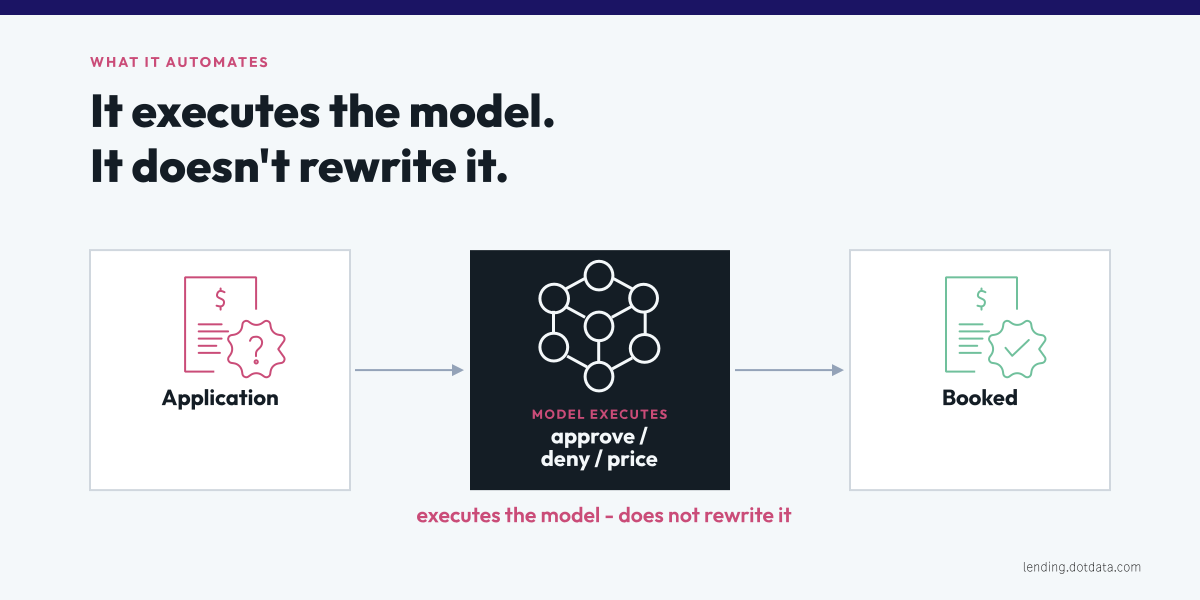
AI-powered loan decision systems aim to accelerate lending processes and create a consistent, scalable workflow across lending operations. The challenge is that all scoring models have blind spots — inefficiencies due to either gaps in training data or changing market conditions — and accelerating automated processing only accelerates bad decisions based on the gaps in the models. Blind acceleration of a model with gaps risks propagating bad loan decisions throughout the portfolio, damaging overall portfolio quality.
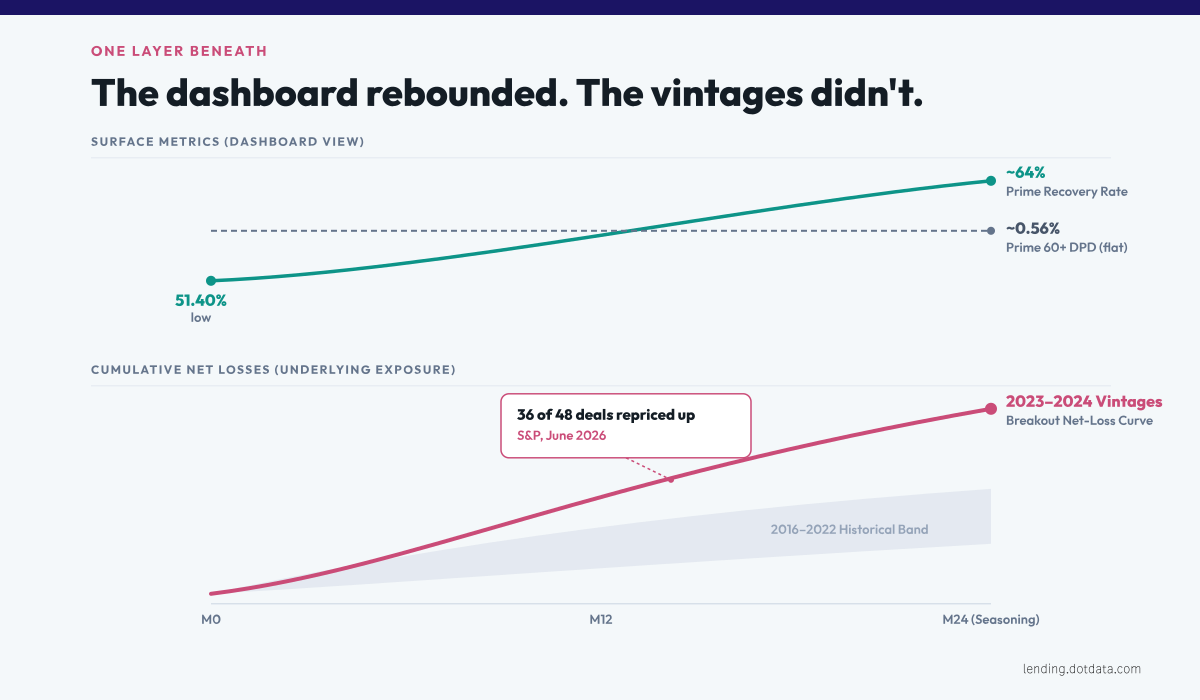
In a prime book, the surface appears to be stable. Recoveries surged through early 2026 — S&P’s ABS tracker indicated that prime recovery reached approximately 64% by May, a significant increase from a low of 51.40% — while prime 60-plus-day delinquency remained steady at about 0.56% and annualized losses hovered around 0.54%. Every metric monitored by the loan approval dashboard shows positive results.
The signal is located one layer beneath. Prime annualized losses have continued to increase year over year; the vintages from 2023 and 2024 are not meeting their historical loss trends, and S&P has increased its anticipated cumulative net losses for 36 of the 48 transactions it assessed in June 2026, while reducing expectations for only two. The agencies that are pricing these bonds are observing a decline that is not reflected on the dashboard.
The median origination score for new auto loans has decreased by 8 points within just one quarter, while the loan-to-value ratio for new vehicles has increased from 100% to 102% (and for used vehicles, from 110% to 128%). Additionally, the average monthly payment for new vehicles has reached an unprecedented $770, with even super-prime borrowers experiencing payment difficulties relative to the vehicle’s purchase price. The bottom line? Underwriting standards have been relaxed to maintain volume. The vintages recorded this year present a higher level of risk factors than what the model was originally calibrated for.
This situation is not solely about subprime loans. Although the aggregate figures from the New York Fed mask the intricacies of different credit tiers, a detailed VantageScore Auto Loan Risk Study revealed that delinquencies are increasing across all credit categories. The rapid rise in delinquencies in the prime and near-prime segments is counteracting lenders’ efforts to tighten credit history standards elsewhere. At the same time, the overall percentage of seriously delinquent auto loans has reached 5.60% of total balances, while the flow of new delinquencies remains close to 2.97%. This indicates that the portfolio is experiencing losses at a faster rate than it can recover from them.
Subprime shows the extreme version — its highest-ever April delinquency rate at 5.64% and annualized net losses near 9.81% — and the seasonal recovery bounce papering over a structural loss-severity problem that negative equity keeps feeding, with 29.3% of recent trade-ins underwater by an average of $7,214. The pattern holds for near-prime and prime buyers as well. Low delinquency is not low risk; it is often risk that has not surfaced yet.
An approval or underwriting model can only act on the variables an analyst already chose to include from structured data. Signal discovery searches raw relational financial data, unstructured data, and unstructured documents for the specific, non-obvious variable combinations that move a target KPI — such as the 90-day-past-due rate — that the model was never built to test. It runs upstream of approval, not in place of it.
This is the gap that most evaluation criteria overlook. An approval engine operates solely on the fields predetermined for inclusion. In contrast, a scorecard from two years ago represents a static set of variables locked in at a particular point in time. Any predictor not included in that list remains unseen, no matter how distinctly it differentiates a clean vintage from a drifting one.
This is the layer where dotData Core operates. Rather than asking a data-science team to hypothesize and hand-test each candidate variable, the engine evaluates millions of relational combinations directly against the target KPI. It surfaces the ones that actually move it. It calls the results Driver Signals — named, measurable patterns, not an abstract claim that AI finds patterns.
One Driver Signal, now in production, highlights a vehicle feature that aligns with 13% of historical data and raises the default risk by 11.5 percentage points compared to the portfolio average. This is not just a demo statistic. It is the type of variable that would take months to identify through manual review and has a measurable impact on your business.
The mechanics become more complex when signals accumulate. A secured credit card signal, which accounts for 4.93% of records, raises the 90-day past-due rate from a baseline of 20% to 39.3%. Similarly, an education loan signal covering 5.84% of records increases this rate to 25.6%. When combined into a single Precision Impact Segment, the 0.443% of the portfolio that meets both criteria exhibits a default rate of 50.0% — a 30-point increase from the baseline.
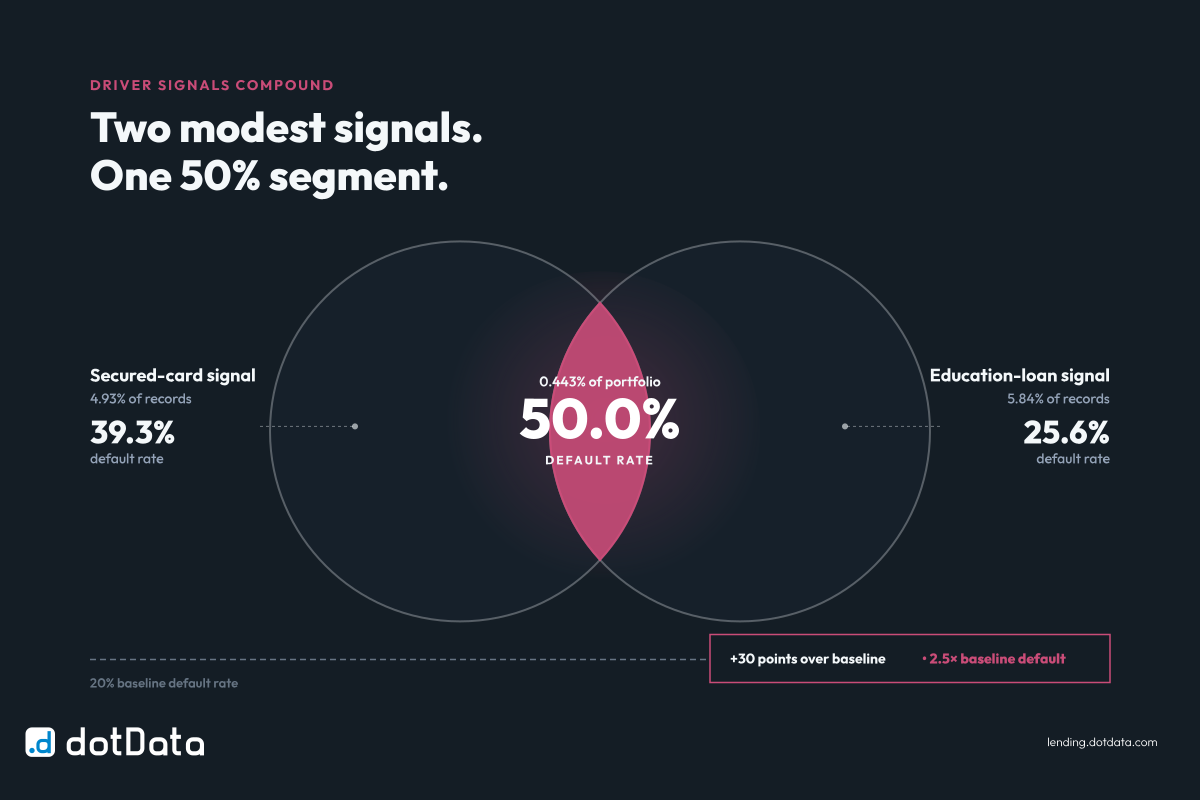
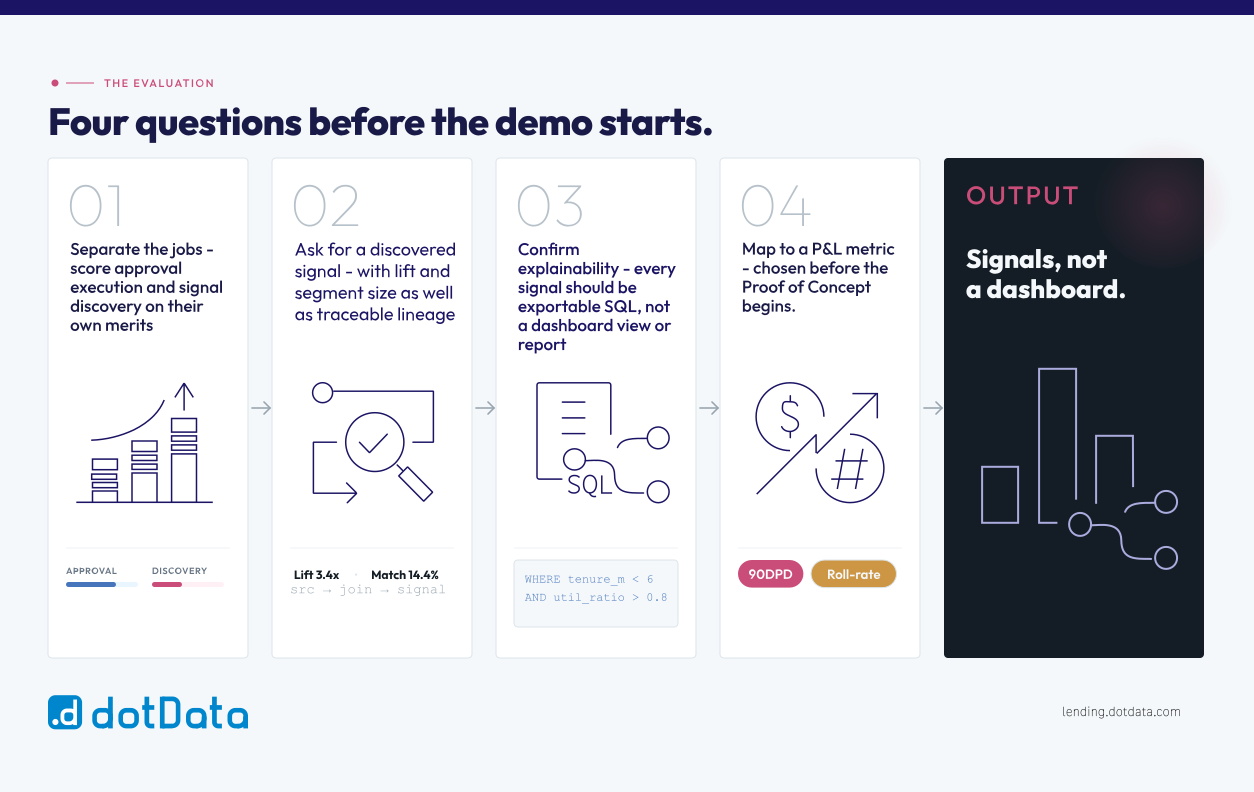
A segment that constitutes 4/1000 of the portfolio and experiences a default rate 2.5 times the baseline is not a candidate for model retraining. It is, instead, a decision related to pricing or knockout rules that a lender can finalize this week.
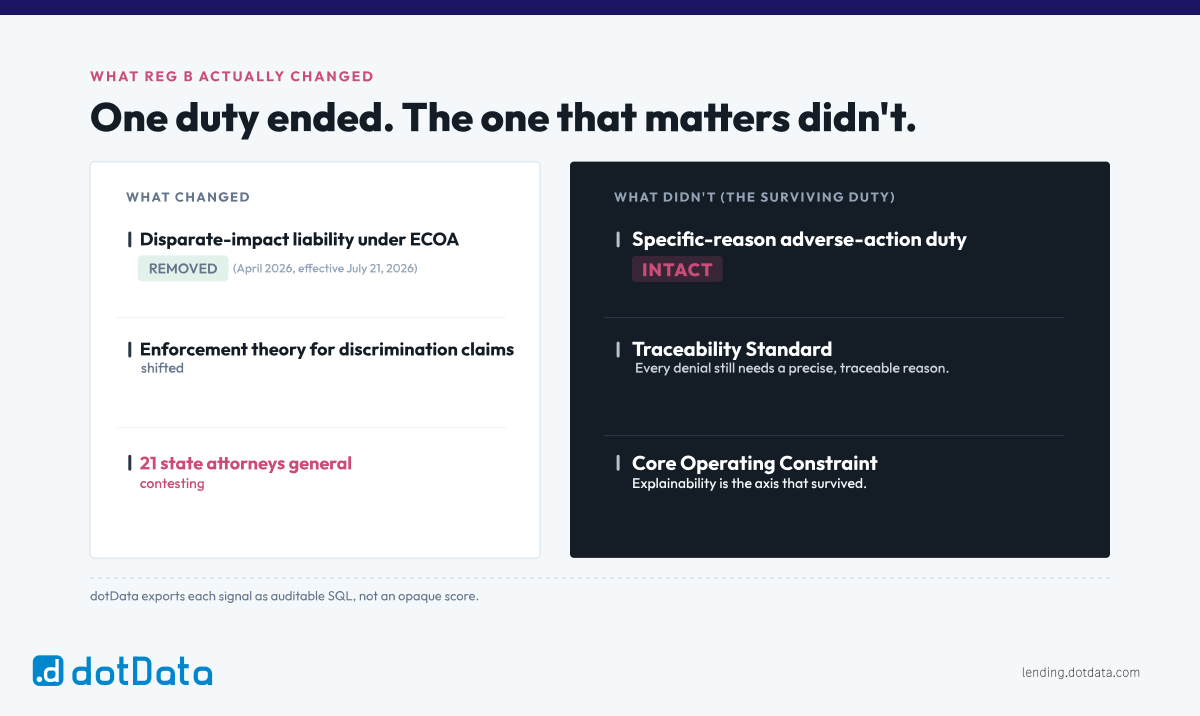
Certainly — yet ECOA and Regulation B stipulate that a specific and accurate rationale must be provided for every adverse action, no matter how complex the model may be. The amendment to Regulation B in April 2026, effective from July 21, 2026, has removed disparate-impact liability under ECOA; however, the duty to explain adverse actions and maintain strict regulatory compliance has not been altered. Therefore, a lender employing an AI agent or AI models for loan approvals must still furnish a precise reason to each applicant who is denied.
It is tempting to read “disparate impact eliminated” as a lighter compliance load. That reading is wrong. The amended Regulation B changed the enforcement theory the Bureau uses for discrimination claims, and 21 state attorneys general are already contesting the change — but the bar for explaining a denial did not move. Lenders must satisfy all regulatory requirements and perform routine compliance checks on their decision logic.
Although the CFPB withdrew its AI adverse-action circulars in May 2025, ECOA and Regulation B continue to require lenders to provide specific reasons for adverse decisions. Legislation dictates the responsibility and places the burden on lenders, regardless of whether model complexity makes explanations harder to obtain.
This is where explainable signal infrastructure earns its place. Because dotData exports each discovered signal as auditable SQL rather than an opaque score, an underwriter or examiner can trace the exact variables behind a denial — the approach covered in Why ‘Glass Box’ Models Win. Explainability is still mandated after the rule change, and traceable logic is how a lender meets it.
Evaluate the alternative cost. A solitary non-compliant adverse-action notice may lead to an examiner’s finding, necessitate a remediation plan, and result in several months of increased scrutiny — or even a private lawsuit in the current environment. Establishing explainable signal infrastructure from the outset is the more economical option.
Evaluate each platform based on three distinct questions instead of relying on a single scorecard for speed and accuracy: what processes does it automate, what insights does it uncover, and is it capable of elucidating its results to an evaluator? A vendor that addresses the first question solely is marketing a decision engine rather than a discovery tool, regardless of the claims made in the presentation materials.
Vendor demos are built to answer the automation question. Ask a different one. Request a live example of a signal the system discovered — with a lift figure, a population-match percentage, and traceable lineage — rather than one the vendor’s team hand-built for the demo.
Positioned this way, the dotData Signal Intelligence Platform sits upstream of whatever approval or decisioning stack a lender already runs — the discovery layer that feeds it, not a replacement for it. The best AI-powered lending platforms worth shortlisting are those that can answer all three questions, a theme the wider AI in lending category returns to throughout the cluster.
Historically, traditional methods of underwriting relied heavily on manual underwriting, forcing lending teams to perform tedious data entry and repetitive tasks. Applicants would wait weeks for a decision while loan officers and a human underwriter collected paper pay stubs, audited bank statements, analyzed personal cash flow, reviewed tax returns, and pulled historical financial records.
This reliance on manual processes and manual effort created massive operational bottlenecks:
By leveraging intelligent automation, Gen AI, large language models, and natural language processing, modern lending platforms can handle automated data extraction and asset verification from disparate sources in seconds. This eliminates the friction of navigating multiple systems while maintaining strict data quality standards.
When modern platforms incorporate alternative data sources — such as utility payments, rental history, and real-time cash flow — they provide a complete picture to assess creditworthiness and accurately determine a borrower’s creditworthiness. Rather than relying on rigid rules that trigger an auto-decline, advanced AI loan approval solutions use automated risk assessment to streamline workflows, flag potential risks through system flags, and deliver faster approvals. The ultimate result for lenders is a clear path toward cost reduction, lower operational costs, maximized operational efficiency, and higher customer satisfaction.
AI loan approval represents the execution task. Acquiring it to mitigate losses leads to quicker processing of the same overlooked areas, particularly in a portfolio where aging vintages and an increasing number of severely delinquent loans render each inaccurately priced approval more expensive than the flow rate or recovery rebound can accommodate. Speed has never been the missing element.
Lenders that differentiate between the speed of approval and the discovery of signals — and who tackle explainability before the enforcement shift — approach the next evaluation with insights rather than just dashboards. This provides a due diligence edge, not a technological one, and is available to any lender willing to ask the essential questions before the demonstration starts.
AI loan underwriting is legal under ECOA and Regulation B; however, it requires lenders to provide specific reasons for denials. When a lender rejects a loan based on a model decision, it must still provide clear and understandable evidence for the decision, regardless of model complexity.
Simply answered – no. A lender may use a complex model, but is required to provide a specific, accurate reason for any denial. The CFPB withdrew its AI-specific circulars in 2025. Still, ECOA and Regulation B remain in effect, requiring an explanation for denials regardless of the underlying technology used to make the decision.
See where your existing models and scorecards have blind spots. Talk to dotData about signal discovery for your portfolio.
此内容由惯性聚合(RSS阅读器)自动聚合整理,仅供阅读参考。 原文来自 — 版权归原作者所有。