



惯性聚合 高效追踪和阅读你感兴趣的博客、新闻、科技资讯
阅读原文 在惯性聚合中打开

推荐订阅源

钛媒体:引领未来商业与生活新知
钛媒体:引领未来商业与生活新知
酷 壳 – CoolShell
酷 壳 – CoolShell
博客园_首页
Engineering at Meta
Engineering at Meta
量子位
A
About on SuperTechFans
阮一峰的网络日志
阮一峰的网络日志
Recent Announcements
博客园 - 司徒正美
V
Visual Studio Blog
H
Hackread – Cybersecurity News, Data Breaches, AI and More
The GitHub Blog
The GitHub Blog
freeCodeCamp Programming Tutorials: Python, JavaScript, Git & More
F
Fortinet All Blogs
Martin Fowler
Martin Fowler
腾讯CDC
Jina AI
Jina AI
C
Check Point Blog
H
Help Net Security
罗磊的独立博客
OSCHINA 社区最新新闻
OSCHINA 社区最新新闻
V
V2EX
爱范儿
爱范儿
I
InfoQ

Futurism

Tesla Investors Disturbed by Cybercab's Obvious Lack of Progress Oops! Many Tesla Cybercabs Actually Do Have Steering Wheels, Undercutting a Core Promise Lawyers Already Lining Up to Defend Victims of Cybercab Crashes Deranged Stalker Seizes Control of Woman's Tesla Software to Terrorize Her While Driving There's a Huge Economic Problem With Tesla's Cybercabs Tesla's Glitchy Cybercab Accidentally Lets Passengers Access Controls to Manually Drive the Car Using Virtual Joystick on In-Vehicle Screen Amazon Cargo Jet Crashes Just Feet From Parking Lot Full of Tesla Cybercabs, Killing Five It Turns Out That Drivers Absolutely Detest Those Giant Touchscreens They Put in Cars Now The People Maintaining Waymo's Self-Driving Cars Are Being Treated Horribly, Insider Claims Uber Abruptly Ends Operations in Africa, Abandoning Drivers and Riders Mid-Trip Tesla Driver Killed After Self-Driving Mode Stops in the Middle of a Highway Researchers Alarmed as GPS Readings Suddenly Veer Off by 33 Feet, Enough to Crash Self-Driving Cars Airline Defends Decision to Fly Two Full Sized Passenger Jets So Close to a Packed Stadium That They Nearly Grazed the Roof Uber Drivers Say Waymo Robotaxis Are Driving Down Their Pay Tesla "Ambassador" Melts Down Over "Horrible" Robotaxi Ride, Says He Had to Call an Uber After Total Self-Driving Failure Teslas Are Still Driving Into Oncoming Freight Trains Former Lyft Drivers Now Doing Menial Tasks for Their Waymo Overlords China Recalls Nearly Three Million Teslas Over Unsafe Door Handles Tesla Is Giving Up on Solar Roof Tiles as Elon Musk Leans Into Fossil Fuels Paramedics Now Rolling Up to Medical Emergencies in Flying Hovercraft Government Spending on Mass Transit Would Be Incredible for Small Towns, Study Finds Tesla Robotaxi With No Driver Spotted Smashing Through Traffic Barriers AI Billionaires Are So Greedy That They're Supercharging Sales of Yachts and Private Jets There's Pretty Much No Good Way to Fight an Electric Vehicle Fire, New Study Finds Hackers Created a Device That Can Take Over a Boeing 737 Jet's Autopilot Without Anyone Noticing Driver Pulls Up Directly to Firehouse When His Tesla Inexplicably Bursts Into Flames Transportation Secretary Announces That the Air Traffic Controller Crisis Is History Now That He's Hired Thousands of Epic Gamers Flock's Secret Surveillance Plan Will Make You Gasp Tesla Explosion Sends Injured Firefighters to the Hospital Labor Union Sues Over Self-Driving Trucks
You’ll Gasp When You Hear How Many Chinese EVs You Can Bu...
Frank Landym · 2026-05-03 · via Futurism

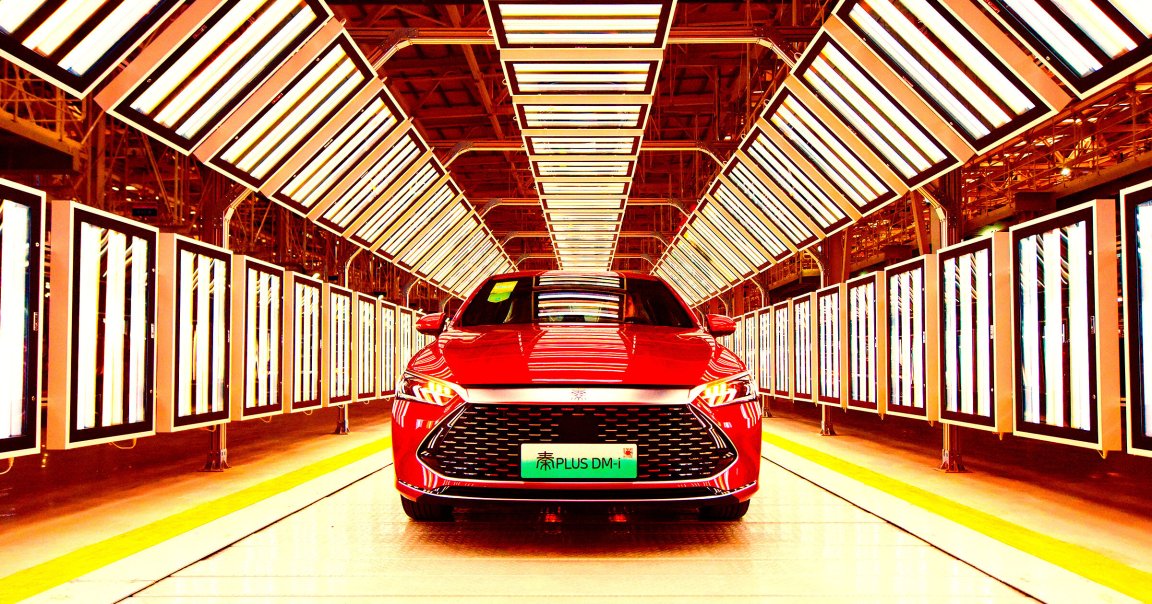
A red BYD Qin PLUS DM-i car is positioned centrally in a brightly lit inspection tunnel, surrounded by numerous rectangular light panels on the walls and ceiling, creating a symmetrical and futuristic atmosphere. The car's front grille and headlights are prominently visible, with the license plate displaying "PLUS DM-i."

VCG/VCG via Getty Images/Futurism

Sign up to see the future, today

Can’t-miss innovations from the bleeding edge of science and tech

American automakers have some explaining to do.

According to new reporting from Reuters, you could buy up to five Chinese electric vehicles for the average price of a single new car in the US.

It’s a startling comparison that encapsulates China’s unquestionable dominance in the EV space, and indeed its position as the largest car manufacturing nation in the world. The other side of that equation is how US automakers have rested on their laurels, content to push overly large and expensive cars on their customers — not to mention the US’s foremost EV company, Tesla, still being caught in a downward spiral under Elon Musk’s erratic leadership.

Let’s break down that headline-fueling comparison. Reuters cites Kelley Blue Book data showing that the average price of a new set of wheels in the US in March was $51,456. (Go figure that the percentage of Americans taking out predatory 84 month car loans is higher than ever.)

In China, meanwhile, there’re more than 200 EVs and hybrids for sale at less than $25,000 according to data from DCar cited by Reuters.

Of this category, the five best selling Chinese EVs that start under $12,000 could all be bought for around that beefy $51,456 price tag. These cars won’t match up in size to behemoth US vehicles, but they’re more than capable — and arguably just as stylish as well.

The crème de la crème among this Cheap Five is the Geely EX2, a subcompact hatchback that was the top-selling car of any kind in China last year. It sells for just $10,060, and for that you get all the bells and whistles you’d expect from a modern car — giant infotainment screen and all — and a surprisingly roomy interior. The top trim has a battery range of 314 miles, based on Chinese testing standards.

“When you get in, you don’t feel like you are in a small car,” ​auto analyst Felipe Munoz told Reuters. “It feels better in terms of quality and bigger in terms of size.”

Mike Floyd at Motor Trend agreed. “We can say anecdotally that it’s borderline huge inside for a car of its exterior dimensions,” Floyd wrote. “I’m six feet tall, and I sat in the back during one of the autocross runs and had several inches of legroom and a couple of inches of headroom. Super impressive.”

In other words, it’s almost mindblowing how much new car you’re getting in China for just ten grand. Stateside, $10,000 might get you a ten year old, gas guzzling sedan with over 100,000 miles under its belt.

It’s also a testament to the diversity of sizes on offer from Chinese automakers, whereas American automakers have narrowed their fleets to comprising ever larger cars. The US big three automakers have almost entirely abandoned selling sedans; Ford and Chevy don’t sell any sedan models at all.

Caution should be taken not to breathlessly pour praise on Chinese automakers, since they also have their ups and downs — though the numbers here speak for themselves — but it’s a sobering reality for US companies nonetheless.

More on EVs: Tesla Quietly Buys Mysterious $2 Billion Entity