



惯性聚合 高效追踪和阅读你感兴趣的博客、新闻、科技资讯
阅读原文 在惯性聚合中打开

推荐订阅源

Martin Fowler
Martin Fowler
Engineering at Meta
Engineering at Meta
钛媒体:引领未来商业与生活新知
钛媒体:引领未来商业与生活新知
阮一峰的网络日志
阮一峰的网络日志
奇客Solidot–传递最新科技情报
奇客Solidot–传递最新科技情报
量子位
Jina AI
Jina AI
Microsoft Azure Blog
博客园_首页
L
LangChain Blog
A
About on SuperTechFans
人人都是产品经理
人人都是产品经理
freeCodeCamp Programming Tutorials: Python, JavaScript, Git & More
美团技术团队
博客园 - 三生石上(FineUI控件)
N
Netflix TechBlog - Medium
D
DataBreaches.Net
P
Proofpoint News Feed
小众软件
小众软件
Vercel News
Vercel News
T
The Blog of Author Tim Ferriss
WordPress大学
WordPress大学
雷峰网
雷峰网
G
Google Developers Blog

Victor Tangermann Archives - Futurism

AI Slop YouTube Channel Glitches Out in a Way So Bizarre That It’s Vaguely Disturbing Double Murder Suspect Asked ChatGPT How to Hide Body in Dumpster The White House Suddenly Seems Pretty Terrified of Anthropic Democrat and Republican Voters United on Key Issue: Hatred of Data Centers NASA’s Moon Landing Schedule Slipping Horrendously Under Trump NASA Fires Up Futuristic Plasma Thruster Designed to Take Us to Mars Toilet Maker Spikes in Value as It Flushes Money Into AI New England Journal of Medicine Retracts Paper Because Photo of Patient’s Insides Was Garbled by AI Eric Trump’s Crypto Company Is Falling Into Total Disaster Gen Z Is Turning Against AI in an Incredible Way If OpenAI Loses This Trial, It Could Effectively Be Eliminated in Its Current Form D4vd Bought Chainsaws and Body Bag on Amazon After Murder, Prosecutors Say, in the Most Grisly Case of Internet Brain Rot We’ve Ever Heard There’s a Hidden Shortcut to Mars, Scientific Paper Finds Reddit Intentionally Breaks Its Mobile Website, Demanding Users Download Its App Instead Uninstalls of ChatGPT Are Spiking at the Worst Time Imaginable for OpenAI Another Military UFO Guy Just Died Sam Altman Caught in What May Be His Most Spectacular Lie Yet Scientists Scan Gigantic Structure Hiding Behind Our Galaxy If You Thought Mark Zuckerberg Was a Pathetic Little Worm Before, Wait Until You Hear About His Latest Move OpenAI in Shambles as IPO Looms Scientists Experimenting With Quantum Effect That Some Fear Could Cause Chain Reaction That Ends Entire Universe Weird Things Happen When You Give AI Agents Money and Let Them Spend It Bitcoin Developers Are Debating a Move That Could Send Crypto Markets Into a Tailspin Video Shows NASA Astronaut Struggling to Walk After Journey Around the Moon Sam Altman Issues Grim Apology Top Medical Journal Publishes Searing Article Warning Against Medical AI New Browser Plugin Adds Typos to Your AI-Generated Emails to Make Them Look Real New AI-Powered Robot Can Destroy Human Champions at Ping Pong Devious New AI Tool “Clones” Software So That the Original Creator Doesn’t Hold a Copyright Over the New Version NASA Planning to Set First-Ever Fire on the Surface of the Moon
Visitor Approaches From the Edge of the Solar System
Victor Tangermann · 2026-05-10 · via Victor Tangermann Archives - Futurism

Comet C/2025 R3 PANSTARRS, which was only discovered last year, has been visible to stargazers in the northern hemisphere for weeks now.

Getty Images

Sign up to see the future, today

Can’t-miss innovations from the bleeding edge of science and tech

For thousands of years, astronomers have watched Halley’s Comet come and go, becoming visible to the naked eye every 72 to 80 years. That makes it a short-period comet, whose highly elliptical orbit takes it beyond Neptune before making its decades-long return. (The last time we caught a glimpse of the comet was in 1986, while its next appearance is slated for mid-2061.)

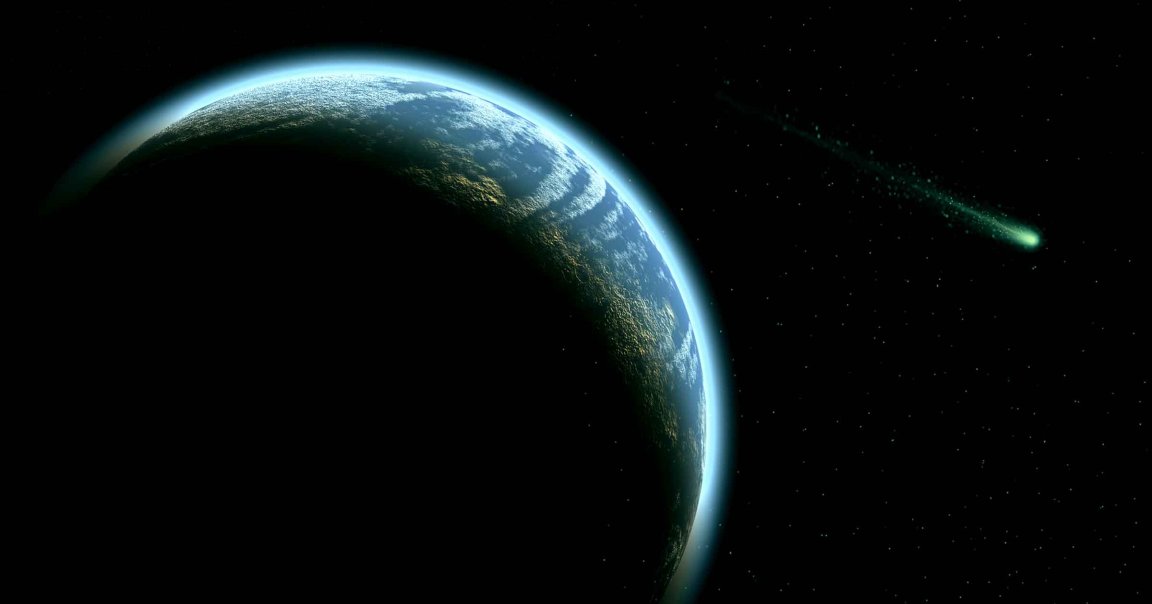
Other comets take far longer to orbit the Sun. As the New York Times reports, comet C/2025 R3 PANSTARRS, which was only discovered last year, has been visible to stargazers in the northern hemisphere for weeks now. However, once it’s on its way out, it’s not expected to return for another 170,000 years.

It’s origin is of particular interest to astronomers, who believe it came from the Oort Cloud, a giant spherical shell that blankets the solar system, representing the outermost edge of our star’s gravitational influence. Researchers believe it’s chock full of icy and rocky objects like C/2025 R3 PANSTARRS.

Long-period comets are an exceedingly rare sight — and an exciting opportunity to get a precious glimpse of the furthest reaches of the solar system.

“Whenever we spot them, it’s the first time we’ve seen them, and it’s also the only time that we will see them in our lifetimes,” Te Whatu Stardome in New Zealand resident astronomer Josh Aoraki told the NYT.

Whether future civilizations will be able to see the visitor again isn’t guaranteed. As the Perth Observatory’s Matt Woods points out in a recent guide, gravitational interactions with the solar system’s planets can eject comets form our star system altogether.

Given its suspected origins, studying a “dirty snowball” comet like C/2025 R3 PANSTARRS could provide us with tantalizing clues about the earliest days of the solar system. Current theories suggest that tiny chunks of leftover planet-making material dating back billions of years, called planetesimals, were driven away from the Sun when the planets formed. While some left the system entirely, others were trapped between a region where galactic influences balanced out with the Sun’s gravity, a region that’s now known as the Oort cloud.

The movement of these objects may have even played a role in delivering the necessary building blocks that allowed life on Earth to form, according to Woods.

In other words, there are plenty of reasons to get out the telescope before C/2025 R3 PANSTARRS is too distant to be visible to amateur astronomers.

“So while C/2025 R3 PANSTARRS might appear as little more than a faint, fuzzy patch through binoculars, it represents something far more significant,” Woods wrote. “It is a relic from the birth of the Solar System, a frozen archive of cosmic history, and for a brief moment, it’s visible from right here on Earth.”

“Not bad for something you can spot just after sunset,” he added.

More on comets: Please Resist the Urge to Drink the Melted Sludge From 3I/ATLAS