
惯性聚合 高效追踪和阅读你感兴趣的博客、新闻、科技资讯
阅读原文 在惯性聚合中打开

推荐订阅源

月光博客
月光博客
Martin Fowler
Martin Fowler
Last Week in AI
Last Week in AI
罗磊的独立博客
阮一峰的网络日志
阮一峰的网络日志
博客园 - 【当耐特】
奇客Solidot–传递最新科技情报
奇客Solidot–传递最新科技情报
博客园 - 三生石上(FineUI控件)
S
SegmentFault 最新的问题
V
Visual Studio Blog
Hugging Face - Blog
Hugging Face - Blog
雷峰网
雷峰网
博客园_首页
人人都是产品经理
人人都是产品经理
量子位
美团技术团队
The Cloudflare Blog
小众软件
小众软件
WordPress大学
WordPress大学
有赞技术团队
有赞技术团队
M
MIT News - Artificial intelligence
Microsoft Security Blog
D
DataBreaches.Net
博客园 - Franky

Victor Tangermann Archives - Futurism

Grimly Cyberpunk Video Shows Ukrainian Soldiers Leaning Out of Propeller Plane to Obliterate Drones With Rifles AI Slop YouTube Channel Glitches Out in a Way So Bizarre That It’s Vaguely Disturbing Double Murder Suspect Asked ChatGPT How to Hide Body in Dumpster The White House Suddenly Seems Pretty Terrified of Anthropic Democrat and Republican Voters United on Key Issue: Hatred of Data Centers NASA’s Moon Landing Schedule Slipping Horrendously Under Trump NASA Fires Up Futuristic Plasma Thruster Designed to Take Us to Mars Toilet Maker Spikes in Value as It Flushes Money Into AI New England Journal of Medicine Retracts Paper Because Photo of Patient’s Insides Was Garbled by AI Eric Trump’s Crypto Company Is Falling Into Total Disaster Gen Z Is Turning Against AI in an Incredible Way If OpenAI Loses This Trial, It Could Effectively Be Eliminated in Its Current Form D4vd Bought Chainsaws and Body Bag on Amazon After Murder, Prosecutors Say, in the Most Grisly Case of Internet Brain Rot We’ve Ever Heard Reddit Intentionally Breaks Its Mobile Website, Demanding Users Download Its App Instead Uninstalls of ChatGPT Are Spiking at the Worst Time Imaginable for OpenAI Another Military UFO Guy Just Died Sam Altman Caught in What May Be His Most Spectacular Lie Yet Scientists Scan Gigantic Structure Hiding Behind Our Galaxy If You Thought Mark Zuckerberg Was a Pathetic Little Worm Before, Wait Until You Hear About His Latest Move OpenAI in Shambles as IPO Looms Scientists Experimenting With Quantum Effect That Some Fear Could Cause Chain Reaction That Ends Entire Universe Weird Things Happen When You Give AI Agents Money and Let Them Spend It Bitcoin Developers Are Debating a Move That Could Send Crypto Markets Into a Tailspin Video Shows NASA Astronaut Struggling to Walk After Journey Around the Moon Sam Altman Issues Grim Apology Top Medical Journal Publishes Searing Article Warning Against Medical AI New Browser Plugin Adds Typos to Your AI-Generated Emails to Make Them Look Real New AI-Powered Robot Can Destroy Human Champions at Ping Pong Devious New AI Tool “Clones” Software So That the Original Creator Doesn’t Hold a Copyright Over the New Version NASA Planning to Set First-Ever Fire on the Surface of the Moon
There’s a Hidden Shortcut to Mars, Scientific Paper Finds
Victor Tange · 2026-04-30 · via Victor Tangermann Archives - Futurism

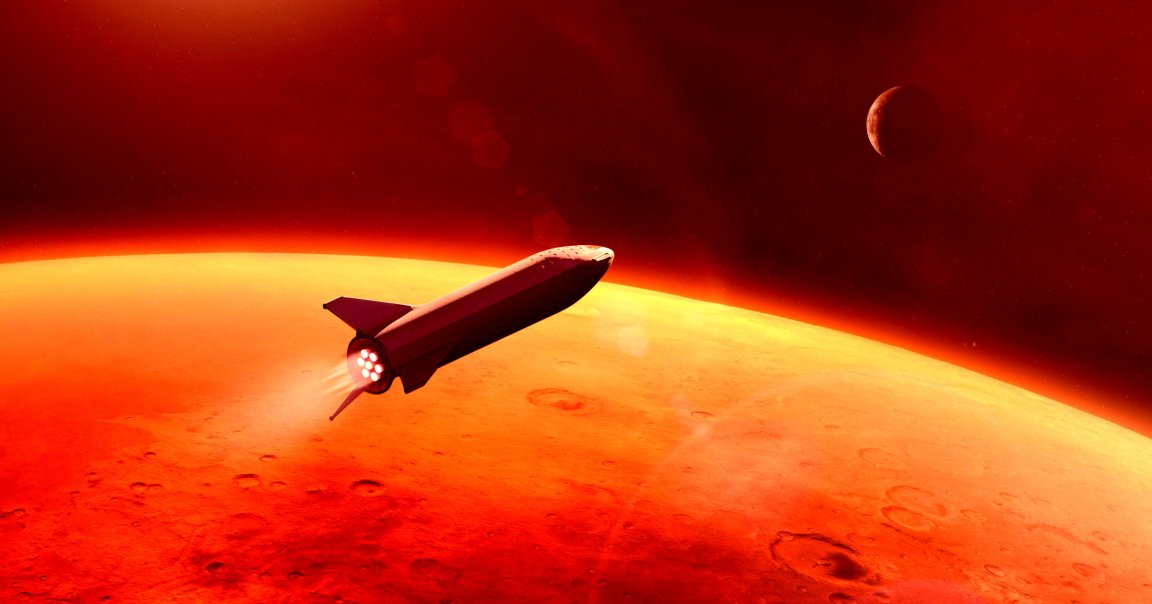
According to a new study, there might be a way to cut the journey to Mars down significantly by considering the trajectories of asteroids.

SpaceX / Futurism

Sign up to see the future, today

Can’t-miss innovations from the bleeding edge of science and tech

It takes an average of 12.5 minutes for light to cover the distance between the Earth and Mars.

Using currently available propulsion methods — and at a time when both planets’ orbits align perfectly, a “Mars opposition” that only happens every 26 months or so — traveling to the Red Planet could still take anywhere from five to 11 months.

But according to a new study published in the journal Acta Astronautica, there might be a way to cut the journey down significantly. Author Marcelo de Oliveira Souza, a cosmologist at the State University of Northern Rio de Janeiro in Brazil, considered the trajectory of asteroids, calculating a perfectly optimized route that he says could bring a round trip to Mars down to just 153 days.

He examined the flight path of asteroid 2001 CA21, which crossed the orbits of both Earth and Mars at a steady five-degree tilt. He then calculated this journey for the upcoming Mars oppositions over the next five years, concluding that in 2031, the planets align so perfectly that it “supports two complete sub-year round-trip missions consistent with the CA21-anchored plane.”

“The 2031 opposition emerges as uniquely favorable under the CA21-plane constraint, yielding two outbound Earth to Mars trajectories (33 and 56 days) and corresponding dynamically consistent return legs forming complete round-trip architectures of approximately 153 and 226 days total duration,” the paper reads.

Naturally, there are plenty of other major factors that will determine how long astronauts will have to spend to get to Mars, from propulsion methods and fuel capacity to the total mass of the payload.

Despite decades of extensive research, covering the average distance of 140 million miles — orders of magnitude farther than the Moon — with a human crew remains a distant goal. That’s not to mention the need to find shelter until the next Mars opposition, to ensure that the crew can make it back to Earth in one piece.

Yet as the latest paper suggests, even something as simple as the orbital plane of an asteroid could allow us to optimize our journeys there — a glimmer of hope that our first in-person visit isn’t quite as distant as it may seem.

More on trips to Mars: Scientists Puzzled by Huge Shadowy Blight Spreading Across Surface of Mars