




惯性聚合 高效追踪和阅读你感兴趣的博客、新闻、科技资讯
阅读原文 在惯性聚合中打开

推荐订阅源

阮一峰的网络日志
阮一峰的网络日志
Apple Machine Learning Research
量子位
D
DataBreaches.Net
云风的 BLOG
云风的 BLOG
博客园 - 聂微东
博客园_首页
D
Docker
博客园 - 叶小钗
S
SegmentFault 最新的问题
大猫的无限游戏
大猫的无限游戏
钛媒体:引领未来商业与生活新知
钛媒体:引领未来商业与生活新知
J
Java Code Geeks
H
Hackread – Cybersecurity News, Data Breaches, AI and More
A
About on SuperTechFans
博客园 - 三生石上(FineUI控件)
F
Fortinet All Blogs
小众软件
小众软件
aimingoo的专栏
aimingoo的专栏
爱范儿
爱范儿
腾讯CDC
罗磊的独立博客
雷峰网
雷峰网
博客园 - Franky

Hugging Face - Blog

Waypoint-1.5: Higher-Fidelity Interactive Worlds for Everyday GPUs ALTK‑Evolve: On‑the‑Job Learning for AI Agents Safetensors is Joining the PyTorch Foundation Holo3: Breaking the Computer Use Frontier Any Custom Frontend with Gradio's Backend A New Framework for Evaluating Voice Agents (EVA) Bringing Robotics AI to Embedded Platforms: Dataset Recording, VLA Fine‑Tuning, and On‑Device Optimizations One-Shot Any Web App with Gradio's gr.HTML CUGA on Hugging Face: Democratizing Configurable AI Agents New in llama.cpp: Model Management Building Deep Research: How we Achieved State of the Art OVHcloud on Hugging Face Inference Providers 🔥 20x Faster TRL Fine-tuning with RapidFire AI Building for an Open Future - our new partnership with Google Cloud Aligning to What? Rethinking Agent Generalization in MiniMax M2 Building a Healthcare Robot from Simulation to Deployment with NVIDIA Isaac Sentence Transformers is joining Hugging Face! Unlock the power of images with AI Sheets Supercharge your OCR Pipelines with Open Models Google Cloud C4 Brings a 70% TCO improvement on GPT OSS with Intel and Hugging Face Get your VLM running in 3 simple steps on Intel CPUs Nemotron-Personas-India: Synthesized Data for Sovereign AI Introducing RTEB: A New Standard for Retrieval Evaluation Accelerating Qwen3-8B Agent on Intel® Core™ Ultra with Depth-Pruned Draft Models VibeGame: Exploring Vibe Coding Games Nemotron-Personas-Japan: ソブリン AI のための合成データセット Swift Transformers Reaches 1.0 – and Looks to the Future Smol2Operator: Post-Training GUI Agents for Computer Use SyGra: The One-Stop Framework for Building Data for LLMs and SLMs Gaia2 and ARE: Empowering the community to study agents
Hugging Face Machine Learning Demos on arXiv
Abubakar Abid, Omar Sanseviero, Pedro Cuenca · 2022-11-17 · via Hugging Face - Blog

Back to Articles

Abubakar Abid's avatar

Omar Sanseviero's avatar

Pedro Cuenca's avatar

We’re very excited to announce that Hugging Face has collaborated with arXiv to make papers more accessible, discoverable, and fun! Starting today, Hugging Face Spaces is integrated with arXivLabs through a Demo tab that includes links to demos created by the community or the authors themselves. By going to the Demos tab of your favorite paper, you can find links to open-source demos and try them out immediately 🔥
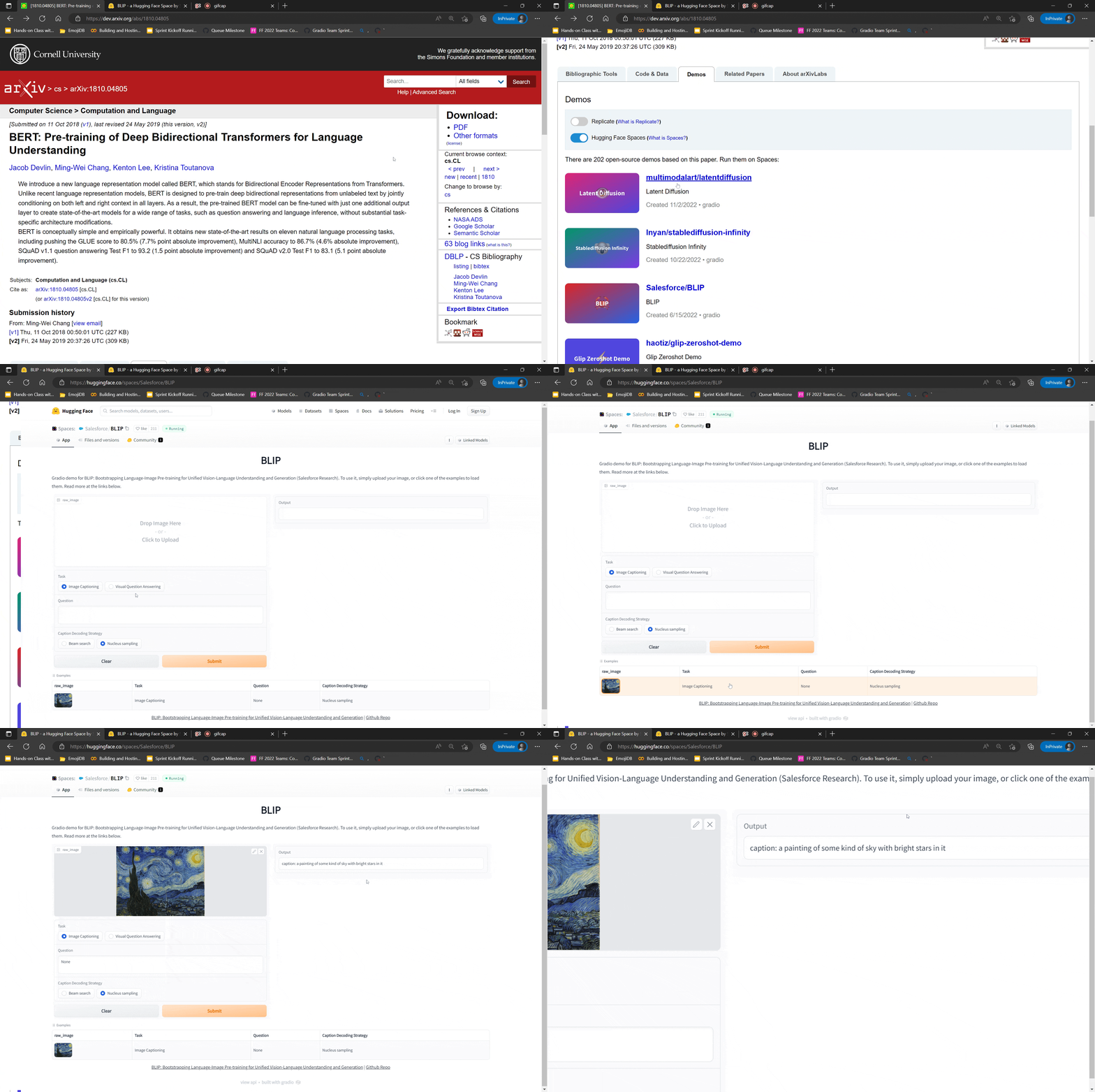
You can now find interactive demos under ArXiv papers

Since its launch in October 2021, Hugging Face Spaces has been used to build and share over 12,000 open-source machine learning demos crafted by the community. With Spaces, Hugging Face users can share, explore, discuss models, and build interactive applications that enable anyone with a browser to try them out without having to run any code. These demos are built using open-source tools such as the Gradio and Streamlit Python libraries, and leverage models and datasets available on the Hugging Face Hub.

Thanks to the latest arXiv integration, users can now find the most popular demos for a paper on its arXiv abstract page. For example, if you want to try out demos of the BERT language model, you can go to the BERT paper’s arXiv page, and navigate to the demo tab. You will see more than 200 demos built by the open-source community -- some demos simply showcase the BERT model, while others showcase related applications that modify or use BERT as part of larger pipelines, such as the demo shown above.
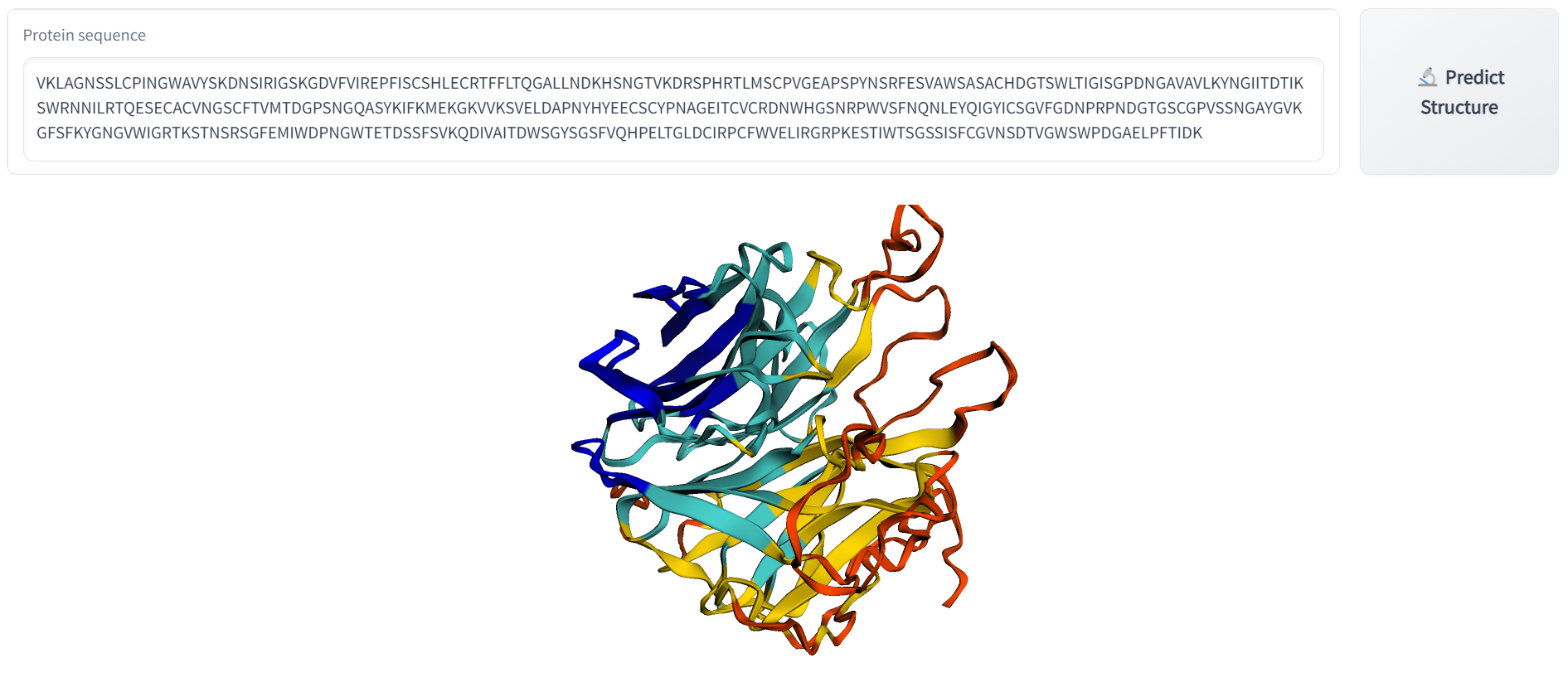
An interactive demo of a protein structure model, available on Hugging Face Spaces

Demos allow a much wider audience to explore machine learning as well as other fields in which computational models are built, such as biology, chemistry, astronomy, and economics. They help increase the awareness and understanding of how models work, amplify the visibility of researchers' work, and allow a more diverse audience to identify and debug biases and other issues. The demos increase the reproducibility of research by enabling others to explore the paper's results without having to write a single line of code! We are thrilled about this integration with arXiv and can’t wait to see how the research community will use it to improve communication, dissemination and interpretability.