
惯性聚合 高效追踪和阅读你感兴趣的博客、新闻、科技资讯
阅读原文 在惯性聚合中打开

推荐订阅源

S
SegmentFault 最新的问题
博客园 - 三生石上(FineUI控件)
WordPress大学
WordPress大学
博客园 - 【当耐特】
月光博客
月光博客
Vercel News
Vercel News
D
Docker
I
InfoQ
Apple Machine Learning Research
博客园 - 叶小钗
MongoDB | Blog
MongoDB | Blog
GbyAI
GbyAI
有赞技术团队
有赞技术团队
雷峰网
雷峰网
博客园 - 聂微东
小众软件
小众软件
Y
Y Combinator Blog
腾讯CDC
L
LangChain Blog
The GitHub Blog
The GitHub Blog
宝玉的分享
宝玉的分享
Stack Overflow Blog
Stack Overflow Blog
大猫的无限游戏
大猫的无限游戏
T
The Blog of Author Tim Ferriss

Hugging Face - Blog

Waypoint-1.5: Higher-Fidelity Interactive Worlds for Everyday GPUs ALTK‑Evolve: On‑the‑Job Learning for AI Agents Safetensors is Joining the PyTorch Foundation Holo3: Breaking the Computer Use Frontier Any Custom Frontend with Gradio's Backend A New Framework for Evaluating Voice Agents (EVA) Bringing Robotics AI to Embedded Platforms: Dataset Recording, VLA Fine‑Tuning, and On‑Device Optimizations One-Shot Any Web App with Gradio's gr.HTML CUGA on Hugging Face: Democratizing Configurable AI Agents New in llama.cpp: Model Management Building Deep Research: How we Achieved State of the Art OVHcloud on Hugging Face Inference Providers 🔥 20x Faster TRL Fine-tuning with RapidFire AI Building for an Open Future - our new partnership with Google Cloud Aligning to What? Rethinking Agent Generalization in MiniMax M2 Building a Healthcare Robot from Simulation to Deployment with NVIDIA Isaac Sentence Transformers is joining Hugging Face! Unlock the power of images with AI Sheets Supercharge your OCR Pipelines with Open Models Google Cloud C4 Brings a 70% TCO improvement on GPT OSS with Intel and Hugging Face Get your VLM running in 3 simple steps on Intel CPUs Nemotron-Personas-India: Synthesized Data for Sovereign AI Introducing RTEB: A New Standard for Retrieval Evaluation Accelerating Qwen3-8B Agent on Intel® Core™ Ultra with Depth-Pruned Draft Models VibeGame: Exploring Vibe Coding Games Nemotron-Personas-Japan: ソブリン AI のための合成データセット Swift Transformers Reaches 1.0 – and Looks to the Future Smol2Operator: Post-Training GUI Agents for Computer Use Gaia2 and ARE: Empowering the community to study agents Scaleway on Hugging Face Inference Providers 🔥
SyGra: The One-Stop Framework for Building Data for LLMs ...
Bidyapati Pradhan, Vipul Mittal, Amit Kumar Saha, Surajit Dasgup · 2025-09-22 · via Hugging Face - Blog

Back to Articles

When we think about building a model - be it a Large Language Model (LLM) or a Small Language Model (SLM) - the first thing we need is data. While a vast amount of open data is available, it rarely comes in the exact format required to train or align models. In practice, we often face scenarios where the raw data isn't enough. We need data that is more structured, domain-specific, complex, or aligned with the task at hand. Let's look at some common situations:

Complex Scenarios Missing

 You start with a simple dataset, but the model fails on advanced reasoning tasks. How do you generate more complex datasets to strengthen performance?

Knowledge Base to Q&A

 You already have a knowledge base, but it's not in Q&A format. How can you transform it into a usable question-answering dataset?

From SFT to DPO

 You've prepared a supervised fine-tuning (SFT) dataset. But now you want to align your model using Direct Preference Optimization (DPO). How can you generate preference pairs?

Depth of Questions

 You have a Q&A dataset, but the questions are shallow. How can you create in-depth, multi-turn, or reasoning-heavy questions?

Domain-Specific Mid-Training

 You possess a massive corpus but need to filter and curate data for mid-training on a specific domain.

PDFs and Images to Documents

 Your data lives in PDFs or images, and you need to convert them into structured documents for building a Q&A system.

Boosting Reasoning Ability

 You already have reasoning datasets, but want to push models toward better "thinking tokens" for step-by-step problem-solving.

Quality Filtering

 Not all data is good data. How do you automatically filter out poor-quality samples and keep only the high-value ones?

Small to Large Contexts

 Your dataset has small chunks of context, but you want to build larger-context datasets optimized for RAG (Retrieval-Augmented Generation) pipelines.

Cross-Language Conversion

 You have German datasets but need to translate, adapt, and repurpose them into English Q&A systems. And the list goes on. The needs around data building never end when working with modern AI models.


Enter SyGra: One Framework for Every Data Challenge

This is where SyGra comes in. SyGra is a low-code/no-code framework designed to simplify dataset creation, transformation, and alignment for LLMs and SLMs. Instead of writing complex scripts and pipelines, you can focus on prompt engineering, while SyGra takes care of the heavy lifting.
Key Features of SyGra:
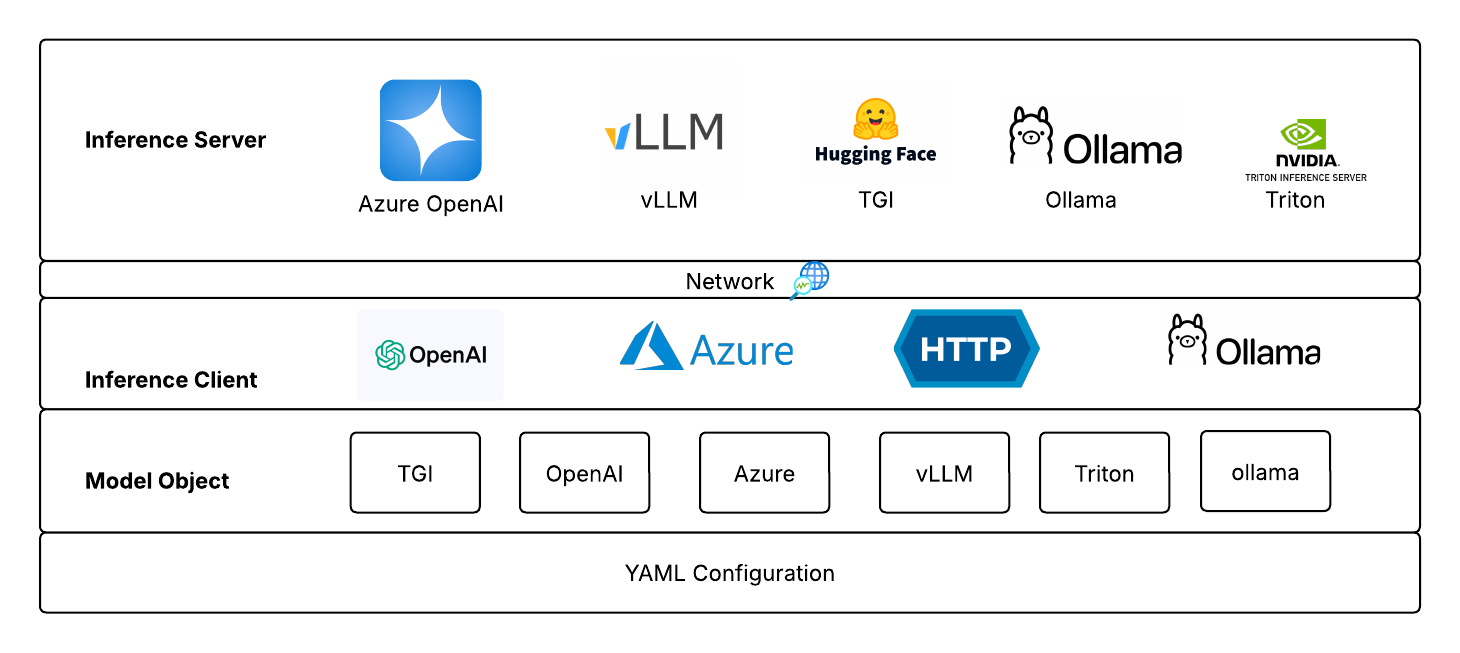
  • ✅ Python Library + Framework: Easy to integrate into existing ML workflows with SyGra library.
  • ✅ Supports Multiple Inference Backends: Works seamlessly with vLLM, Hugging Face TGI, Triton, Ollama, and more.
  • ✅ Low-Code/No-Code: Build complex datasets without heavy engineering effort.
  • ✅ Flexible Data Generation: From Q&A to DPO, reasoning to multi-language, SyGra adapts to your use case.


Why SyGra Matters

Data is the foundation of AI. The quality, diversity, and structure of your data often matter more than model architecture tweaks. By enabling flexible and scalable dataset creation, SyGra helps teams:

  • Accelerate model alignment (SFT, DPO, RAG pipelines).
  • Save engineering time with plug-and-play workflows.
  • Improve model robustness across complex and domain-specific tasks.
  • Reduce manual dataset curation effort.
  • Note: An example implementation can be found at https://github.com/ServiceNow/SyGra/blob/main/docs/tutorials/image_to_qna_tutorial.md
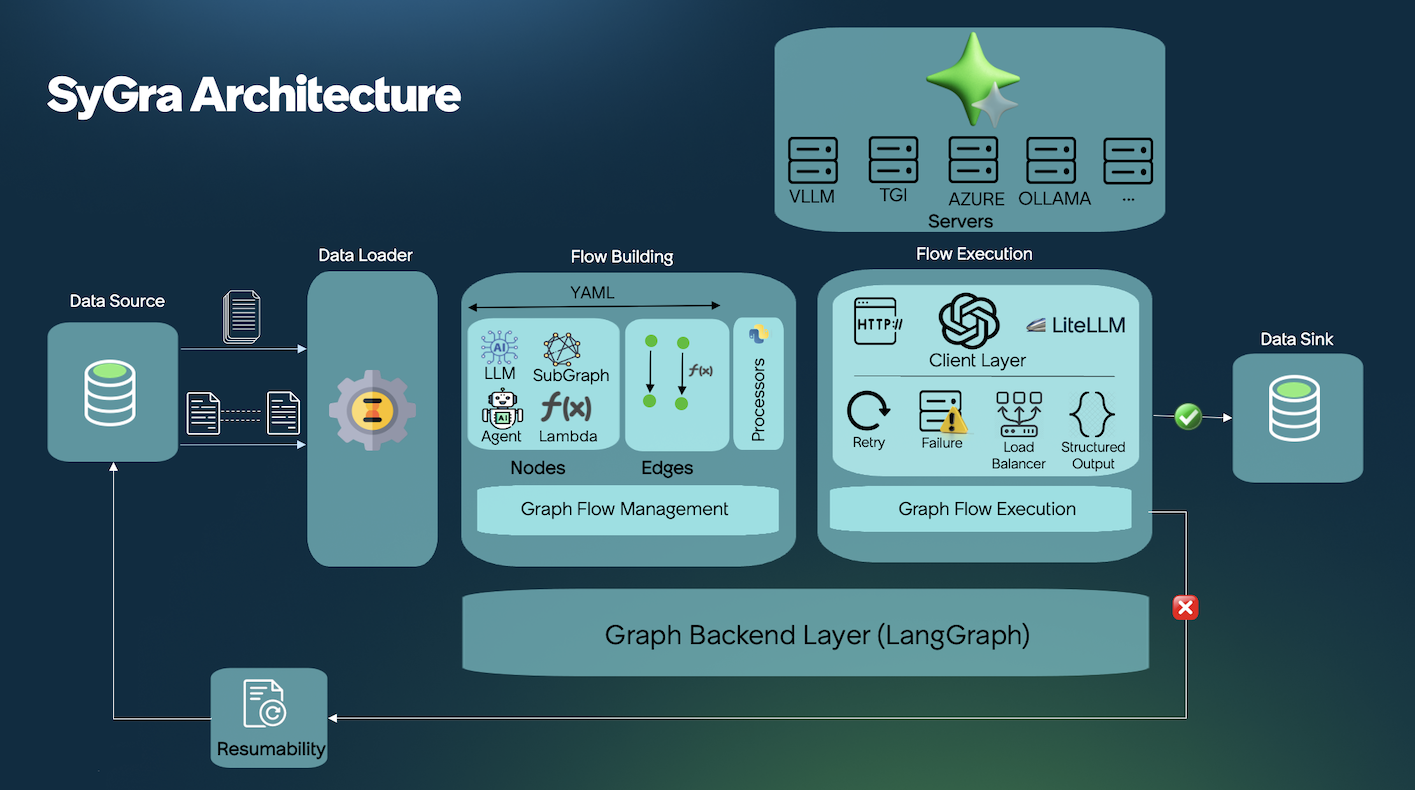
    SyGra Architecture

    Few Example Task https://github.com/ServiceNow/SyGra/tree/main/tasks/examples

    Final Thoughts

    The journey of building and refining datasets never ends. Each use case brings new challenges - from translation and knowledge base conversion to reasoning enhancement and domain filtering. With SyGra, you don't have to reinvent the wheel every time. Instead, you get a unified framework that empowers you to generate, filter, and align data for your models - so you can focus on what really matters: building smarter AI systems.

    References

    • Paper Link: https://arxiv.org/abs/2508.15432
    • Documentation: https://servicenow.github.io/SyGra/
    • Git Repository: https://github.com/ServiceNow/SyGra