



The proliferation of multimodal foundation models has enabled new capabilities in image recognition. However, different models have different strengths. Data scientists can struggle to determine which models to consider for their application—or even how to assess them. That’s why my colleagues and I at the University of Washington developed “Task Me Anything.”
This innovative solution allows users to generate bespoke benchmarks tailored to their needs.
I recently presented my work to an audience of Snorkel researchers and engineers. You can watch the entire talk (embedded below). I have also summarized the main points here.
The AI community has developed a variety of benchmarks to measure multimodal model performance. This can make it difficult for data scientists to identify the right benchmark for their task—never mind the right model.
“Task Me Anything” tackles this head-on by providing a user-centric generative benchmark creation system.

Key features:
This approach produces benchmarks aligned with the users’ unique requirements, easing the process of selecting the right model for the project, and then prioritizing data development for fine-tuning.
Using Task Me Anything follows a four-step process—from determining user queries to evaluating the model.
Users can run through this pipeline multiple times to fulfill different needs. They may use their first run to select which model most closely matches their use case and begin fine-tuning it. They may use later runs to identify where their model falls short and prioritize data development efforts.
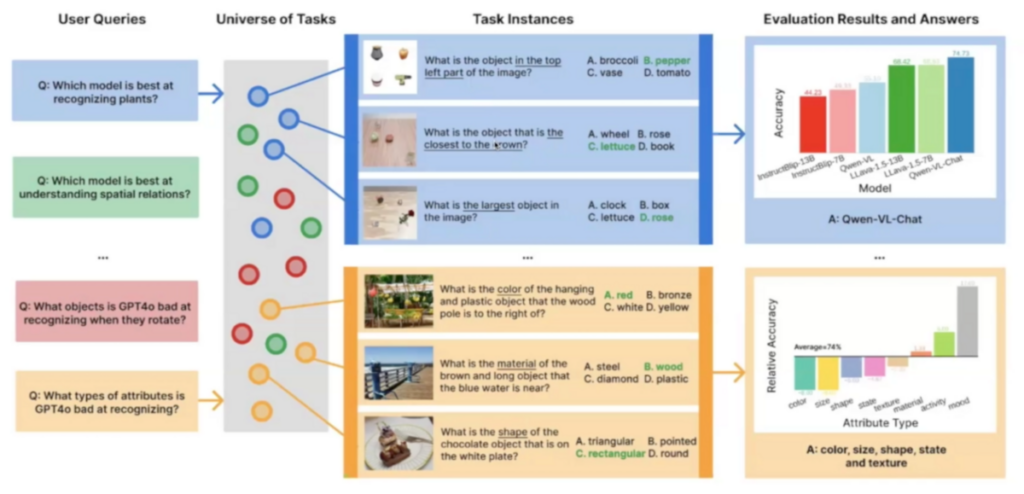
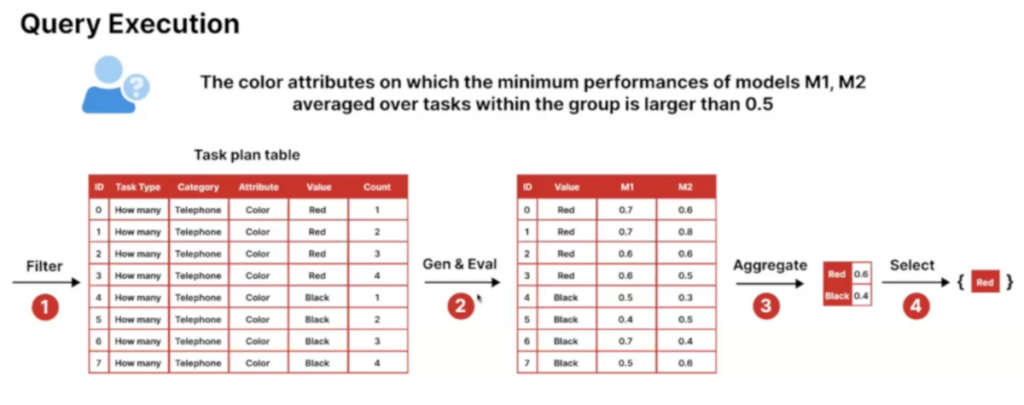
The Task Me Anything process starts with detailed task plans. These plans serve as blueprints for which objects of interest, task types, and other attributes to include in a task.
With a task plan established, the pipeline will use appropriate software to build the final task— for example using Blender to generate realistic 3D scenes that include varied coffee cups in different orientations. This creates a challenge for easily-measurable outcomes for models’ recognition capabilities.
The system’s task space includes:
Combining these elements, Task Me Anything can generate over 700 million unique tasks. Users can apply these tasks to answer the following kinds of questions:
Teams using Task Me Anything typically have a limited budget for model evaluation. They cannot examine every task in detail. To get around this, Task Me Anything leverages approximation techniques to evaluate models efficiently and effectively.
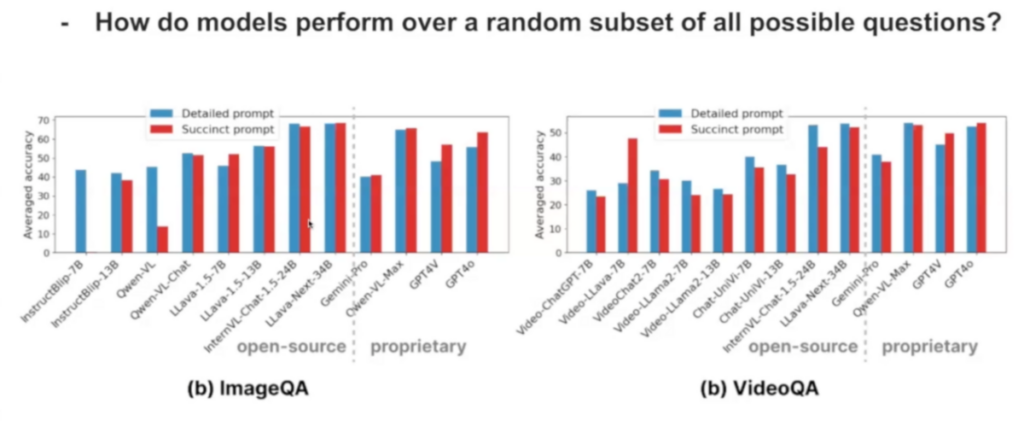
As a baseline, the pipeline randomly selects a subset of tasks for evaluation. From that random sample, a second stage trains a machine learning model to predict performance on the remaining tasks. A final active learning step takes the approximation a step further by iteratively evaluating a small batch of tasks, training a predictive model, and using this model to guide subsequent evaluations.
Together, these three stages ensure the optimal use of limited evaluation budgets.
Through extensive testing, Task Me Anything has yielded significant insights into the performance of multimodal models. Here are some key findings:
Task Me Anything offers flexibility and precision in benchmarking multimodal models. It empowers users to generate custom benchmarks aligned with their specific needs and provides valuable insights into model capabilities. This system not only addresses current benchmarking challenges but also sets a framework to assess future research and development in AI.
This framework is also extensible. We already have plans to add assets to address domains like math, healthcare, and 3D vision.
For developers looking to identify and fine-tune the best foundation model or large language model for their application, Task Me Anything offers the tools necessary to make well-informed decisions.
Follow Snorkel AI on LinkedIn, Twitter, and YouTube to be the first to see new posts and videos!
此内容由惯性聚合(RSS阅读器)自动聚合整理,仅供阅读参考。 原文来自 — 版权归原作者所有。