




惯性聚合 高效追踪和阅读你感兴趣的博客、新闻、科技资讯
阅读原文 在惯性聚合中打开

推荐订阅源

J
Java Code Geeks
奇客Solidot–传递最新科技情报
奇客Solidot–传递最新科技情报
有赞技术团队
有赞技术团队
博客园 - 【当耐特】
云风的 BLOG
云风的 BLOG
Martin Fowler
Martin Fowler
钛媒体:引领未来商业与生活新知
钛媒体:引领未来商业与生活新知
量子位
Engineering at Meta
Engineering at Meta
博客园 - 叶小钗
T
The Blog of Author Tim Ferriss
Recent Announcements
罗磊的独立博客
B
Blog
让小产品的独立变现更简单 - ezindie.com
U
Unit 42
Microsoft Azure Blog
D
Docker
N
Netflix TechBlog - Medium
Cyber Security Advisories - MS-ISAC
B
Blog RSS Feed
I
InfoQ
freeCodeCamp Programming Tutorials: Python, JavaScript, Git & More
V
V2EX

Consumer Insights

The ransomware negotiator who was working for the other side After years on the run, alleged Ryuk ransomware operator pleads guilty INTERPOL crackdown shows scammers shifting to social media Meta lets strangers remix your public Instagram photos with AI—here’s how to opt out Invited to a "job interview" with Netflix or OpenAI? Beware! Your Google password could be at risk Two arrested over credit card phishing - as the Netherlands is named Europe's worst for payment fraud India pauses WhatsApp username feature over security concerns Alleged teen ransomware hustler faces US charges after arrest in Finland WhatsApp usernames explained: how to reserve yours and stay safe Scammers race to cash in on Venezuelan earthquake disaster USB drives carrying China-linked malware infected Japanese military networks for nearly a year WhatsApp tests new safety prompt before you chat with strangers Social media is worth celebrating. It's also worth protecting. Polish police dismantle SIM-swap gang accused of crypto theft Operation Endgame deals fresh blow to StealC and Amadey malware networks Cybercrime now rivals traditional crime across parts of Asia Apple's Hide My Email tweak leaves privacy fans fuming Americans lost $3.5 billion to imposter scams last year — and the scams are getting harder to spot Scammers have killed the physical Steam Gift cards Crypto investment scam sends couriers to collect victims' cash, FBI warns Maine forced to take down data breach portal after fake notices filed with authorities Privacy own-goal: World Cup blunder leaks Lionel Messi's passport details Why schools remain one of cybercriminals' favourite targets WhatsApp detects new spyware activity from Israel’s NSO Group despite court order Got a LinkedIn message from a recruiter? It might be Chinese intelligence, warn FBI and MI5 Europol cracks down on illegal streaming globally Hackers didn't hack Instagram; they just asked Meta AI FBI Warns Fans About FIFA Scams Ahead of 2026 World Cup Virtual knife, real lawsuit: Counter-Strike skin dispute ends in court As Deepfakes Spread, YouTube Makes AI Labels Harder to Miss
Hacker hijacks Brazil's national alert system, sending "m...
Graham CLULEY · 2026-06-23 · via Consumer Insights

Picture the scene. You're in bed fast asleep, when suddenly your phone erupts with a blaring emergency siren. . You grab the phone. It's a flood warning for your region. Except where the details should be, every field just reads "misantropi4."

That was the experience for millions of Brazilians in the early hours of Saturday, 20 June 2026.

Somebody had broken into Brazil's national Civil Defence alert system and used it to send fake "Extreme Alert" notifications - the most severe category, normally reserved for warnings of imminent natural disasters - to mobile phones across at least five states, including São Paulo, Rio de Janeiro, and the Federal District.
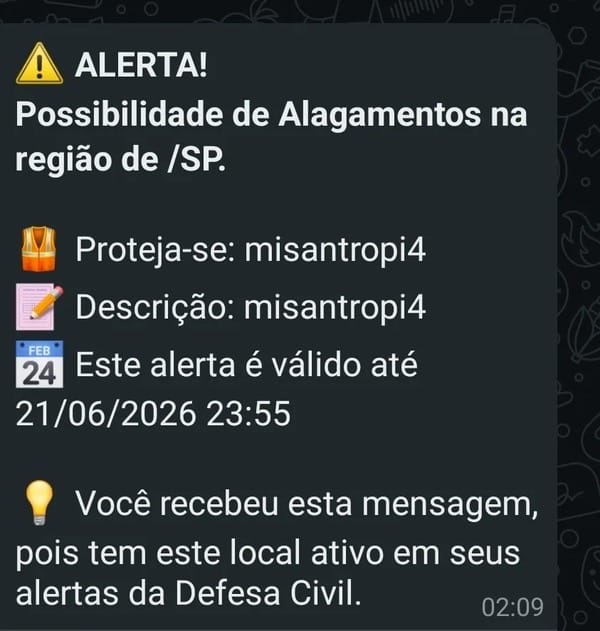
In case you were wondering, "misantropia" translates to "misanthropy": hatred or aversion to humanity.

The first unauthorised alert was blasted out at around 11:40 pm on June 19 in Paraná. Over the next couple of hours, ten fake alerts were sent — nine via Cell Broadcast (which bypasses silent mode and overrides whatever is on a smartphone user's screen) and one via SMS. Each state civil defence agency was quick to confirm that none of its own people had pressed any buttons, and that there was nothing going on that would actually warrant an extreme alert.

In a statement posted on social media, Brazil's National Civil Defence confirmed that it had pulled the alert platform offline at 1:30am following the compromise.
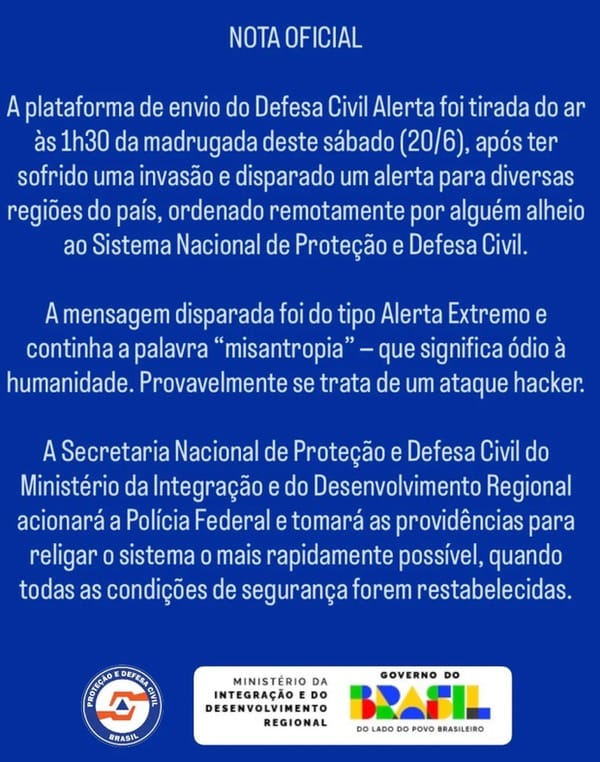
Officials said there was no evidence of "structural damage" to the infrastructure, but have been unable to confirm just how many devices were actually hit.

National Secretary of Protection and Civil Defence Wolnei Wolff confirmed that the attackers managed to regain access after an initial attempt to block them from accessing the system. No suspects have been positively identified so far.

Brazil's Cell Broadcast system was introduced in the last couple of years, and only expanded to cover the entire country in October 2025.

Thankfully, no dangerous instructions accompanied the alerts. If the public had, for instance, been told to evacuate or visit a malicious webpage then things could undoubtedly have been worse. The biggest loss was an interrupted night's sleep for many people.

But the damage to trust is real. Emergency alert systems work because people believe them. Every time one of these systems issues a false alert - whether through negligence or a deliberate attack - trust erodes.

The risk is that next time there is a genuine flood warning or landslide alert, some people will roll over and go back to sleep, assuming it is another hacker with a grudge against humanity.