

惯性聚合 高效追踪和阅读你感兴趣的博客、新闻、科技资讯
阅读原文 在惯性聚合中打开

推荐订阅源

The Hacker News
The Hacker News
月光博客
月光博客
Last Week in AI
Last Week in AI
D
DataBreaches.Net
MyScale Blog
MyScale Blog
The Register - Security
D
Docker
酷 壳 – CoolShell
酷 壳 – CoolShell
Y
Y Combinator Blog
WordPress大学
WordPress大学
Microsoft Security Blog
I
InfoQ
cs.AI updates on arXiv.org
P
Privacy International News Feed
云风的 BLOG
云风的 BLOG
OSCHINA 社区最新新闻
OSCHINA 社区最新新闻
L
LangChain Blog
钛媒体:引领未来商业与生活新知
钛媒体:引领未来商业与生活新知
C
Check Point Blog
V
V2EX
P
Palo Alto Networks Blog
Threat Intelligence Blog | Flashpoint
小众软件
小众软件
博客园 - 叶小钗
A
Arctic Wolf
The GitHub Blog
The GitHub Blog
V
Visual Studio Blog
Martin Fowler
Martin Fowler
Simon Willison's Weblog
Security Latest
Security Latest
阮一峰的网络日志
阮一峰的网络日志
博客园 - 【当耐特】
Know Your Adversary
Know Your Adversary
N
Netflix TechBlog - Medium
Recorded Future
Recorded Future
B
Blog RSS Feed
T
Tenable Blog
S
Secure Thoughts
Vercel News
Vercel News
Hugging Face - Blog
Hugging Face - Blog
C
CXSECURITY Database RSS Feed - CXSecurity.com
PCI Perspectives
PCI Perspectives
T
Tor Project blog
MongoDB | Blog
MongoDB | Blog
A
About on SuperTechFans
罗磊的独立博客
Cyber Security Advisories - MS-ISAC
F
Fortinet All Blogs
Webroot Blog
Webroot Blog
T
Threat Research - Cisco Blogs

The Eclectic Light Company

Hero or hooligan: Theseus’ later years BSD flags are incompatible with iCloud Drive Apple has released macOS Tahoe 26.5.1 In memoriam Mary Cassatt: 1, 1868-1880 Solutions to Saturday Mac riddles 362 What Location Services do in macOS Eclectic paintings of Joseph Stella: 2 European myths Last Week on My Mac: Razzle and dazzle Eclectic paintings of Joseph Stella: 1 American landscapes Saturday Mac riddles 362 Protect files with the Locked or Immutable flag Reading Visual Art: 252 Dragonfly What happens in the log when an app crashes as it starts up? Portraits of trees: Introduction On Reflection: Conclusions and contents Which tasks require mains power? Medium and message: Vast canvases Online reference to external displays for Apple silicon Macs What’s in that phishing email? Hero or hooligan: Theseus and Ariadne Solutions to Saturday Mac riddles 361 How to search document versions Rubens’ Consequences of War Rubens’ Peace and War Saturday Mac riddles 361 How to search Time Machine backups? Naturalists: Contents and artists On Reflection: Extending the image Tackle QuickLook problems Medium and message: Pottery Hero or hooligan: Theseus and the sandals How QuickLook provides thumbnails and previews Last Week on My Mac: Syncing metadata in iCloud Drive Paintings of visits to India 1778-1877 Saturday Mac riddles 360 Naturalists: Sorolla and Zorn On Reflection: Pierre Bonnard 1909-1946 SpotTest 1.2 can display Spotlight metadata directly On Reflection: Pierre Bonnard 1899-1908 How to preserve versions, and how to create versioned PDFs Medium and message: Sculpture What gets synced in iCloud Drive? Hero or hooligan: Perseus 2 Solutions to Saturday Mac riddles 359 Last Week on My Mac: snapshots, the elephant in APFS Paintings of Beatrice Portinari: to 1862 Saturday Mac riddles 359 Naturalists: Into the 20th century How to check whether Spotlight is getting the right metadata On Reflection: Mirror play Hero or hooligan: Perseus 1 The bicentenary of Frederic Edwin Church: 1857-77 Solutions to Saturday Mac riddles 358 macOS virtual machines and audio-video syncing A walk in the parks of Rome, Vienna, Manhattan and Brooklyn Saturday Mac riddles 358 Naturalists: Photography Use Finder tags for categories Control what gets written to the log Medium and message: Tapestry Virtualisation on Apple silicon Macs is different Jerusalem Delivered: Overview and contents The bicentenary of Frederic Edwin Church: 1849-57 Solutions to Saturday Mac riddles 357 Painting Pandora and her box: 1883-1919 Painting Pandora and her box: 1550-1882 Saturday Mac riddles 357 Reading Visual Art: 250 Winged sandals The secret life of the xattr The macOS Natural Language framework and Nalaprop Medium and Message: Stained glass The MACL extended attribute Jerusalem Delivered: 13 Leading characters Solutions to Saturday Mac riddles 356 Privacy: How locations are protected Painting Spring blossom 2 Last Week on My Mac: Don’t be a victim of fraud Painting Spring blossom 1 Saturday Mac riddles 356 Explainer: Recovery Reading Visual Art: 249 Mask Naturalists: Urban poverty On Reflection: Cézanne Privacy: Which folders are protected in Tahoe? Medium and Message: Mosaic Jerusalem Delivered: 12 Delivery Solutions to Saturday Mac riddles 355 Centaurs 2: Revenge Centaurs 1: Fights Saturday Mac riddles 355 Explainer: sandboxes Naturalists: The modern meal Why you can’t trust Privacy & Security Apple has just released an update to macOS Tahoe, to version 26.4.1 On Reflection: Divisionism Please help update CPU frequencies for Apple silicon Macs Commemorating the centenary of the death of John Ferguson Weir Privacy: Files & Folders or Full Disk Access? Jerusalem Delivered: 11 Into Jerusalem Privacy: protected folders
Brushstrokes: 16th century
hoakley · 2026-06-18 · via The Eclectic Light Company

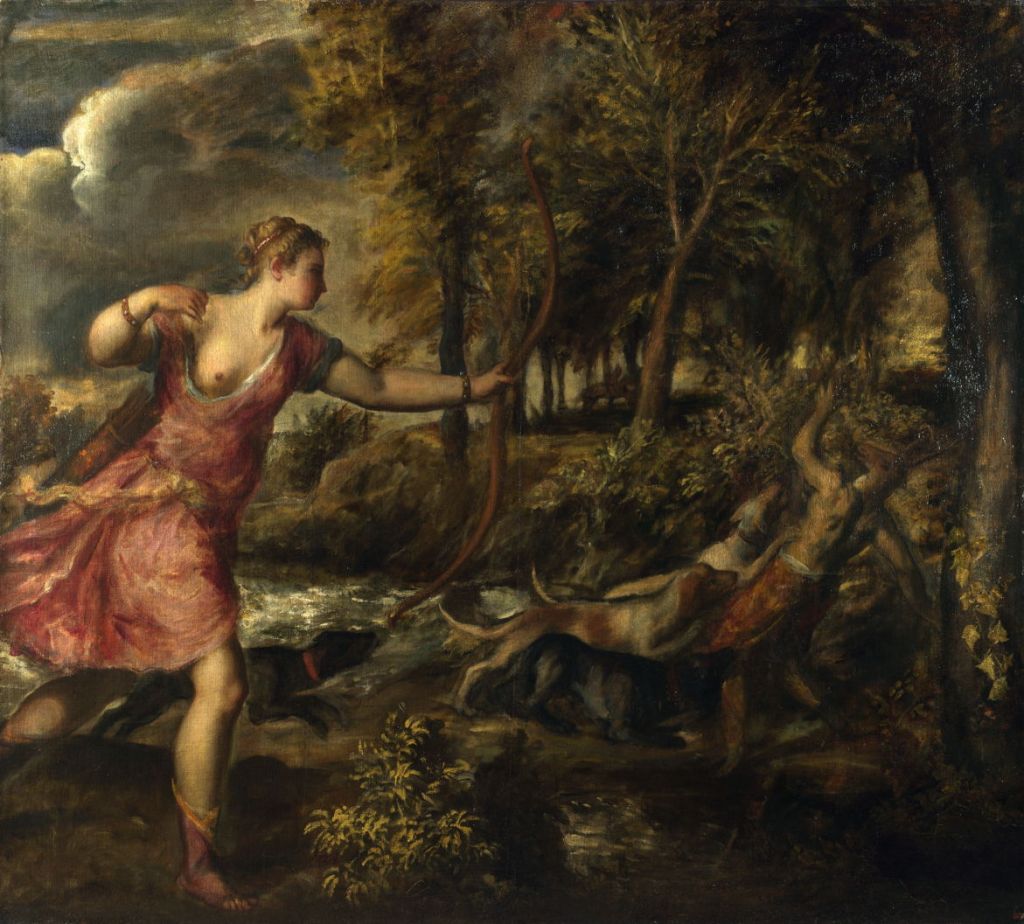
Titian (Tiziano Vecelli) (c 1490–1576), The Death of Actaeon (c 1559-75), oil on canvas, 178.8 x 197.8 cm, The National Gallery, London. Wikimedia Commons.

By the first quarter of the sixteenth century, it was no longer exceptional for a painter to leave brushstrokes and other marks in their oil paintings. However, the evidence also becomes more difficult to interpret, as the rapid decline in the use of rigid wood panels and the rise of canvas should make us more cautious.

dossodossiallegoryfortune
Dosso Dossi (Giovanni di Niccolò de Lutero) (1490–1542), Allegory of Fortune (c 1530), oil on canvas, 179.1 x 217.2 cm, Getty Center, Los Angeles, CA. Wikimedia Commons.

Explaining away brushstrokes in the work of Dosso Dossi (1490–1542) as being merely the result of Venetian influence, or the effect of wear and age, is more difficult. His Allegory of Fortune (c 1530) may look impeccably smooth, but as the detail below shows, it is here that the vegetation, rather than fabrics, is formed from brushstrokes.
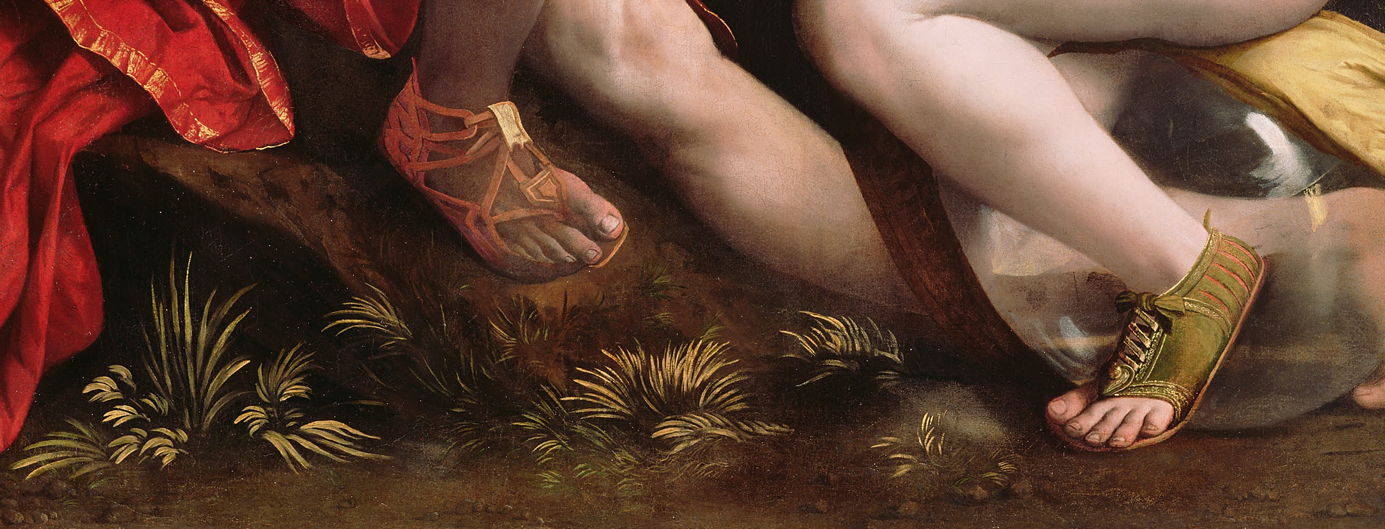
dossodossiallegoryfortunedet
Dosso Dossi (Giovanni di Niccolò de Lutero) (1490–1542), Allegory of Fortune (detail) (c 1530), oil on canvas, 179.1 x 217.2 cm, Getty Center, Los Angeles, CA. Wikimedia Commons.

Dosso Dossi was Ferraran, and his only contact with Venetian painting appears rather tortuous: he worked frequently with his brother Battista, who in turn had trained in Raphael’s workshop in Rome, probably between 1517-20, after its influence by del Piombo. Perhaps painterly style was highly contagious.

bassanowaycalvary
Jacopo Bassano (dal Ponte) (c 1510–92), The Way to Calvary (c 1544-5), oil on canvas, 145.3 x 132.5 cm, The National Gallery, London. Wikimedia Commons.

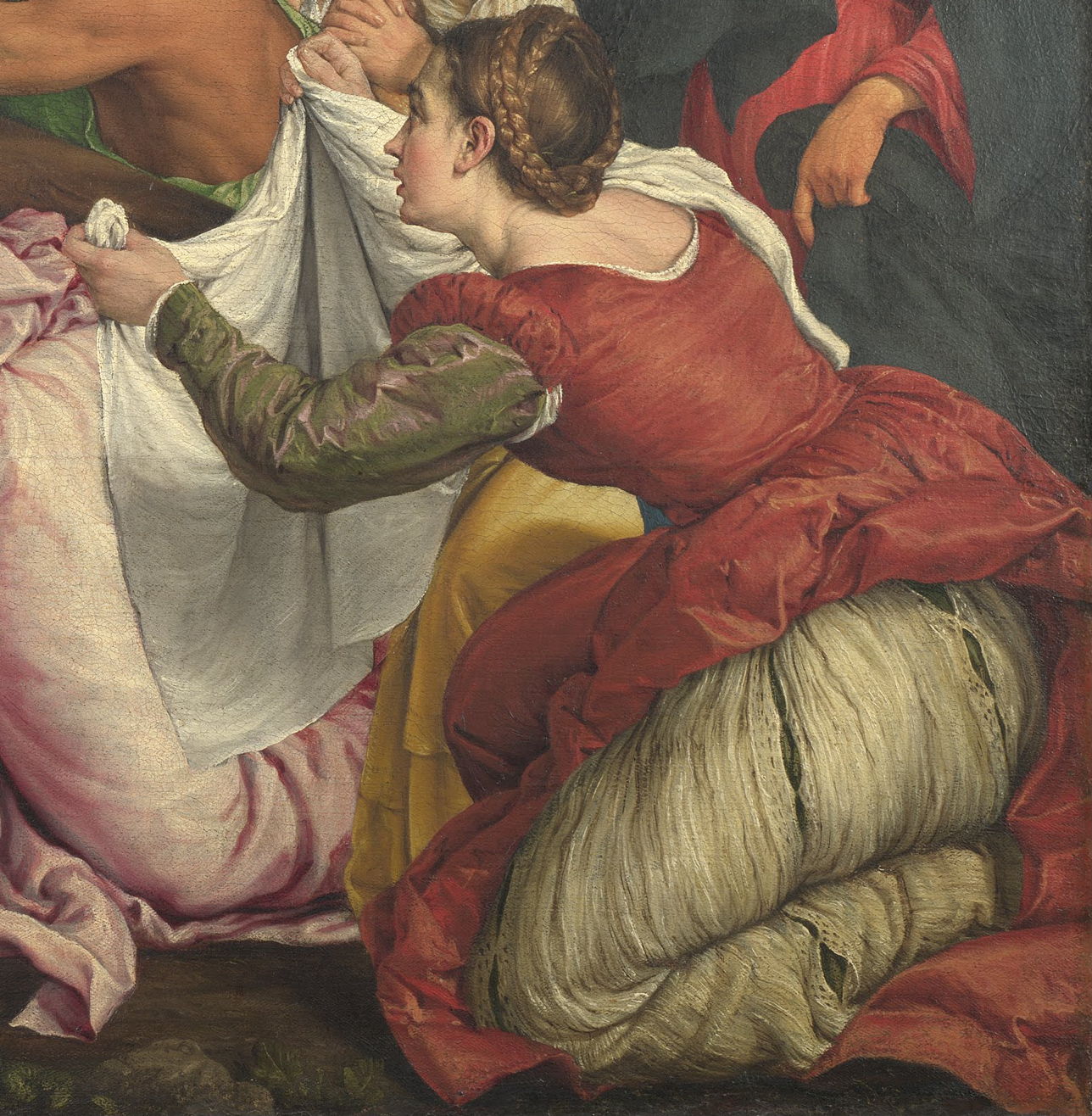
Although most of Bassano’s paintings appear finished to Florentine standards, and at first sight his The Way to Calvary (c 1544-5) appears no exception, some are delightfully painterly when examined more closely.
bassanowaycalvarydet
Jacopo Bassano (dal Ponte) (c 1510–92), The Way to Calvary (detail) (c 1544-5), oil on canvas, 145.3 x 132.5 cm, The National Gallery, London. Wikimedia Commons.

What appear from a distance to be meticulously detailed fabrics turn out to be rich in marks left by the brush. These are most abundant in the coarse petticoat seen billowing in the lower right, and in the sheen on the satin of the woman’s left arm, as well as the white sheet she is holding up.

When Titian, perhaps the most famous of all the Venetian Masters, was older, his style became overtly painterly, with significant passages in many of his works having clearly visible brushstrokes.

titiandeathactaeon
Titian (Tiziano Vecelli) (c 1490–1576), The Death of Actaeon (c 1559-75), oil on canvas, 178.8 x 197.8 cm, The National Gallery, London. Wikimedia Commons.

The Death of Actaeon (c 1559-75) is a good example of his painterly style, with many of the looser passages being obvious even at this scale.

titiandeathactaeondet
Titian (Tiziano Vecelli) (c 1490–1576), The Death of Actaeon (detail) (c 1559-75), oil on canvas, 178.8 x 197.8 cm, The National Gallery, London. Wikimedia Commons.

Closer examination shows painterly rough brushwork in the brights of the water surface, fabrics, vegetation, and distant objects. In each case, this practice generates distinctive texture, compared with the smooth skin, and the coats of the dogs.

titianrapeeuropa
Titian (Tiziano Vecelli) (c 1490–1576), The Rape of Europa (1560-2), oil on canvas, 178 × 205 cm, Isabella Stewart Gardner Museum, Boston, MA. Wikimedia Commons.

The Rape of Europa (1560-2) is another painting which doesn’t attempt to hide its painterly facture, although its paint layer does look worn as well.

titianrapeeuropadet
Titian (Tiziano Vecelli) (c 1490–1576), The Rape of Europa (detail) (1560-2), oil on canvas, 178 × 205 cm, Isabella Stewart Gardner Museum, Boston, MA. Wikimedia Commons.

The most obvious gestural marks once again appear in fabrics, the water surface and objects beneath it, such as the large fish at the bottom.

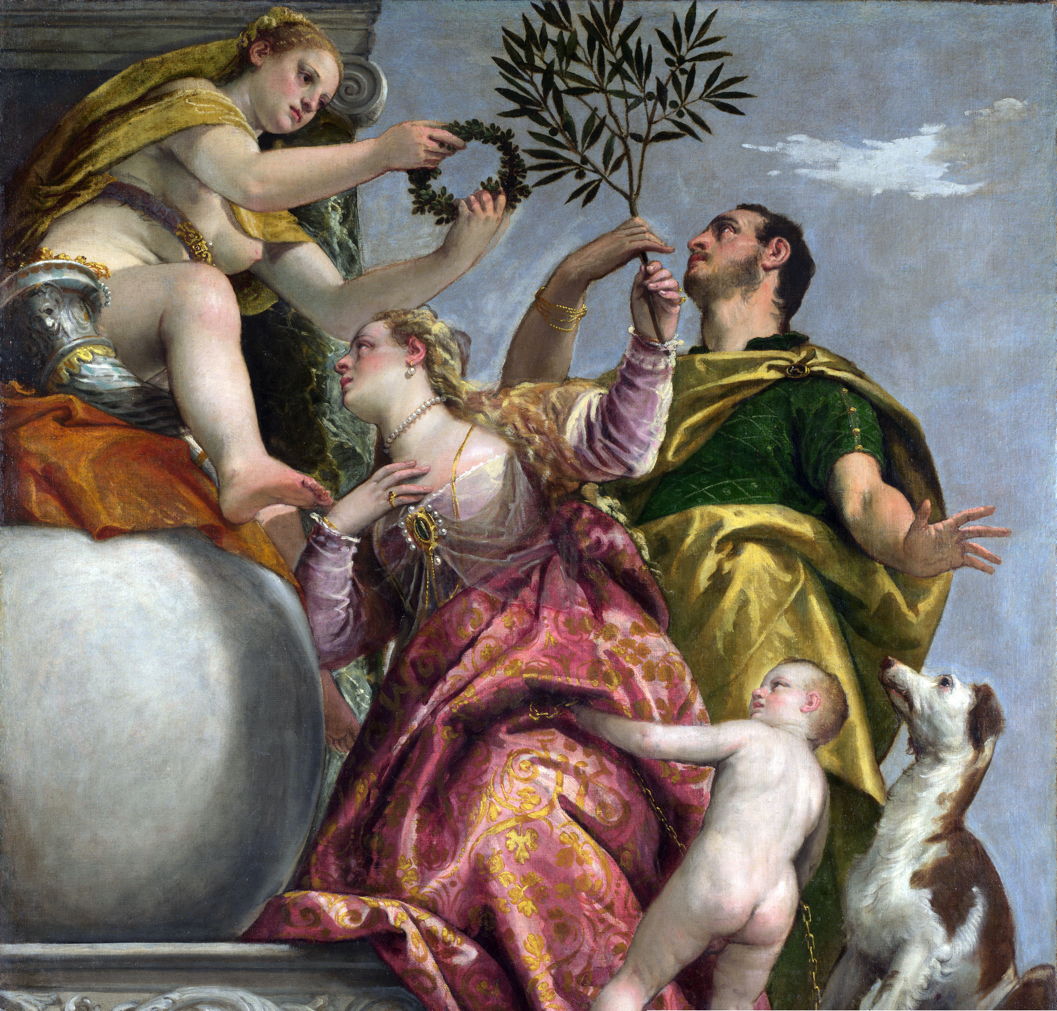
Many of the later works of Veronese are rich in visible brushstrokes. I offer just two examples: it is worth studying high-resolution images and the originals of his paintings after about 1570 to discover more painterly passages.
veronesehappyunion
Paolo Veronese (Caliari) (1528–88), Allegory of Love, IV, ‘The Happy Union’ (c 1575), oil on canvas, 187.4 x 186.7 cm, The National Gallery, London. Wikimedia Commons.

From a distance, the tight composition of his Allegory of Love, IV, ‘The Happy Union’ (c 1575) looks to have been painted in disegno, although differences in fabric textures and the splash of light cloud suggest more detailed examination is warranted.
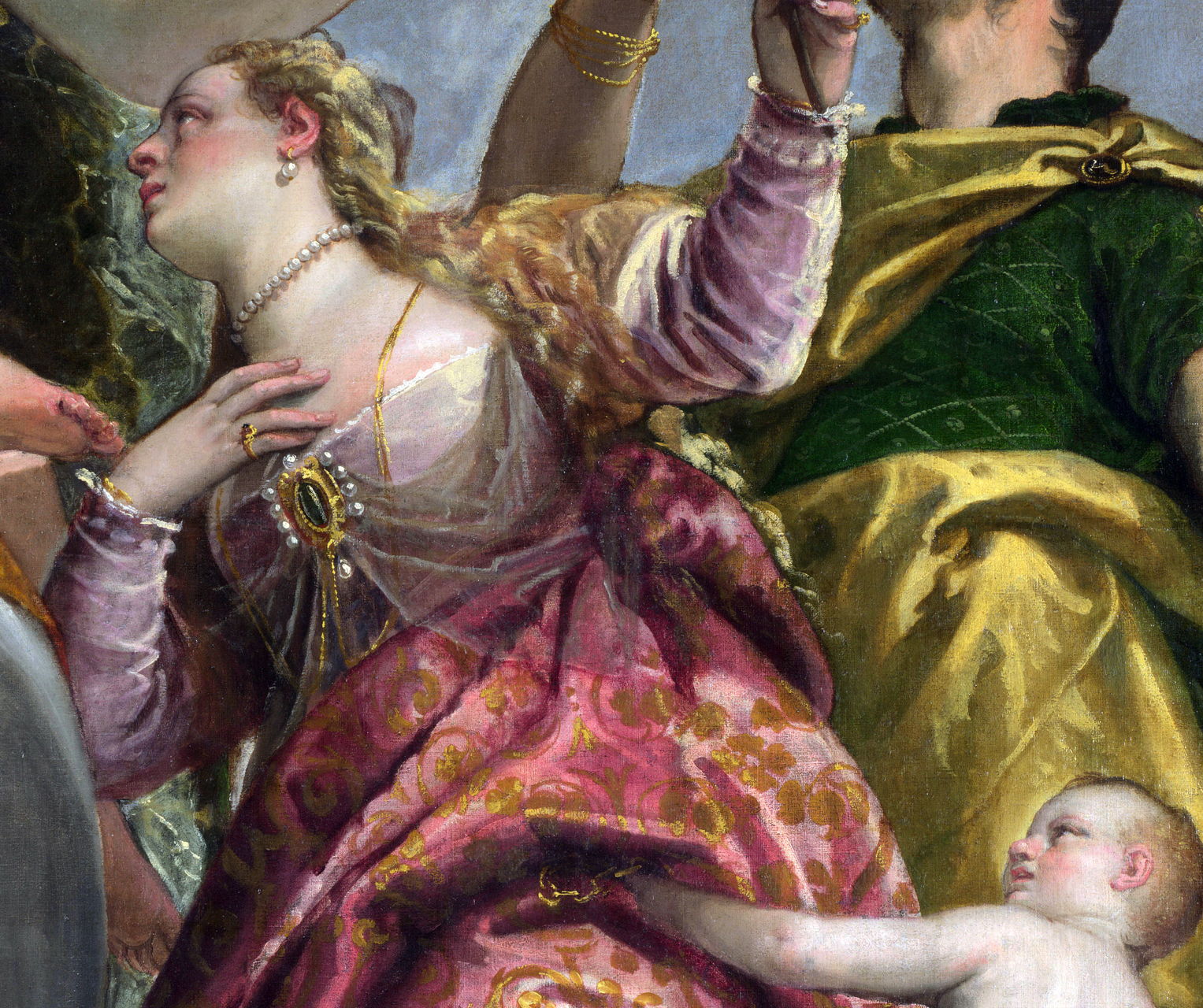
veronesehappyuniondet
Paolo Veronese (Caliari) (1528–88), Allegory of Love, IV, ‘The Happy Union’ (detail) (c 1575), oil on canvas, 187.4 x 186.7 cm, The National Gallery, London. Wikimedia Commons.

Once closer to the canvas, many of the details turn out to be painterly caresses with the brush, in the fabrics and hair in particular.
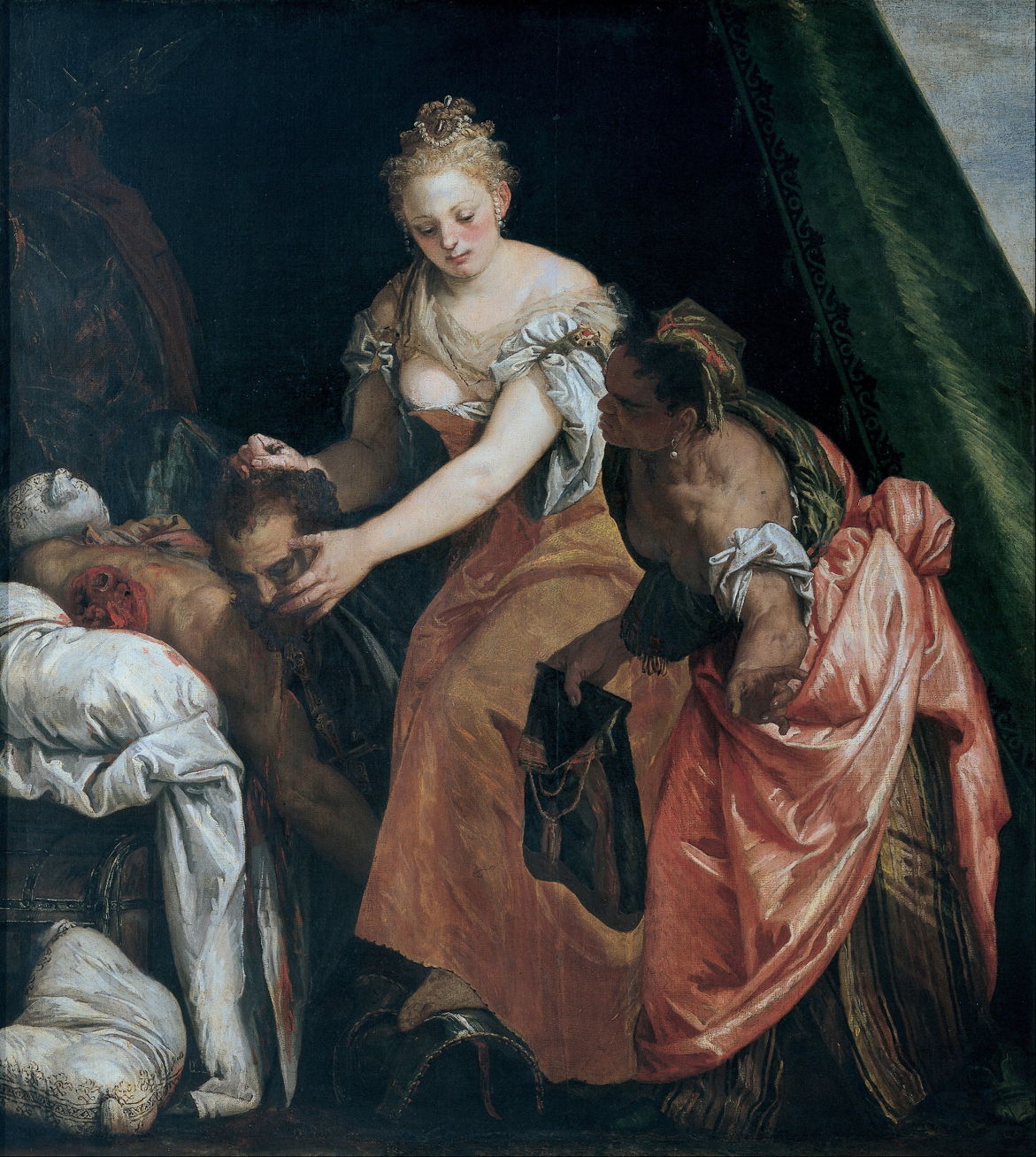
veronesejudithholofernes
Paolo Veronese (Caliari) (1528–88), Judith and Holofernes (c 1580), oil on canvas, 195 x 176 cm, Musei di Strada Nuova, Genova. Wikimedia Commons.

Later still, Veronese’s Judith and Holofernes (c 1580) make no attempt to conceal the scumbled highlights of its fabrics.
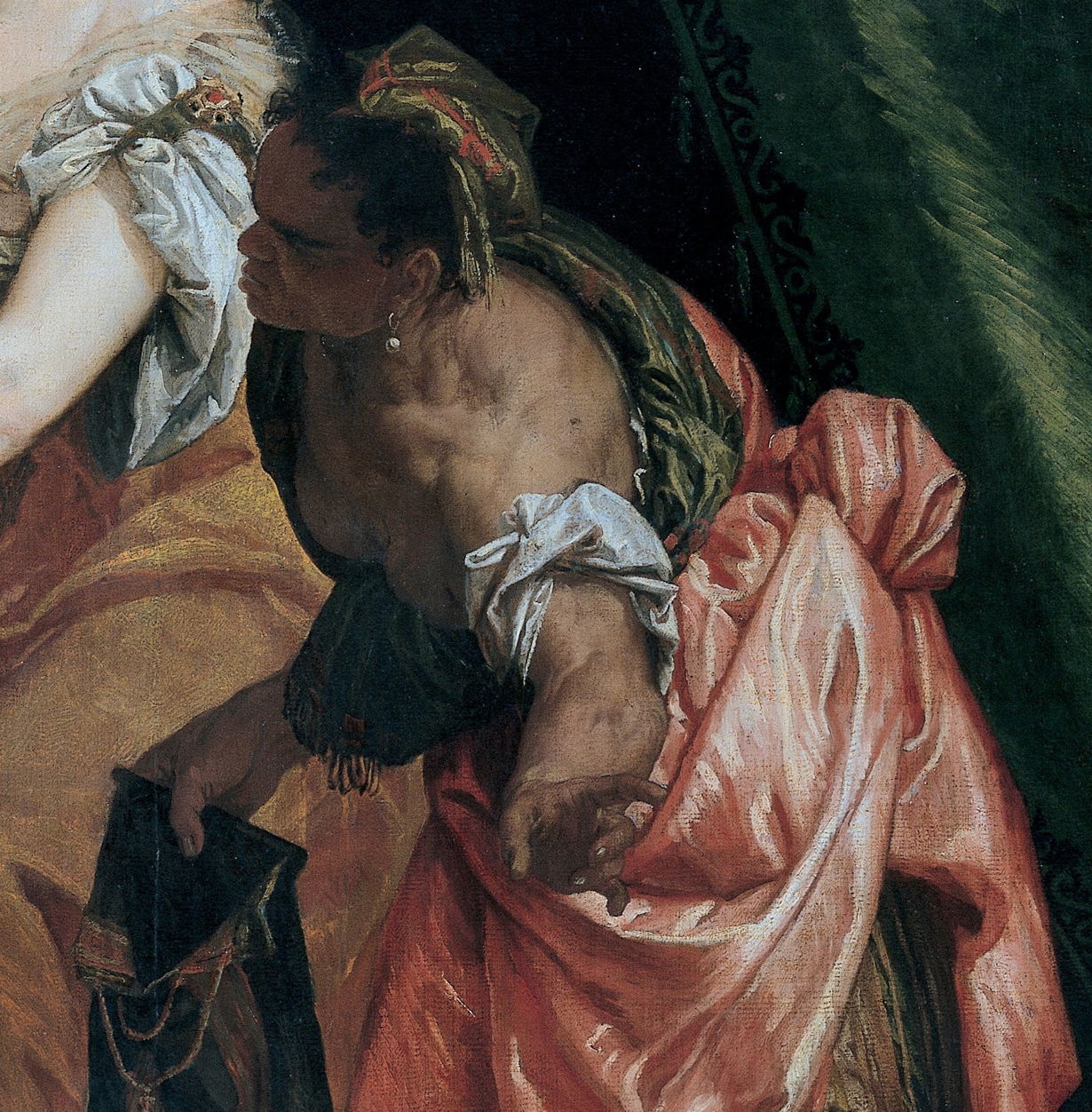
veronesejudithholofernesdet
Paolo Veronese (Caliari) (1528–88), Judith and Holofernes (detail) (c 1580), oil on canvas, 195 x 176 cm, Musei di Strada Nuova, Genova. Wikimedia Commons.

A detail shows how extensive and free Veronese was in making his marks, although they are largely confined to fabrics, with flesh being painted more smoothly.

With the seventeenth century fast approaching, it was high time for El Greco and Peter Paul Rubens.