

惯性聚合 高效追踪和阅读你感兴趣的博客、新闻、科技资讯
阅读原文 在惯性聚合中打开

推荐订阅源

J
Java Code Geeks
腾讯CDC
M
MIT News - Artificial intelligence
Y
Y Combinator Blog
L
LangChain Blog
Vercel News
Vercel News
云风的 BLOG
云风的 BLOG
GbyAI
GbyAI
Stack Overflow Blog
Stack Overflow Blog
Microsoft Azure Blog
B
Blog RSS Feed
The GitHub Blog
The GitHub Blog
酷 壳 – CoolShell
酷 壳 – CoolShell
B
Blog
P
Proofpoint News Feed
H
Hackread – Cybersecurity News, Data Breaches, AI and More
博客园_首页
Google DeepMind News
WordPress大学
WordPress大学
aimingoo的专栏
aimingoo的专栏
小众软件
小众软件
IT之家
IT之家
A
About on SuperTechFans
H
Help Net Security

Let's Encrypt

The difficulty of making sure your website is broken Simplifying Certificate Renewals for Millions of Domains with ACME Renewal Information (ARI) Six-Day and IP Address Certificates Available in Certbot Shorter Certificate Lifetimes and Rate Limits DNS-PERSIST-01: A New Model for DNS-based Challenge Validation On the Importance of "Hello" and "Thanks" 6-day and IP Address Certificates are Generally Available 10 Years of Let's Encrypt Certificates Decreasing Certificate Lifetimes to 45 Days New "Generation Y" Hierarchy of Root and Intermediate Certificates Ten Years of Community Support ACME Renewal Information (ARI) Published as RFC 9773 Native ACME Support Comes to NGINX End of Life Plan for RFC 6962 Certificate Transparency Logs OCSP Service Has Reached End of Life We've Issued Our First IP Address Certificate Expiration Notification Service Has Ended Reflections on a Year of Sunlight How We Reduced the Impact of Zombie Clients Sustaining a More Secure Internet: The Power of Recurring Donations Ending TLS Client Authentication Certificate Support in 2026 How Pebble Supports ACME Client Developers Ten Years of Let's Encrypt: Announcing support from Jeff Atwood We Issued Our First Six Day Cert Encryption for Everybody Scaling Our Rate Limits to Prepare for a Billion Active Certificates Ending Support for Expiration Notification Emails Announcing Six Day and IP Address Certificate Options in 2025 Announcing Certificate Profile Selection Ending OCSP Support in 2025
Let’s Encrypt Continues Partnership with Princeton to Bol...
2024-05-30 · via Let's Encrypt

By Sarah McClure ·

Let’s Encrypt is proud to have been partnering with the Center for Information Technology Policy team at Princeton University since 2018 to bolster defenses against Border Gateway Protocol (BGP) attacks. We’re thrilled to continue this partnership thanks to renewed funding from the Open Technology Fund.

“Let’s Encrypt has played a pivotal role in driving our research around protecting against BGP attacks and preventing the disruption such attacks can cause. We’re grateful for the partnership with Let’s Encrypt, as the largest Certificate Authority, in this critical work.” – Jennifer Rexford, Provost, Princeton University

To date, our work with Princeton has focused on defending against BGP attacks on domain control validation via Multi-Perspective Issuance Corroboration (MPIC). This year, Let’s Encrypt is adding two new remote perspectives for domain validation. This means we will make five total validation requests, one from the primary datacenter and four from remote perspectives (previously two). Increased perspectives provide more domain validation security, thus improving visibility and protection against BGP attacks.
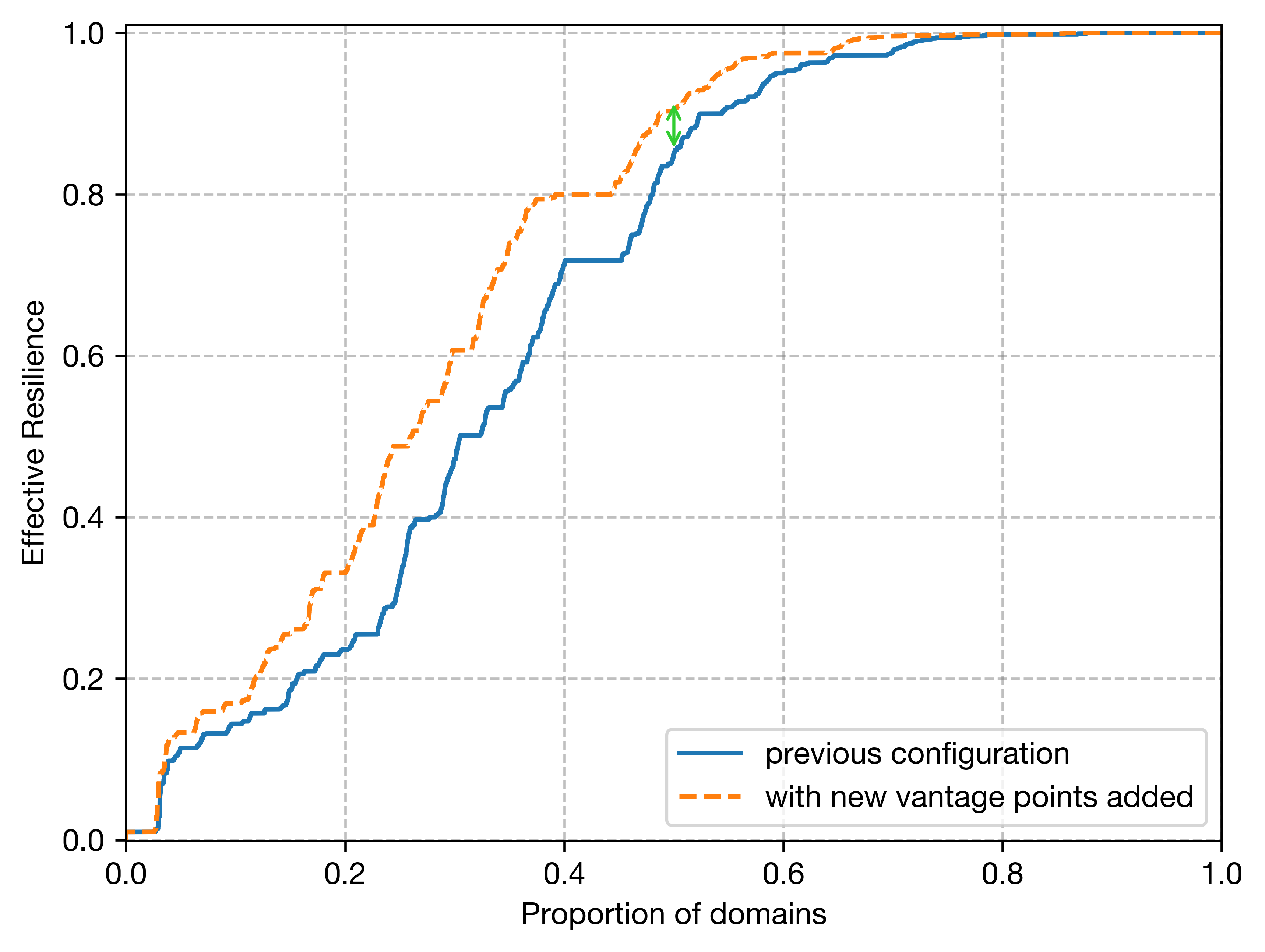
Additional global vantage points increase resilience of Let’s Encrypt issuance. Source: Princeton Center for Information Technology Policy

Additionally, we will be facilitating the adoption of ACME Renewal Information (ARI) in order to enable certificate authorities (CAs) to maintain continuity of service in a mass revocation/replacement event. If a BGP attack does occur, ARI will allow CAs to quickly and automatically revoke and replace certificates associated with the victim domain. Learn more about how to integrate ARI into an existing ACME client.

Our team will be working with the research groups of Professor Prateek Mittal to provide secure data related to increased perspectives and ARI, and contributing to research analysis and discoveries.

We’d like to thank Princeton University for their partnership on this important work, and Open Technology Fund for making it possible.

Internet Security Research Group (ISRG) is the parent organization of Let’s Encrypt, Prossimo, and Divvi Up. ISRG is a 501(c)(3) nonprofit. If you’d like to support our work, please consider getting involved, donating, or encouraging your company to become a sponsor.