


惯性聚合 高效追踪和阅读你感兴趣的博客、新闻、科技资讯
阅读原文 在惯性聚合中打开

推荐订阅源

WordPress大学
WordPress大学
小众软件
小众软件
MongoDB | Blog
MongoDB | Blog
Hugging Face - Blog
Hugging Face - Blog
Jina AI
Jina AI
Cyber Security Advisories - MS-ISAC
Stack Overflow Blog
Stack Overflow Blog
L
LangChain Blog
大猫的无限游戏
大猫的无限游戏
量子位
A
About on SuperTechFans
G
Google Developers Blog
雷峰网
雷峰网
奇客Solidot–传递最新科技情报
奇客Solidot–传递最新科技情报
IT之家
IT之家
钛媒体:引领未来商业与生活新知
钛媒体:引领未来商业与生活新知
博客园_首页
H
Hackread – Cybersecurity News, Data Breaches, AI and More
Vercel News
Vercel News
V
Visual Studio Blog
OSCHINA 社区最新新闻
OSCHINA 社区最新新闻
博客园 - 聂微东
U
Unit 42
Apple Machine Learning Research

Google Research

Building AI to accelerate science and improve lives AI for everyone in every language Ask a Scientist: How can researchers use AI to spot a wildfire? A new deep learning model maps global methane emissions from space. Our new contrail avoidance trial in Asia-Pacific 5 amazing visuals show how the male fruit fly’s brain map is advancing neuroscience Ask a Scientist: How do researchers use AI to predict a cyclone? Ask a Scientist: How can researchers use AI to predict a flood? Operation Blue Skies: Reducing aviation climate impact with AI AMIE, our research medical AI system, demonstrates real-time clinical video consultation capabilities in a first-of-its-kind study. Understanding the AI economy How governments and organizations are leveraging Google’s AI breakthroughs for crisis resilience Three new satellites join the fight against wildfires. The latest AI news we announced in June 2026 Towards a world where no one is surprised by a natural disaster New research shows how AMIE, our medical AI, could help manage health conditions. 4 ways researchers are collaborating with Co-Scientist to solve big problems The latest AI news we announced in May 2026 A new experiment brings better group meetings to Google Beam Gemini for Science: AI experiments and tools for a new era of discovery Evolving expectations of what’s possible Quantum frontiers may be closer than they appear Building superconducting and neutral atom quantum computers Our new study explores how AI can reduce the climate impact of air travel. Broadening advanced AI education across Africa Groundsource: using AI to help communities better predict natural disasters Honoring the art of the possible this International Women’s Day How our open-source AI model SpeciesNet is helping to promote wildlife conservation The latest AI news we announced in February The quantum era is coming. Are we ready to secure it?
Our WeatherNext 2 AI model demonstrated a massive leap fo...
Aug 06, 2026 · 2026-08-06 · via Google Research

Predicting how hurricanes and cyclones develop is a longstanding challenge, and every hour of warning counts. Tropical cyclones are among the most destructive weather events on Earth, and for meteorologists, issuing accurate, timely warnings is a constant race against time.

Today, in a paper published in Nature, Google researchers show that our WeatherNext AI model achieved state-of-the-art accuracy in predicting a cyclone's track, intensity, and wind structure. This represents a massive leap forward — roughly a decade of meteorological progress in one model.

To help build climate resilience worldwide, we are now open-sourcing the WeatherNext 2 model to the global research community. For more information, check the Google DeepMind blog.

Google DeepMind blog

An AI breakthrough in forecasting cyclones

WeatherNext enables accurate cyclone forecasts that can give an extra day of warning. Now we are open sourcing the model.

See more
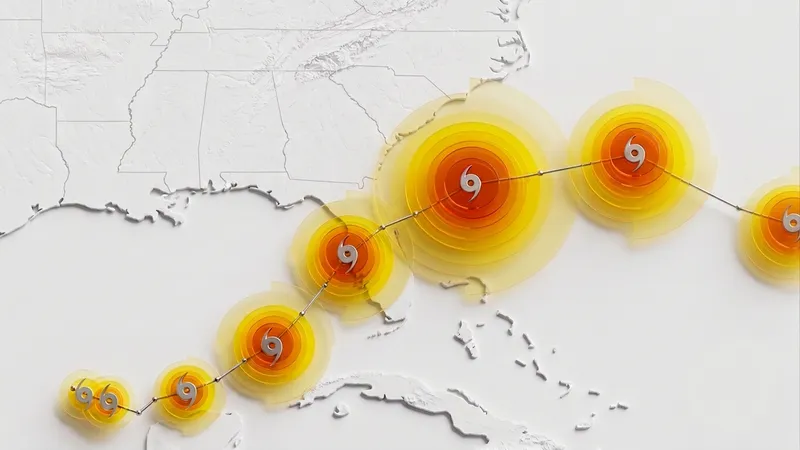
Cyclone prediction map