



惯性聚合 高效追踪和阅读你感兴趣的博客、新闻、科技资讯
阅读原文 在惯性聚合中打开

推荐订阅源

人人都是产品经理
人人都是产品经理
Microsoft Security Blog
让小产品的独立变现更简单 - ezindie.com
博客园_首页
Hugging Face - Blog
Hugging Face - Blog
美团技术团队
G
GRAHAM CLULEY
H
Hackread – Cybersecurity News, Data Breaches, AI and More
阮一峰的网络日志
阮一峰的网络日志
L
Lohrmann on Cybersecurity
S
Security @ Cisco Blogs
cs.CV updates on arXiv.org
S
Security Affairs
The Cloudflare Blog
A
About on SuperTechFans
Google DeepMind News
D
Darknet – Hacking Tools, Hacker News & Cyber Security
Spread Privacy
Spread Privacy
Y
Y Combinator Blog
V2EX - 技术
V2EX - 技术
罗磊的独立博客
F
Full Disclosure
Jina AI
Jina AI
S
Schneier on Security
钛媒体:引领未来商业与生活新知
钛媒体:引领未来商业与生活新知
C
CXSECURITY Database RSS Feed - CXSecurity.com
Webroot Blog
Webroot Blog
雷峰网
雷峰网
Threat Intelligence Blog | Flashpoint
Recorded Future
Recorded Future
freeCodeCamp Programming Tutorials: Python, JavaScript, Git & More
cs.AI updates on arXiv.org
博客园 - 三生石上(FineUI控件)
K
Kaspersky official blog
V
Visual Studio Blog
Vercel News
Vercel News
Cyberwarzone
Cyberwarzone
CTFtime.org: upcoming CTF events
T
Tor Project blog
Cloudbric
Cloudbric
Hacker News - Newest:
Hacker News - Newest: "LLM"
爱范儿
爱范儿
L
LINUX DO - 最新话题
GbyAI
GbyAI
Attack and Defense Labs
H
Heimdal Security Blog
Recent Announcements
L
LINUX DO - 热门话题
L
LangChain Blog
Simon Willison's Weblog

Blog

Confidential computing and the new regulatory focus on data in use | Canonical A day in the life of an Android developer with Anbox Cloud | Canonical Canonical announces the Enterprise Store as part of Ubuntu Pro | Canonical Tracing a memory leak bug in PID 1 and contributing an upstream fix: a Linux support story | Canonical MAAS installation: bare metal provisioning is easier than ever | Canonical Januscape vulnerability CVE-2026-53359 mitigations available | Canonical Managing Ubuntu on bare metal at scale | Canonical Ubuntu Server: a platform made for enterprise scale | Canonical Beyond safety and security: Why automotive open source demands dependability  | Canonical DirtyClone Linux kernel local privilege escalation vulnerability fixes available | Canonical pedit COW kernel local privilege escalation vulnerability mitigations | Canonical Canonical becomes Gold Sponsor of Trifecta Tech Foundation | Canonical Challenges designers face in open source (and how to fix them) | Canonical Hunting a 16-year-old SQLite bug with TLA+: is dqlite affected? | Canonical Anbox Cloud on C4A metal: Android, at scale, without friction | Canonical Canonical announces live kernel patching for Arm64 | Canonical How to use RISC-V custom instructions with Ubuntu | Canonical Ubuntu Summit 26.04: connected by open source | Canonical So you need to add microcontrollers to your fleet: now what? | Canonical Validating real-world skills through Canonical Academy | Canonical Virtualized Android comes to Anbox Cloud | Canonical Template: Streamlining open source design contributions | Canonical Beyond Mythos: responding to a new threat landscape | Canonical A look into Ubuntu Core 26: Building a local AI inference appliance in a virtual machine | Canonical This year we celebrate a decade of Ubuntu Server support on the s390x architecture: marking a long-standing collaboration between Canonical and IBM that began at LinuxCon 2015. The first release happened on April 21, 2016, bringing Ubuntu 16.04 LTS (Xenial Xerus) to IBM Z and IBM LinuxONE platforms.  A first for Ubuntu on IBM That […] AI at the edge: simplifying infrastructure with Cisco and Canonical | Canonical The next era of telco clouds: get open infrastructure choice with Sylva and Canonical Kubernetes | Canonical What is RDMA over Converged Ethernet (RoCE)? | Canonical Beyond tokens per watt – using Ubuntu 26.04 LTS for AI | Canonical A look into Ubuntu Core 26: Deploying AI models on Renesas RZ/V series for production | Canonical RISC-V profiles – why is RVA23 significant? | Canonical AI with AMD ROCm on Ubuntu: your questions answered | Canonical When distributed workloads stall because nodes cannot exchange small messages quickly and consistently, the network is the limiting factor. How do you solve that problem? InfiniBand offers one solution. InfiniBand is an interconnect, meaning the end-to-end communication system that links compute, storage, and accelerator nodes. It is impl […] Microsoft has announced the preview of Azure Cobalt 200, its second-generation custom Arm silicon. Learn how Ubuntu and Ubuntu Pro support these new VMs from day one, offering seamless deployment, long-term security maintenance, and Kernel Livepatch without requiring engineering or platform changes […] How Canonical Support solves hard Linux performance bugs  – even in 12-year old code | Canonical Securing AI agent workflows on Ubuntu with the new NVIDIA OpenShell snap | Canonical Canonical announces optimized Ubuntu images for TPU virtual machines by Google Cloud | Canonical VMware hypervisor deployment using MAAS | Canonical Migrating from Apache Spark 3 to Spark 4 | Canonical Introducing Workshop: launch sandboxed development environments on Ubuntu with a single command | Canonical Run agentic workloads on Arm and Ubuntu | Canonical Decoding design: How design and engineering thrive together in open source | Canonical Developing web apps with local LLM inference | Canonical A local privilege escalation (LPE) security vulnerability in the Linux kernel, codename “PinTheft,” was publicly disclosed on May 19, 2026. The vulnerability was fixed in the mainline Linux kernel tree. A proof-of-concept exploit was published along with public disclosure. This has been assigned the CVE ID CVE-2026-43494; other discoverin […] Canonical has announced the general availability of Managed Kubeflow on the Microsoft Azure Marketplace. This fully managed MLOps platform allows enterprise AI teams to deploy a production-ready environment in under an hour, eliminating infrastructure maintenance. […] A look into Ubuntu Core 26: Cloud-powered edge computing with AWS IoT Greengrass and Azure IoT Edge | Canonical CVE-2026-46333 (ssh-keysign-pwn) Linux kernel vulnerability mitigations | Canonical
Building an open source chain of trust: new research uncovers key blockers and ways forward | Canonical
Canonical · 2026-07-06 · via Blog

Canonical is pleased to share its latest research report, “The open source chain of trust.” Based on a survey of 500 DevOps professionals, the report highlights how organizations approach their open source software supply chains. While many companies are moving toward verifiable provenance and automated security workflows, internal misalignment and disjointed approaches remain serious challenges for most teams.

Read the report

Open source is the fabric of modern IT, but management remains fragmented

Open source powers development toolchains and underpins cloud-native platforms. It runs across on-prem, cloud, and edge environments. While organizations formalize policies and adopt security tools, many rely on fragmented processes with significant visibility gaps in CI/CD process between development and production stages. This research shows that 90% of respondents believe their organization needs to improve cross-team collaboration regarding open source software.
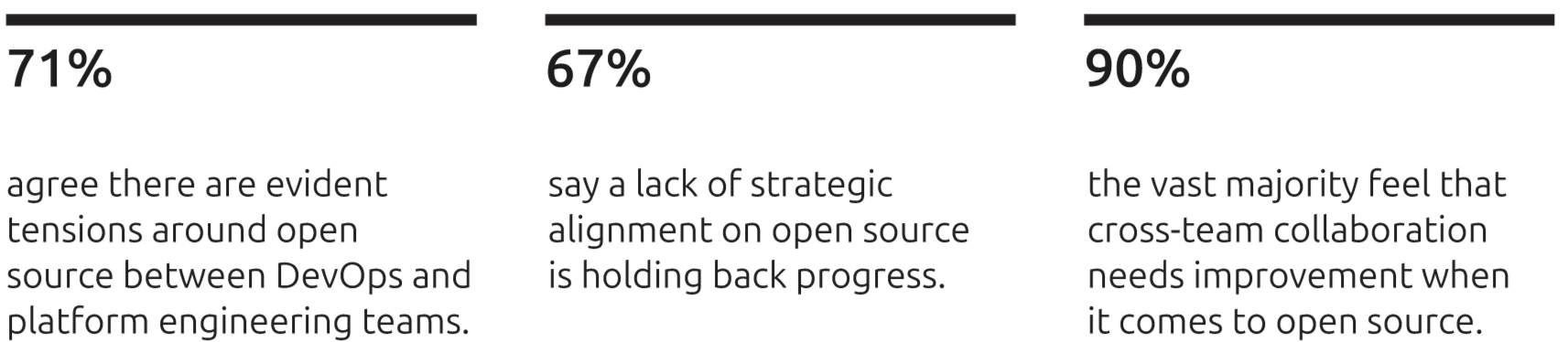
Figure 1: overview of key findings from the research

Organizations often stitch together components from many sources using inconsistent methods and misaligned upgrade cadences. Security teams struggle to manage transitive dependencies in this environment. Meanwhile, operations teams face constant trade-offs between stability and necessary changes.

Open source is a critical foundation of the enterprise, but managing the dependency sprawl can be an operational and security challenge. On top of these existing supply chain challenges, the cadence of software development is accelerating. Consequently, it is increasingly crucial for organizations to bring automation and cross-team collaboration into their SDLC governance.”

– Rachel Stephens, Research Director at RedMonk

Key findings from the research

The report identifies operational challenges and highlights how internal misalignment impacts software supply chains:

  • Cross-team tensions stall progress: 71% of respondents report tensions between DevOps and platform engineering teams regarding the scalable use of open source.
  • Manual processes hinder maturity: 35% of organizations still rely on manual code reviews for security. Another 21% use manual methods to track vulnerabilities.
  • Operational risk drives patching delays: Primary causes for delays include system compatibility concerns (53%) and resource constraints like staff shortages (43%).
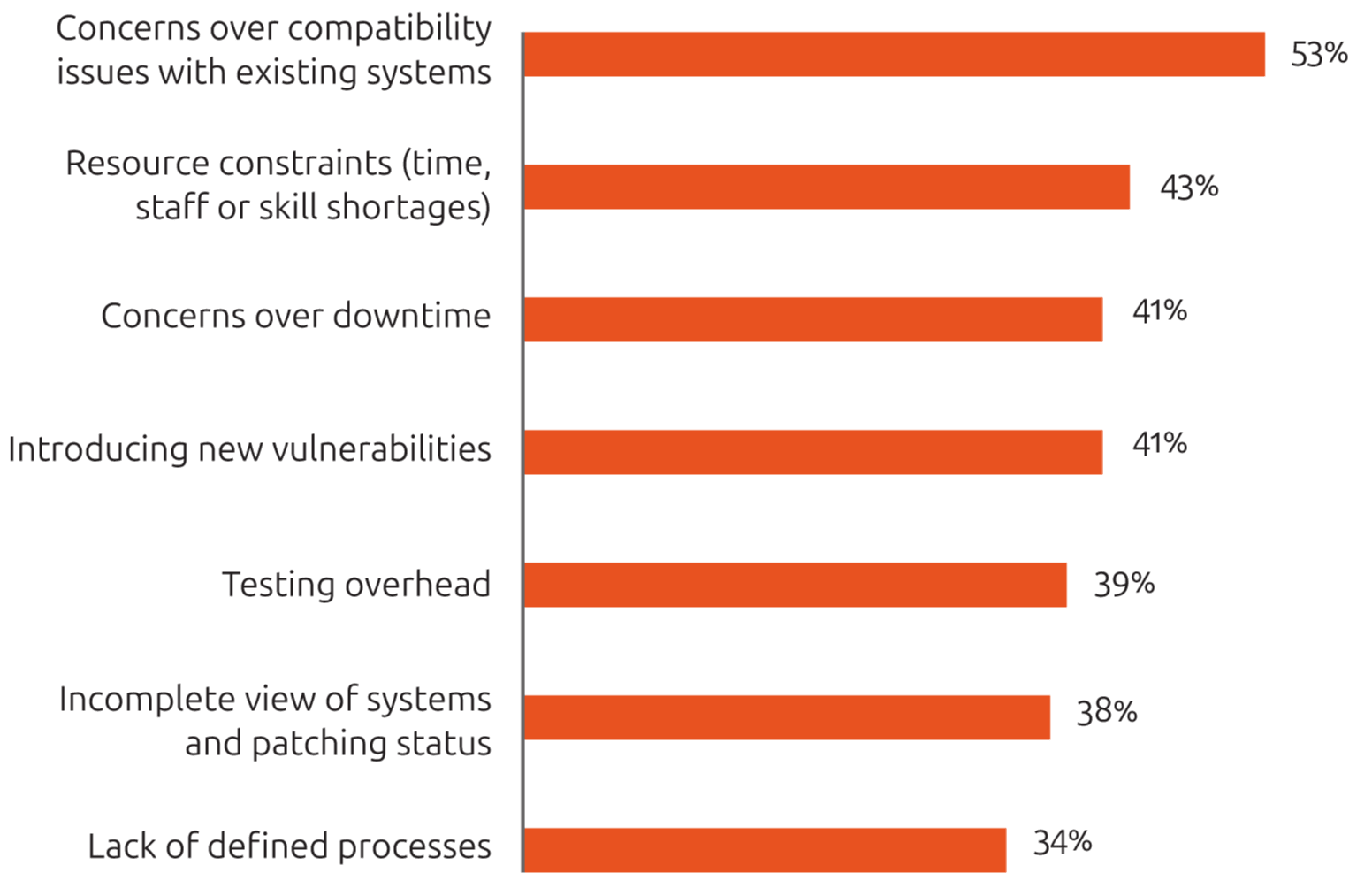
Figure 2: Most common causes of delays in organizations’ ability to patch vulnerabilities, top 3 combined answers.

Mitigating gaps through a trusted foundation

The research highlights a clear path toward more predictable and secure operations:

  • Rely on the operating system as a strategic control plane: 98% of respondents describe the OS as extremely or very important for detecting and applying updates to open source components, suggesting it can serve as a central layer to govern supply chain hygiene.
  • Establish verifiable provenance: 48% of respondents state that tracked packages would improve their confidence in software supply chain security.
  • Strengthening collaboration: Choosing the right platform as a foundation brings consistent governance and strengthens the working relationship between DevOps, security, and operations.

Discover all the insights from the research

“This new research highlights that scaling open source innovation requires organizations to move beyond fragmented workflows to adopt a stable foundation that can help fast-track security and compliance. At Canonical, we help our customers achieve exactly this by simplifying vulnerability management and providing a single, verifiable stack with trusted end-to-end provenance.”

– Lech Sandecki, Product Manager at Canonical

Trusted open source with Canonical

Maturing processes and improving internal alignment are critical for addressing security concerns. Through Ubuntu Pro, Canonical delivers consistent security maintenance for the operating system and thousands of upstream open source packages.

By streamlining vulnerability management and committing to up to 15 years of platform stability through backporting, Canonical helps resolve the inherent tension between rigorous security and operational uptime. This shift moves organizations from a state of fragmented visibility and complex management to one of securely designed architecture, ensuring the open source fabric they depend on remains a source of innovation and not of risk.

About the research

The report is based on a global survey of 500 IT professionals conducted by Vanson Bourne. Respondents represent organizations across the Americas, EMEA, and APAC.

Further resources on open source security

Read our latest research into software supply chains. Canonical offers in-depth guides to help you secure open source ecosystems and navigate supply chain complexities.

  • The state of software supply chains: Explore IDC research detailing why software supply security remains a challenge despite greater patching efforts, and how AI is making the compliance landscape more challenging. Download the research report  
  • A guide to open source vulnerability management: Discover the main challenges with open source security vulnerabilities, best practices for effective vulnerability management and how to apply cybersecurity frameworks like the NIST framework with Ubuntu Pro. Download the guide

Related posts


70% of IT teams spend more than 6 hours per week on security patching – new IDC research

Canonical announcements Ubuntu tech blog

Open source software is a popular tool for businesses for many reasons, but this adoption has introduced new challenges in maintaining their open source software supply chain. 57% of organizations source their packages from upstream open source repositories, and 51% from ecosystem packages like pip or npm. The research shows that while 9 ...


Sovereign clouds: enhanced data security with confidential computing 

Confidential computing Ubuntu tech blog

Increasingly, enterprises are interested in improving their level of control over their data, achieving digital sovereignty, and even building their own sovereign cloud. However, this means moving beyond thinking about just where your data is stored to thinking about the entire data lifecycle.  In this blog, we cover the differences betwe ...