




After twin earthquakes struck northern Venezuela last month, thousands of people took to social media, pleading for help locating friends and family. The interim government was slow to act, but help came quickly from an unexpected source: developers and programmers.
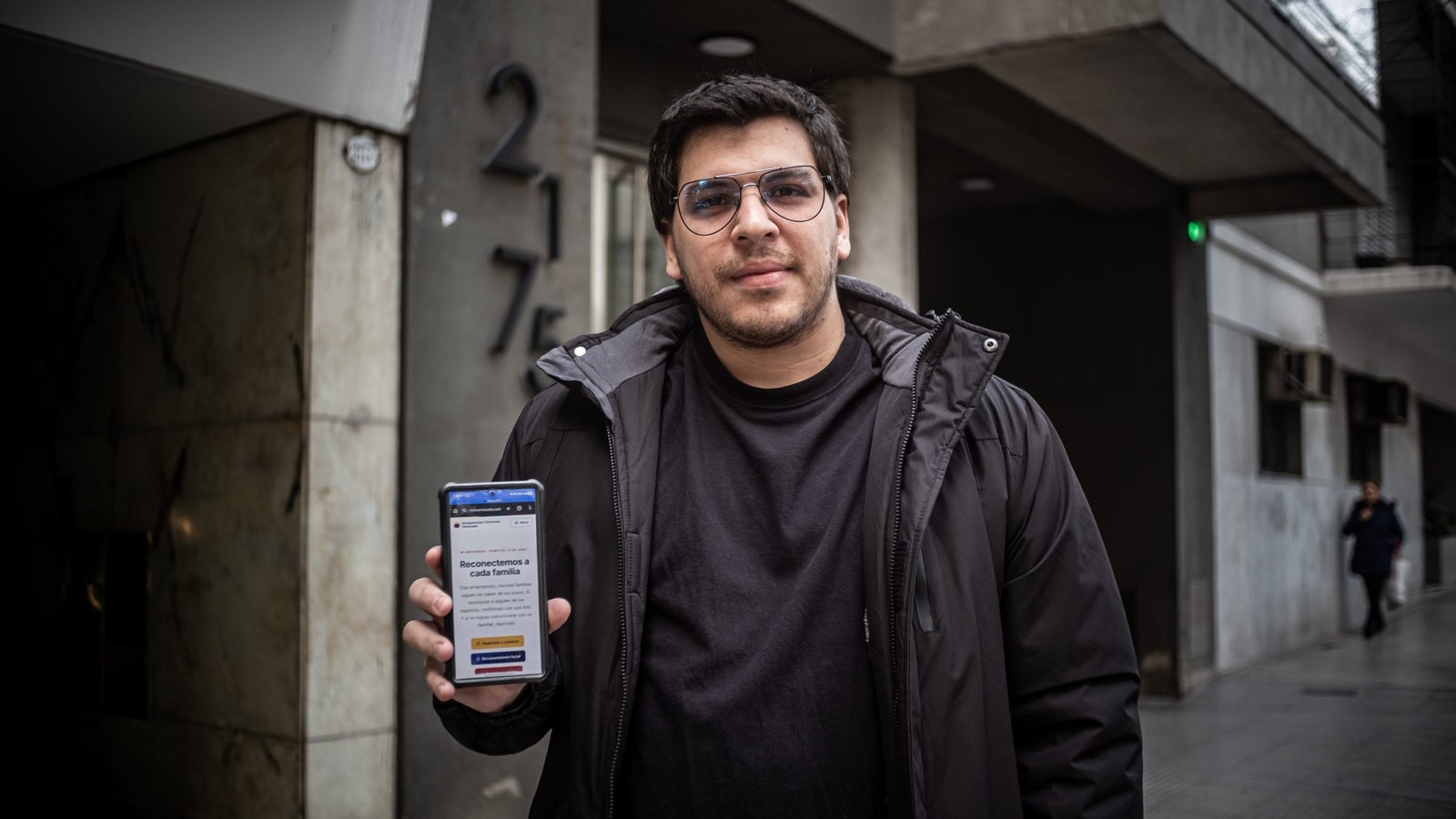
“Who knew when the government was going to respond?” Jorge Bastidas, a 31-year-old Venezuelan programmer who lives in Buenos Aires, told Rest of World. “We decided to take action.”
Bastidas and his team of six created Desaparecidos Terremoto Venezuela, a website for citizens to report, identify, and reunite with missing family and friends. Using Claude Opus 4.8, and facial recognition software donated by Mexican company Lab-Co, Bastidas designed the site to load quickly, without requiring users to register or download an app. It received more than 30,000 missing-person reports in the first two days, he said.
Without AI, “it would have taken me about 24 hours without rest to build something that took me three hours,” Bastidas said.
The earthquakes killed more than 3,800 people, and destroyed homes and hospitals. Telecommunications infrastructure, including a submarine fiber-optic cable and mobile network towers, was severely damaged. Power outages added to the challenge of accessing the internet.
With a near-total absence of state support, Venezuelan citizens and diaspora members like Bastidas stepped in. Within hours of the quakes, volunteer developers in Miami, San Francisco, Chile, Argentina, and elsewhere used AI to quickly build websites to report missing persons, coordinate donation drives, assess structural damage to buildings, map hospital capacity, locate shelters, and reunite pets with owners.
AI “should never replace the state’s legal responsibility or its accountability mechanisms.”Nicole Sánchez, researcher, Fundación InternetBolivia.org
Venezuelan developer Samuel Mariña in California created Ayuda en Camino, or “help on the way,” a website for aid organizations, volunteers, donation centers, and people in need. He built it in four hours, with Replit. With limited connectivity in the affected areas, a WhatsApp assistant can check donations and requests without accessing the site, Mariña told Rest of World.
The internet was “drowning in disconnected information. It was hard to know what people had versus what people needed,” he said. “We wanted to centralize the information and make sure the aid wasn’t wasted, and reached where it was needed.”
Jorge Luis Chacón, CEO of AI engineering company Henkki, developed Somos Acompañamiento with religious organization Ministerio de Acompañamiento International, hours after the earthquakes. Besides missing-person reports, it has lists of survivors and the injured in hospitals. It has over 84,000 registrations, Chacón told Rest of World. With human rights group Laboratorio Migrante, he is also developing an AI system to monitor for human trafficking, he said.
The lack of official resources means that journalists are also using AI to gather data. The Venezuelan women journalists’ network created a search tool with AI tool builder Lovable, which compiles data from medical centers, hospitals, and shelters. Journalists in Venezuela and overseas verify all the data, Valeria Pedicini, a member of the network, told Rest of World. The extra steps for verification are “necessary,” given the lack of official information, she said.
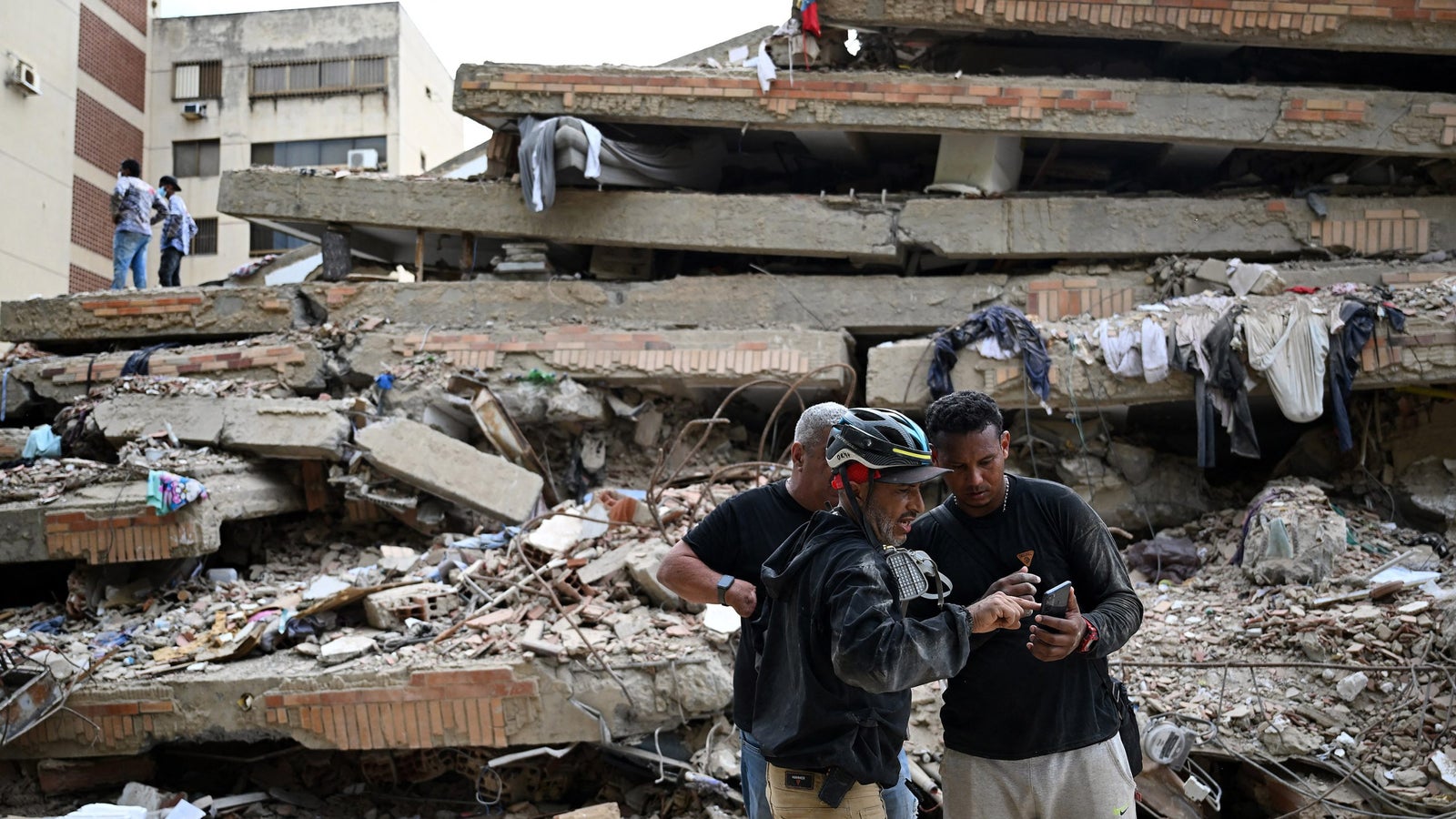
Marianne Diaz Hernández, a digital security expert and founder of the nonprofit Acceso Libre in Santiago, Chile, built terremotove.com, as she watched social media flood with desperate requests for help from survivors. It took her an hour to put together an emergency response map to locate collapsed buildings, search for missing persons, and post any information related to the earthquakes with Claude Code and Kobo Toolbox, she told Rest of World. By the time she launched the site, there were at least three others like hers, she said.
“Everything the state should be doing is being done by civil society,” Hernández said. “People could have been putting their efforts somewhere else, but what we did was fill the state’s role however we could, with what we had.”
In humanitarian crises like the one unfolding in Venezuela, AI tools can help analyze large amounts of data to facilitate family reunification, identify the nearest resources for people, and optimize aid distribution, Nicole Sánchez, a researcher at digital rights organization Fundación InternetBolivia.org, told Rest of World.
“AI can complement these functions and make them more efficient,” she said. “But it should never replace the state’s legal responsibility or its accountability mechanisms.”
Citizens have said Venezuelan authorities have been slow to respond, and have failed to adequately address the crisis — a criticism that acting President Delcy Rodríguez has rejected.
As AI is used increasingly to aid people affected by conflicts, disasters, and other humanitarian crises, experts warn that the systems need human oversight to ensure data privacy, and to minimize errors that can have serious consequences for users.
In Venezuela, while speed is of the essence, developers must ensure that data is collected and stored responsibly, with adequate safeguards that “need to be even stronger” than usual, Sánchez said.
“It might seem like something we can think about later, something that isn’t a priority right now because we’re in the middle of a humanitarian crisis,” she said. “But it is a real problem” because of the sensitive data, including biometrics.
The people are the ones who make these tools valuable.”Jorge Bastidas, programmer
The Desaparecidos Terremoto site was kept “simple” for people to access and upload information easily, and came under cyberattacks, Bastidas said. They then added greater security, he said.
Three weeks on, international aid is reaching Venezuela, but the civilian-led websites and apps remain the main source of information. While they have accelerated and democratized access to critical data, they cannot replace government aid, cybersecurity consultant Jorge Sánchez-Primera told Rest of World.
“Right now, information is disaggregated, incorrect, or doubled, and that’s without considering privacy and data protection risks,” he said. “The state should be centralizing efforts and protecting people’s privacy.”
Meanwhile, some developers have turned their attention to potential future crises. Arturo Nieve, who built a missing-persons registry called Civis, is adapting it to address what he believes is a bigger problem: the near lack of early-warning systems for floods and landslides. Nieve uses open-source satellite data and rainfall forecasts to send alerts via text messaging and WhatsApp to vulnerable rural communities, he told Rest of World.
The Desaparecidos Terremoto team plans to continue working for about three months, and keep the site accessible to the public in the event of a future disaster, Bastidas said.
Despite the tragic circumstances, “seeing the capacity for actions by citizens” was a positive outcome, he said.
“In less than a day, hundreds of different initiatives around the world were activated with AI,” said Bastidas. But “AI is a tool, it is not a substitute for people. … The people are the ones who make these tools valuable.”
此内容由惯性聚合(RSS阅读器)自动聚合整理,仅供阅读参考。 原文来自 — 版权归原作者所有。