


惯性聚合 高效追踪和阅读你感兴趣的博客、新闻、科技资讯
阅读原文 在惯性聚合中打开

推荐订阅源

Security Latest
Security Latest
Apple Machine Learning Research
D
Docker
美团技术团队
freeCodeCamp Programming Tutorials: Python, JavaScript, Git & More
宝玉的分享
宝玉的分享
月光博客
月光博客
J
Java Code Geeks
V
V2EX
IT之家
IT之家
T
Troy Hunt's Blog
D
DataBreaches.Net
Cloudbric
Cloudbric
Blog — PlanetScale
Blog — PlanetScale
H
Hackread – Cybersecurity News, Data Breaches, AI and More
CTFtime.org: upcoming CTF events
G
Google Developers Blog
MongoDB | Blog
MongoDB | Blog
The GitHub Blog
The GitHub Blog
Jina AI
Jina AI
Google DeepMind News
Engineering at Meta
Engineering at Meta
博客园 - Franky
cs.CV updates on arXiv.org
H
Help Net Security
Application and Cybersecurity Blog
S
Security @ Cisco Blogs
N
News and Events Feed by Topic
aimingoo的专栏
aimingoo的专栏
S
Security Affairs
Hugging Face - Blog
Hugging Face - Blog
Forbes - Security
Forbes - Security
AI
AI
奇客Solidot–传递最新科技情报
奇客Solidot–传递最新科技情报
腾讯CDC
H
Heimdal Security Blog
The Cloudflare Blog
S
SegmentFault 最新的问题
Google Online Security Blog
Webroot Blog
Webroot Blog
有赞技术团队
有赞技术团队
The Hacker News
The Hacker News
Microsoft Security Blog
Exploit-DB.com RSS Feed
罗磊的独立博客
Threat Intelligence Blog | Flashpoint
K
KPMG report finds enterprise disconnect between AI and its ROI | CIO
博客园 - 聂微东
Help Net Security
Help Net Security
T
The Exploit Database - CXSecurity.com

Rest of World -

Why state-owned AI won’t solve inequality The hidden cost of Myanmar’s rare earth mines Fed up with Big Tech, communities turn to data collectives for control The U.S. wants to contain China’s AI. Silicon Valley keeps using it China’s AI talent race is starting in high school Can AI beat a goldfish at calling the World Cup? The problem AI content moderation cannot solve AI powers citizen-led disaster relief from afar for Venezuela The Gulf has billions to spend on AI. It still needs Nvidia India’s crackdown on a new WhatsApp feature risks setting a global precedent Older adults know AI is slop. They just like it Your next nurse may monitor you from the Philippines Data centers should benefit the cities that power them China’s AI boom is creating a different kind of entrepreneur China’s web novel platforms embraced AI. Now they are fighting it India is testing an alternative to Silicon Valley’s AI playbook China’s EV makers are taking over the European factories Ford and Nissan can’t fill America’s immigrant tech workers are paying an uncertainty tax I went to the Maldives. Everyone wanted to talk about Temu What happened to China’s overseas EV factory boom? China and the West are taking opposite paths on EV battery recycling The AI-powered World Cup runs on thousands of data workers Chinese universities are cutting language majors to make way for AI GoPro and Roomba were U.S. pioneers. Chinese rivals now dominate Chile turned to China for an undersea cable. The U.S. said no When Americans choose Chinese AI Spotify’s post-English AI future Can open-source beat OpenAI? What the SpaceX IPO reveals about Gulf money in AI China builds a rival satellite constellation as SpaceX goes public Big Tech, big cons: Scammers are hiding in the apps that make your life easy The Great AI Divide: Navigating U.S. and Chinese dominance As the world embraces EVs, the U.S. hits the brakes Silicon Valley’s lure is fading for India’s tech talent What to read: A summer book list Scarcity is driving AI innovation outside Silicon Valley China is training a robot future — one folded shirt at a time EVs are getting more affordable worldwide — except in the U.S. India’s AI deal with the UAE challenges U.S. cloud dominance Pope’s encyclical raises questions on who gets to shape AI China’s tech rise is creating a new kind of tourism U.S. companies have an AI problem. Indian IT wants to be the solution The agentic divide: Why "good enough" AI isn’t enough to survive the new economy U.S. versus China: Can open-source beat OpenAI? AI is minting new billionaires, and workers want their share What AI race? China and U.S. AI worlds are tightly connected Pushing back from Big Tech: Africa’s hard road to AI sovereignty The UAE’s OPEC exit frees up oil wealth as it bets big on AI Silicon Valley keeps misreading China’s role in tech The Filipino virtual assistants behind LinkedIn's "thought leadership" content mill India’s VCs are beating American investors at home Can we really keep kids safe online? What's at stake for tech at the Trump-Xi meeting Taiwan’s chips power the global economy. China holds the leverage Some Taiwanese drone math ahead of the Xi-Trump visit Five times AI hallucinations embarrassed governments The Chinese EV standard winning globally is banned in the U.S. The global cybersecurity gap deepens as AI-powered attacks surge Motorola’s India lawsuit could make platforms police speech faster How the vinyl revival fills the gaps streaming left behind Big Tech is moving data out of the Gulf through Iraqi oil pipelines An old railroad is key to U.S.-China race for critical metals in Africa South Korean probe tests U.S. willingness to protect its tech giants abroad The quiet layoffs sweeping China’s tech giants Humanitarian aid turns to AI as crises outpace capacity The global edtech boom is fading as investors look elsewhere Deadly deepfakes: A survival guide for the age of algorithmic war Why AI alone cannot fix social problems Netflix’s AI deal puts the global VFX workforce at risk Bangladesh's gig workers are stuck in gas lines as Iran-U.S. war strains fuel supply AI is about to make the global e-waste crisis much worse The Mexican security company with a $1.27 billion surveillance empire Voice actors fight to save their livelihoods and local cultures from Hollywood's AI push RedNote chases U.S. expansion after its "TikTok refugee" moment fades In its push to become Big Tech’s data center hub, India is overlooking local resistance Chinese entrepreneurs should go global before they go viral War in the Gulf could tilt the cloud race toward China A Mexican surveillance giant you’ve never heard of is now watching the U.S. border Winners of the 2026 Photo Contest India’s frugal AI models are a blueprint for resource-strapped nations “Data embassies” and safeguarding digital assets during wartime Amazon is betting on speed in a market that may not need it Nations priced out of Big AI are building with frugal models In the Gulf, GPS jamming leaves delivery drivers navigating blind “This is unprecedented”: America's AI boom is leaving the rest of the world behind Workers around the world are not getting what they want from AI The world’s largest humanoid robot maker is going public
AI is shrinking video game development teams to one
Rina Chandran · 2026-07-20 · via Rest of World -

As a teen, Emirhan Gül was a keen gamer, so he was thrilled to join a gaming startup in Istanbul as a developer after university. Over five months, as Turkey rode the wave of mobile gaming, he worked on the design of 23 games, and soon experienced burnout.

“Budgets were high, there was a lot of work, and they hired anyone, even if they didn’t know much,” the 24-year-old told Rest of World. But “the idea of ​​churning out a game a week didn’t really appeal to me much. It wasn’t a culture I particularly enjoyed.”

At the time, the mobile gaming industry was booming in Turkey. The country hosted more than 800 active game studios, making it the biggest game development hub in Europe after London. In 2021, more than half the top 10 mobile games on Apple’s App Store were developed by Turkish studios, including Peak, the country’s first unicorn. In 2022, Dream Games, Peak’s rival, became the second unicorn.

These success stories led aspiring developers like Gül to study gaming and enter the industry. After leaving the Turkish startup, Gül turned down an offer from a U.S. firm, and founded his own studio. With Claude Code’s launch in early 2025, Gül realized he needed just two full-time employees, a fraction of the nearly dozen workers in his previous job.

“I’m the only developer in my team. When we started, I had to write all the code myself. I also have to manage game design, social media, investment meetings, and the like,” he said. “With Claude Code, I can do all that easily. It really sped things up and helped me a lot.”

For Gül, the $200 annual fee for Claude Pro is worth it. Artificial intelligence tools have lowered the barriers to entry for solo developers like him. But as more gaming companies adopt AI tools, more than a quarter of workers in the gaming industry have been laid off worldwide in the past two years, according to a recent survey. 

Instead of hiring five junior programmers … my developer friend does all the work himself with AI.”Nazım Adaklı, Bahçeşehir University

Globally, the video gaming industry is worth more than $500 billion, with mobile gaming making up half of the sales. Big tech companies such as Sony Entertainment, Microsoft, and Tencent dominate, and they are also downsizing: Microsoft Xbox said earlier this month that it is eliminating more than 3,000 jobs, or about a fifth of its workforce, and divesting five of its video-game development studios.

Growth in the game development industry in Turkey has also stalled. The number of new gaming startups fell from nearly 200 in 2021 to 84 in 2023, and to 30 last year. Jobs have dried up, and bigger gaming companies are reluctant to hire entry-level workers, Nazım Adaklı, who lectures on AI in games at Istanbul’s Bahçeşehir University, told Rest of World.

“Instead of hiring five junior programmers at the startup where he works, my developer friend does all the work himself with AI,” Adaklı said. 
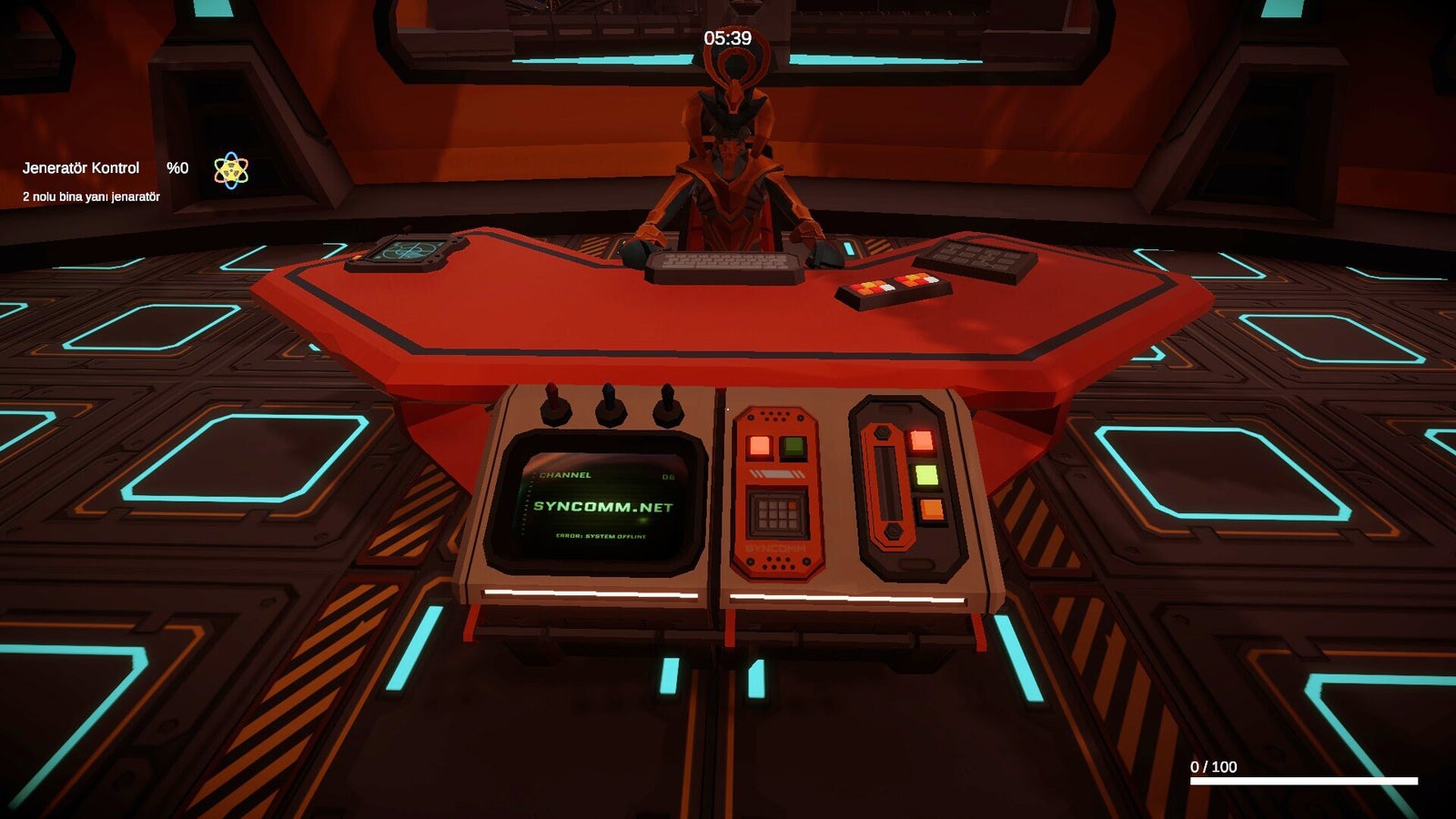
A futuristic control desk with various buttons and screens, featuring a figure in a striking outfit sitting in front

Screenshot of a game from Turkey’s Surveyors Labs.

With generative AI, a person does not need any programming or design experience to develop a game. In Turkey and elsewhere, AI tools are sparking a surge in solo developers and small studios. In 2023, for the first Turkey event on Steam — the U.S. based digital distribution platform for computer games — there were 67 applications from small and independent studios with two or three employees. A year later, the event drew 254 applications from such studios.

Ender Tınkır is one of the solo developers who left a big studio to strike out on his own. At Peak, he worked on hit games such as Toon Blast. Two years later, at Dream Games, he helped develop the blockbuster games Royal Match and Royal Kingdom. In 2022, as ChatGPT launched, he decided to go solo, he told Rest of World.

“AI has become part of my daily work. I use it actively in many areas, from prototyping and visual variation to coding and iteration,” he said. “Many Turkish developer friends who left companies like Peak or Dream have started their own solo studios with AI.” 

Using Microsoft Copilot, OpenAI’s Codex, and Claude Cowork, Tınkır’s Play On Studios released its first mobile game, Zen Mahjong, earlier this year.

“Two years ago, I couldn’t have imagined that I could make a game by myself,” Tınkır said. “In just two months, I developed a game without any involvement in coding, design, or product decisions.”

The barriers to turning people’s ideas into products are disappearing.”Ender Tınkır, a solo developer

In June, an investor approached Tınkır to start “an AI-powered mobile game company,” he said. The new studio has a workforce of two.

“In the next few years, the number of products developed by individuals or very small teams will increase significantly,” Tınkır said. “The barriers to turning people’s ideas into products are disappearing.”

Still, only a fifth of gaming titles make a profit. Meanwhile, AI tools have made it easier to clone games, and are displacing concept artists and writers, and junior developers, Güven Çatak, founder and director of Istanbul’s Bahçeşehir University Game Lab, told Rest of World.

Junior positions “have tanked” for his students, he said. “The earlier path of ‘I’ll get in a big studio, gain experience, and then move up to a senior position’ has become a thing of the past.”

Adaklı is advising his students to waste no time. “Waiting to be hired by big studios is a mistake. … They are creating games, and making deals with publishers while still at college,” he said. 

“I tell my students, ‘Right now is the worst time to enter the game industry to find a stable job, but it’s the best time to start your own venture, to realize your own idea,’” he said.

But with everyone able to develop and release games with ease, the industry is even more competitive, Begüm Ceren Onar, a 34-year-old game designer, told Rest of World. Onar was laid off from an Istanbul-based gaming studio in December after a game her team had worked on for years flopped. The studio decided to use AI to generate ideas for new products, and laid off 17 of its 20 employees, she said.

“More people are developing games on their own, but most are not making a living off of it,” she said. “Quantity doesn’t always mean success.”