







Iran has responded to a U.S. proposal to bring an end to the war in the Middle East, Iranian state media reported Sunday.
The response “was given through mediator Pakistan,” state news agency IRNA said, without specifying what the response was. “According to the proposed plan, negotiations at this stage will focus on the issue of ending the war in the region.”
The two sides continued to trade fire in the Persian Gulf on Saturday, more than a month after a temporary ceasefire deal was announced that was initially intended to reopen the Strait of Hormuz.
Iran has continued to block ships from passing through the strait, disrupting critical Gulf oil supplies and prolonging the global economic uncertainty surrounding the conflict.
Markets have soared and oil prices have dropped over the last week, however, amid anticipation that a deal could be close after weeks of talks and occasional setbacks.
Energy Secretary Chris Wright told NBC News’ “Meet the Press” on Sunday that the U.S. was still waiting for a “clear resolution” from Iran on its latest proposal.
He told moderator Kristen Welker that the U.S. was seeking the “free flow of traffic through the international waters that are the Straits of Hormuz, and an end to the Iranian nuclear program.”
“When we start to get free flow of traffic through the Strait of Hormuz, energy prices will come down,” he added.
Mike Waltz, U.S. ambassador to the United Nations, meanwhile told ABC News that the negotiations had gone “longer and slower, I think, than anyone would like,” but stressed “those negotiations and that diplomacy is ongoing.”
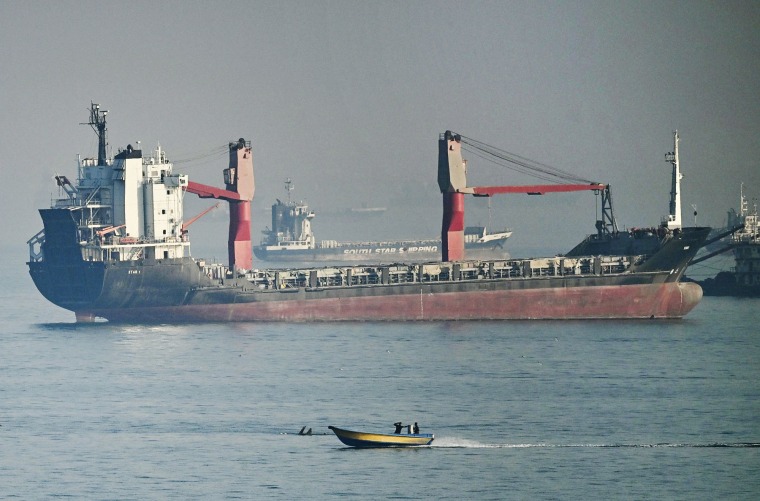
President Donald Trump’s plan for military vessels to escort merchant ships through the Strait of Hormuz, known as “Project Freedom,” was paused last week just days after it was announced.
The U.S. has meanwhile continued its own blockade of Iran’s ports, but a U.S. intelligence analysis concluded Tehran could withstand a naval blockade for months.
In a phone interview with NBC News on Friday, Trump said “No” when asked if the conflict with Iran was over.
“It’s over when it’s over,” the president said. “But we certainly have won militarily. We have to get people to come out of the caves [in Iran] and sign something.”
Roughly 20% of the world’s oil passed through the Strait of Hormuz before the U.S. and Israel attacked Iran on Feb. 28.
In the interview, Trump said of the critical waterway: “We really control it; they don’t. And we’ve taken the business away from them.”
There are “no boats going into Iran,” he added. “They’re dying.”
More important than bringing about an immediate end to the conflict is striking a deal that is in the best interests of the U.S., he suggested.
“I don’t want to get there if it means I can’t make the best deal,” he said. “I’ve got to make good deals. We’re pretty close.”
Iran’s Foreign Minister Abbas Araghchi said Friday that “every time a diplomatic solution is on the table, the U.S. opts for a reckless military adventure.”
The U.S. military blockade of Iran’s ports will eventually deprive Tehran of crucial oil revenue, but the regime could likely withstand the pressure for months without a major economic crisis or lasting damage to its oil fields, energy industry analysts and two Western officials familiar with intelligence assessments told NBC News.
Administration officials say the blockade is designed to cut off Iran’s oil exports — the country’s economic lifeline — and force Tehran to reopen the Strait of Hormuz and bow to U.S. demands at the negotiating table.
Iran has gradually begun to cut back oil production due to the blockade and, at some point within the next two months, it may run out of storage capacity for its oil and even be forced to shut down some wells. But most analysts say Iran can probably avoid shutting down wells since a significant amount of its oil can be consumed domestically, allowing most oil fields to keep operating.
此内容由惯性聚合(RSS阅读器)自动聚合整理,仅供阅读参考。 原文来自 — 版权归原作者所有。