


It took just 48 hours for Ben Lopman’s 18-month-old son to go from being an energetic toddler to totally listless.
Lopman’s son Ruben was suffering from severe dehydration from rotavirus, one of the most common causes of diarrhea and vomiting in babies and children. He was so sick, he ended up in the hospital, desperately needing intravenous fluids to keep up his strength to battle the infection.
Lopman, an infectious disease epidemiologist now at Emory University, was living in London when his son got sick. It was 2008, five years before the United Kingdom approved a vaccine to prevent the highly contagious virus. The boy eventually recovered.
“It was scary,” said Lopman. “It also reminded me how severe this disease can be for any kid.”

Rotavirus, a seasonal virus similar to influenza, has been rising across the U.S. since January. With infection rates higher now than this time last year, doctors have fresh concerns that declining vaccinations could lead to more severe illness and a higher surge in the coming years.
The virus — which is spread by hands touching an infected surface, then touching the mouth — used to be a major cause of severe illness among babies and young children in the U.S., responsible for more than 200,000 emergency room visits, up to 70,000 hospitalizations and dozens of deaths each year, according to the National Foundation for Infectious Diseases. That drastically changed after the first oral vaccine was approved 20 years ago.
Data from WastewaterScan, an academic program through Stanford University in partnership with Emory University, shows the virus has been surging since January, with levels continuing to increase in certain parts of the U.S., including the West and the Midwest.
“We’re seeing a lot of rotavirus in wastewater right now, definitely very high levels and that indicates to us that there are high levels of rotavirus infections in these communities,” said Dr. Marlene Wolfe, WastewaterScan's program director and co-principal investigator.
Dr. Stephanie Deleon is seeing the surge up close in Oklahoma City.
Deleon is associate chief medical officer and a pediatric hospitalist at Oklahoma Children’s OU Health where there’s been a steady influx of children admitted for rotavirus over the last two months. There’s no sign it’s slowing, she said.
Early symptoms include a fever of about 101 Fahrenheit, along with vomiting. “Both of those go away pretty quickly, within a day to a day and a half,” she said. But then the diarrhea will start after, often upwards of 20-plus episodes per day.”
There is no treatment for the infection other than supportive care such as fluids, so children and their families have to wait for the virus to run its course. Symptoms can last about three to eight days.
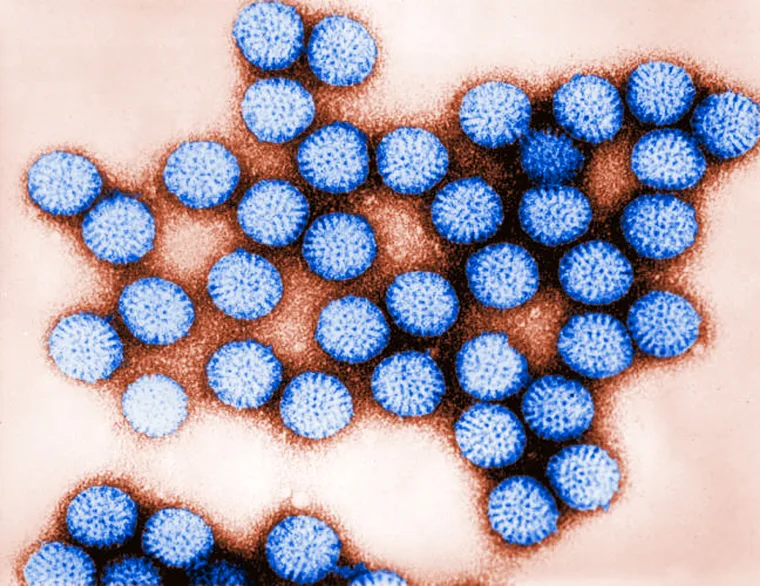
Most of the patients she’s seeing in the hospital are either too young to get the vaccine, haven’t received all the doses yet or are unvaccinated, an increasing problem across the U.S. According to the latest CDC data, nationally, 73.8% of children are vaccinated. That number has been steadily declining over the last eight years.
“Children who are not vaccinated are absolutely at higher risk of severe disease and the need for hospitalization,” Deleon said.
Hand-washing and cleaning surfaces can help stop the spread, but the virus is tough to kill.
“The virus lives on surfaces for a long time,” said Dr. Yvonne Maldonado, Taube Endowed Professor of Global Health and Infectious Diseases at Stanford University. “Even with washing your hands, it’s easy for the virus to remain.”
Rotavirus can infect anyone, but it can be particularly fast-moving and severe in babies and young children, often leading to hospitalization.
“The problem with rotavirus is it’s a vomiting illness,” said Dr. Paul Offit, director of the Vaccine Education Center and professor of pediatrics at the Children’s Hospital of Philadelphia. “You vomit and vomit and vomit. It’s very hard to rehydrate someone by mouth who’s vomiting and that’s why they end up coming into the hospital for intravenous fluids.”
Offit said he used to see 400 children every year at his hospital with severe dehydration from the virus. He vividly remembers being a pediatric resident and treating a child who died.
“This child was perfectly healthy two days earlier,” he said. “It was a healthy, little 9-month-old girl. I’ll never forget this because I was the one who then had to go out to this mother in the waiting room to tell her her child had died.”
He said that memory lived in his head as he later helped develop RotaTeq, one of two vaccines now approved for rotavirus.
The Centers for Disease Control and Prevention estimates that 40,000 to 50,000 hospitalizations among infants and young children are prevented every year due to the vaccines, which are given starting at 2 months of age.
Studies have also shown that 9 out of 10 kids who get the vaccine will be protected from severe disease. Seven out of 10 will be protected from getting infected at all, according to the CDC.
Despite the data, earlier this year, Health and Human Services Secretary Robert F. Kennedy Jr. announced changes to the childhood immunization schedule, which included removing the rotavirus vaccine and telling parents they should talk to their doctor before deciding to vaccinate.
“The virus is still circulating,” Offit said. “So a choice not to get a vaccine is a very real choice to experience that infection.” While the schedule changes were put on hold by a federal judge last month, doctors worry that even attempted moves to change the guidelines likely planted seeds of doubt among some new parents, who may now hesitate to vaccinate for rotavirus.
“These are young people and they are getting confusing messaging,” Maldonado said. “They don’t know where to turn.”
While deaths from rotavirus will likely never be common in the U.S. because of access to health care, the rate of severe complications could significantly increase because of resistance to vaccination, said Dr. Monica Gandhi, a UCSF infectious disease specialist.
“The fear and the expense and the pain and the taking off work, a hospitalization is a really big deal,” she said. “When the medical community developed vaccines, it was not because 100% of people died, it was because you don’t want children to ever get sick or die.”
Lopman, who used to study rotavirus for the CDC, said he doesn’t think the current surge in cases is connected to the recent policy changes. But he is concerned that with vaccination rates falling, what he experienced with his son could happen to more families.
“This is actually a really extraordinary vaccine,” he said. “It’s also been studied extensively for safety and there’s a very clear, overwhelming benefit.”
此内容由惯性聚合(RSS阅读器)自动聚合整理,仅供阅读参考。 原文来自 — 版权归原作者所有。