


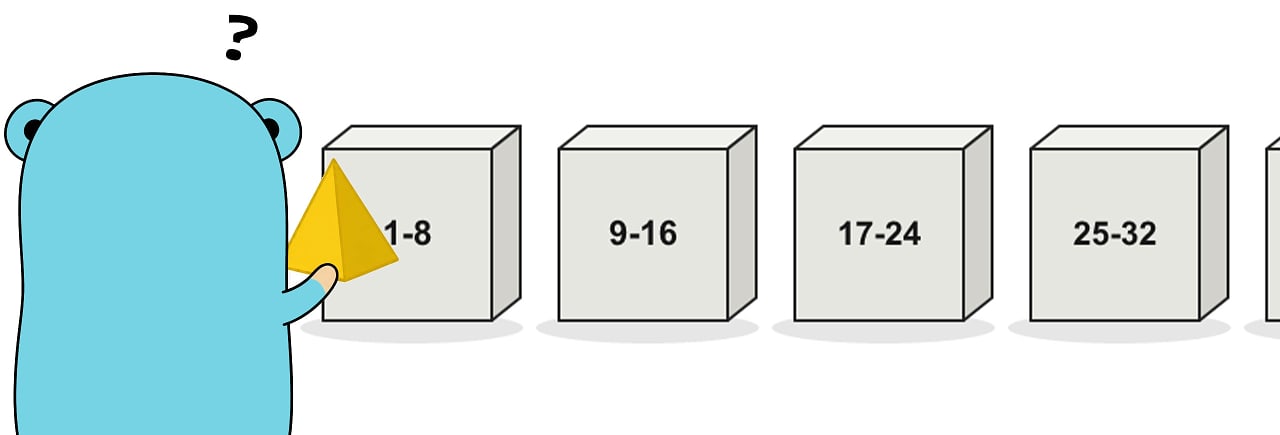
Size-Specialized Memory Allocation in Go 1.27 — Small allocations (under 80 bytes) are now up to 30% faster, and you can get the benefits just by rebuilding. Learn where the speedup comes from and why 80 bytes was the "sweet spot". Allocation-heavy programs could see a ~1% gain overall.
Michael Matloob (The Go Blog)
Data Races and the Limits of ThreadSanitizer in C and Go — A tour of how ThreadSanitizer (the engine behind race detection in Go) works, and the easily reachable limits where it stops catching real races. Two objects in unrelated sync.Pools colliding in Go's 128-slot table is enough to hide a race.
Phil Eaton
IN BRIEF:
-
The proposal for cgo without a C toolchain from last week's issue is progressing, with a CL adding a
GOEXPERIMENTto trial it ahead of any approval. -
The first bare-bones draft Go 1.28 release notes are available to skim, ahead of the expected February 2027 release.
-
🔒 The Rust team has put out an alert to maintainers of popular libraries saying there's an 'ongoing campaign' targeting them in order to compromise their systems. Go is not immune to this, so stay alert.
-
🇪🇺 GopherCon Europe 2027 has been announced for Berlin next June 14–17.
-
🇮🇹 GoLab 2026 takes place in Bologna, Italy on November 1–3.
A 40ms Go GC Pause Caused by Swap — “I’m writing this so you don’t slap your forehead like I almost did when I decided to run swap in production to absorb memory spikes.”
Fernando Simões
Scaling Go in CI by Replacing actions/setup-go — How GitHub's official actions/setup-go lets parallel jobs interfere with each other's caches, and why its cache goes stale until you touch go.mod. CloudX's alternative gives each CI job its own isolated cache.
Schwab and Downs (CloudX)
📄 A Million Go Map Entries Take 38MB, Not 16MB – A look at where the extra bytes go in Go’s Swiss table map implementation and why map[T]struct{} no longer saves memory over map[T]bool. Nazar Boyko
▶️ Numbers: The Long History Behind Go's Untyped Constants – A history-heavy talk on how 1960s word sizes gave C its integer literal mess, and why you’ll never see 0x80ULL in Go code. Dave Cheney
▶️ Building a Web App with Go and HTMX Haseeb Majid
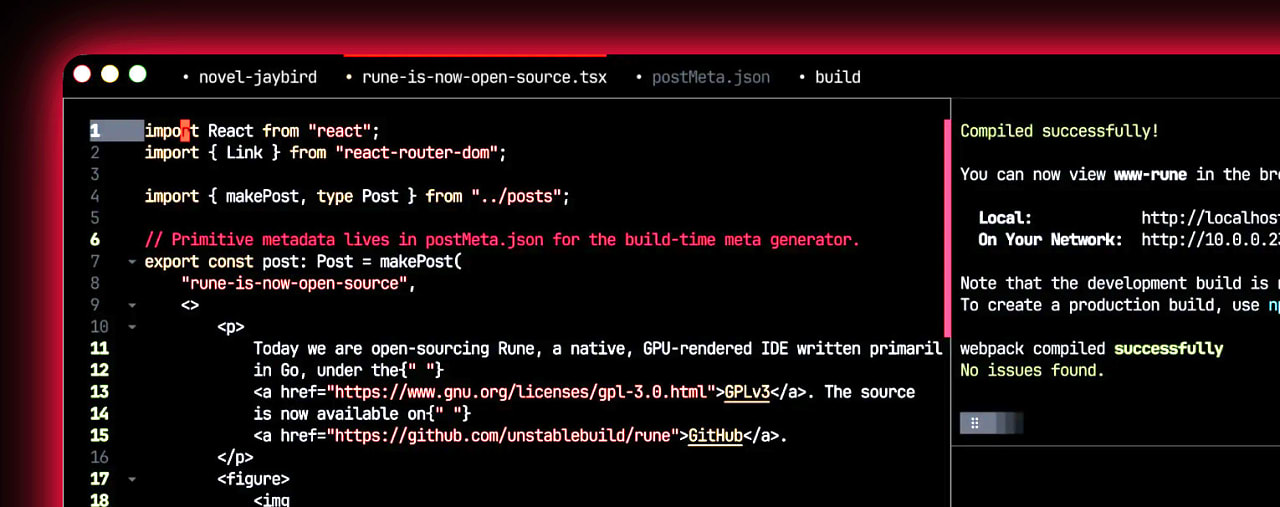
💡 Rune is also an interesting case study for using (a fork of) Ebitengine for its GPU-powered rendering.
💡 If 'wasm2go' sounds familiar, there's also ncruces/wasm2go which powers the cgo-free go-sqlite3. The key difference is ncruces/wasm2go emits pure Go, while goccy's also generates amd64 and arm64 assembly.
Software Engineer - Join our "kick ass" team! Our software team operates from 17 countries and we're looking for more exceptional engineers to join our team.
🐘 Since many Go backends end up talking to Postgres, you may also like our sibling newsletter: Postgres Weekly.
-
str2duration 2.2 – Get a
time.Durationfrom a string like1hor1w2d3s. -
html2text 1.5 – Convert HTML to plain text with no dependencies.
-
Goldmark 2.1 – Popular Markdown parser and rendering library.
-
✉️ enmime 2.5 – MIME mail encoding and decoding package.
-
gRPC-Go 1.84.0 – High perf gRPC framework.
-
go-diff 0.9 –
diffparser and printing library.