





Last week colleagues from across the Guardian came together for the first global Berger Hack Day: two packed days of experimentation,collaboration and creative problem-solving across the organisation and international offices. The Berger Hack Day takes its name from John Berger, the influential writer, critic and thinker whose work challenged how we see the world, who gets to speak, and how stories are told. His ideas provided the intellectual and creative backdrop for teams across the Guardian to come together and question assumptions, experiment with new approaches and imagine what the Guardian could become next.
The brief was kept deliberately open but with a strong sense of purpose running through it. Participants were invited to develop ideas that help us become more global, more digital and more visual, while breaking down silos and encouraging collaboration across the organisation. No prior hack-day or engineering experience was required, just curiosity, generosity and a willingness to try things out.
Many of the projects tackled real challenges facing journalism today: accessibility, trust, reader overload, climate reporting, collaboration across teams and making the most of our content on and off platform.
Across dozens of demos, teams showcased everything from playful and entertaining concepts to technically ambitious prototypes, often combining editorial thinking with product, data, engineering and commercial perspectives. Importantly, many ideas were rooted in Guardian values: improving access to journalism, strengthening relationships with readers and supporting high-quality reporting.
What followed was an energising reminder of how much imagination, expertise and ambition exists across the Guardian.
Highlights from the day
It would be impossible to list every project, but a few recurring themes stood out:
-
Making journalism more accessible and trustworthy, including tools to simplify articles for readers with learning disabilities and ways to surface sources more transparently in podcasts and video.
-
Helping readers navigate abundance, with personalised content curation and playful formats designed to reduce overwhelm.
-
Connecting people – internally and externally, whether through tools that help colleagues find one another across departments or features that allow readers to signal what journalism matters most to them.
-
Being more visual and off-platform savvy, with experiments in repurposing data visualisations, faster social graphics and new multimedia formats.
The sheer range of ideas - from serious and mission-driven to gloriously silly - was a reminder that creativity thrives when people are given time, trust and permission to experiment.
Celebrating the winners
At the end of the second day, after a rapid-fire set of demos and some intense voting, the winners were announced, with each category reflecting a different kind of success:
Best Conceptual Hack: Facts are Sacred
Cameron Armstrong, Chloe Kirton, Janita Da-Costa, Daniel Okoronkwo, Vicky Graham, Fran Singh, Rachel Stewart and Johanna Kollmann
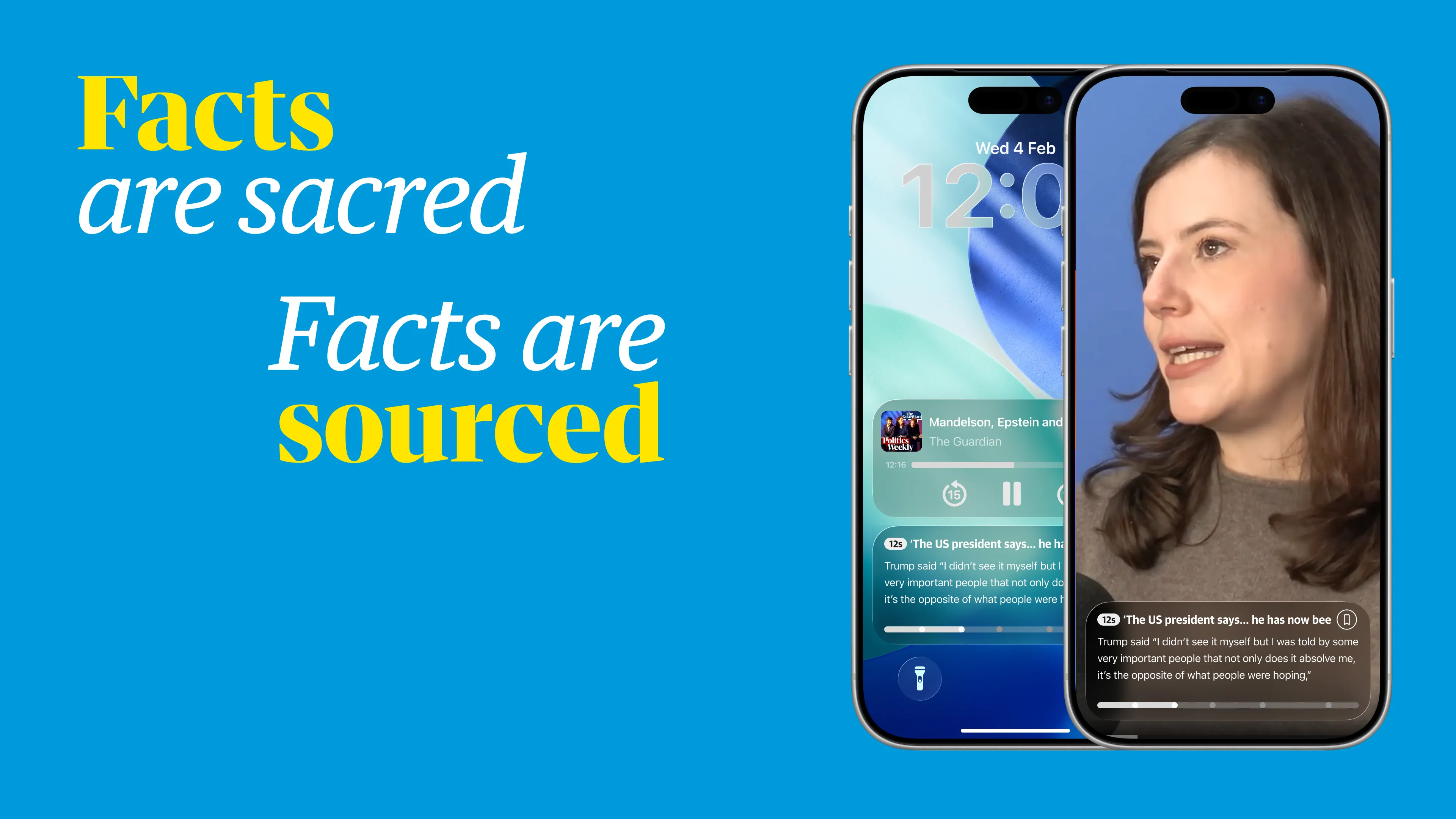
Screenshot of the Facts are Sacred hack, which won the Best Conceptual Hack category at the Berger Hack Day.
Illustration: Cameron Armstrong, Chloe Kirton, Janita Da-Costa, Daniel Okoronkwo, Vicky Graham, Fran Singh, Rachel Stewart and Johanna Kollmann
This project tackled trust head-on, proposing a way to make sourcing in podcasts and video more visible through timestamped, linked references. The idea resonated strongly with audiences, reinforcing the Guardian’s commitment to transparency and rigour.
Best Technical Hack: Data Dive – making quick social videos
Anna Leach, Prina Shah, Rik Roots and Nikhita Chulani
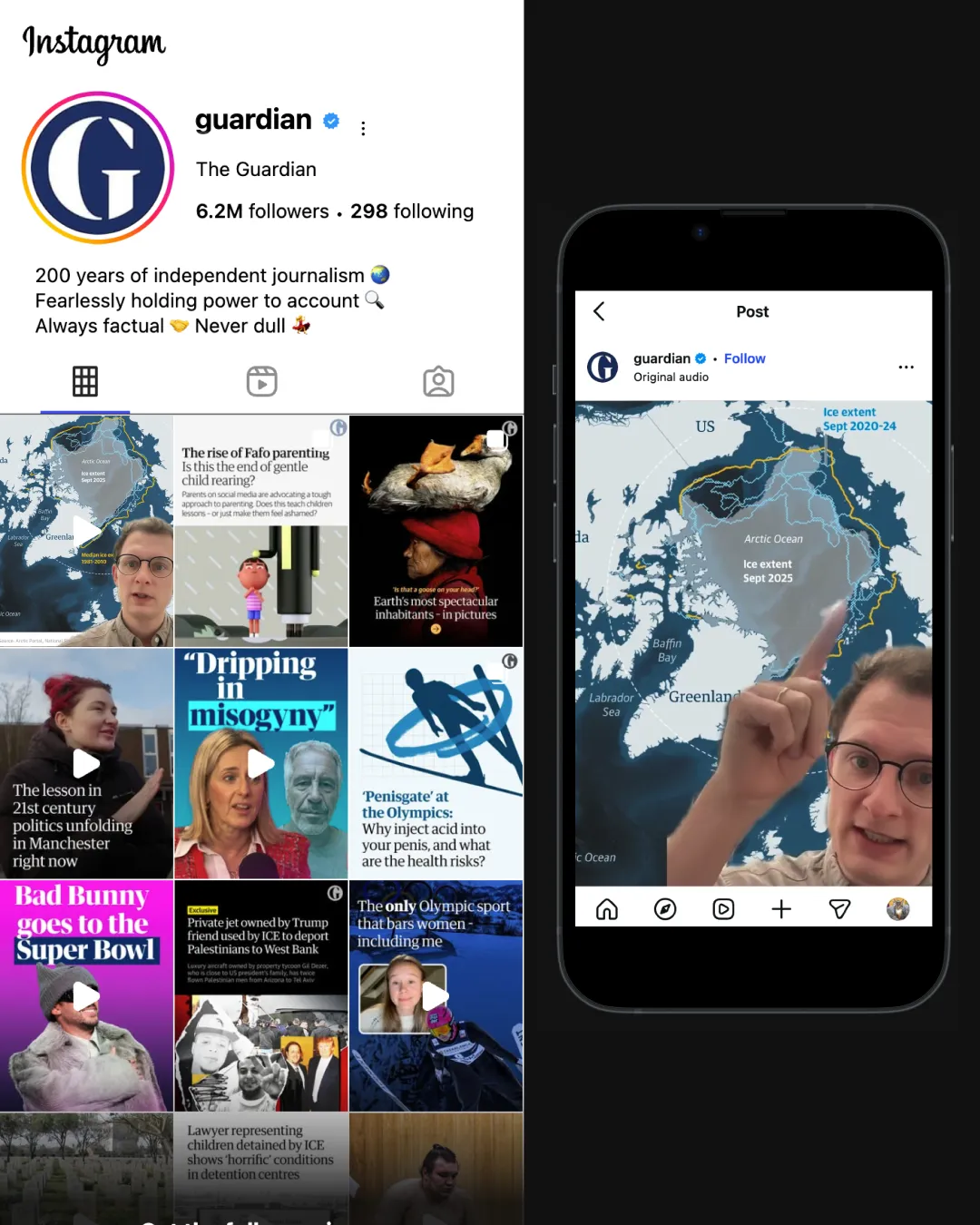
Screenshot of the Data Dive hack, which won the Best Technical Hack category at the Berger Hack Day. Illustration: Anna Leach, Prina Shah, Rik Roots and Nikhita Chulani
This project demonstrated how existing visuals could be rapidly transformed into high-quality social video content. It struck a powerful balance between technical execution and real-world usefulness.
Most Entertaining Hack: Project Virgo
Simon Byford
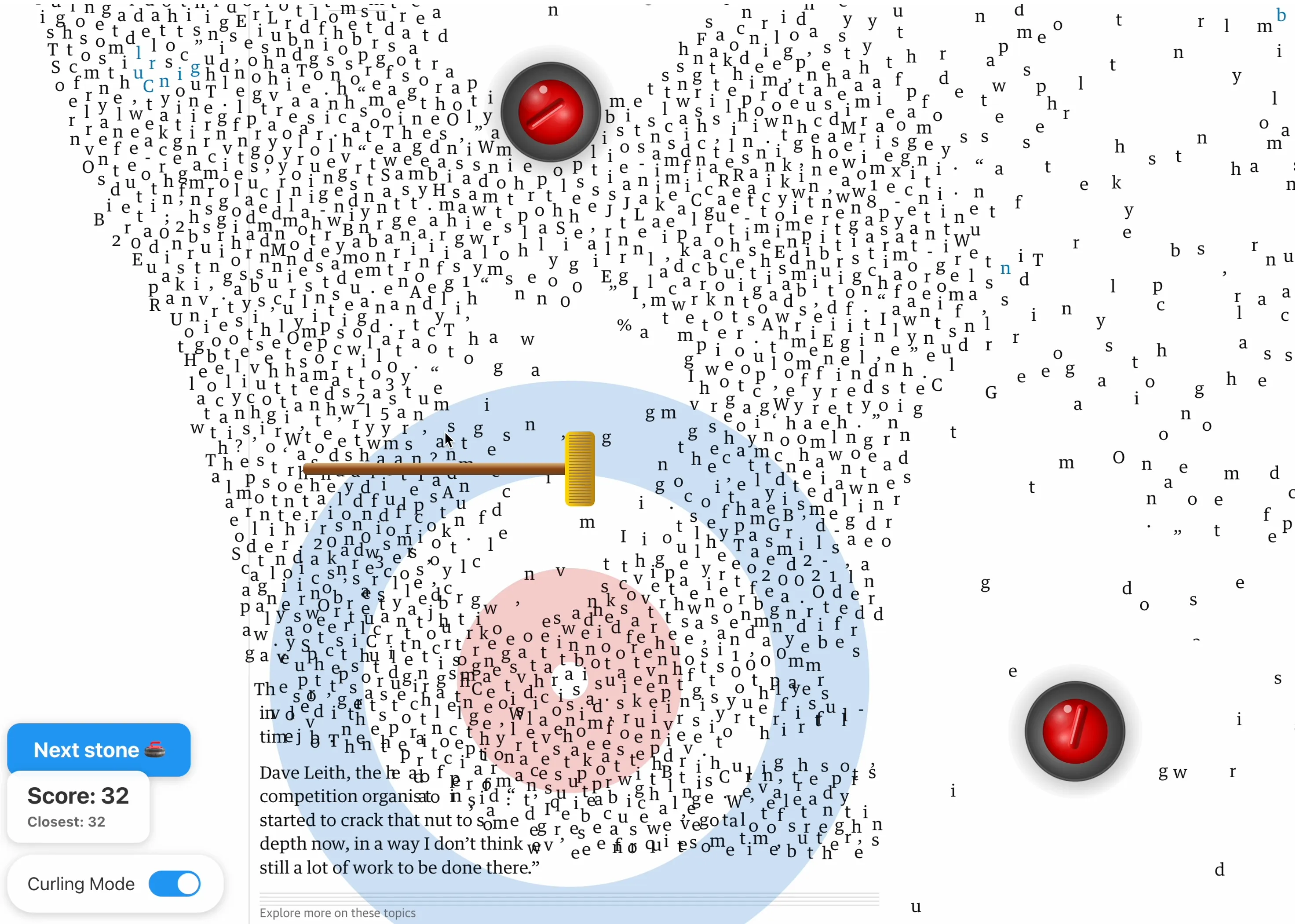
Screenshot of the Project Virgo hack, which won the Most Entertaining Hack category at the Berger Hack Day. Illustration: Simon Byford
A joyful reminder that hack days should be fun as well as functional. Project Virgo transformed news articles into interactive snooker tables and curling sheets, leaning into playfulness and creativity, and earning its title as the most entertaining hack of the day.
Most Ambitious Failure: The Guardian Commercial Library
Yoni Ross, Rory Hamilton and Keith Campbell
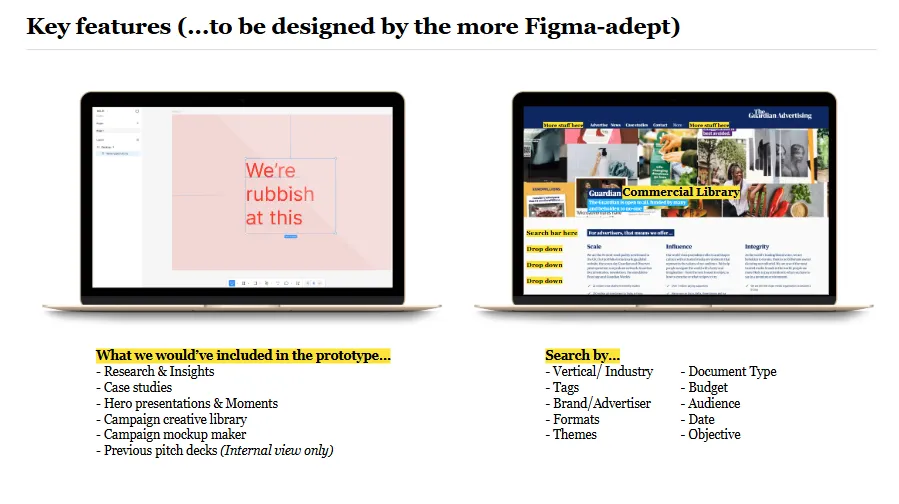
Screenshot of the Guardian Commercial Library hack, which won the Most Ambitious Failure category at the Berger Hack Day. Illustration: Yoni Ross, Rory Hamilton and Keith Campbell
This award celebrated bravery. In product and engineering, we like to celebrate effort, even when things don’t go as planned. The team took on a genuinely big, complex challenge - creating a global commercial library - and shared their learning openly, embodying the spirit of experimentation that hack days are all about.
Best in Berger: Your Five a Day
Joseph Smith, Helene Samson, Gustavo Gava, Emily Turner, Georges Lebreton and Michael Clapham
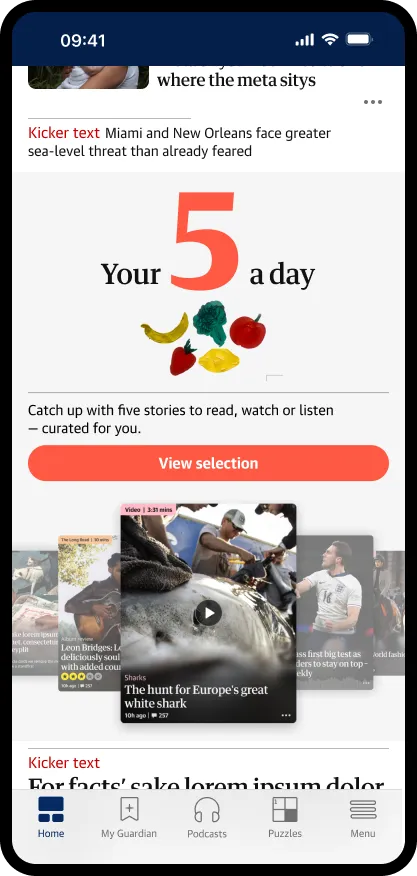
Screenshot of the Your Five a Day hack, which won the Best in Berger category at the Berger Hack Day.
Illustration: Joseph Smith, Helene Samson, Gustavo Gava, Emily Turner, Georges Lebreton and Michael Clapham
Chosen as the most on-theme project, Your Five a Day offered a thoughtful response to news overload, proposing a personalised daily mix of content that feels healthy, intentional and shareable.
What next?
Beyond the prizes and prototypes, the Berger Hack Day succeeded in something harder to measure: creating momentum. Many teams are already exploring next steps, and several ideas have clear potential to become future features. Just as importantly, the event reinforced the value of making time to think together about the future of the Guardian.
A huge thank you to everyone who took part, organised, presented, voted, asked questions, tested ideas and cheered others on. This was Berger at its best - collaborative, ambitious and full of possibility!