惯性聚合 高效追踪和阅读你感兴趣的博客、新闻、科技资讯
阅读原文 在惯性聚合中打开

推荐订阅源

Threat Intelligence Blog | Flashpoint
T
The Exploit Database - CXSecurity.com
Recent Commits to openclaw:main
Spread Privacy
Spread Privacy
Hacker News - Newest:
Hacker News - Newest: "LLM"
cs.CV updates on arXiv.org
Google Online Security Blog
S
Security Affairs
Help Net Security
Help Net Security
Simon Willison's Weblog
N
News and Events Feed by Topic
P
Palo Alto Networks Blog
P
Privacy International News Feed
T
Threat Research - Cisco Blogs
P
Proofpoint News Feed
N
News and Events Feed by Topic
C
Cyber Attacks, Cyber Crime and Cyber Security
TaoSecurity Blog
TaoSecurity Blog
T
Tor Project blog
Schneier on Security
WordPress大学
WordPress大学
Cyber Security Advisories - MS-ISAC
cs.CL updates on arXiv.org
V
Visual Studio Blog
F
Fortinet All Blogs
大猫的无限游戏
大猫的无限游戏
钛媒体:引领未来商业与生活新知
钛媒体:引领未来商业与生活新知
T
Tenable Blog
M
MIT News - Artificial intelligence
T
Threatpost
freeCodeCamp Programming Tutorials: Python, JavaScript, Git & More
N
News | PayPal Newsroom
P
Privacy & Cybersecurity Law Blog
酷 壳 – CoolShell
酷 壳 – CoolShell
Microsoft Azure Blog
小众软件
小众软件
Cyberwarzone
Cyberwarzone
雷峰网
雷峰网
云风的 BLOG
云风的 BLOG
量子位
Google DeepMind News
O
OpenAI News
爱范儿
爱范儿
H
Hackread – Cybersecurity News, Data Breaches, AI and More
奇客Solidot–传递最新科技情报
奇客Solidot–传递最新科技情报
F
Full Disclosure
B
Blog
Cloudbric
Cloudbric
MyScale Blog
MyScale Blog
阮一峰的网络日志
阮一峰的网络日志

KuangjuX(狂且)

提高 Directory Cache 性能 高速缓存技术(Cache) Chisel 学习笔记 随笔(一) 指令级并行技术 TLB MMU 笔记(基于 MIPS) Verilator 学习笔记 MIT-6.S081-mmap MIT-6.S081 Networking MIT-6.S081 Lazy Page Allocation MIT-6.S081 Copy on Write Fork MIT-6.S081 User Level Threads 2021年终总结 RISC -V N扩展 io_uring 阅读笔记 在Ubuntu中升级Linux内核 飞书Rust实习面试 Rust并发安全总结 Rust String 用法总结
xv6-riscv中的KPTI机制
KuangjuX · 2021-11-19 · via KuangjuX(狂且)

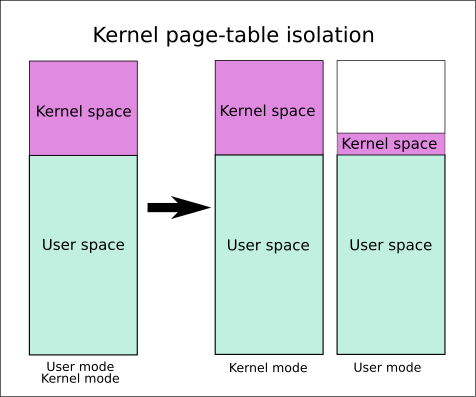
KPTI (Kernel Page Table Isolation) 机制最初的主要目的是为了缓解 KASLR 的绕过以及 CPU 侧信道攻击。

在 KPTI 机制中,内核态空间的内存和用户态空间的内存的隔离进一步得到了增强。

  • 内核态中的页表包括用户空间内存的页表和内核空间内存的页表。
  • 用户态的页表只包括用户空间内存的页表以及必要的内核空间内存的页表,如用于处理系统调用、中断等信息的内存。

简而言之,KPTI 机制通过在系统调用等由用户态陷入内核态的过程中切换页表,使得内核态不能直接访问用户态的虚拟内存和执行用户态的代码段来避免熔断安全漏洞。

xv6-riscv 中的 KPTI

上下文切换

关于用户态陷入内核态的上下文切换,定义在 kernel/trampoline.S 中的 uservec 中:

1
2
3
4
5
6
7
8
9
10
11
12
13
14
15
16
17
18
19
20
21
22
23
24
25
26
27
28
29
30
31
32
33
34
35
36
37
38
39
40
41
42
43
44
45
46
47
48
49
50
51
52
53
54
55
56
57
58
59
60
61
62
63
64
65
66
67
68
69
70
uservec:    
#
# trap.c sets stvec to point here, so
# traps from user space start here,
# in supervisor mode, but with a
# user page table.
#
# sscratch points to where the process's p->trapframe is
# mapped into user space, at TRAPFRAME.
#

# swap a0 and sscratch
# so that a0 is TRAPFRAME
csrrw a0, sscratch, a0

# save the user registers in TRAPFRAME
sd ra, 40(a0)
sd sp, 48(a0)
sd gp, 56(a0)
sd tp, 64(a0)
sd t0, 72(a0)
sd t1, 80(a0)
sd t2, 88(a0)
sd s0, 96(a0)
sd s1, 104(a0)
sd a1, 120(a0)
sd a2, 128(a0)
sd a3, 136(a0)
sd a4, 144(a0)
sd a5, 152(a0)
sd a6, 160(a0)
sd a7, 168(a0)
sd s2, 176(a0)
sd s3, 184(a0)
sd s4, 192(a0)
sd s5, 200(a0)
sd s6, 208(a0)
sd s7, 216(a0)
sd s8, 224(a0)
sd s9, 232(a0)
sd s10, 240(a0)
sd s11, 248(a0)
sd t3, 256(a0)
sd t4, 264(a0)
sd t5, 272(a0)
sd t6, 280(a0)

# save the user a0 in p->trapframe->a0
csrr t0, sscratch
sd t0, 112(a0)

# restore kernel stack pointer from p->trapframe->kernel_sp
ld sp, 8(a0)

# make tp hold the current hartid, from p->trapframe->kernel_hartid
ld tp, 32(a0)

# load the address of usertrap(), p->trapframe->kernel_trap
ld t0, 16(a0)

# restore kernel page table from p->trapframe->kernel_satp
ld t1, 0(a0)
csrw satp, t1
sfence.vma zero, zero

# a0 is no longer valid, since the kernel page
# table does not specially map p->tf.

# jump to usertrap(), which does not return
jr t0

可以看到 csrw satp, t1 这条语句将用户态的页表切换成了内核态的页表,也就是说,在内核态中尽管可以访问用户态页表,但无法直接通过虚拟内存访问用户态代码段,因为我们没有在内核页表中为用户代码段直接做映射。

内核访问用户态数据

关于内核如何访问用户态数据定义在 kernel/vm.ccopyoutcopyin 函数中:

1
2
3
4
5
6
7
8
9
10
11
12
13
14
15
16
17
18
19
20
21
22
23
24
25
26
27
28
29
30
31
32
33
34
35
36
37
38
39
40
41
42
43
44
45
46
47
48
49


int
copyout(pagetable_t pagetable, uint64 dstva, char *src, uint64 len)
{
uint64 n, va0, pa0;

while(len > 0){
va0 = PGROUNDDOWN(dstva);
pa0 = walkaddr(pagetable, va0);
if(pa0 == 0)
return -1;
n = PGSIZE - (dstva - va0);
if(n > len)
n = len;
memmove((void *)(pa0 + (dstva - va0)), src, n);

len -= n;
src += n;
dstva = va0 + PGSIZE;
}
return 0;
}


int
copyin(pagetable_t pagetable, char *dst, uint64 srcva, uint64 len)
{
uint64 n, va0, pa0;

while(len > 0){
va0 = PGROUNDDOWN(srcva);
pa0 = walkaddr(pagetable, va0);
if(pa0 == 0)
return -1;
n = PGSIZE - (srcva - va0);
if(n > len)
n = len;
memmove(dst, (void *)(pa0 + (srcva - va0)), n);

len -= n;
dst += n;
srcva = va0 + PGSIZE;
}
return 0;
}

可以看到,为了访问用户态数据,我们需要首先将用户态的虚拟地址经过用户态页表进行地址翻译转成物理地址,之后再通过物理地址直接访问用户态数据即可,那么由于在内核中的数据段是进行 1 : 1 映射的,因此内存访问在经过 MMU 地址翻译的时候不会出错,关于内核地址映射定义在 kernel/vm.ckvmmake 函数中:

1
2
3
4
5
6
7
8
9
10
11
12
13
14
15
16
17
18
19
20
21
22
23
24
25
26
27
28
29
30
31
32
33

pagetable_t
kvmmake(void)
{
pagetable_t kpgtbl;

kpgtbl = (pagetable_t) kalloc();
memset(kpgtbl, 0, PGSIZE);


kvmmap(kpgtbl, UART0, UART0, PGSIZE, PTE_R | PTE_W);


kvmmap(kpgtbl, VIRTIO0, VIRTIO0, PGSIZE, PTE_R | PTE_W);


kvmmap(kpgtbl, PLIC, PLIC, 0x400000, PTE_R | PTE_W);


kvmmap(kpgtbl, KERNBASE, KERNBASE, (uint64)etext-KERNBASE, PTE_R | PTE_X);


kvmmap(kpgtbl, (uint64)etext, (uint64)etext, PHYSTOP-(uint64)etext, PTE_R | PTE_W);


kvmmap(kpgtbl, TRAMPOLINE, (uint64)trampoline, PGSIZE, PTE_R | PTE_X);


proc_mapstacks(kpgtbl);

return kpgtbl;
}

引用

Copyright Notice: All articles in this blog are licensed under CC BY-NC-SA 4.0 unless stating additionally.