


惯性聚合 高效追踪和阅读你感兴趣的博客、新闻、科技资讯
阅读原文 在惯性聚合中打开

推荐订阅源

Hugging Face - Blog
Hugging Face - Blog
腾讯CDC
阮一峰的网络日志
阮一峰的网络日志
博客园_首页
Last Week in AI
Last Week in AI
月光博客
月光博客
D
DataBreaches.Net
WordPress大学
WordPress大学
雷峰网
雷峰网
酷 壳 – CoolShell
酷 壳 – CoolShell
让小产品的独立变现更简单 - ezindie.com
博客园 - 叶小钗
OSCHINA 社区最新新闻
OSCHINA 社区最新新闻
U
Unit 42
Recent Announcements
宝玉的分享
宝玉的分享
MyScale Blog
MyScale Blog
C
Check Point Blog
F
Fortinet All Blogs
B
Blog
小众软件
小众软件
Vercel News
Vercel News
罗磊的独立博客
有赞技术团队
有赞技术团队

Nautilus

Can the Sugar Molecules That Coat Our Cells Predict Our Health? These Ancient Baby Predators Challenge Our Understanding of Evolution This “Roasted Exoplanet” Has a Wild Orbit Today Was the Day Galileo Caved See the Southern Lights from Space in New ISS Video Qatari Sand Cats Caught on Camera for the First Time How to Protect Earth Against Violent Space Weather In the Midst of Tornado Season, a Surprisingly Short History of Predicting Twisters Can “Dante’s Inferno” Tell Us Something About Space Rocks? How to Dodge a Mountain Lion The Inventor of the Thinking Machine Didn’t Worry. Neither Should You Science Is Political—and Spiritual Take a Gander at an Ancient Supernova in the Heart of the Milky Way The Model for Botticelli’s Venus Died at 23 The Birth-Control Pill May Encourage Binge Eating This Shark Can Walk on Land Aliens Probably Have Consciousness If You’re Counting on Calcium and Vitamin D Supplements to Prevent Fractures, Think Again Saving a Tiny Endangered Porpoise One Pixel at a Time This Cosmonaut Was the First Woman in Space Does This Protein Hold the Key to Differences in Aging Between Males and Females? The Nautilus Reading List of Books on Evolution Does Cooperation Beat Cheating After All? Is This the King of GLP-1s? What Is a Trillion, Really? Bad Third-Grade Behavior Could be a Preview of Educational Failure These Ancient Millipedes Paved the Way for Terrestrial Life ISS Astronaut Shares Incredible Photos of Volcanoes Taken From Space Goblin Sharks Caught on Camera in Their Natural Habitat for the First Time The Ancient Roots of Modern Winemaking
Tadpoles Use a World War I Naval Strategy to Dazzle Preda...
Jake Currie · 2026-06-03 · via Nautilus

During World War I, Allied ships got flashy new paint jobs featuring bold zig-zagging stripes. Known as “dazzle camouflage,” the purpose of the makeover wasn’t to conceal the ships but rather to make their range, speed, and heading difficult to discern for anyone peering through the periscope of a German U-boat. According to new research published in Amphibia-Reptilia tree frog tadpoles may have adopted the same strategy—with a slight twist.
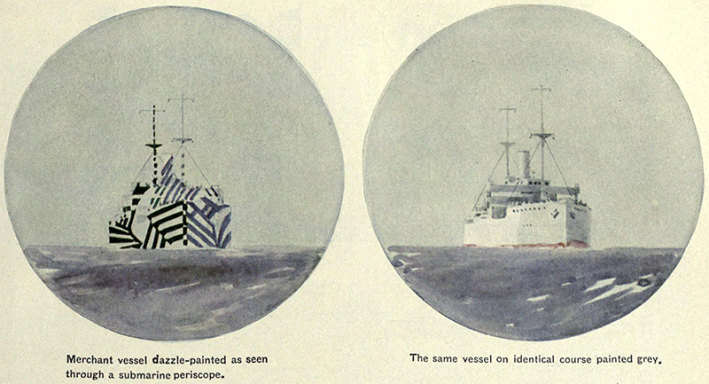
DAZZLE DISGUISE: Artist’s rendering of a periscope view of ship with dazzle camouflage (left) and without (right). Image from Encyclopedia Britannica (1922). Credit: Encyclopedia Britannica, 1922.

Tadpoles from the Japanese tree frog Dryophytes leopardus are usually a dull brownish color with translucent tails, but in the presence of their predators, dragonfly nymphs, their tails transform into a vivid orange color with black spots. “After seeing these tadpoles with orange tails at (Kyoto University’s) experimental farm, I wondered what role such a bright tail could have,” study author and Kyoto University graduate student Akihiro Noda said in a statement.

Read more: “These Nature Photographs Aren’t What They Seem

To find out, Noda and his colleagues placed both normal and orange-tailed tadpoles in tanks with dragonfly nymphs and watched what happened. The team recorded the attacks and misses, along with where the nymph focused its efforts (body versus tail). 
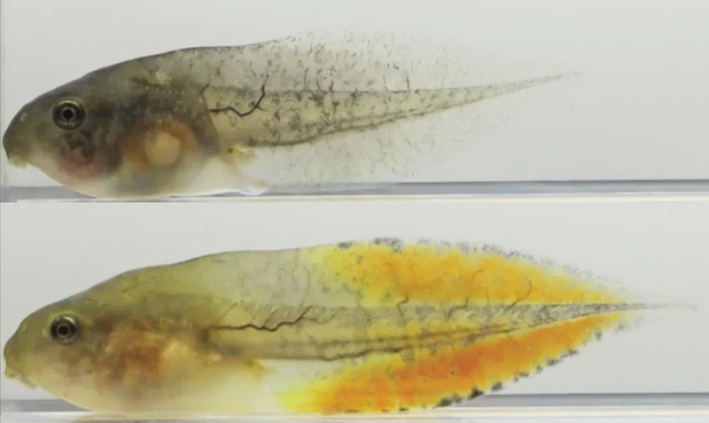
NEW LOOK: These photographs of Dryophytes leopardus tadpoles illustrate predator-induced tail coloration. The top image shows tadpoles reared without predators, and the bottom shows tadpoles raised with the dragonfly nymph Anax nigrofasciatus. Images from Noda, A., et al. Ichthyology & Herpetology (2025).

Somewhat surprisingly, the nymphs went for the orange tails most frequently, but these attacks also missed the most. Additionally, even successful strikes to the tail were less likely to result in mortal wounds compared to body strikes. According to the researchers, the tail coloration likely serves two functions: drawing the nymph’s attention while making it more difficult to target, similar to the zebra-striped World War I ships. “The way the orange tail moves when the tadpole swims may make it harder for dragonfly nymphs to aim accurately,” Noda explained. 

Sometimes all it takes to survive is a new paint job.

Enjoying Nautilus? Subscribe to our free newsletter.

Lead image: fledermausstudio and Wera / Adobe Stock