








Identity-based vectors, including malicious email, phishing, compromised credentials, and brute force attacks, initiated 85% of attacks across education, above the 79% overall survey rate.
Malicious email was the single most common technical root cause in both lower education (31%) and higher education (29%).
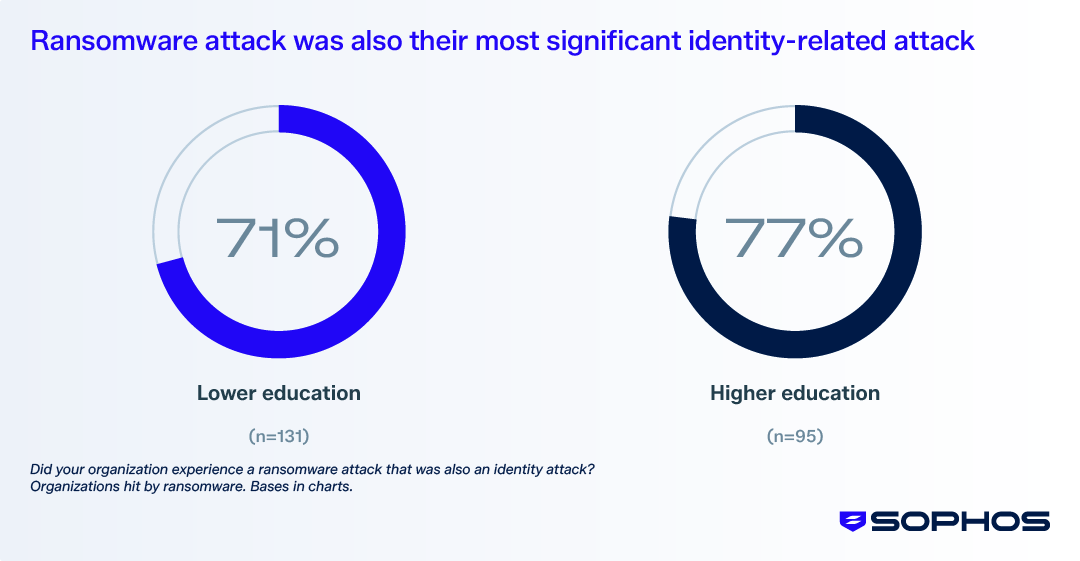
However, the identity theme runs deeper than the entry point for ransomware attacks. 73% of education victims confirmed their ransomware attack was also their most significant identity attack in the past year. That was six percentage points above the 67% overall survey rate. Higher education had the most overlap at 77%, while lower education’s rate was 71%. The 67% overall survey finding was also featured in our State of Identity Security 2026 report earlier in the year.
When asked which operational shortcomings contributed to the ransomware attack, education providers cited each factor at a higher rate than the overall survey, aside from security gaps. Here’s what that looked like:
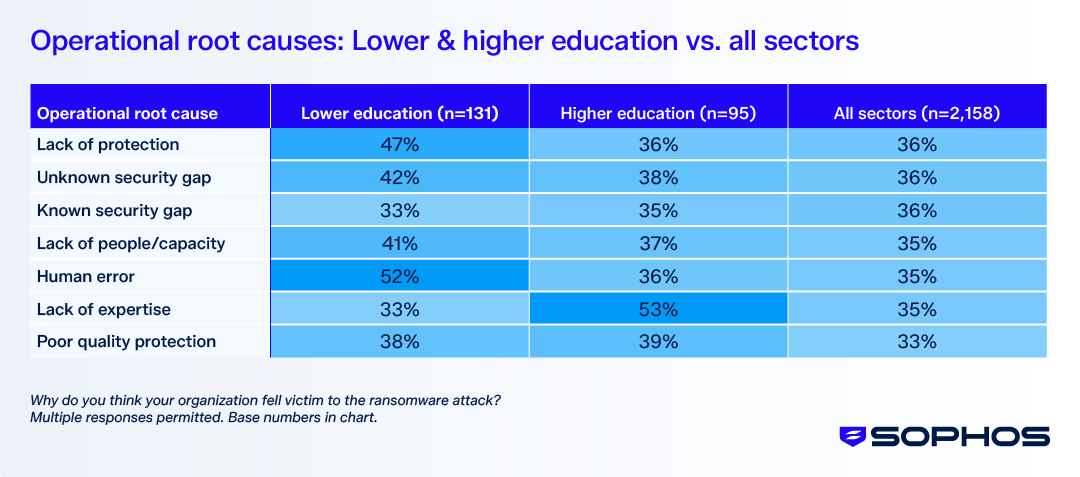
Splitting education reveals different weaknesses:
These operational root causes are described in more detail in the report.
Last year's report showed lower education stopping more attacks before encryption than any other sector. This year, that progress reversed. The share of attacks against lower education that succeeded in encrypting data more than doubled, from 29% in the 2025 report to 61% in 2026, above the 56% overall survey rate.
Across all of education, 58% of attacks ended in encrypted data.
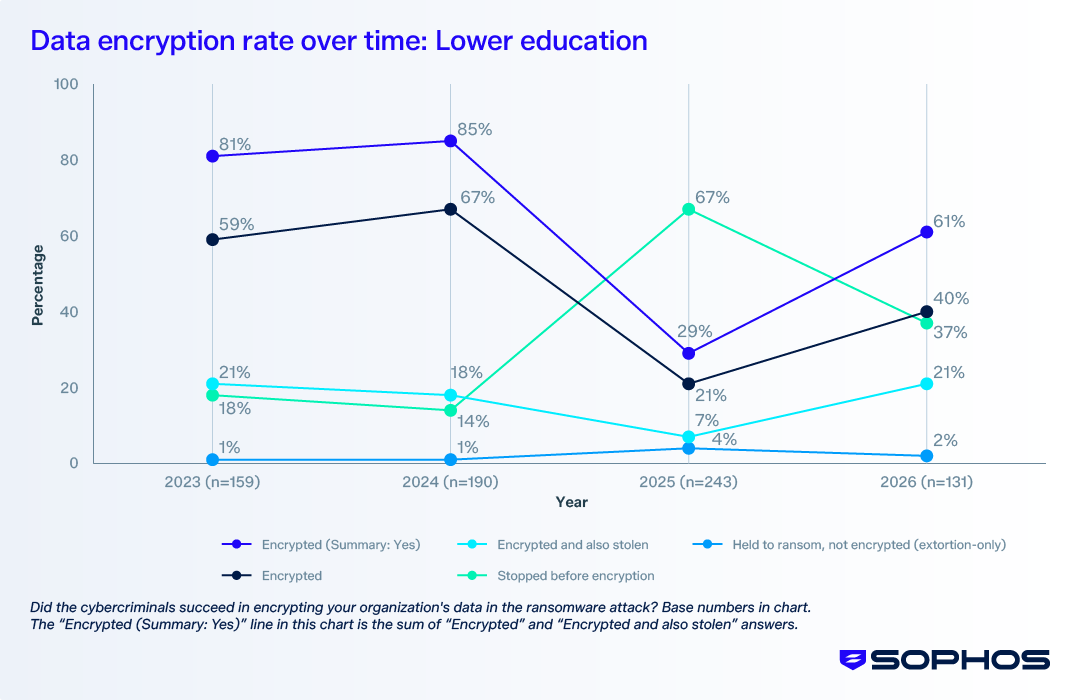
However, the usage of backups to recover data increased in this year’s report: 77% of lower education and 69% of higher education providers restored data from backups, both above the 66% overall survey rate, and both a rebound from 2025.
Education not only paid more to recover, it also took longer. Education providers were nearly twice as likely as the overall survey to face a recovery lasting a month or more.
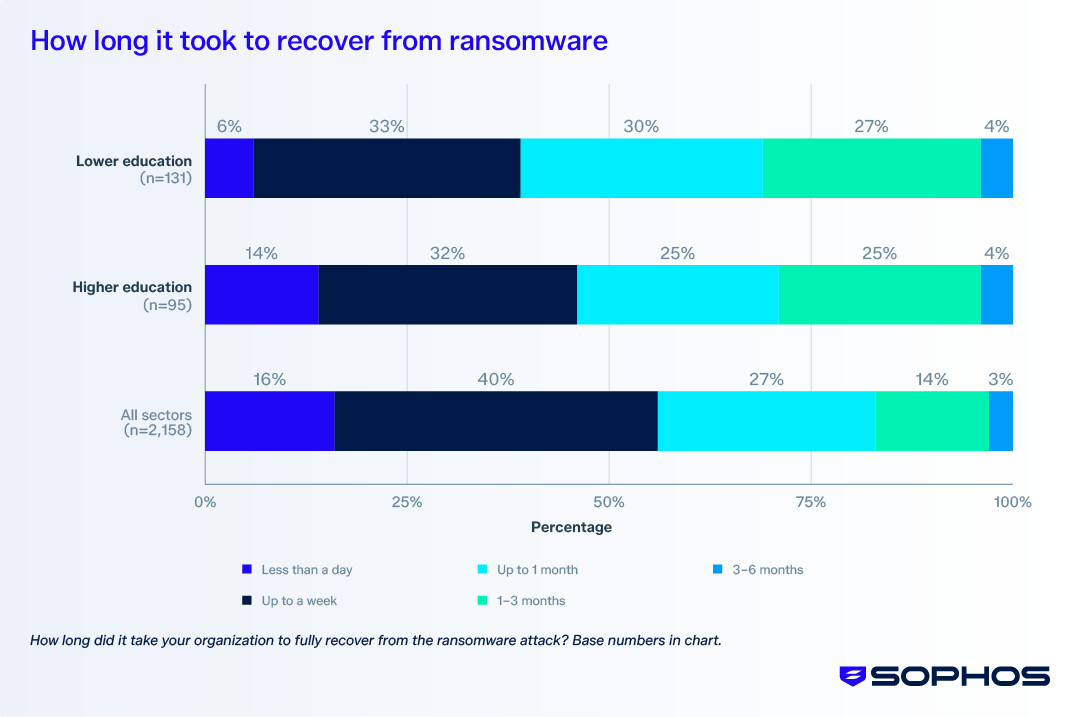
Education sectors sat near the top of the list when ranking sectors that had the longest average recovery times, and lower education was at the top of the list for another long-recovery time category. You can find the full details in the report.
Ransom demands sent to education providers fell to a multi-year low, with the median demand dropping to $775,200 and continuing a downward trend that has held for two years running.
Ransom payments moved the other way, edging up slightly to a median of $515,000. Even so, that amount stayed below the $769,000 overall survey median. It’s a positive step that education kept paying less than the overall survey despite facing steeper demands.
The report breaks down which education sector is driving demands and payments down.
A common thread runs through all sectors in this year's findings. Almost all victims of credential-based attacks had MFA enabled (98% education, 97% overall survey), yet most still had their data encrypted.
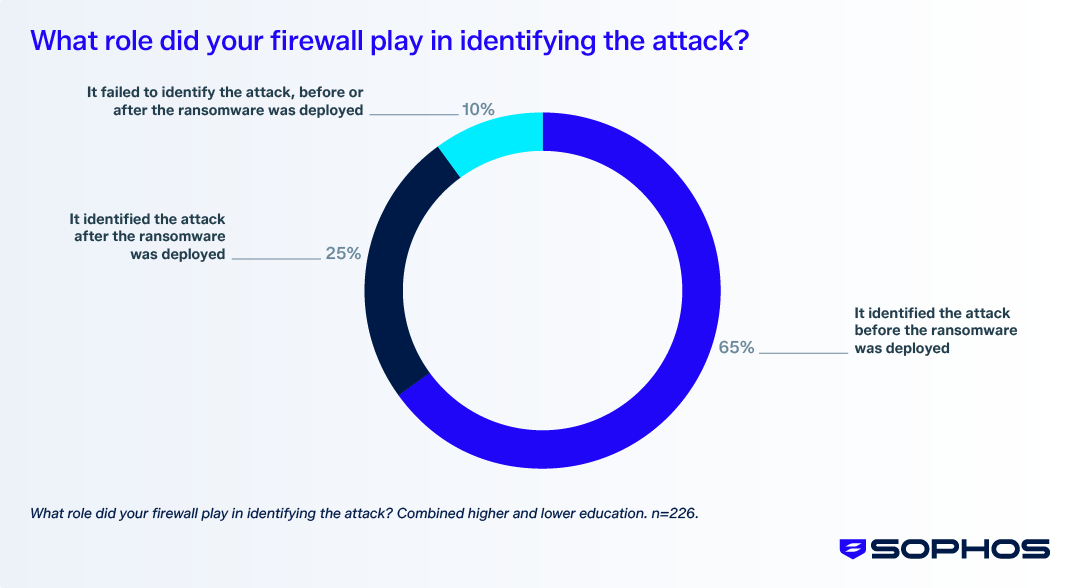
Another question revealed that firewalls flagged 65% of attacks for education providers before the ransomware detonated. But even in those early-detection cases, education victims were still encrypted 51% of the time.
Controls are collecting the right signals. They aren't connecting deeply enough with each other to stop the attack in time. One of the recommendations in the report is to start moving cybersecurity toward a defense system posture, where identity, email, endpoint, and network controls share signals and respond as one.
This report also explores how the pressure of ransomware lands on people. 53% of higher education teams reported increased pressure from senior leaders after an attack, and around four in ten education teams reported staff absence due to stress or mental-health issues, well above the overall survey rates.
For a sector where recovery is already slower and costlier, connecting existing defenses is the highest-leverage place to invest, both to protect data and to relieve the teams defending it.
Download the report for the full findings, lower and higher education breakdowns, sector comparisons, and recommendations.
此内容由惯性聚合(RSS阅读器)自动聚合整理,仅供阅读参考。 原文来自 — 版权归原作者所有。