









 AI is changing infrastructure conversations, but not always in the way the hype suggests. Not every AI workload is moving to Kubernetes. Many training environments still depend on specialized systems, bare-metal performance, high-speed file storage, and tightly managed GPU clusters. But Kubernetes is becoming increasingly relevant in the AI stack.
As organizations move beyond experimentation, they need repeatable ways to deploy, scale, manage, and update AI-related services. That includes model development environments, inference applications, data pipelines, vector databases, analytics services, and supporting applications that are often containerized. Kubernetes gives teams a common control plane for running these workloads across environments.
The challenge is that AI workloads are rarely simple or stateless. They depend on data, checkpoints, models, metadata, logs, and persistent services. That makes storage a core part of the architecture — not an afterthought.
AI Makes Kubernetes More Stateful
Kubernetes was originally associated with stateless applications: web services, APIs, and microservices that could be restarted or rescheduled without much concern for local data. AI workloads are different.
A model-serving application may need fast access to model files. A vector database needs persistent volumes. A data pipeline may need reliable storage for intermediate outputs. A training workflow may generate checkpoints that cannot be lost. A development team may need shared workspaces across notebooks, tools, and services.
In these environments, a container is not just a disposable compute unit. It is part of a larger workflow that depends on persistent state. That creates a simple but important requirement: storage has to move at the speed of Kubernetes without losing the reliability expected from enterprise infrastructure.

Performance Still Matters
AI teams are often sensitive to performance because slow storage shows up quickly. It can delay data preparation, slow down model iteration, increase inference latency, or leave expensive GPU resources underutilized.
Not every Kubernetes-based AI workload needs extreme performance, but many need predictable performance. That means storage should support high I/O demand, low latency where needed, and consistent access under changing workload conditions.
Performance also needs to be considered across the full workflow. AI infrastructure is not just about training. It includes data ingestion, preprocessing, experimentation, model serving, monitoring, and retraining. Each stage may place different demands on storage.
A storage platform that performs well only in one scenario may not be enough. Kubernetes storage needs to support a mix of databases, pipelines, application services, and AI tools without forcing teams into complex workarounds.
Persistence Cannot Be Fragile
 For AI workloads running on Kubernetes, persistence is not optional. Pods can move. Nodes can fail. Applications can restart. The storage layer needs to preserve data across those changes. This is especially important for stateful AI components such as databases, feature stores, metadata services, model repositories, and application backends. Losing state can mean lost work, corrupted pipelines, interrupted services, or failed production deployments.
The storage layer should support reliable persistent volumes, replication, snapshots, and recovery options. Teams need confidence that when Kubernetes reschedules a workload, the data follows safely and predictably. Without that foundation, Kubernetes can become risky for anything beyond lightweight experimentation.
Kubernetes Storage Has to Be Operationally Simple
AI teams already have enough complexity to manage. They are dealing with data pipelines, model versions, GPUs, frameworks, deployment patterns, security requirements, and cost pressure. Storage should not add another operational burden.
For Kubernetes environments, storage should work naturally with how platform teams operate. That means dynamic provisioning, integration through standard Kubernetes interfaces, automation-friendly management, and clear visibility into capacity and performance.
Developers and platform engineers should not have to file manual storage tickets every time they need a persistent volume. They should be able to request storage through Kubernetes and get the right resources quickly, while infrastructure teams maintain control over policies, protection, and utilization. This balance matters. AI teams want speed. IT teams need governance. Good Kubernetes storage has to support both.

Resilience Is Part of the AI Platform
As AI moves closer to production, resilience becomes more important. Experimental workloads can tolerate some disruption. Production inference services, customer-facing applications, and business-critical analytics cannot. Storage needs to support availability and recovery at the level the workload requires. That may include replication, failover, snapshots, and the ability to recover quickly from failures or mistakes.
Snapshots are especially useful in AI environments because teams often need to preserve known-good states, protect key datasets, or roll back after changes. As model and data workflows become more complex, recovery points become part of operational discipline. The goal is not only to keep applications running. It is to protect the data and artifacts that make AI work valuable.
Portability and Hybrid Environments Matter
Many organizations will run AI across a mix of environments. Some workloads may stay on-premises because of data gravity, performance needs, compliance, or cost. Others may run in the cloud for elasticity or access to managed services. Some teams will use both.
Kubernetes can help create consistency across these environments, but storage often becomes the limiting factor. If persistent data is difficult to move, protect, or manage across infrastructure boundaries, portability becomes theoretical. AI storage strategies should consider where data lives, how applications access it, and what happens when workloads need to shift. The more stateful the workload, the more important the storage architecture becomes.
Cost Cannot Be Ignored
AI infrastructure can get expensive quickly. GPUs, cloud services, data growth, and high-performance storage can all put pressure on budgets. Storage costs are especially easy to underestimate. AI workloads often generate large amounts of data, including raw inputs, processed datasets, checkpoints, logs, model versions, and derived outputs. Cloud storage can be convenient, but long-term costs, performance tiers, and data movement fees can add up.
For Kubernetes-based AI workloads, teams need storage that supports performance and resilience without forcing them into an unsustainable cost model. That means looking beyond initial deployment convenience and considering total cost over time.
What Kubernetes Storage Needs to Deliver for AI
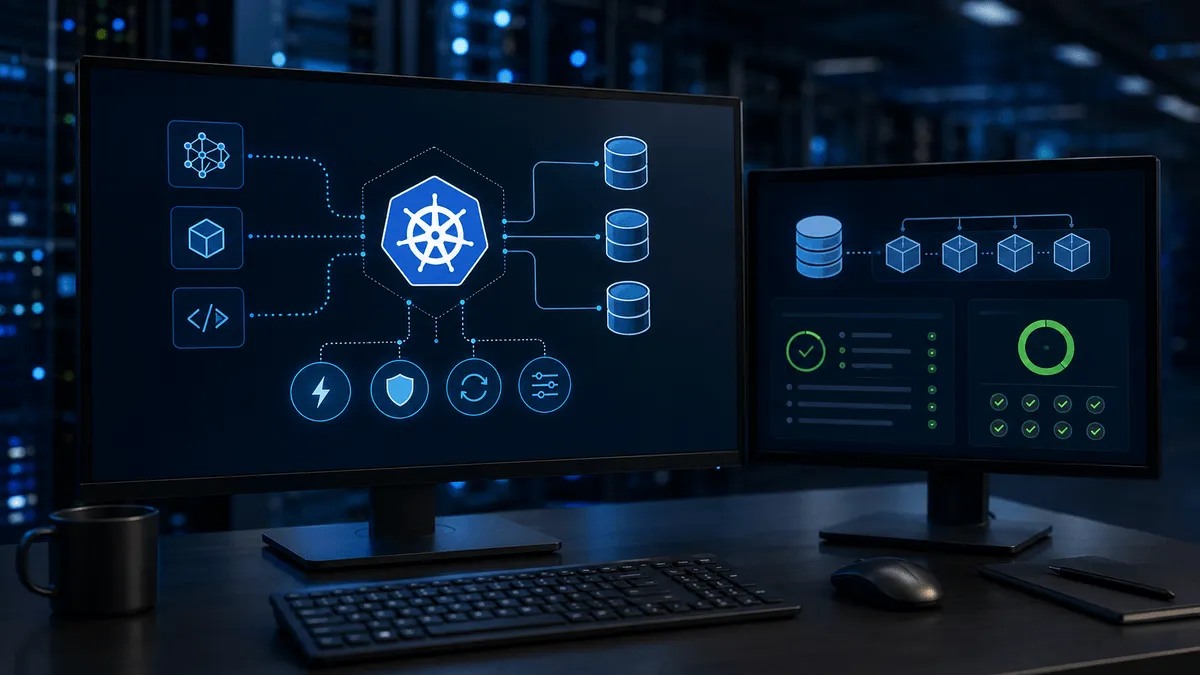
AI workloads running on Kubernetes need storage that is persistent, performant, resilient, and simple to operate. They need storage that integrates with Kubernetes instead of sitting awkwardly beside it. They need dynamic provisioning for developers, policy control for operators, and reliability for production workloads.
The container-native storage layer should support the way modern teams actually work: fast iteration, frequent deployment, mixed workloads, and growing data requirements. Kubernetes can provide the orchestration layer for containerized AI applications. But without the right storage foundation, teams may struggle to move from pilots to reliable production environments.
Where DataCore Puls8 Fits
DataCore Puls8 is designed for organizations running stateful workloads on Kubernetes. It provides container-native persistent storage with a CSI driver, dynamic provisioning, high IOPS performance, replication, snapshots, and operational simplicity for Kubernetes environments.
For teams bringing AI-related workloads into containers, Puls8 helps address one of the biggest infrastructure gaps: giving Kubernetes applications persistent storage that is fast, resilient, and easier to manage.
AI does not make storage less important. It makes storage more visible. And as more AI services, databases, pipelines, and applications run in Kubernetes, the storage layer becomes a critical part of making those workloads practical, reliable, and cost-effective.