

惯性聚合 高效追踪和阅读你感兴趣的博客、新闻、科技资讯
阅读原文 在惯性聚合中打开

推荐订阅源

P
Proofpoint News Feed
T
Tenable Blog
T
The Exploit Database - CXSecurity.com
A
Arctic Wolf
C
CERT Recently Published Vulnerability Notes
Blog — PlanetScale
Blog — PlanetScale
V
Vulnerabilities – Threatpost
Vercel News
Vercel News
P
Palo Alto Networks Blog
N
News and Events Feed by Topic
Simon Willison's Weblog
L
LINUX DO - 最新话题
阮一峰的网络日志
阮一峰的网络日志
C
CXSECURITY Database RSS Feed - CXSecurity.com
Google DeepMind News
Project Zero
Project Zero
奇客Solidot–传递最新科技情报
奇客Solidot–传递最新科技情报
WordPress大学
WordPress大学
The Last Watchdog
The Last Watchdog
博客园_首页
D
Docker
MyScale Blog
MyScale Blog
D
Darknet – Hacking Tools, Hacker News & Cyber Security
The Hacker News
The Hacker News
云风的 BLOG
云风的 BLOG
cs.AI updates on arXiv.org
T
The Blog of Author Tim Ferriss
T
Threat Research - Cisco Blogs
M
MIT News - Artificial intelligence
S
Schneier on Security
C
Check Point Blog
I
Intezer
S
Securelist
雷峰网
雷峰网
小众软件
小众软件
C
Cyber Attacks, Cyber Crime and Cyber Security
PCI Perspectives
PCI Perspectives
S
Security @ Cisco Blogs
酷 壳 – CoolShell
酷 壳 – CoolShell
freeCodeCamp Programming Tutorials: Python, JavaScript, Git & More
S
Security Affairs
量子位
cs.CV updates on arXiv.org
A
About on SuperTechFans
T
Troy Hunt's Blog
Google Online Security Blog
F
Fortinet All Blogs
C
Cybersecurity and Infrastructure Security Agency CISA
Security Archives - TechRepublic
Latest news
Latest news

Human Risk Management Blog

Attackers Exploit AI Hallucinations to Send Users to Phishing Sites Warning: ARToken Phishing Kit Automates BEC Attacks Trust Nothing: Tips to Secure AI Tools and Agents CyberheistNews Vol 16 #29 ClickFix Social Engineering is Now the Leading Malware Delivery Method Beyond the Checkbox: How a Proactive Partnership Led to Turnkey Hazing Compliance Trust, Verify, Protect: Modernizing Email Security for the Cloud Report: Social Engineering Remains a Central Part of AI-assisted Attacks ClickFix Social Engineering is Now the Leading Malware Delivery Method CyberheistNews Vol 16 #28 Your 2026 Phishing by Industry Benchmarks: The Findings on Human Risk Scammers Can Use AI Tools to Pinpoint Your Location Based on a Photo Report: Attackers Are Using AI to Automate Social Engineering Your KnowBe4 Fresh Compliance Plus Content Updates from June 2026 From Awareness to Digital Workforce Security Your KnowBe4 Fresh Content Updates from June 2026 Threat Actor Uses Phishing to Breach Orgs for Ransomware Gangs Invoice Phishing Attacks Are Abusing the Shop App Phishing Campaign Impersonates Interpol to Deliver Ransomware Prompt Injection and the Rise of Agentic Risk Hyper-Targeted Social Engineering Needs Real-Time Video Response Your Email is Protected. Is Your Teams Chat? CyberheistNews Vol 16 #27 [HOW TO] Your Cybersecurity Starts at Home on World Social Media Day 2026 Phishing by Industry Benchmarking Report: Findings on Human Risk Static DLP Is Leaving You in the Dark: Why It’s Time for Intelligent, Self-Serve Outbound DLP and Misdirected Content Analysis INC Ransomware Gang Targets the Legal Sector 5 Essential Cybersecurity Defenses for Cloud Email Security Cybercriminals Are Targeting the FIFA World Cup 2026 Why Bite-Sized Security Awareness Training Matters in an Age of TikTok and Digital Distraction Happy 3rd Birthday to Our KnowBe4 Community! Phishing Exposes Employee Data at 86% of Fortune 100 Companies Shadow AI Is Not Shadow IT With a Better Marketing Budget CyberheistNews Vol 16 #26 A New Extortion Scam Uses IT Impersonation to Breach Organizations Cybersecurity Starts At Home This World Social Media Day FTC Report: Americans Lost $3.5 Billion to Imposter Scams Last Year Report: Device Code Phishing is Surging Report: Online Shoppers Increasingly Ignore Scam Warning Signs Security Training Needs Google Maps, Not Christopher Columbus Turn Account Takeover Into Real-Time Security Coaching Extortion Gang Sends In-Person Attackers to Exfiltrate Data Attackers aren’t loyal to any collaboration channel CyberheistNews Vol 16 #25 [The AI Tell] How To Expose Machine-Written Phishing Fast Social Engineering Attacks Abuse Workplace Collaboration Tools New Extortion Brand Uses IT Impersonation to Breach Organizations APWG Report: Social Media Phishing is Surging Cybersecurity Awareness Training for AI: Key Focus Areas Americans Lost $900 Million to AI-Powered Scams Last Year What AI Can’t Hide When It Writes a Phishing Email Your AI Agents Are Eager to Please And Easy to Exploit From 1% to 26%: How AIDA Orchestration Fixes the Remedial Training Gap Best AI Agent Security Tools for SMB and Enterprise in 2026 4 Hot Summer Travel Tips To Avoid Scams CyberheistNews Vol 16 #24 [FBI Alert] Lock Down Your Microsoft 365 Device Code Flows Now The Role of Agentic AI in Phishing Security Training A Credit Score for Cyber Behavior Agentic AI Security in 2026: What to Know How to Secure AI Agents: 4 Best Practices An Overview of Email Compliance Regulations and Reporting Report: AI-Assisted Fraud is Surging Attackers Use Spoofed ChatGPT Site to Deliver Malware I Love Device-Bound Session Credentials, But They Are Still Phishable and Hackable Nearly Two-Thirds of CEOs Cite Cyberattacks as Their Top Concern A Look at Spam vs. Phishing: 4 Key Differences KnowBe4 Wins Multiple 2026 TrustRadius Top Rated Awards Cyber Insurance for Mid‑Market Organizations in Southeast Asia KnowBe4 Earns Multiple 2026 Buyer's Choice Awards from TrustRadius The New Frontier: Securing Japan’s Hybrid Digital Workforce (2026 & Beyond) CyberheistNews Vol 16 #23 Now Phishing Attacks Use Real Hotel Reservations to Target Travelers Report: AI-Enabled Social Engineering Attacks Are on the Rise Your KnowBe4 Fresh Compliance Plus Content Updates from May 2026 FBI: Kali365 Phishing Kit is Targeting Microsoft 365 Accounts KB4-CON - AI Is Everything How to Secure AI Adoption In Your Organization Your KnowBe4 Fresh Content Updates from May 2026 The Silent Invitation: A Deep Dive into Calendar Invite Phishing Cyber Insurance for Mid‑Market Organizations in Southeast Asia Chinese-Language Phishing Kits Are Growing More Advanced Phishing Attacks Are Using Real Hotel Reservation Info to Target Travelers Warning: Scammers are Exploiting Geopolitical Unrest Athletes Are Increasingly Targeted by Social Engineering Attacks AI Agent Governance Part 3 - Runtime Governance: The Hidden Performance Cost of Agentic AI AI Agent Governance Part 2 - What Good Looks Like: Governing AI Agents in Practice 8 Ways to Reduce False Positives in Email Security Ransomware Attacks Drive a Surge in Cyber Insurance Claims My Favorite 5 KnowBe4 Agents Perry Carpenter KB4-CON 2026 Q&A: Deepfakes & Deception Free Gift Fallacy: How Attackers Harvest Credit Cards via Fake Surveys When Global Conflict Becomes a Cyber Weapon: How Iran Tensions and Other Stressful Events Fuel Social Engineering Attacks CyberheistNews Vol 16 #21 [Heads Up] GitHub Breach Shows Developer Tools Are Social Engineering Targets Alert: Extortion Groups Are Using Phishing Kits to Automate Their Attacks Beyond the Chatbot: Why Your AI Agents are Your Newest (and Most Vulnerable) Colleagues Report: Adversarial Use of AI is Evolving
The New Face of AI Risk
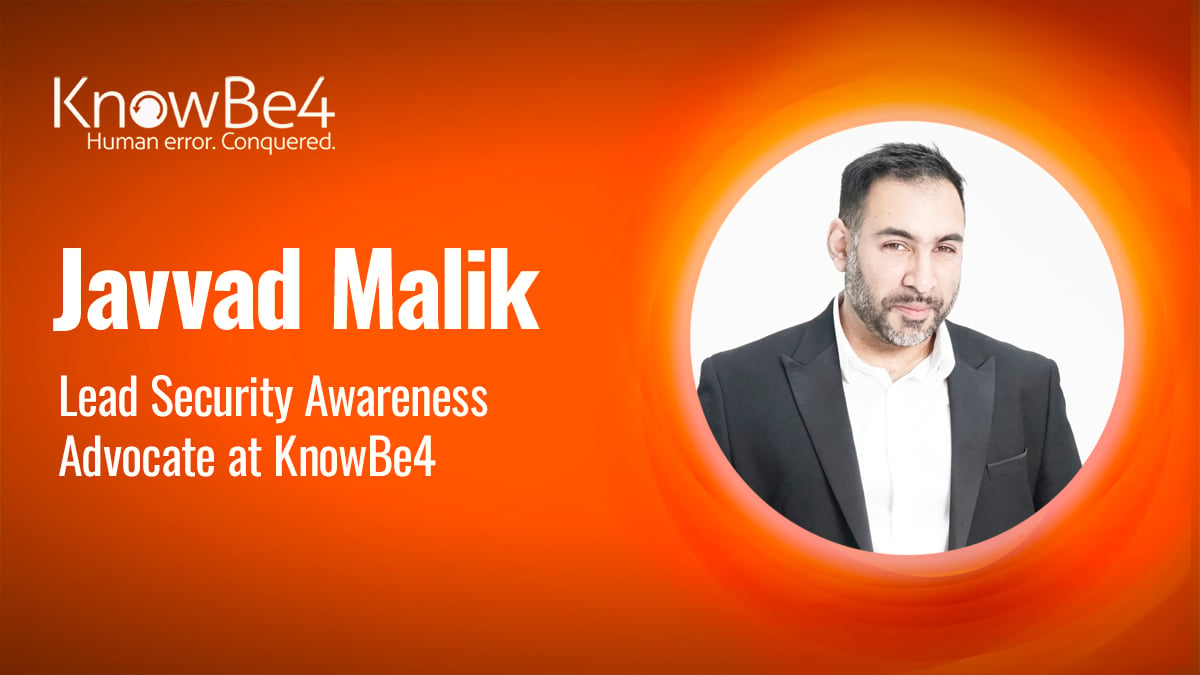
Javvad Malik · 2026-07-22 · via Human Risk Management Blog

Javvad Malik, Lead CISO Advisor at KnowBe4Cybercrime used to have a ‘"tell." It was the digital equivalent of a villain stroking their cat - clunky grammar, misspelt links and suspicious attachments that screamed ‘phishing’.

But the arrival of AI has changed everything. Typos have been replaced by perfect prose. Generic lures have evolved into highly personalized attacks that mimic your internal language and align with your project timelines. These attacks don't just land in an inbox; they adapt in real-time if you engage and they can be deployed at a scale we’ve never seen before.

The once-a-year security awareness training was built for a world that no longer exists. When threats are continuous, your defense cannot be sporadic. Organizations need to move toward live coaching — real-time nudges that guide users exactly when they are about to make a high-risk decision.

The Hybrid Workforce

Your organization's directory is no longer just a list of names. It’s a complex ecosystem of humans and their AI agents, held together by APIs, SaaS integrations and a healthy dose of optimism.

These digital assistants are incredibly helpful. They’re drafting code, managing calendars and interacting with customers. But they are also vulnerable. An attacker doesn't always need to trick a human; they can trick an agent into oversharing data or overwriting critical files.

When security teams respond by simply locking everything down, it creates a "shadow AI" problem. Staff will always find a way to use the tools they need to get the job done. The real risk lives in that blurry area between what is officially permitted and what is functionally necessary.

Speed and Precision at Scale

What actually changes when AI takes the lead in cyberattacks? Two things: precision and speed.

  1. Context Over Content: Attackers can now generate thousands of tailored messages that look like routine business. Red flags are no longer about bad spelling. Today’s phish arrives mid-thread, using the correct tone to ask for a plausible favor. In this environment, understanding the context is more important than checking the content.
  2. Multichannel Conversations: These aren't slow one-off emails; they are rapid dialogues. An attack might start as an email, move to a chat app, and culminate in a quick “verification” video call on a Friday afternoon.

Setting the Controls

To counter a rising tide of risk, we need guidance that appears just at the right time and place.

Imagine a system that interrupts a dangerous action with a simple prompt: "This attachment is from an unfamiliar sender — send to security for a quick check?" or "Payment details have changed; please verify via a secondary known channel." This allows the business to move fast without removing the safety net.

We also need to govern AI agents with the same rigor we apply to colleagues.

  • Identity and Access: Give agents unique, rotating credentials.
  • Least Privilege: Keep their permissions narrow and explicit.
  • The Human Loop: If an agent wants to perform a high-risk task (like moving money or changing permissions), it should require a human sign-off.
  • Logging: Record everything. If a bot makes a mistake, you need a breadcrumb trail to figure out why it thought that action was reasonable.

Cultivating a "No-Fear" Culture

Ultimately, your strongest defense is your culture. If your security policy relies on punishment, your employees will hide their mistakes. When people fear being reprimanded, they won't report a suspicious link until it's too late.

We need to reward transparency. Praise the near misses and make the secure path the easiest one to take. When you explain the why behind a rule, people are more likely to follow it.

In an AI-augmented world, thread-hijacking is caught because someone notices a subtle shift in timing or tone. A vendor’s bank change is flagged because the workflow demands a manual callback. Sensible points of critical thinking that protect the team.

Leaning into the Workflow

AI has made cyber threats faster and more personal. The solution isn't to retreat or rely on outdated training modules. It’s to integrate security into the actual flow of work.

The modern workforce is a hybrid of human intuition and machine speed. To stay safe, we have to secure the entire team as one.