


惯性聚合 高效追踪和阅读你感兴趣的博客、新闻、科技资讯
阅读原文 在惯性聚合中打开

推荐订阅源

Cyberwarzone
Cyberwarzone
F
Full Disclosure
V
Visual Studio Blog
freeCodeCamp Programming Tutorials: Python, JavaScript, Git & More
有赞技术团队
有赞技术团队
J
Java Code Geeks
博客园 - 【当耐特】
OSCHINA 社区最新新闻
OSCHINA 社区最新新闻
博客园 - 叶小钗
L
LINUX DO - 最新话题
T
Threatpost
S
SegmentFault 最新的问题
Vercel News
Vercel News
云风的 BLOG
云风的 BLOG
C
Cyber Attacks, Cyber Crime and Cyber Security
Google DeepMind News
Know Your Adversary
Know Your Adversary
S
Schneier on Security
V
Vulnerabilities – Threatpost
D
DataBreaches.Net
G
GRAHAM CLULEY
Latest news
Latest news
P
Privacy International News Feed
D
Darknet – Hacking Tools, Hacker News & Cyber Security
C
CXSECURITY Database RSS Feed - CXSecurity.com
Scott Helme
Scott Helme
L
Lohrmann on Cybersecurity
T
The Exploit Database - CXSecurity.com
Security Latest
Security Latest
G
Google Developers Blog
L
LangChain Blog
MyScale Blog
MyScale Blog
Project Zero
Project Zero
N
News and Events Feed by Topic
Hacker News - Newest:
Hacker News - Newest: "LLM"
大猫的无限游戏
大猫的无限游戏
P
Proofpoint News Feed
Blog — PlanetScale
Blog — PlanetScale
阮一峰的网络日志
阮一峰的网络日志
N
News | PayPal Newsroom
www.infosecurity-magazine.com
cs.AI updates on arXiv.org
SecWiki News
SecWiki News
T
Tor Project blog
C
Check Point Blog
Google Online Security Blog
GbyAI
GbyAI
The Last Watchdog
The Last Watchdog
cs.CL updates on arXiv.org
WordPress大学
WordPress大学

Pulse News | The HinduBusinessLine

Mission universal access to clean energy Canada invests in building climate-resilient health systems Hidden hunger: Fixing the micronutrient crisis Honour the calling, rebuild trust in healthcare Self-reliant well-being When patients fall through the cracks of health insurance claims ‘The kindergarten health class for the 50-plus’ Tennis, sustainable meals and painting NFHS-6: Obesity scale tilts heavily against women Yoga for healthy ageing Medical negligence: A fair redressal system can restore trust Fragile success of HIV response UK sandbox for AI health innovations It’s time to revise the list of essential medicines Blood donation: Humanity in every drop How PMOS pushed this student to grow her own food USFDA moots ways to reduce animal testing for cancer drugs South Africa cracks down on illegal weight-loss drugs Morning walks, home food and no devices at dinner time E-pharmacies: The missing regulatory prescription Domestic drugmakers make a play for the innovation league Gatekeeping unproven ‘harm reduction’ nicotine products Unmasking tobacco’s appeal Repurposing medicines to treat more diseases Workouts, walking, and boundaries... not burnouts Fast-tracking biopharma goals with regulatory reform Making vaccines in and for Africa Medical ethics: The perils of not speaking up Keeping infant formula free of contaminants The ‘public health crisis’ facing transgender people UK busts criminal ring supplying illegal steroids Clean hands are life-saving Cardio sessions, cricket and unwinding with music ‘Free markets’ and shackled access to medicines Inside India’s GLP-1 rush Stalling the silent spread of TB cases Meditation, play and staying curious Towards a malaria-free future Don’t hide unfavourable clinical trial results: FDA Countries take more ownership of immunisation Medical supply chain leaks: Where does the buck stop? Stand with science for universal wellbeing The uncomfortable conversations over end-of-life decisions USEPA labels microplastics, pharmaceuticals as contaminants How medical myths go viral at deadly speed Gym sessions, yoga and occasional return to rollerblading Australia looks for improved ways to regulate sunscreens Slower pace of reduction in child mortality India’s silent newborn crisis Small daily habits, no quick fixes TB endgame: Yes, we can Alternatives to animal testing in drug development The pothole ‘miracle’ that wasn’t ‘Special 301’ report, in a time of strife Chile ends leprosy — a first in the Americas Hydration, protein, and AI as pocket nutritionist Making the shift to vaccinating older people Citizen-led Canadian health strategy for men and boys What women want... from health insurance Investing in women’s wellbeing beyond maternity Kidney health and planet protection Where a hospital grew from the people Aloe vera, consistent workouts, ashwagandha and magnesium More cataract surgeries needed: WHO Quality summit for the pharma industry Digital addiction: The elephant in the living room Sending medicines via the India-US trade corridor UK medical device testing hits a high BioAsia lifesciences conclave Notes of inspiration, meditation, and light kickboxing Pre-check pilot to boost local pharma manufacturing in the US Custom waiver alone cannot make medicines affordable Batting for clinical trials, but not without its ‘subjects’ WHO calls for strong cancer prevention strategies Delivering self-care over the counter Greying Kerala’s rising tide of elder care needs and health support 'Rare diseases in India aren’t rare, they’re orphaned' Indian pharma seeks R&D booster shot to stay globally competitive Quiet lakeside walks, seasonal food, and cricket Labelling info on gluten-containing grains Harmful sugary drinks are not taxed enough: WHO Budget 2026 Why research no longer needs animal cruelty The rising climate toll on body and mind Walks, vegan food and crosswords Dangers of buying illegal weight-loss drugs online Data gap hinders FDA’s safety review of cosmetics Young brigade rises in India’s pharma sector Leprosy is curable, break the stigma Fertility Inc: Inside India’s booming IVF business Fragile peace between hospitals and insurance providers Testing times loom for the ‘pharmacy of the developing world’ Medical tourism: Pitching India’s cost and care advantage Restorative eating, music for reflection, and treadmill time Mapping how everyday medicines affect gut bacteria WHO launches digital library on traditional medicine Challenges ahead in 2026 Coldrif case: When cough syrup turns poison Tackling India’s future, complex disease burden How to make health insurance truly inclusive for people with disabilities
Wearable tech: Health monitors on the go
By Vallari Sanzgiri · 2026-04-06 · via Pulse News | The HinduBusinessLine
The demand for health-tracking wearables is steadily growing in India

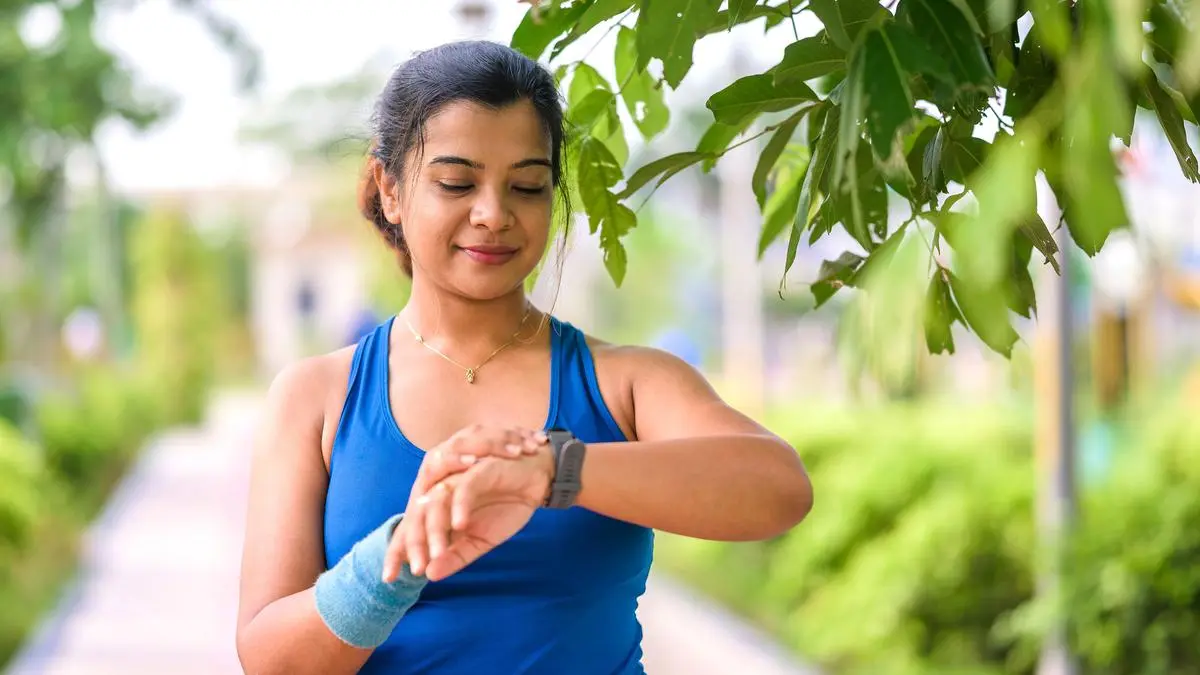
The demand for health-tracking wearables is steadily growing in India | Photo Credit: Ankit Sah

Delhi-based Bhavna Saini loves using her smartwatch at the gym — from tracking her steps and speed to checking the time — it has become second nature to her over the last three years.

“I had used a Fitbit band before this and liked the concept of a smartwatch. Health tracking is an important factor for me. It helps track my speed, milestones, heart rate. Recently, I’ve also started tracking my blood pressure, due to health issues, so it helps with that as well,” she says.

Like Saini, Bengaluru resident Shubham Palriwala also uses a health-tracking wearable. “The device helped me track my sleep. I thought I was fine [in terms of sleep], but it turned out I wasn’t. It benefited me in understanding if my body got enough sleep/rest and how to effectively allocate workload,” he says.

The community of fitness enthusiasts that swears by health-tracking wearables is expanding in India, fuelled by awareness on preventive care and lifestyle-related diseases. In fact, Finnish health-tech company Oura recently launched its Oura Ring 4 products, which track sleep and over 50 other wellness indicators, claiming a vibrant market in India.

ECG (electrocardiogram) monitoring is currently available in less than 5 per cent of smartwatches, while blood pressure tracking is available in 22 per cent, says Counterpoint Research.

“Smartwatches are now increasingly equipped with continuous monitoring of metrics like blood pressure, heart rate, and sleep quality... Preventive monitoring is steadily becoming mainstream, especially among millennials and Gen Z,” says Anshika Jain, Principal Analyst, Counterpoint Research.

Vishal Gondal, Founder and Chief Executive of health-tech company GOQii, says fitness coaches were among the earliest champions of wearable data. Now doctors too have put their trust in devices as a step towards preventive care. In fact, Dr Sunil Khetarpal, Deputy Director General, Association of Healthcare Providers, India (AHPI), describes the use of smartwatches, smart rings and similar devices as a form of self-care that alerts individuals on deviations. The data also helps doctors with early detection, boosted by AI applications within the device — reducing overall morbidity and mortality rate, he says.

“Today, 60 per cent of deaths in India are due to non-communicable diseases like diabetes and high blood pressure, that require long-term treatment. These devices help maintain information about some profiles and contribute to preventative medicine,” he points out.

Data protection

While some users outline the advantages of wearables, industry watchers raise concerns over the accuracy and protection of user data in India.

GOQii and Oura confirmed near perfect accuracies. Gondal says  GOQii’s Smart Vital range uses medical-grade sensors and is approved by the drug regulator as a medical device. The company also holds ISO 13485 certification, which enables integration with out-patient department (OPD) healthcare and insurance. Oura is pursuing regulatory approvals and provides upto 99 per cent accuracy with medical-grade ECG devices and 79 per cent agreement with polysomnography (test to diagnose sleep problems), it says.

However, smart rings and watches continuously collect data and generate profiles of individuals, embedding surveillance in everyday health behaviour, points out Shivangi Rai, Deputy Coordinator and Lead – technology, health and society, Centre for Health Equity, Law and Policy. The data can reveal highly sensitive health inferences. Even when anonymised, the data can be re-identified, especially with longitudinal biometric data, she says.

Smartwatches (₹1,000 to ₹1 lakh) and smart rings (₹1,00-40,000) are the most popular wearable devices

Wristbands and earwear are also in use for tracking health

Average selling price of consumer wearables was ₹4,400 in 2025

Around 1.14 lakh wearable devices, worth $3 billion, were shipped to India in 2025

“The real danger is that intimate bodily and behavioural data becomes a commercial asset. Health data is often reused, shared, or analysed in ways that users are not properly informed about, don’t fully understand or expect, and there aren’t many protections against profiling, breaches, or commercial misuse. Data is shared beyond device manufacturer with app developers, cloud service providers and ad tech companies, often without informed consent of individuals,” says Rai.

Further, breach of privacy could lead to discrimination based on the health data — such as exclusion from insurance coverage, claims denial or levy of high insurance premiums, she adds.  While India does have the Digital Personal Data Protection Act (DPDPA), 2023, the law does not define health data or lay down standards for anonymisation, she says, describing it as a major gap in regulation.

Keep it simple

Wearables increase the risk of cyber breaches, and data theft exposes sensitive health data, say experts. Since many wearables store or process health data outside the country, it complicates user control or enforcement of data protection laws.

Khetarpal advises individuals to keep their wearable needs simple. Tracking simple metrics like blood pressure, respiratory rate, pulse, sugar and oxygen levels — accompanied by a healthy lifestyle — is a form of preventive medicine, he says, without getting into potential data-linked pitfalls.

More Like This

Published on April 6, 2026