


惯性聚合 高效追踪和阅读你感兴趣的博客、新闻、科技资讯
阅读原文 在惯性聚合中打开

推荐订阅源

W
WeLiveSecurity
博客园 - 【当耐特】
Microsoft Azure Blog
WordPress大学
WordPress大学
Stack Overflow Blog
Stack Overflow Blog
cs.AI updates on arXiv.org
IT之家
IT之家
Cloudbric
Cloudbric
The Register - Security
小众软件
小众软件
PCI Perspectives
PCI Perspectives
G
Google Developers Blog
AI
AI
OSCHINA 社区最新新闻
OSCHINA 社区最新新闻
Google DeepMind News
宝玉的分享
宝玉的分享
Recent Commits to openclaw:main
量子位
TaoSecurity Blog
TaoSecurity Blog
cs.CV updates on arXiv.org
F
Full Disclosure
N
Netflix TechBlog - Medium
博客园_首页
Last Week in AI
Last Week in AI
A
Arctic Wolf
B
Blog RSS Feed
J
Java Code Geeks
C
Cybersecurity and Infrastructure Security Agency CISA
I
InfoQ
aimingoo的专栏
aimingoo的专栏
云风的 BLOG
云风的 BLOG
NISL@THU
NISL@THU
MyScale Blog
MyScale Blog
H
Hackread – Cybersecurity News, Data Breaches, AI and More
Jina AI
Jina AI
有赞技术团队
有赞技术团队
S
Schneier on Security
L
Lohrmann on Cybersecurity
P
Privacy & Cybersecurity Law Blog
T
Threat Research - Cisco Blogs
P
Palo Alto Networks Blog
S
Security @ Cisco Blogs
Security Archives - TechRepublic
Security Latest
Security Latest
Vercel News
Vercel News
博客园 - 司徒正美
Webroot Blog
Webroot Blog
Hacker News: Ask HN
Hacker News: Ask HN
A
About on SuperTechFans

Clean Tech News | The HinduBusinessLine

Solar self-reliance may cost India ₹30,000 cr this year No reply from CEA: CERC Utah bets on nuclear to power AI-driven data centre growth RE sector awaits easing of generation forecast norms Agastya Energy secures ₹4,000-cr loan from IREDA ‘Right of way’ issue is killing us: Wind industry RE projects: Build more, save ₹2.27 lakh cr Integrating climate finance into the banking regulatory framework GEF: The conservation kitty just shrank 36% The fresh wind turning Suzlon 2.0 turbines An e-dumper locator for safe disposal of electronic waste Smart meter rollout is impeded by its ambiguous status How protected are power plants from the risk of flooding? New coating steps up green hydrogen output, lowers cost India’s nuclear power ambitions face a tariff test Electrifying energy consumption India’s ambitions for nuclear energy face a tariff test Why Tamil Nadu needs more verified clean power Wartsila’s fresh pitch to industry — grid stability The wait for atmanirbharta in pumped storage projects Liquidation of discoms’ regulatory assets will spur industrial use of renewable energy CERC sends out feelers for ‘capacity markets’ APTEL’s judgement is a wakeup call for discoms After a lull, why temperature spikes are likely to intensify in north India Power regulator’s nudge towards ‘market coupling’ Cruising towards Indian carbon market Renewable energy ministry approves pilot CfD scheme Renewable components supply chained to imports Despite PFBR going critical, India is still a long way from thorium utilisation Oil-starved industry looks to reignite heat pumps Key takeaways from CEA’s national power generation adequacy plan for the coming decade Storage, flexible usage and ‘virtual supply’ are key to taming peak power demand CERC settles dispute dating back a quarter century New NDC: As wars rage elsewhere, India must battle to green itself Can ‘district cooling’ temper peak power demand? Buzz in energy storage sector Electrifying effect of India Energy Stack What is slowing residential rooftop solar installations Indian solar sector hits third century International Energy Agency voices concern over rising electricity bills Well-intentioned, but politically fraught New concepts reflect NEP 2026’s modern thinking PM Surya Ghar: Where does India stand on the second anniversary of the scheme? NLC to add 650 MW of solar power capacity this year CCUS: An idea whose time has come, but at a price Why rigid control of power grid frequency should be a thing of the past Can ‘cooling-as-a-service’ fix the decarbonisation gap? Energy storage: From better to BESS Why Maharashtra’s solar pump scheme is grabbing attention globally Bids for ₹6,444 cr west-east RE transmission project Why VPPAs may not be a game-changer Shrinking gap in peak electricity demand Developers told to add BESS, shift to non-solar hours A watershed moment for battery storage capacity ‘ANEEL fuel fundamentally reshapes India’s thorium pathway’ A farmer’s fraught venture into solar generation Why the new nuclear legislation may not attract private investment Odisha’s green hydrogen pitch rides on its revenue surplus German firm Enerparc bags electricity trading licence The bigger, the better, right? Suzlon says not really India must capture carbon to unleash climate action India’s clean energy transition finds its tipping point in 2025 India faces 1.3 million transformer failures annually How floating solar can buoy up India’s green transition Rooftop solar installations gather speed; touch 22.5 GW All green talk, no greenback Mining silver and more from retired solar panels India’s NDC: To publish or not to publish COP: The rise of a new influential triad A Himalayan effort at climate change mitigation International meet on green hydrogen in New Delhi Climate action: A case of ‘a lot’ done to little avail Solar+battery vs new coal Why are so many transmission towers collapsing? Virtual PPAs, the next big thing in RE Tackling the black sheep of waste RE development in the time of data vacuum Powering the plough: What PM-KUSUM scheme must do to give a fillip to farmers Maharashtra overtakes Tamil Nadu in Renewable Energy capacity India’s non-fossil-fuel power capacity crosses 250-GW mark Non-fossil based power generation reaches 30% Hydrogen body urges refineries to tender for GH2 Blues of the global green hydrogen story A booster shot for the recycling sector Power regulator proposes tweaks to deviation settlement mechanism Global hydrogen demand up 2% in two years: Report How to accurately peg ‘additionality’ in carbon credits Adani to sell thermal power at ₹6.07 a kWhr Rossiya set to cleave a green sea route Green bonds: How to overcome the challenge of fading ‘greenium’
How India’s ethanol hedge is paying back
By C.K. Jain · 2026-05-11 · via Clean Tech News | The HinduBusinessLine
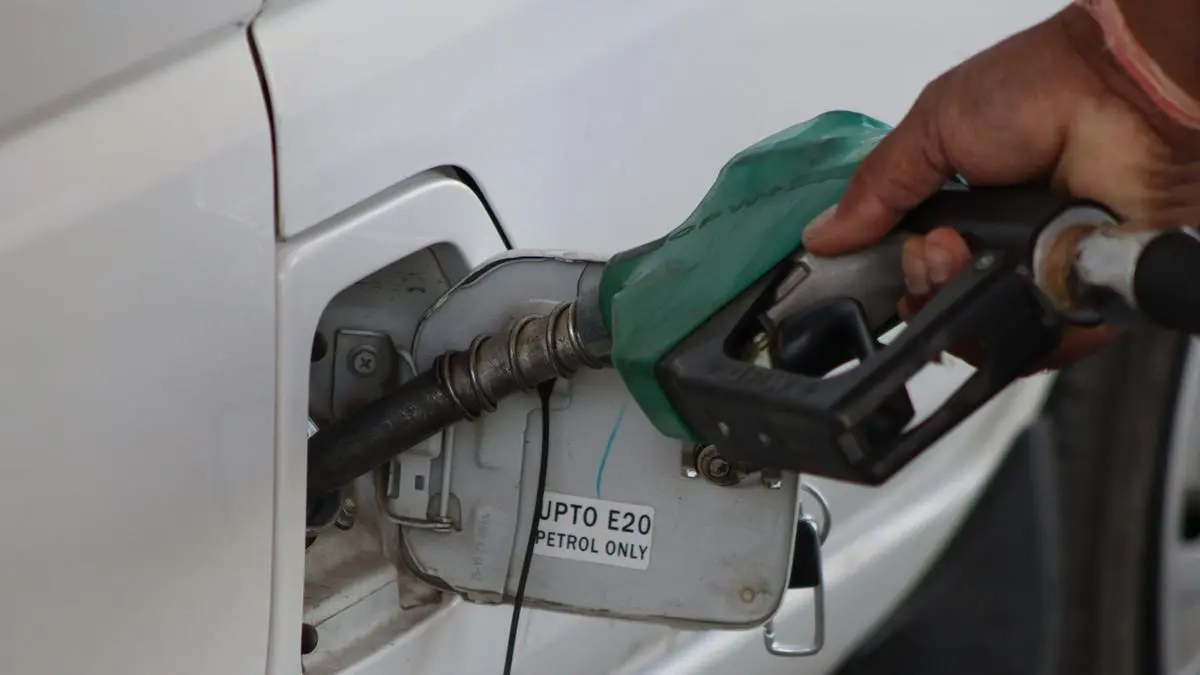
PERFECT MIX. India’s ethanol production currently exceeds the requirement for E20 blending

PERFECT MIX. India’s ethanol production currently exceeds the requirement for E20 blending | Photo Credit: Fahad Puthawala

India is preparing for E85 — petrol blended with 85 per cent ethanol — and even E100 fuels for flex-fuel vehicles that can run on any blend. This push looks prescient. As crude oil volatility and shortages returned with force in 2026, triggered by the Strait of Hormuz blockade and global supply disruptions, India found itself buffered by a policy conceived over two decades ago: the ethanol-blended petrol programme.

What began quietly in January 2003 as a modest initiative — with a 5 per cent blending target across nine states — barely registered in the public discourse. Even by 2014, the national blending average was just 1.53 per cent. But the groundwork had been laid steadily, through incremental policy support, distillery capacity creation, and a long-term view of energy transition.

The real shift came about in 2018. The National Policy on Biofuels redefined the programme’s scope, expanding ethanol feedstock beyond sugarcane molasses to include damaged food grains, surplus rice, maize, and agricultural residues. This diversification reduced reliance on water-intensive sugarcane and brought the grain-producing regions of north and central India into the ethanol economy, creating new income streams for farmers.

The scale-up that followed was dramatic. Ethanol blending increased near 20-fold from 380 million litres in 2013-14 to 7.07 billion litres in 2023-24. Blending levels climbed to 14.6 per cent in 2023-24, nearly 18 per cent by end-2024, and the targeted 20 per cent by March 2025 — five years ahead of schedule.

Today, India’s ethanol production exceeds the requirement for E20 blending. The surplus is not a problem but a strategic strength, ensuring readiness for higher blends such as E25, E30 or E40.

The next phase is already taking shape. The draft rules for E85 fuels are under preparation, alongside a push for flex-fuel vehicles (FFVs).

The CAFE III emission norms, expected from April 2027, are under review with proposals to treat FFVs on par with electric vehicles in emission credits.

This could accelerate their adoption and deepen ethanol’s role in the transport sector.

Beyond road transport, aviation is emerging as a new frontier for blended fuels. In April, the government amended aviation turbine fuel (ATF) regulations to include blended and synthetic fuels, effectively clearing the path for sustainable aviation fuel (SAF). Blending targets have been set at 1 per cent by 2027, 2 per cent by 2028 and 5 per cent by 2030 — marking ethanol’s entry into a high-value sector.

The foundation has been built, capacity exists, feedstock is diversified, and flex-fuel vehicles are on the horizon. What India’s ethanol programme now requires is continuity — the same patient, sustained commitment that built it.

(The writer is President, Grain Ethanol Manufacturers’ Association)

More Like This

Published on May 11, 2026