

惯性聚合 高效追踪和阅读你感兴趣的博客、新闻、科技资讯
阅读原文 在惯性聚合中打开

推荐订阅源

S
Securelist
C
Cybersecurity and Infrastructure Security Agency CISA
cs.AI updates on arXiv.org
S
Security Affairs
Hacker News: Ask HN
Hacker News: Ask HN
L
Lohrmann on Cybersecurity
PCI Perspectives
PCI Perspectives
Threat Intelligence Blog | Flashpoint
C
Cyber Attacks, Cyber Crime and Cyber Security
Recent Commits to openclaw:main
OSCHINA 社区最新新闻
OSCHINA 社区最新新闻
MyScale Blog
MyScale Blog
月光博客
月光博客
W
WeLiveSecurity
T
Threat Research - Cisco Blogs
Martin Fowler
Martin Fowler
CTFtime.org: upcoming CTF events
Recorded Future
Recorded Future
The GitHub Blog
The GitHub Blog
Webroot Blog
Webroot Blog
Security Archives - TechRepublic
TaoSecurity Blog
TaoSecurity Blog
P
Proofpoint News Feed
Google DeepMind News
F
Full Disclosure
U
Unit 42
Jina AI
Jina AI
博客园 - 司徒正美
阮一峰的网络日志
阮一峰的网络日志
L
LINUX DO - 最新话题
宝玉的分享
宝玉的分享
大猫的无限游戏
大猫的无限游戏
The Hacker News
The Hacker News
The Last Watchdog
The Last Watchdog
T
Troy Hunt's Blog
腾讯CDC
T
Threatpost
H
Hacker News: Front Page
P
Palo Alto Networks Blog
博客园 - 聂微东
Last Week in AI
Last Week in AI
有赞技术团队
有赞技术团队
Help Net Security
Help Net Security
L
LINUX DO - 热门话题
N
News and Events Feed by Topic
人人都是产品经理
人人都是产品经理
让小产品的独立变现更简单 - ezindie.com
奇客Solidot–传递最新科技情报
奇客Solidot–传递最新科技情报
Application and Cybersecurity Blog
Spread Privacy
Spread Privacy

Opinion, Editorial, Views, Columnists, Columns | The HinduBusinessLine

Rupee can’t be defended from just one side Railways’ performance Why not have a women-only party? Labour pangs Pak’s peculiar comeback on the global stage Letters to Editor India has jobs, but it needs better ones Cross-border insolvency laws and trade A major health challenge Editorial. Snooping around Letters to the Editor dated April 20, 2026 All you want to know about the women’s reservation and delimitation bills fiasco Editorial. Process deficit Letters to the Editor dated April 19, 2026 WPI effect on new GDP series The tragic reality of police brutality India’s AI value paradox Prepare the ground India-Korea economic ties poised to strengthen Nari Shakti Bill — a missed opportunity Natural farming should become mainstream policy Insights from new GDP data Strategies to enhance fertilizer security Pathway to maritime insurance sovereignty Why the GoP’s jittery Clear the smoke Aiding piped gas push Stocks are the least over-priced asset in India Is TCS harassment case tip of the iceberg? SIP with caution Global gold ETFs post worst-ever $12 billion monthly outflow: WGC How India is funding Silicon Valley’s rise Cyber insecurity Continuity via status quo Iran war, a boon for the BRICS Assessing the easing of provisioning norms by RBI Iran war, a test for India’s economic resilience Iran war’s impact on India’s farm output and food inflation Economic competence in judiciary Pressure point India moving up the pharma value chain NFRA’s statutory leap Finance capital in time of war How West-Asia war could reshape the AI race When signals diverge: Reading the Nifty-Gold ratio Mohali’s miracle boys Plastic concerns Nice countries come last Lawyers matter more than ever for corporates Odisha central to our aluminium ambitions Editorial. Fair deal Editorial. Wait and watch Letters to the Editor dated April 10, 2026 Unfortunate fallout of cyber crime investigations Letters to the Editor dated April 9, 2026 Will the uneasy truce hold? Charting an intellectually honest way of forecasting RBI plumps for caution amidst uncertainty Large corporates and the sustainability transition of MSMEs MPC positive, despite strong headwinds Cease and desist Together, let us empower our Nari Shakti An AI model that’s too risky NPS funds consistency check: what 10-year rolling returns reveal Editorial. Nuclear milestone Letters to the Editor dated April 7, 2026 Packaging woes China’s perennial industrial policy Sensex has fallen on account of global forces India’s strategic defiance at the WTO meet Freebies will hit Tamil Nadu’s fiscal health Close the backdoor in tobacco FDI policy Is EU’s CBAM discriminatory? Editorial. Freebies unplugged Letters to the Editor dated April 6, 2026 Projecting growth is not easy Improving safety in Indian aviation Amendments to FCRA India’s outreach to Angola will contain energy risk Oil shocks and the rupee: The tricky 100s Sensex at 40: Secrets behind long-term wealth in markets Editorial. Sweeping powers India’s next social protection is care, not cash In West Asia, it is advantage China Is awarding Trump a Nobel Prize the best bet for peace? Editorial. Knotty regulations Letters to the Editor dated April 3, 2026 Time to push for rupee internationalisation Up in the air Time for industry to lead economic resilience Allied healthcare needs attention What holds back investor participation? Still no endgame in sight Challenging year What happens when CAD rises Reorienting farm research Telecom infra must rest on strong fibre network A severe test for monetary policy India’s chance in supply chain reset Bengaluru’s housing market is growing but affordability is shrinking
Editorial. Prepare the ground
2026-06-03 · via Opinion, Editorial, Views, Columnists, Columns | The HinduBusinessLine
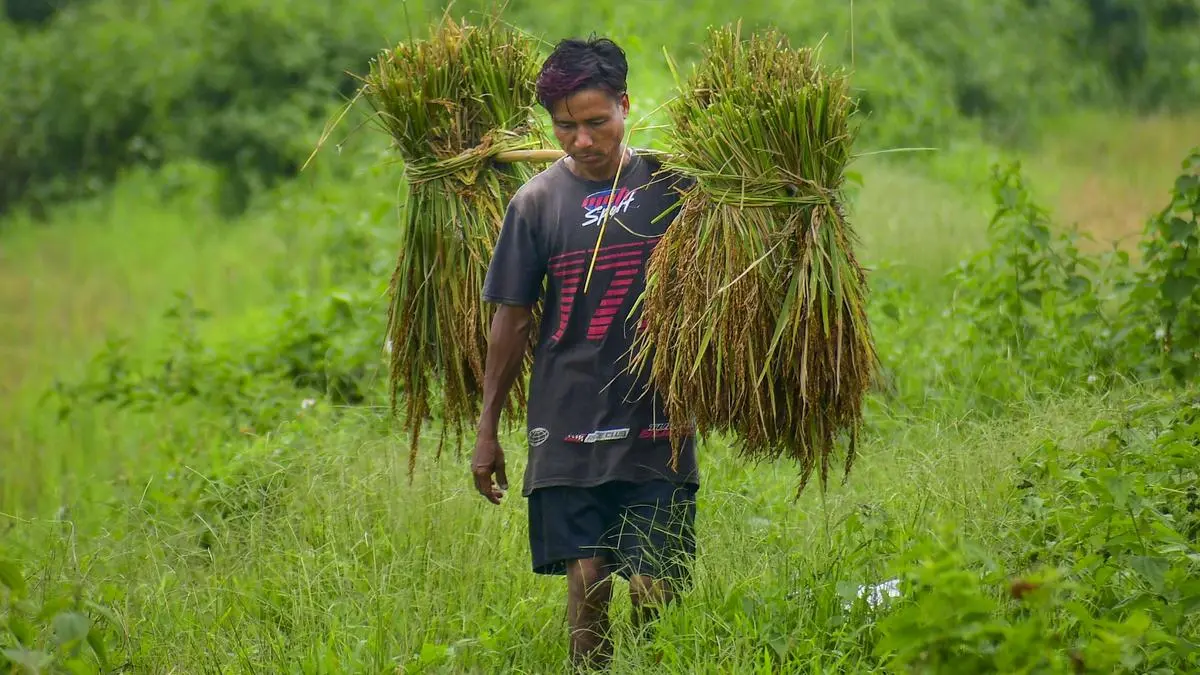
Agriculture: Monsoon worries

Agriculture: Monsoon worries | Photo Credit: -

The India Meteorological Department’s (IMD) June forecast for South-West monsoon carries more bad news than the April one. IMD now believes that monsoon rainfall for the country will likely be at 90 per cent of the Long Period Average (LPA), compared to the April forecast of 92 per cent. IMD’s June forecast for the monsoon is usually more accurate than the early April one. It suggests a deficient monsoon year, instead of merely a sub-normal one, and calls for greater preparation. The forecast also casts a damper on the spatial distribution of rain. Only North-East India, not very critical for the agri-economy, is now expected to receive normal rain.

Central and South Peninsular India and the North-West are likely to experience below normal rains. The monsoon core zone, which is rainfed and critical for agricultural output, is expected to receive less than 94 per cent of LPA. The forecast also raises the possibility of the looming El Nino coinciding exactly with the monsoon months. In April, the IMD had talked of weak La Nina conditions persisting until June, pushing back the advent of El Nino. It also held out the hope that a positive Indian Ocean Dipole (a weather phenomenon that counteracts the impact of El Nino) could emerge towards the end of the Southwest monsoon season. A positive IOD has in some years negated the El Nino effect. However, the latest forecast says that neutral IOD conditions are expected to continue, suggesting that this hope is receding. The World Meteorological Organisation has just predicted that there is an 80 per cent probability of a moderate to strong El Nino emerging between June and August. June has already seen a patchy start to the Southwest monsoon, accompanied by a countrywide heat wave. Should these conditions last through July, the critical sowing month, kharif output could be seriously hit.

In its latest estimates this week, the Agriculture Ministry has marginally lowered its kharif output target to 151 million tonnes for rice (from 154 million tonnes last year), 52.5 million tonnes for maize (55.1 MT last year) and 40 million tonnes for oilseeds (43.1 MT last year). Estimates for other kharif crops such as sugarcane, jowar, bajra, tur, urad and moong have either been hiked or left unchanged from the previous year. No estimates have been provided for horticulture crops. It is unclear if this is because the Ministry expects no impact from a deficient monsoon, or plans to course-correct as sowing progresses.

Pulses and vegetables have been key contributors to spells of runaway inflation in the past. Therefore, a sensible approach is to start with realistic estimates — and avoid knee-jerk actions such as export bans or import duty cuts which hurt farm incomes and impact India’s reputation as a reliable supplier of agri-products. Lower paddy and maize output also call for recalibration of the ambitious ethanol blending programme. Overall, the Centre and States should be prepared with policy options to deal with eventualities.

Published on June 3, 2026