
惯性聚合 高效追踪和阅读你感兴趣的博客、新闻、科技资讯
阅读原文 在惯性聚合中打开

推荐订阅源

WordPress大学
WordPress大学
D
Docker
Microsoft Azure Blog
S
SegmentFault 最新的问题
Recent Announcements
博客园 - 司徒正美
钛媒体:引领未来商业与生活新知
钛媒体:引领未来商业与生活新知
宝玉的分享
宝玉的分享
Spread Privacy
Spread Privacy
T
The Exploit Database - CXSecurity.com
腾讯CDC
T
Tenable Blog
aimingoo的专栏
aimingoo的专栏
T
The Blog of Author Tim Ferriss
Microsoft Security Blog
Latest news
Latest news
Cyber Security Advisories - MS-ISAC
CTFtime.org: upcoming CTF events
O
OpenAI News
MongoDB | Blog
MongoDB | Blog
博客园 - 聂微东
P
Palo Alto Networks Blog
博客园 - 【当耐特】
博客园 - 三生石上(FineUI控件)
小众软件
小众软件
Cisco Talos Blog
Cisco Talos Blog
P
Privacy International News Feed
J
Java Code Geeks
IT之家
IT之家
P
Privacy & Cybersecurity Law Blog
cs.CL updates on arXiv.org
P
Proofpoint News Feed
NISL@THU
NISL@THU
量子位
Recent Commits to openclaw:main
C
CERT Recently Published Vulnerability Notes
K
KPMG report finds enterprise disconnect between AI and its ROI | CIO
T
Tor Project blog
V
V2EX
博客园_首页
The Last Watchdog
The Last Watchdog
雷峰网
雷峰网
Threat Intelligence Blog | Flashpoint
A
About on SuperTechFans
S
Schneier on Security
Hacker News: Ask HN
Hacker News: Ask HN
Hugging Face - Blog
Hugging Face - Blog
Simon Willison's Weblog
C
CXSECURITY Database RSS Feed - CXSecurity.com
人人都是产品经理
人人都是产品经理

TechSpot

Flagship Rematch: Ryzen 7 5800X3D vs. Core i9-12900K Slack chats and internal data from failed startups are finding a second life in AI training A $5 Bluetooth tracker hidden in a postcard exposed a warship's movements Leakers claim PlayStation 6 could offer at least 3x the performance of the PS5 The Mac Mini is no longer a niche product, it's local AI infrastructure IPv6 traffic reaches parity with IPv4 for the first time, Google data shows Xbox expansion cards are now cheaper than SSDs, and PC users are repurposing them Blue Origin prepares to reuse New Glenn booster in bid to challenge SpaceX Nvidia could bring back the 12GB RTX 3060 as supply issues disrupt GPU roadmap What was the first OS you ever used? SNK revives NeoGeo AES with modern upgrades and HDMI support Valve's Proton 11 beta boosts Linux gaming with better performance and classic game support Researchers warn Microsoft Defender vulnerability is already being exploited A four-day Steam freebie turned into $250,000 for an indie game AMD may relaunch Ryzen 7 5800X3D for AM4's 10th anniversary This humanoid robot can almost run as fast as a human sprinter Two New Jersey men jailed for helping North Korean IT workers infiltrate 100+ companies A $7,000 DIY radar project is taking on hardware that usually costs over $100,000 Metro 2039 is going darker than ever, launching this winter on PC and consoles Gemini arrives on macOS with a dedicated desktop app AI infrastructure boom pushes AMD, Intel and Arm to new valuation heights New self-healing material can repair itself over 1,000 times, extend the lifespan of cars and aircraft Japan's bullet train to debut high-tech private cabins, for an added fee Memory card and flash drive pricing surges 120%, with some models spiking 260% Open-source tool decrypts all private data collected by Windows Recall on Copilot PCs The 2026 PC and Console Gaming Report shows most revenue now comes from games outside the Top 20 PureMac is a new open-source macOS cleanup and app removal tool Your Airbnb host might actually be AI Steam might soon display 30-day price history for game deals Intel brings 18A process to budget laptops with new Core Series 3 CPUs How Intel Got Into Trouble: We Test the Last Decade of Intel Flagship CPUs Microsoft counters MacBook Neo with free Game Pass and Office bundle on Windows laptops Popular WordPress plugins backdoored after ownership change, putting thousands of websites at risk Spotify launches physical book sales, expands audiobook features Intel Nova Lake-S is coming after Ryzen APUs with a 16-core iGPU for gamers on a budget Alienware launches $350 QD-OLED monitor with lower brightness to cut costs Recordly brings Screen Studio-style recordings to a free, open-source app Meta doubles down on custom AI chips with Broadcom deal through 2029 Someone finally got an RTX 5090 running on a Mac – no hacks required Will AI agents need to buy their own software licenses? Microsoft sure hopes so Duolingo stops evaluating workers based on how much AI they use Nvidia warranty payouts surged 1,000% last year, not that they can't afford it Nvidia says it's not buying a PC maker, but the idea didn't seem crazy Netgear becomes first router brand exempt from FCC foreign-made ban Google adds Rust to Pixel 10 modem to block attacks at one of Android's weakest points Clicking "reject cookies" might not actually do anything DaVinci Resolve 21 beta adds photo editing and deeper AI integration Malware campaign lures users with fake Windows Update website Apple is testing four smart glasses designs as it prepares to challenge Meta Ray-Bans Amazon purchases Globalstar for $11.6B to expand its low Earth orbit satellite network Capcom's Pragmata earns strong early reviews ahead of release Microsoft is removing 32GB size limit for FAT32 volumes, this time for real Missouri town ousts half of its city council after $6 billion AI data center approval External GPUs were always second best. CopprLink may change that Google will demote websites that hijack your browser's back button Japan finds a way to recover 90% of lithium from old EV batteries Man who vandalized Sam Altman's home claimed AI would end humanity, charged with attempted murder New terahertz technique lets engineers see inside running processors in real time Microsoft just made its Surface laptops a lot more expensive Shipping records suggest Valve will launch the Steam Controller before the Steam Machine This 3D-printed 15-fan side panel drops CPU temps by 20 degrees Rockstar Games hit with ransom demand after third-party data breach Blu-ray lives on as Verbatim and I-O Data pledge support with new drives and discs The software that landed Apollo 11 on the moon is now free online Metal Gear Solid movie is back on track with new directors Anti-data center vote in Wisconsin puts future AI projects on notice Mozilla says Microsoft is using Copilot and Edge to tighten its grip on Windows Gmail encryption goes mobile, but email itself remains the weak link France starts moving government systems from Windows to Linux xAI sues Colorado over AI law, calling it a threat to free speech Florida launches probe into OpenAI as company eyes massive IPO South Korea moves to curb the meteoritic rise of DRAM and PC hardware prices Keychron shares 3D keyboard blueprints on GitHub, opening hardware to modders Nvidia's mythical N1 SoC surfaces on a real motherboard, and it's packing 128GB of LPDDR5X Tesla is working on a smaller, cheaper electric SUV DDR5 prices drop nearly 30%, but memory costs are still far from normal Amazon laid off 30,000 workers while CEO Andy Jassy got a 30% pay bump FBI recovers "deleted" Signal messages through iPhone notifications PC market posts modest growth in early 2026 despite memory shortages and economic strain TikTok star Khaby Lame's $975 million deal is raising serious red flags VeraCrypt, WireGuard among projects disrupted by Microsoft account suspensions Microsoft OneDrive users report mysterious spam files that won't go away Intel tops $300 billion market cap for the first time since the dot-com boom The cables powering the internet are under the ocean – and under threat A version of Windows 10 released a decade ago is now eligible for additional security patches Iran-linked hackers are now targeting industrial controllers in US infrastructure Hackers are turning home routers into tools to spy on Microsoft 365 users A weird macOS bug is blocking new network connections after 49 days of uptime NIH study identifies experimental opioid with strong pain relief and lower addiction risk SanDisk's new 2TB SD card costs $2,000, and it's not even the fastest option Ohio man pleads guilty in first case under federal law banning AI deepfakes John Deere will pay $99 million in right-to-repair lawsuit, but admits nothing Tech layoffs are piling up: 80,000 jobs cut in early 2026, and AI is getting the blame Greece to ban social media for children under 15 starting next year New report revives theory that cryptographer Adam Back could be Bitcoin creator Satoshi Nakamoto Anthropic just lost another round in its fight with the Pentagon Some Windows 3.1 apps were simply "too evil" for Windows 95 to support, says Microsoft veteran AMD confirms Ryzen 9 9950X3D2 priced at $899 German police identify REvil and GandCrab mastermind now living in Russia After Wi-Fi 7's Speed Push, Wi-Fi 8 Is Turning to Reliability
The quiet reinvention of search in the age of AI
SerpApi · 2026-05-06 · via TechSpot

Serving tech enthusiasts for over 25 years.
TechSpot means tech analysis and advice you can trust.

"Search is dead" has been a recurring headline for years. First, it was social media that was supposed to replace it. Then apps. Then, voice assistants. Now it's generative AI.

If you look at today's search pages, it's easy to see something fundamental has changed. The familiar stack of blue links has been squeezed downward by AI summaries, "knowledge panels," shopping modules, videos, and ads. But here's the thing: search didn't die. It just moved.

What used to be a visible interface: 10 blue links and a page rank, is quietly turning into backend infrastructure. Increasingly, search is no longer something you look at. It's something software consumes.

From blue links to backend data

In the classic SEO era, the game was straightforward. Rank higher. Capture clicks. Measure traffic. Optimize metadata. Repeat.

Search engines were gateways. You typed a query, scanned results, and chose where to go next. Publishers competed for position. Users decided what to trust.

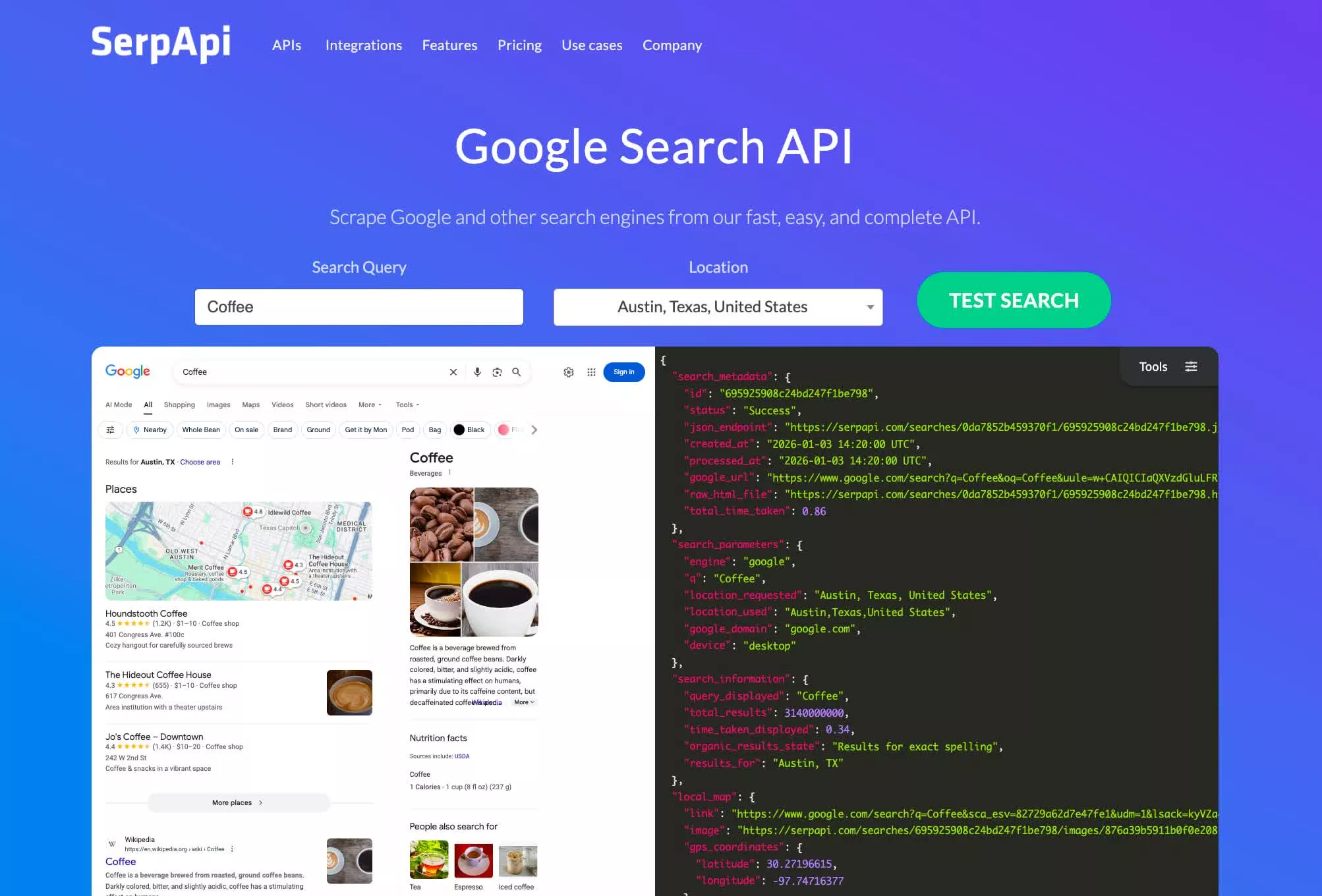
The generative AI wave has shifted that dynamic. Large language models now summarize answers directly in the search interface. Instead of sending users to a website, search increasingly tries to synthesize the web into a single response – sometimes with citations, sometimes without.
That changes incentives. It also changes architecture.

Behind those AI-generated summaries, there's still search happening. Models rely on retrieval pipelines. They pull structured results. They analyze snippets. They rank relevance. The difference is that much of that process now happens before a human sees anything. Search, in other words, has become a data stream.

Search, in other words, has become a data stream.

Instead of thinking in terms of pageviews and clicks, developers are increasingly thinking in terms of structured results: JSON payloads, citation arrays, featured snippets, shopping results, and AI answer blocks. The browser isn't the only interface anymore – APIs are.

The API layer no one sees

As AI systems expand into everything from customer support bots to research assistants, they need access to fresh, structured web data. This is where the real reinvention is taking place.

Scraping HTML pages manually isn't scalable. Manually parsing search results isn't practical at an enterprise scale. And relying solely on static training data introduces staleness.

A new layer of infrastructure has emerged to bridge that gap – services that convert live search engine results into clean, structured outputs that software can actually use.

SerpApi is one example of that shift. Rather than serving as a marketing tool, it functions as a developer-facing API that delivers structured search engine results in machine-readable formats. Instead of scraping a results page in a browser, a developer can programmatically access rankings, ads, snippets, shopping results, and increasingly, AI-generated answer sections.

When search becomes invisible

One of the more subtle consequences of AI-driven search is that it reduces visibility – not just for publishers, but for everyone trying to understand how answers are constructed.

When a traditional results page ranked websites, you could see the order. You could see the sources. You could compare multiple perspectives. Even if the algorithm was opaque, the outputs were transparent.

AI summaries compress that into a single block of text. Sometimes there are citations. Sometimes they're partial. Sometimes they're buried. That opacity has real implications.

  • If you run a website, how do you know if AI is citing your reporting accurately?
  • If you're a developer building a retrieval-augmented application, how do you audit what sources are being surfaced?
  • If you're a researcher analyzing bias or misinformation, how do you track changes over time?

Monitoring those shifts requires more than manually typing queries into a search bar. It requires structured access to results at scale.
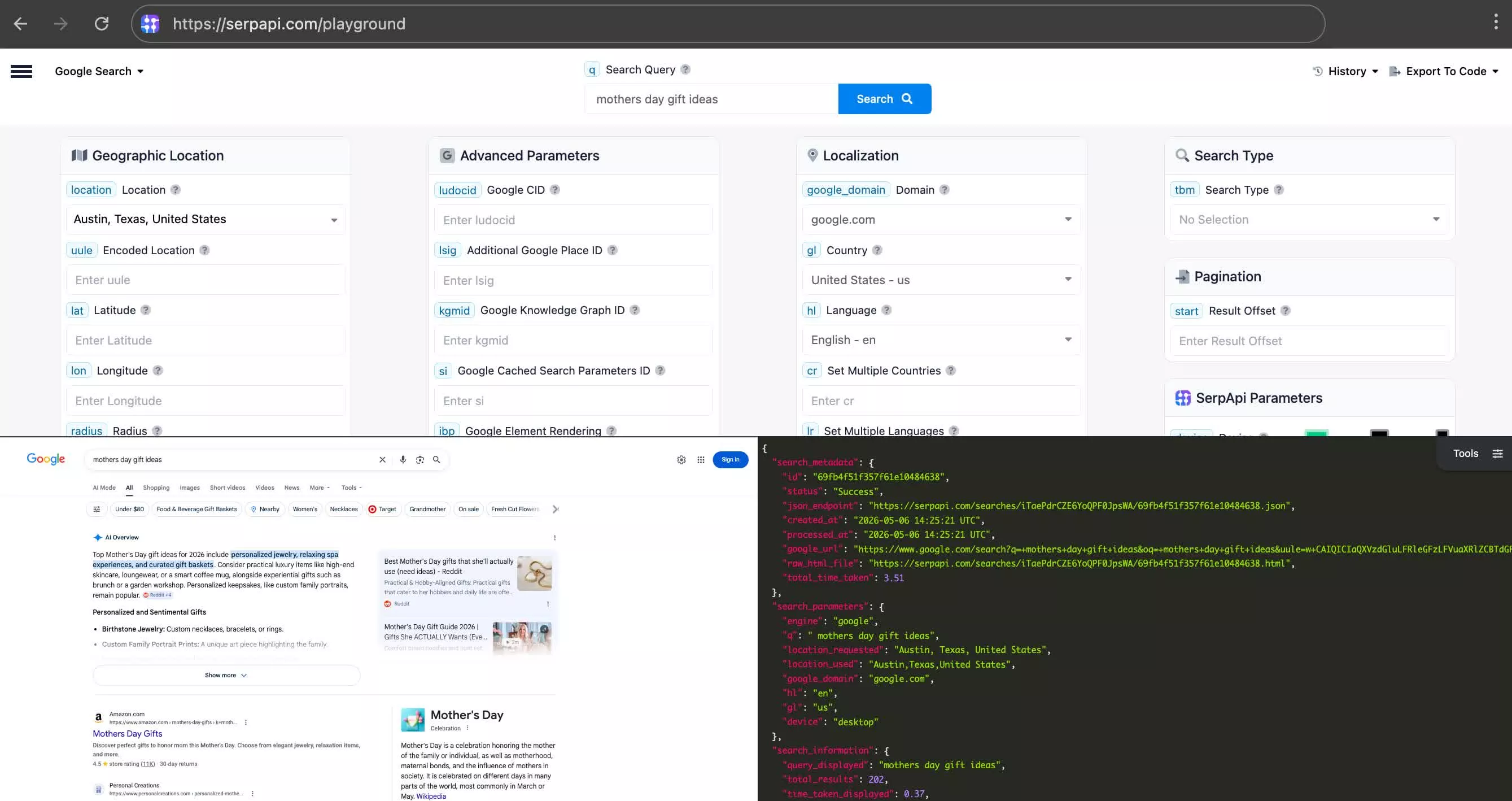
SerpApi provides a playground to tinker with their APIs. So, you can explore the tools before running them programmatically.

SerpApi has leaned into that need, particularly around tracking what Google's AI Mode and similar features are citing. By exposing those AI answer sections and their referenced sources in structured formats, developers and analysts can measure something that would otherwise remain buried in an interface.

From SEO to something else

For two decades, SEO was about visibility in rankings. Now the competition is evolving into something closer to citation visibility. If AI systems summarize content for users, inclusion in those summaries becomes its own form of presence.

Some have started calling this "Generative Engine Optimization," or GEO – a term that's still forming and arguably overused. But the underlying shift is real. The question isn't just "where do we rank?" It's "are we being referenced at all?" That's a harder question to answer without tools that can systematically extract and analyze AI-generated results.

Structured APIs make that analysis possible. Instead of screenshots and manual tracking, organizations can monitor patterns across thousands of queries. They can see when citations appear, disappear, or shift. They can compare how different search engines construct answers.

For general tech readers, this might sound like too much jargon. But it has broader consequences. If AI summaries increasingly become the default interface to information, the pipeline feeding those summaries matters more than ever.

The uncomfortable reality of AI search

It's worth saying: AI search is not universally loved. Some find summaries convenient. Others see them as intrusive or unreliable. Hallucinations still happen. Citations can be inconsistent. The blending of ads, organic results, and AI blocks can blur lines in ways that are difficult to parse.

In fact, the more seamless the experience becomes, the more important transparency tools become. When systems generate confident answers, the burden of verification shifts to developers, publishers, and researchers.

Infrastructure companies that provide structured access to search results aren't building AGI. They're building observability. They're making it possible to audit and analyze what would otherwise be a black box. That role may not grab headlines, but it's foundational.

If you zoom out, the pattern becomes clearer...

Search started as a directory.
Then it became a ranking engine.
Then it became an ad platform.
Now it's becoming an embedded service layer inside AI systems.

The quiet reinvention of search isn't about killing blue links. It's about transforming search from a user interface into infrastructure.

For developers building AI applications, structured access to search results is no longer optional. For publishers trying to understand where their work appears in AI-generated answers, monitoring citations is becoming part of the job. For researchers studying how information flows through generative systems, data access is critical.

Companies like SerpApi sit in that middle layer, providing structured bridges between them and the software that now depends on them. Search didn't die. It just stopped being something you only see in a browser tab. It became an API.

Masthead credit: Zyanya Citlalli