
惯性聚合 高效追踪和阅读你感兴趣的博客、新闻、科技资讯
阅读原文 在惯性聚合中打开

推荐订阅源

Last Week in AI
Last Week in AI
有赞技术团队
有赞技术团队
钛媒体:引领未来商业与生活新知
钛媒体:引领未来商业与生活新知
人人都是产品经理
人人都是产品经理
博客园 - 司徒正美
博客园 - 聂微东
OSCHINA 社区最新新闻
OSCHINA 社区最新新闻
博客园 - 叶小钗
罗磊的独立博客
IT之家
IT之家
博客园 - 三生石上(FineUI控件)
V
Visual Studio Blog
T
Tailwind CSS Blog
大猫的无限游戏
大猫的无限游戏
Hugging Face - Blog
Hugging Face - Blog
H
Hackread – Cybersecurity News, Data Breaches, AI and More
N
Netflix TechBlog - Medium
MyScale Blog
MyScale Blog
J
Java Code Geeks
L
LangChain Blog
S
SegmentFault 最新的问题
奇客Solidot–传递最新科技情报
奇客Solidot–传递最新科技情报
Apple Machine Learning Research
G
Google Developers Blog

TechSpot

Flagship Rematch: Ryzen 7 5800X3D vs. Core i9-12900K Typing with your brain might soon be as simple as wearing a beanie Slack chats and internal data from failed startups are finding a second life in AI training A $5 Bluetooth tracker hidden in a postcard exposed a warship's movements Leakers claim PlayStation 6 could offer at least 3x the performance of the PS5 The Mac Mini is no longer a niche product, it's local AI infrastructure IPv6 traffic reaches parity with IPv4 for the first time, Google data shows Xbox expansion cards are now cheaper than SSDs, and PC users are repurposing them Blue Origin prepares to reuse New Glenn booster in bid to challenge SpaceX Nvidia could bring back the 12GB RTX 3060 as supply issues disrupt GPU roadmap What was the first OS you ever used? SNK revives NeoGeo AES with modern upgrades and HDMI support Valve's Proton 11 beta boosts Linux gaming with better performance and classic game support Researchers warn Microsoft Defender vulnerability is already being exploited A four-day Steam freebie turned into $250,000 for an indie game AMD may relaunch Ryzen 7 5800X3D for AM4's 10th anniversary This humanoid robot can almost run as fast as a human sprinter Two New Jersey men jailed for helping North Korean IT workers infiltrate 100+ companies A $7,000 DIY radar project is taking on hardware that usually costs over $100,000 Metro 2039 is going darker than ever, launching this winter on PC and consoles Gemini arrives on macOS with a dedicated desktop app AI infrastructure boom pushes AMD, Intel and Arm to new valuation heights New self-healing material can repair itself over 1,000 times, extend the lifespan of cars and aircraft Japan's bullet train to debut high-tech private cabins, for an added fee Memory card and flash drive pricing surges 120%, with some models spiking 260% Open-source tool decrypts all private data collected by Windows Recall on Copilot PCs The 2026 PC and Console Gaming Report shows most revenue now comes from games outside the Top 20 PureMac is a new open-source macOS cleanup and app removal tool Your Airbnb host might actually be AI Steam might soon display 30-day price history for game deals
Someone finally got an RTX 5090 running on a Mac – no hac...
Zo Ahmed · 2026-04-15 · via TechSpot

Serving tech enthusiasts for over 25 years.
TechSpot means tech analysis and advice you can trust.

In context: Back in 2018, Apple yanked Nvidia support from macOS entirely, and that was pretty much it for CUDA on the platform. Developers who wanted GPU compute from Team Green on their Macs were out of luck for years. But that's now changing.

Tiny Corp, the same company that built the tinybox AI accelerator, has written its own Nvidia GPU driver completely from scratch. It's called TinyGPU, and it's an open-source macOS kernel extension. Better yet, Apple has signed off on it. That means you don't need workarounds like setting up a virtual machine or messing with System Integrity Protection to run it. All you need to do is plug in an external GPU over Thunderbolt or USB4, approve the extension, and it works.

One YouTuber has already tested the driver using his RTX 5090 with 32GB of VRAM. Alex Ziskind plugged the GPU into a Mac Mini M4 Pro, and it ran just fine. That's impressive considering this is Nvidia Blackwell silicon hooked up to Apple Silicon via a single cable.

But actual performance is a more complicated story. In an inference test using Llama 3.1 8B – a popular open-source AI model – the RTX 5090 managed roughly 7.48 tokens per second. Tokens per second is basically how fast an AI model can spit out its response, and that number isn't going to blow anyone away.
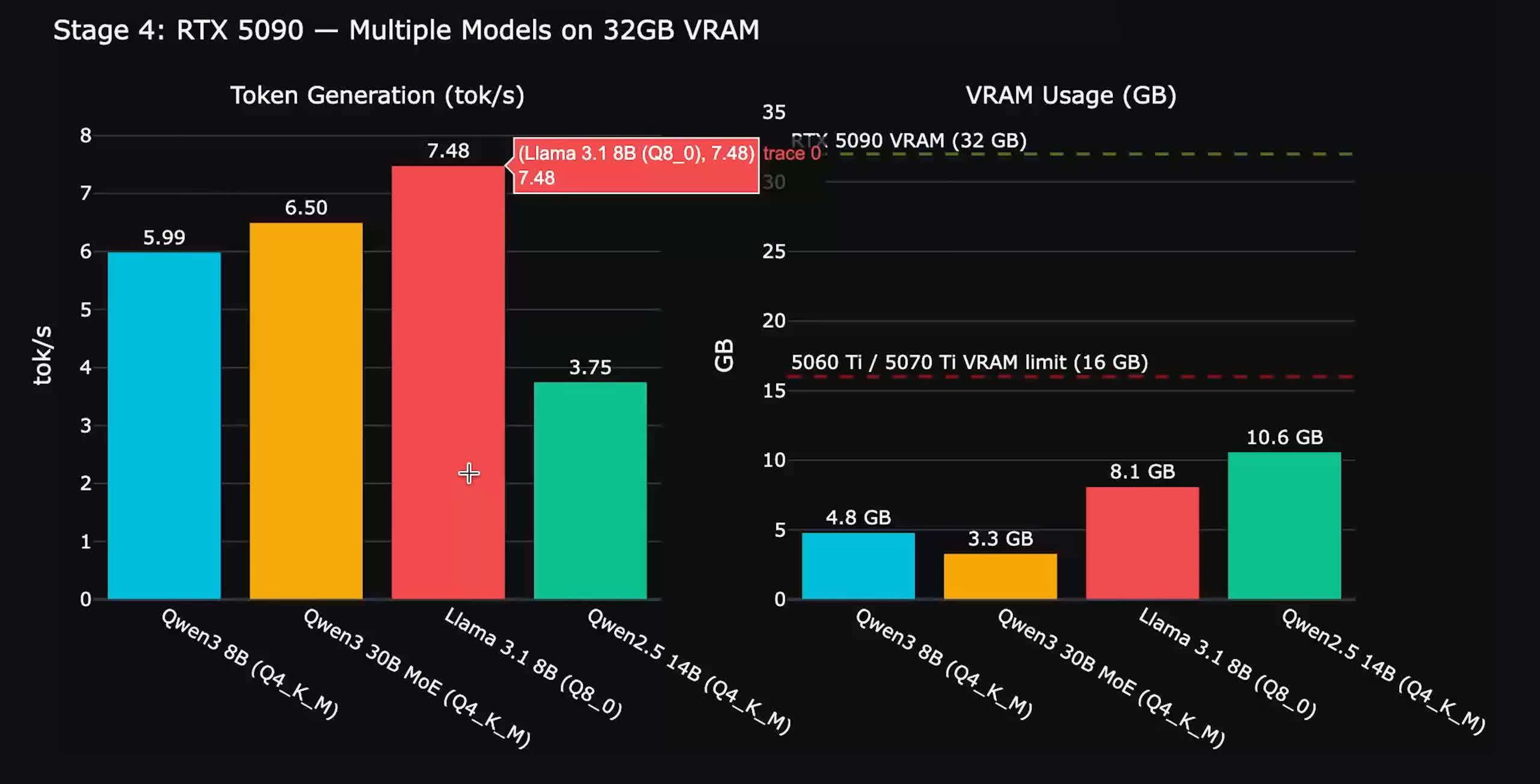
Where things did get interesting, though, was in chat-style tasks. Time to first token, which is how long you wait before the response even starts appearing, was three to four times quicker than what you'd get from using Metal natively. That made the experience feel noticeably snappy, according to Ziskind.
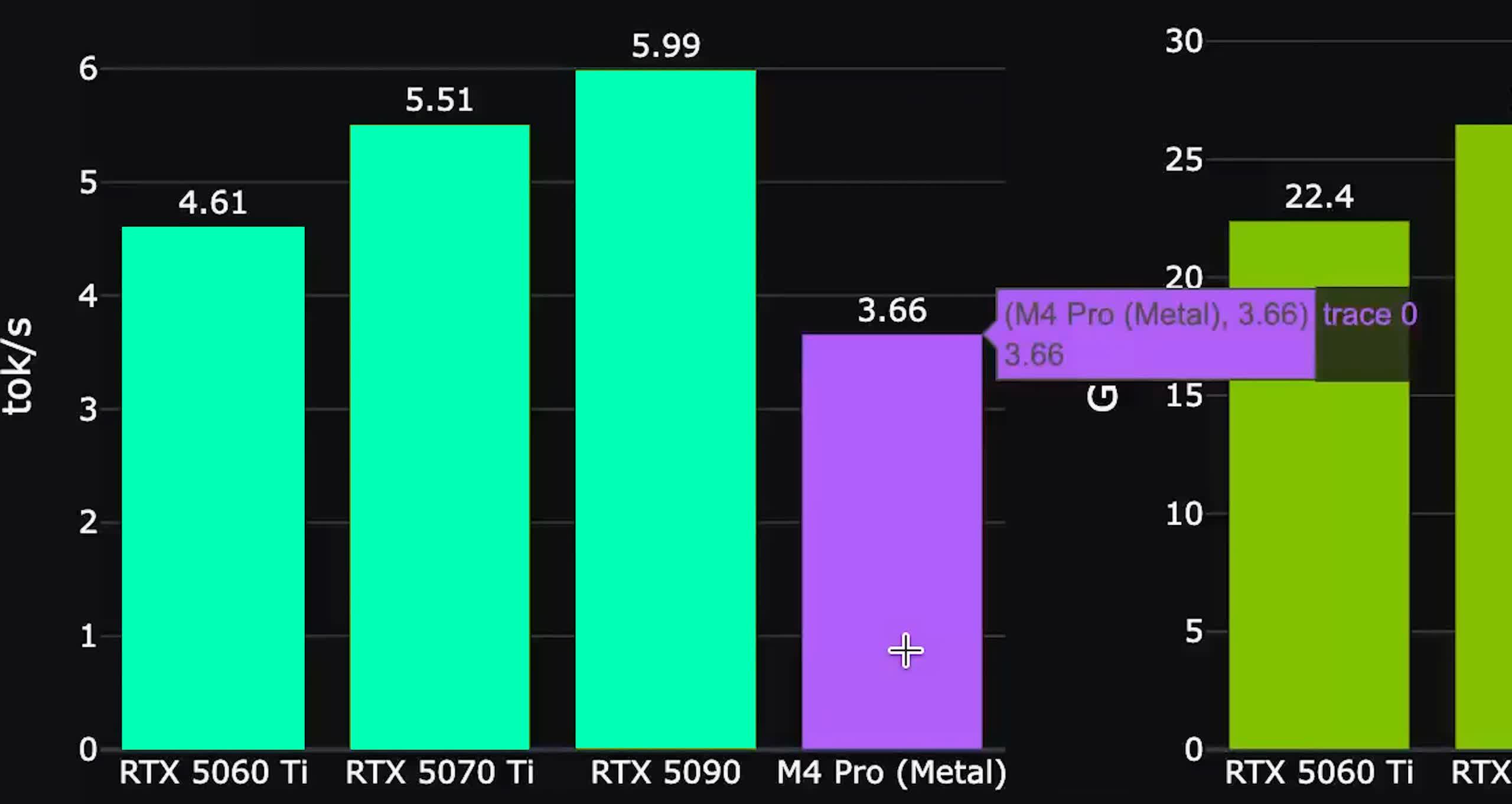
Now for the catch. Running llama.cpp, which is one of the most popular open-source tools for local AI inference, on Metal is still about ten times faster overall. That's a big gap, though it's not really a Thunderbolt bandwidth problem. According to Ziskind, the real culprit is kernel efficiency: the 5090's memory can do 1.8TB/s, but the driver is only reaching 33GB/s.

Then again, this isn't meant to compete with llama.cpp right now. The point is that the driver, compiler pipeline, and memory management are all in place. With that out of the way, Tiny Corp can start working on optimizations.