


Serving tech enthusiasts for over 25 years.
TechSpot means tech analysis and advice you can trust.
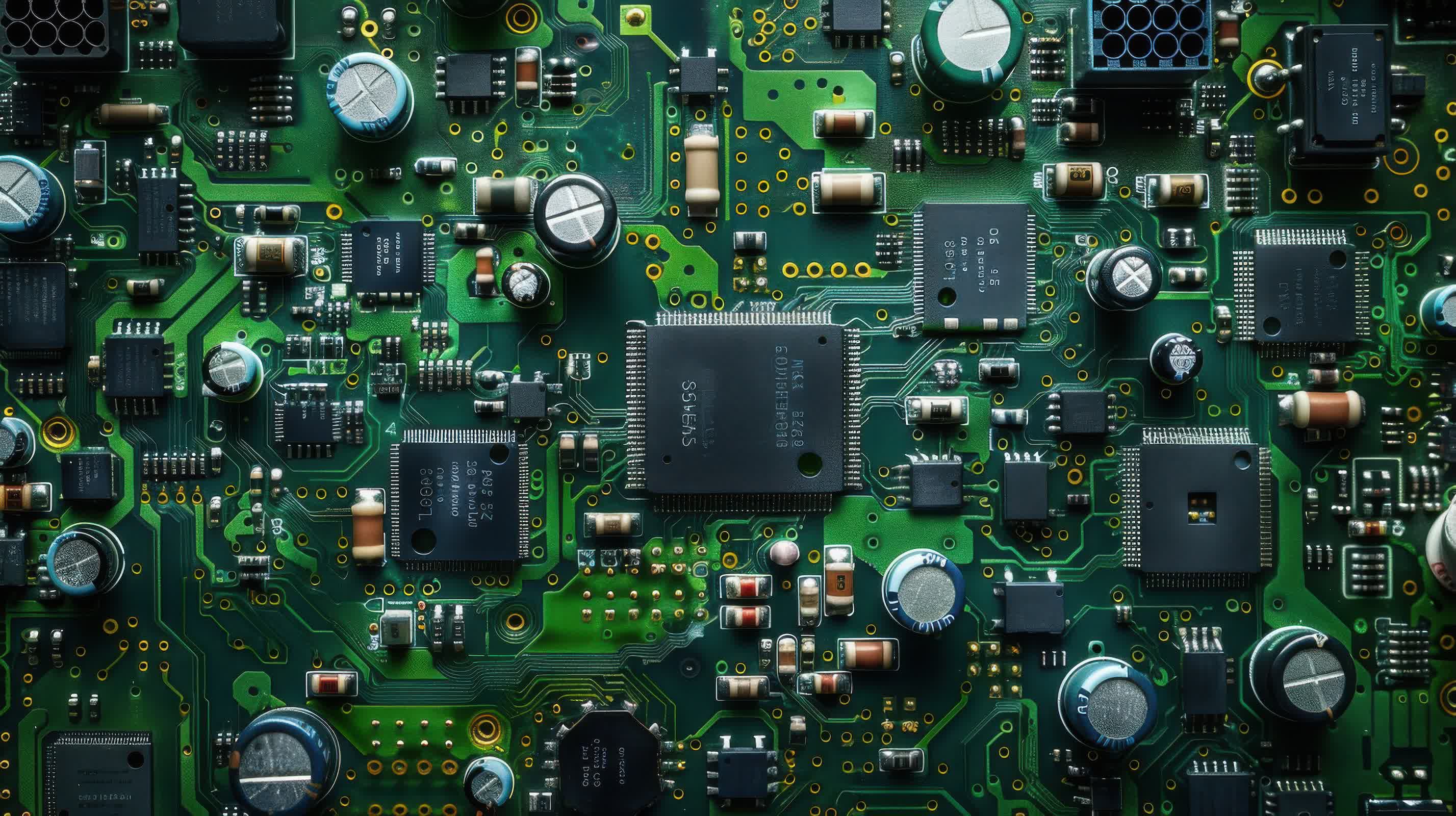
The big picture: Most people never think about what's inside a circuit board, but a little-known resin is quickly becoming a major concern for the tech industry. High-purity polyphenylene ether resin sits deep within the electronics supply chain, yet it plays a critical role in how printed circuit boards manage heat, maintain signal integrity, and ensure reliability. The material helps boards inside smartphones, laptops, data center servers, 5G base stations, cars, and countless other devices continue operating under demanding conditions. So when the petrochemical and industrial complex in Jubail, Saudi Arabia, went offline earlier this year, that obscure resin suddenly became a major concern for electronics manufacturers.
The disruption at Jubail did not begin with the missile strikes on April 6 and 7. Plants had already been shut down in late March as it became clear that moving cargo through the Strait of Hormuz was too risky amid the conflict. The attacks then added damage to a logistics system that was already at a standstill.
Dow has a joint venture at the complex with Saudi Aramco, and on an April 23 earnings call, Dow CEO Jim Fitterling said the company is still working on the assumption of a "275-day-plus" timeline before logistics and supply chains return to normal.
For the tech industry, the timing is particularly difficult. Resin is a basic input in PCB manufacturing, and substituting it requires redesigning boards, re-running reliability and performance tests, and securing new approvals.
Prices are already reflecting the strain. April's Producer Price Index showed processed goods up 9.4% from a year earlier, with plastic resins and materials among the key drivers – the largest increase in more than three years.
Nvidia supplier Victory Giant in China, one of the world's largest PCB makers, has warned that the conflict in the Middle East could push up prices for copper and resin. According to a Goldman Sachs note, PCB prices rose by as much as 40% between March and April. TTM, a US-based PCB maker whose shares are up more than 400% over the past year, told CNBC it is raising prices by roughly 5% to 25%.
The fragility of the system was on display during a recent CNBC-accompanied tour of TTM's facilities, which highlighted just how much PCB production has shifted offshore over the past two decades.
Back in 2000, roughly 30% of the world's printed circuit boards were manufactured in the US, according to data the company provided; today, that share is closer to 4%, with China now dominating global output. The boards may be assembled in different countries, but they still depend on resin from a small group of suppliers – and a large portion of that high-purity material was coming from the Jubail complex.
Supply chain expert and Wichita State University professor Usha Haley said the Saudi complex supplied about 70% of the world's high-purity PPE resin. "Production has now come to a standstill, and no alternative supplier exists to fill the gap. PCB prices have risen 40% in a month, and lead times for epoxy-resin inputs have expanded from three weeks to fifteen," Haley said.
The effects will not show up at the checkout line all at once. Mark Vena, CEO and principal analyst at SmartTech Research, expects most consumers will never hear the phrase "PPE resin shortage" in a retail store, even if it is shaping what they pay. "Printed circuit boards are the nervous system of every modern device, and when board costs spike, the pain moves quickly through phones, laptops, wearables, gaming consoles, routers, and AI servers," he said.
Apple has more levers than most companies to manage the shock. It has scale, long-term supplier contracts, sophisticated demand forecasting, and the ability to rework designs faster than smaller competitors. But it still faces the same upstream constraint as everyone else.
But it still faces the same upstream constraint as everyone else. "But insulated does not mean immune, because every iPhone still depends on high-reliability circuit boards and the same global materials web that everyone else uses," Vena said. "Apple can move the pain around, but it cannot make a concentrated petrochemical bottleneck disappear."

That pressure is likely to show up first in product lines with thinner margins. Vena pointed to categories such as PCs, accessories, gaming devices, routers, and midrange Android phones as especially exposed, because manufacturers in those segments have less room to absorb sharp increases in PCB costs. He also said foldable smartphones are likely to feel the impact most acutely, given their more complex designs.
In the near term, flagship phone sticker prices are likely to hold. Thad Hwang, founder and CEO of Goji Mobile, said he does not expect higher retail prices for devices like the iPhone 17 or Samsung Galaxy S26 in the next couple of months. But he also pointed to autumn as the period when the longer-term effects of semiconductor disruption and supply chain instability could begin to emerge.
The US does not have the capacity to replace the lost resin from Jubail. Sridhar Tayur, professor of operations management at Carnegie Mellon University, said skills and production have shifted elsewhere, and policymakers often do not focus on these choke points until they are already in crisis. "Suddenly, people are going to be drawing down on the inventory they have," Tayur said.
If the plant in Saudi Arabia remains offline for a few more months, he expects problems to become more visible. "The situation will affect data centers, routers, and high-end 5G phones – this is where the type of resin used matters most," he said. For manufacturers, even the largest ones, the options are limited. As Tayur put it, for Apple and other electronics makers, "there's not much they can do about shortages if it's just not there."
此内容由惯性聚合(RSS阅读器)自动聚合整理,仅供阅读参考。 原文来自 — 版权归原作者所有。