





A five-level operating model for turning API security visibility into measurable risk reduction, faster remediation, and confident digital growth — without slowing development.
API security operationalization is the process of converting API discovery and visibility into continuous, measurable risk reduction across discovery, vulnerability identification, prioritization, mitigation, and scaling. It moves API security from a one-time assessment to a repeatable, outcome-driven program, with KPIs such as mean time to remediation (MTTR), high-risk API count, and exposed endpoint reduction.
Operationalization matters because APIs are the fastest-growing attack surface — and most organizations now have visibility into their APIs but cannot act on it consistently. Without operationalization, discovery becomes a catalog instead of a control.
Most organizations aren’t struggling to see their APIs anymore. They’re struggling to turn API security visibility into consistent, measurable outcomes. According to the OWASP API Security Top 10, the most damaging API risks — broken object-level authorization (BOLA), broken authentication, and unrestricted resource consumption — all exploit gaps that exist after discovery, not before it.
APIs are the fastest growing attack surface — Imperva research shows API-directed attacks now account for a meaningful share of the application threat landscape (see the 2025 Imperva Bad Bot Report for current bot-driven API abuse data). Yet many security programs stall after discovery: risks are identified but not prioritized. Findings are reported but not operationalized. Controls exist, but don’t scale.
Imperva API Security closes that gap.
It enables organizations to move beyond insight and into action, so API security becomes a repeatable, outcome-driven capability that reduces real risk, improves efficiency, and supports faster innovation.
Here’s how to operationalize it for impact.
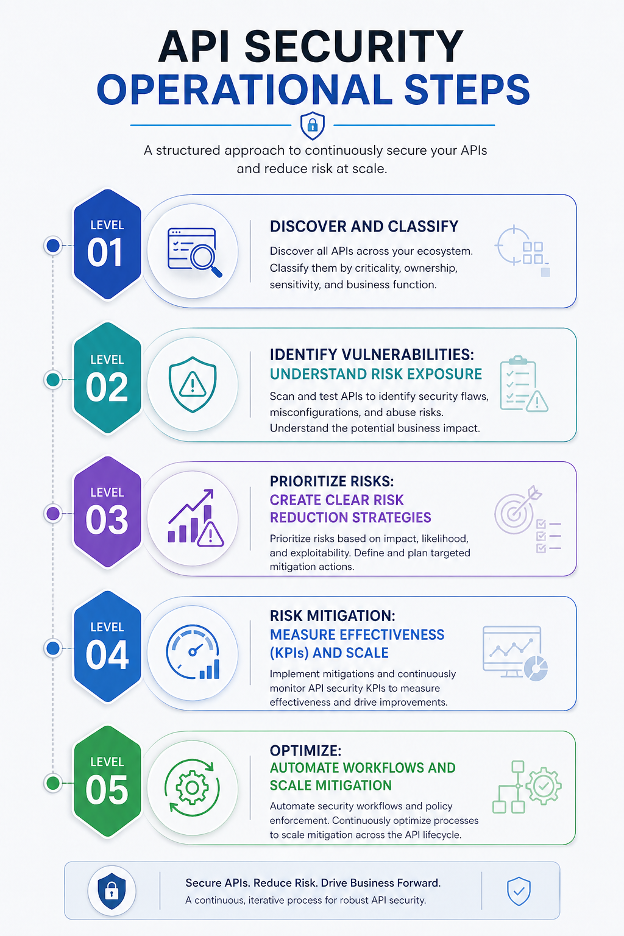
Figure 1: The Imperva API Security operational maturity model — five levels from Discover to Optimize.
Building a complete, continuously updated inventory of every API
API discovery is the continuous process of identifying every API endpoint — managed, unmanaged, shadow, and deprecated — across cloud, on-premises, and hybrid environments, then classifying each one by data sensitivity and business criticality.
You can’t secure what you don’t fully understand, and classifying APIs by data sensitivity helps reduce the scope to a more manageable set. In dynamic environments, APIs are constantly changing, new ones spin up, old ones linger, and many remain undocumented.
Operationalization starts with continuous, accurate discovery and classification:
How Imperva delivers:
Imperva API Security provides deep, continuous visibility into your API ecosystem, helping you uncover hidden APIs and automatically build a risk-aware inventory. This gives you not just a list of APIs, but the context needed to act on them.
Outcome: Reduced API attack surface, an inventory you trust, and the foundation every later level depends on. Without trustworthy discovery, prioritization is guesswork.
Expose real-world risk, not just theoretical issues
Modern API attacks don’t rely on obvious exploits. They leverage legitimate access in unintended ways — abusing business logic, over-permissioned tokens, and weak authorization. The OWASP API Security Top 10 ranks broken object-level authorization (BOLA) as the #1 API risk: an authenticated user manipulates an object identifier (user ID, account ID, document ID) to access another user’s data the API never intended to expose. Unlike SQL injection, BOLA produces no malformed payloads — every request looks legitimate.
To operationalize security, you need to detect:
How Imperva delivers:
Imperva analyzes API traffic and behavior to surface context-rich risk signals, so you can see not just what’s vulnerable, but how it can be exploited in practice.
Outcome: Shift from static findings to actionable intelligence aligned with real attack paths.
Focus on what actually matters to the business
Not all API risks are equal and treating them that way slows teams down.
Operational maturity comes from risk-based prioritization:
How Imperva delivers:
Imperva brings together visibility, behavioral insight, and business context to help teams focus on the highest-impact risks first, cutting through noise and enabling faster, smarter decisions.
Outcome: Align security effort with business risk, not alert volume.
Turn insight into action, and prove it’s working
Security only delivers value when risk is actively reduced, and that reduction is measurable.
Mitigation should be paired with clear KPIs:
How Imperva delivers:
Imperva enables teams to detect and respond to malicious or risky API activity with precision, using inline actions at the client session level to stop abuse in real time, far more effective than coarse IP-based blocking. This turns API security into a measurable, outcome-driven function.
Outcome: Demonstrate real risk reduction and tangible ROI.
Embed API security into how your business operates
Manual processes don’t scale in modern API environments. Optimization is about making API security continuous, automated, and integrated.
This means:
How Imperva delivers:
Imperva helps operationalize API security at scale, reducing manual effort while improving consistency and coverage. It enables security teams to keep pace with development without becoming a bottleneck.
Outcome: Scale protection without scaling complexity.
Sustainable API security is not just about stronger controls. It’s about balance.
Too much focus on protection slows the business. Too much focus on speed increases exposure.
Imperva API Security brings both together.
Right + Left = Optimum—where security doesn’t compete with the business; it accelerates it.
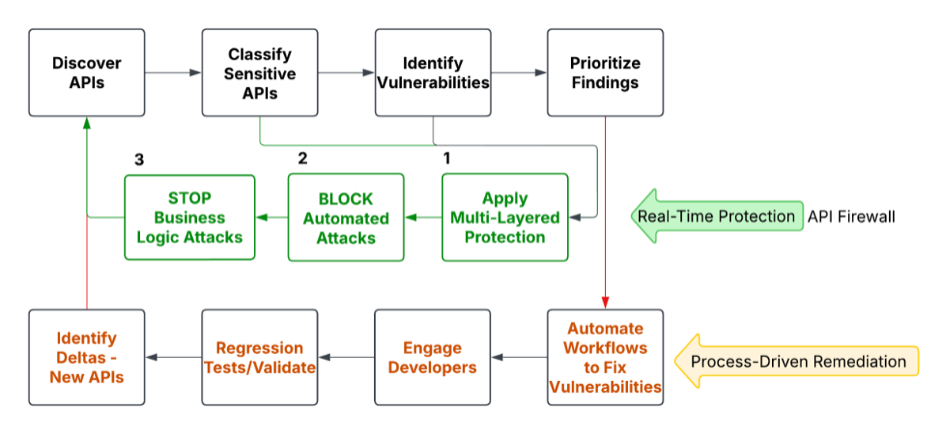
Figure 2: Building a Sustainable Strategy – Right + Left = Optimum
The difference between having API security and operationalizing it is the difference between insight and impact.
With Imperva API Security, organizations can:
The result is not just better security.
It’s faster innovation, stronger resilience, and confident digital growth.
If your API security program is stuck at visibility, it’s time to take the next step.
Operationalize it. Measure it. Scale it.
See how Imperva API Security can help you turn API security into a strategic advantage,
and start driving real business value from day one.
Want to see how Imperva API Security can be operationalized at scale? Watch the detailed expert webinar for practical guidance and real-world insights.
What’s the difference between API security and API security operationalization?
API security is the set of controls that protect APIs from abuse. API security operationalization is the practice of running those controls as a continuous, measurable program — with discovery, prioritization, KPIs, and automation rather than one-time scans.
What are the most common API vulnerabilities?
The OWASP API Security Top 10 (2023 edition) ranks broken object-level authorization (BOLA), broken authentication, broken object-property-level authorization, unrestricted resource consumption, and broken function-level authorization as the highest-impact API risks. Most modern attacks combine two or more of these.
How is API discovery different from API documentation?
API documentation describes what an API is supposed to do. API discovery finds every API that actually exists in your environment — including shadow, deprecated, and undocumented endpoints that documentation misses. Operationalized programs treat discovery as continuous, not one-time.
How do you measure API security effectiveness?
Track high-risk API count, mean time to remediate (MTTR), exposed/unmanaged endpoint count, protection coverage, and inline-action rate. KPI movement over time is the proof that the program — not just the toolset — is working.
Does Imperva API Security work with my existing WAF or WAAP?
Yes. Imperva API Security is part of the Imperva Web Application and API Protection (WAAP) platform and integrates with Imperva WAF, the Imperva CDN, and third-party SIEM/SOAR tooling. The same operational model spans web app and API protection.
→ Explore the Imperva API Security platform: https://www.imperva.com/products/api-security/
Protect your business for 30 days on Imperva.
此内容由惯性聚合(RSS阅读器)自动聚合整理,仅供阅读参考。 原文来自 — 版权归原作者所有。