



惯性聚合 高效追踪和阅读你感兴趣的博客、新闻、科技资讯
阅读原文 在惯性聚合中打开

推荐订阅源

Forbes - Security
Forbes - Security
The Hacker News
The Hacker News
V
Vulnerabilities – Threatpost
C
CXSECURITY Database RSS Feed - CXSecurity.com
Spread Privacy
Spread Privacy
P
Proofpoint News Feed
AWS News Blog
AWS News Blog
S
Securelist
S
Security @ Cisco Blogs
Cloudbric
Cloudbric
T
Troy Hunt's Blog
SecWiki News
SecWiki News
cs.CL updates on arXiv.org
K
KPMG report finds enterprise disconnect between AI and its ROI | CIO
Security Latest
Security Latest
C
Cyber Attacks, Cyber Crime and Cyber Security
AI
AI
Threat Intelligence Blog | Flashpoint
Stack Overflow Blog
Stack Overflow Blog
I
Intezer
I
InfoQ
Attack and Defense Labs
H
Hackread – Cybersecurity News, Data Breaches, AI and More
Recent Commits to openclaw:main
T
The Exploit Database - CXSecurity.com
Cyber Security Advisories - MS-ISAC
N
News | PayPal Newsroom
云风的 BLOG
云风的 BLOG
S
Secure Thoughts
T
The Blog of Author Tim Ferriss
Martin Fowler
Martin Fowler
L
LINUX DO - 最新话题
Exploit-DB.com RSS Feed
D
Darknet – Hacking Tools, Hacker News & Cyber Security
A
About on SuperTechFans
Hacker News - Newest:
Hacker News - Newest: "LLM"
TaoSecurity Blog
TaoSecurity Blog
www.infosecurity-magazine.com
Webroot Blog
Webroot Blog
L
LangChain Blog
MyScale Blog
MyScale Blog
Recent Announcements
P
Privacy & Cybersecurity Law Blog
Vercel News
Vercel News
Engineering at Meta
Engineering at Meta
C
Cybersecurity and Infrastructure Security Agency CISA
Y
Y Combinator Blog
L
Lohrmann on Cybersecurity
B
Blog RSS Feed
The Last Watchdog
The Last Watchdog

Blog

Imperva Customers Protected Against "wp2shell" Pre-Authentication RCE in WordPress Core | Imperva Code Injection in Perforce Helix Core (CVE-2026-6902) | Imperva AI Bot Traffic: Which Bots to Allow or Block | Imperva API Security Tools: What Each One Protects | Imperva CVE-2025-54068 Laravel Livewire Credential Theft Campaign: 6,000+ Applications Compromised | Imperva On-Premises API Security on Kubernetes | Imperva AI Security Assistant for Faster Investigations | Imperva Best WAAP Solutions 2026: Enterprise Buyer Guide | Imperva Compromise OpenClaw with Prompt Injections in Message Objects The Clock Is Already Ticking: Why Post-Quantum Cryptography Can’t Wait Imperva Customers Protected Against CVE-2026-49975 (HTTP/2 Bomb) DoS Imperva Customers Protected Against CVE-2026-45247 in Mirasvit Full Page Cache Warmer for Magento Real-Time Webhook Notifications: No More Lost Security Alerts Dify: When Your AI Platform Becomes the Attack Surface CVE-2026-42945: Imperva Customers Protected Against Critical NGINX Rewrite Module Vulnerability Using Bedrock with Claude Code? Your AWS Credentials Are Shared With Every Subprocess Why AI Agents Make API Security a CISO Priority CVE-2026-23870: Imperva Customers Protected Against Critical React Server Components DoS Vulnerability | Imperva Your Redis Server Looks Fine. That’s the Problem. | Imperva API Security Operations: From Visibility to Risk Reduction | Imperva Imperva Customers Protected Against CVE-2026-41940 in cPanel & WHM Bad Bot Report 2026: The Internet Is No Longer Human and It’s Changing How Business Works Why PoP Count Isn’t the Real Measure of Application Security Performance Hacking Safari with GPT 5.4 Enterprise-Grade Application Security, Cloud-Native Speed: Introducing Imperva for Google Cloud Anthropic Mythos: Separating Signal from Hype Cloud Based WAF Upload Scan and Control: The New Standard for File Upload Security
Imperva Customers Protected Against CVE-2026-9082 in Drupal Core
Gabi Sharadin · 2026-05-22 · via Blog

Imperva Customers Protected Against CVE-2026-9082 in Drupal Core

TL;DR: CVE-2026-9082 is a highly critical SQL injection vulnerability in Drupal core that can be exploited by unauthenticated users against Drupal sites using PostgreSQL. The vulnerability affects Drupal’s database abstraction API and can allow specially crafted requests to trigger arbitrary SQL injection, potentially leading to information disclosure, privilege escalation, remote code execution, or additional attacks. Drupal released patches across supported versions, and affected organizations should upgrade immediately. Imperva customers are protected against exploitation attempts associated with CVE-2026-9082.

About CVE-2026-9082

On May 20, 2026, the Drupal Security Team disclosed SA-CORE-2026-004, tracked as CVE-2026-9082. The vulnerability affects Drupal core versions from 8.9.0 before 10.4.10, 10.5.0 before 10.5.10, 10.6.0 before 10.6.9, 11.0.0 before 11.1.10, 11.2.0 before 11.2.12, and 11.3.0 before 11.3.10.

The issue exists in Drupal’s database abstraction API, which is designed to sanitize database queries and prevent SQL injection. According to Drupal, specially crafted requests can result in arbitrary SQL injection on sites using PostgreSQL databases. The vulnerability can be exploited by unauthenticated users and may lead to information disclosure and, in some cases, privilege escalation, remote code execution, or other follow-on attacks.

The vulnerability is specific to PostgreSQL-backed Drupal deployments. The flaw stems from attacker-controlled array keys flowing into SQL placeholder names in Drupal’s PostgreSQL entity query handling. Researchers identified two unauthenticated paths to the vulnerable code: the JSON login endpoint and JSON:API filter syntax.

What We’ve Seen

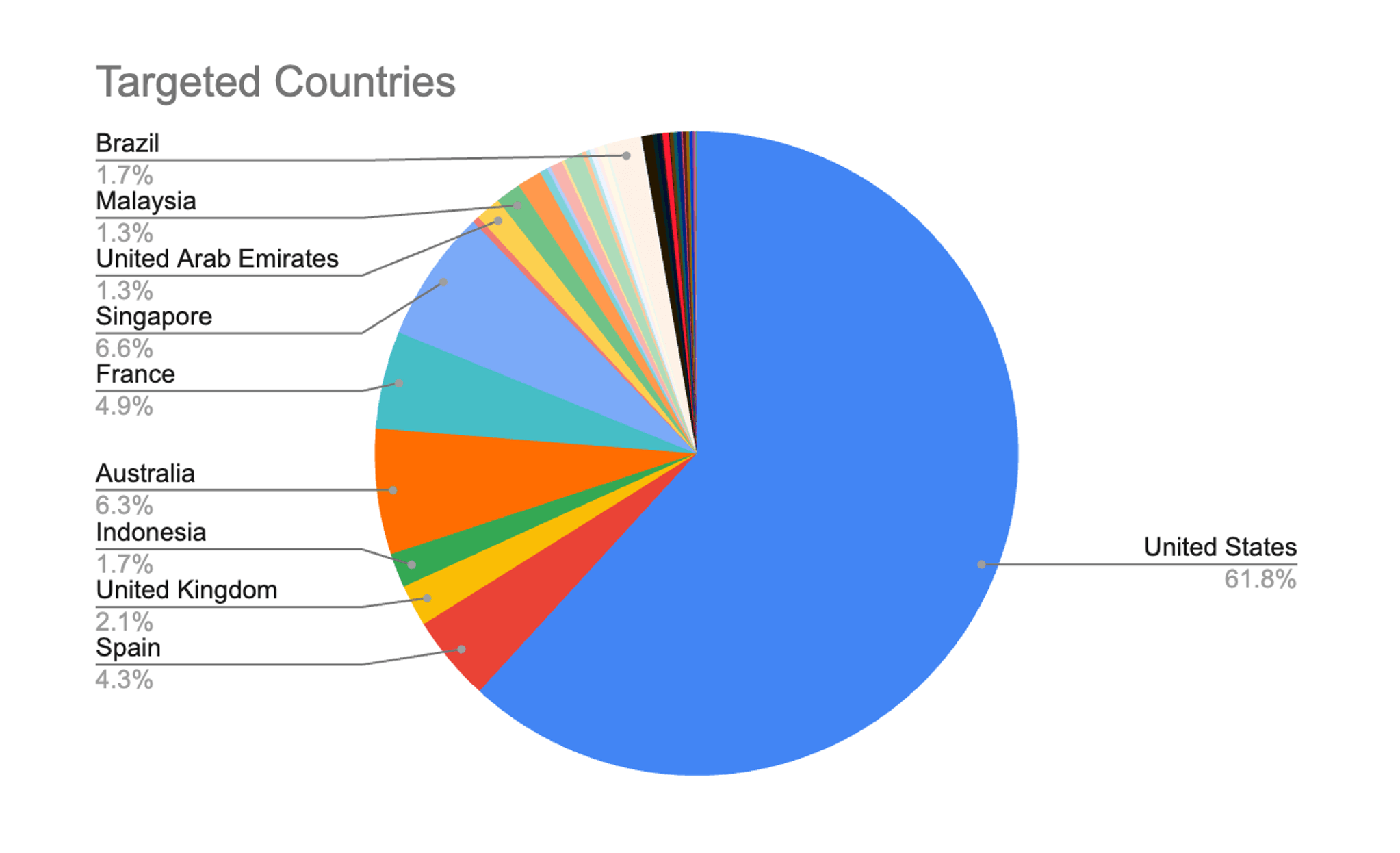
Since CVE-2026-9082 was released, Imperva has observed over 15,000 attack attempts targeting almost 6,000 individual sites across 65 countries. Attacks are primarily targeting Gaming and Financial Services sites so far, at collectively almost 50% of all attacks.
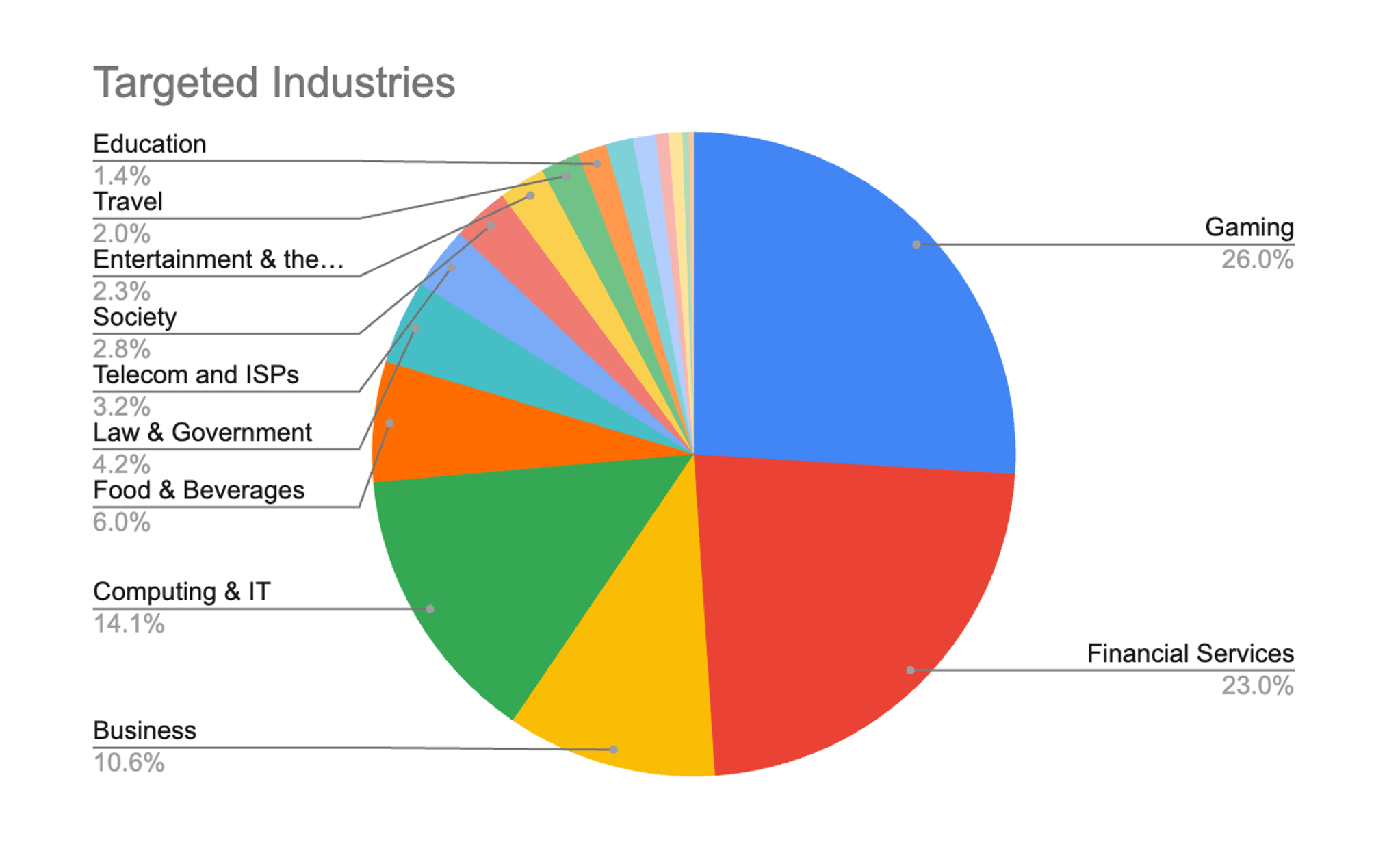
industries

countries

Most of the observed activity so far appears to be probing. The payloads in the attached Imperva data largely focus on JSON:API routes, particularly /jsonapi/node/article, and use crafted filter parameters designed to test whether a target is vulnerable. Several payloads include Nuclei-style markers such as nuclei_sa_core_2026_004, nuclei-probe, and nuclei-probe-miss, indicating automated scanning and template-based validation activity.

The most common payload patterns include:

  • JSON:API filter probes using operator=IN against the title field
  • Crafted array keys such as 0), 0)) OR 1=1 –, and _) AND 1=1–
  • Time-based SQL injection checks using PostgreSQL functions such as pg_sleep
  • UNION-style and syntax-break probes intended to validate error-based SQL injection behavior

This pattern suggests attackers and scanners are primarily attempting to identify exposed Drupal sites running vulnerable PostgreSQL-backed configurations. While the activity is currently dominated by reconnaissance and validation, the nature of the vulnerability means successful exploitation could quickly move from probing to data extraction or privilege escalation.

Mitigation and Protection

Organizations running Drupal should upgrade immediately to one of the patched versions: 10.4.10, 10.5.10, 10.6.9, 11.1.10, 11.2.12, or 11.3.10. Searchlight Cyber also noted that the same Drupal release includes Symfony and Twig security updates, making patching important even for environments not using PostgreSQL.

Imperva customers with any WAF deployment are protected against exploitation attempts associated with CVE-2026-9082. 

Bottom Line

CVE-2026-9082 is a high-priority Drupal core vulnerability because it is remotely reachable, exploitable by unauthenticated users, and affects a core query-handling mechanism. Although the vulnerability is limited to PostgreSQL-backed Drupal sites, the widespread use of Drupal and the speed of observed scanning make this an urgent patching priority.

Imperva has already observed broad probing across thousands of sites and dozens of countries. Imperva customers are protected, but organizations should still patch immediately, review logs for suspicious JSON:API and /user/login?_format=json activity, and confirm whether any Drupal deployments use PostgreSQL.

Try Imperva for Free

Protect your business for 30 days on Imperva.

Start Now