



惯性聚合 高效追踪和阅读你感兴趣的博客、新闻、科技资讯
阅读原文 在惯性聚合中打开

推荐订阅源

H
Heimdal Security Blog
A
Arctic Wolf
K
Kaspersky official blog
V
Vulnerabilities – Threatpost
Threat Intelligence Blog | Flashpoint
Simon Willison's Weblog
L
LINUX DO - 热门话题
MongoDB | Blog
MongoDB | Blog
T
Threat Research - Cisco Blogs
D
Docker
爱范儿
爱范儿
T
Tenable Blog
C
Check Point Blog
B
Blog
C
Cisco Blogs
Vercel News
Vercel News
The Cloudflare Blog
T
Threatpost
NISL@THU
NISL@THU
T
Tor Project blog
V2EX - 技术
V2EX - 技术
P
Palo Alto Networks Blog
Application and Cybersecurity Blog
T
Tailwind CSS Blog
G
GRAHAM CLULEY
P
Privacy & Cybersecurity Law Blog
SecWiki News
SecWiki News
博客园 - 司徒正美
S
Security @ Cisco Blogs
GbyAI
GbyAI
S
Secure Thoughts
Microsoft Security Blog
The Register - Security
Recorded Future
Recorded Future
Cloudbric
Cloudbric
Webroot Blog
Webroot Blog
N
News and Events Feed by Topic
Y
Y Combinator Blog
博客园_首页
T
Troy Hunt's Blog
The Hacker News
The Hacker News
雷峰网
雷峰网
Google DeepMind News
U
Unit 42
AWS News Blog
AWS News Blog
PCI Perspectives
PCI Perspectives
V
Visual Studio Blog
博客园 - 聂微东
有赞技术团队
有赞技术团队
酷 壳 – CoolShell
酷 壳 – CoolShell

Microsoft Azure Blog

Frontier models and production agents: Advancing Microsoft Foundry for the agentic era | Microsoft Azure Blog Built to bounce back: How Azure resiliency evolved | Microsoft Azure Blog External key management for Azure Managed HSM Meet Brain: The AI system behind Azure reliability | Microsoft Azure Blog Proving application resilience on Azure with Chaos Studio | Microsoft Azure Blog How to design, build, and optimize cloud infrastructure for long-term efficiency Claude in Microsoft Foundry is now generally available | Microsoft Azure Blog The 2026 Agent Confidence Index: Where 300 builders see real momentum | The Microsoft Cloud Blog Accelerate modern Linux workloads with Azure Files | Microsoft Azure Blog Optimizing PostgreSQL on Azure directly in Visual Studio Code From insight to action: The next phase of agentic cloud operations | Microsoft Azure Blog Modernize your data with Azure Storage: Plan and migrate with confidence | Microsoft Azure Blog 3 things leaders need to know from Microsoft Build 2026 | Microsoft Azure Blog Claude Fable 5 available today in Microsoft Foundry: Powering the next era of autonomous agents AI alone won’t change your business. The system running it will. Announcing Microsoft Discovery general availability and Microsoft Discovery app preview A Developer’s Guide to Managing Models, Cost and Quality in Microsoft Foundry Foundry IQ: Build smarter agents faster with unified knowledge and serverless retrieval Microsoft Build 2026: Building agentic apps with Microsoft Fabric and Microsoft Databases New Azure Cobalt 200 VMs deliver 50% performance improvement, fully optimized for modern agentic AI workloads Claude Opus 4.8 is now available in Microsoft Foundry Powering multi-cluster workloads with seamless cross‑cluster networking for Azure Kubernetes Fleet Manager Azure NetApp Files for EDA workloads: From revolution to breakthrough at scale Azure IaaS: Deploy high-performance workloads with a system-level approach Azure Files Entra-Only identities: Advancing cloud-native identity and security From commit to cloud: Powering what’s next for PostgreSQL Advancing enterprise AI: New SAP on Azure announcements from SAP Sapphire 2026 Red Hat Summit 2026: Platform modernization and AI on Microsoft Azure Red Hat OpenShift Build AI apps with Azure Cosmos DB: Key trends from Cosmos Conf 2026 Scaling cloud and AI: Microsoft Azure’s commitment to Europe’s digital future Azure IaaS: Defense in depth built on secure-by-design principles Enforcing trust and transparency: Open-sourcing the Azure Integrated HSM Microsoft named a Leader in the IDC MarketScape: Worldwide API Management 2026 Vendor Assessment Microsoft Discovery: Advancing agentic R&D at scale Introducing Azure Accelerate for Databases: Modernize your data for AI with experts and investments Cloud Cost Optimization: Principles that still matter Optimize object storage costs automatically with smart tier—now generally available Microsoft named a Leader in The Forrester Wave™ for Sovereign Cloud Platforms How Drasi used GitHub Copilot to find documentation bugs Cloud Cost Optimization: How to maximize ROI from AI, manage costs, and unlock real business value Azure IaaS: Keep critical applications running with built-in resiliency at scale Building sovereign AI at the edge: Microsoft and Armada collaborate to deliver Azure Local on Galleon modular datacenters Navigating digital sovereignty at the frontier of transformation Microsoft named a Leader in 2026 Gartner® Magic Quadrant™ for Integration Platform as a Service AI for nuclear energy: Powering an intelligent, resilient future | The Microsoft Cloud Blog What’s new with Microsoft in open-source and Kubernetes at KubeCon + CloudNativeCon Europe 2026 Advancing agentic AI with Microsoft databases across a unified data estate FabCon and SQLCon 2026: Unifying databases and Fabric on a single data platform Microsoft at NVIDIA GTC: New solutions for Microsoft Foundry, Azure AI infrastructure and Physical AI From legacy to leadership: How PostgreSQL on Azure powers enterprise agility and innovation
OpenAI’s GPT-5.5 in Microsoft Foundry: Frontier intelligence on an enterprise ready platform
Naomi Moneyp · 2026-04-24 · via Microsoft Azure Blog

OpenAI’s GPT-5.5 will be generally available in Microsoft Foundry, bringing OpenAI’s latest frontier model to Azure and the enterprise teams building agents for real production work.

OpenAI’s GPT-5.5 will be generally available tomorrow in Microsoft Foundry, bringing OpenAI’s latest frontier model to Azure and the enterprise teams building agents for real production work.

GPT-5.5 continues a clear progression in the GPT-5 series. GPT-5 brought unified reasoning and speed into a single system. GPT-5.4 brought stronger multi-step reasoning and early agentic capabilities for enterprise use. GPT-5.5 advances this arc with deeper long-context reasoning, more reliable agentic execution, improved computer-use accuracy, and greater token efficiency—designed for sustained, high-stakes professional workflows.

Powerful models alone aren’t enough to operationalize agentic AI at scale. Microsoft Foundry provides the platform layer that turns frontier models into usable, governable systems that enable enterprises to apply security policy and management at the platform level. Foundry is a unified, interoperable environment to build, optimize, and deploy AI applications and agents with confidence. Customers benefit from broad model choice, open and flexible agent frameworks, native integration with enterprise systems and productivity tools, and enterprise-grade security, compliance, and governance. When new models like GPT-5.5 become available, Foundry makes it easy to evaluate, productionize, and scale them without friction.

What’s new in GPT-5.5

GPT-5.5 is built for professional scenarios where precision, reliability, and persistence matter. GPT-5.5 Pro, a premium variant, extends reasoning depth and task complexity for the most demanding enterprise workloads.

  • Improved agentic coding and computer-use: Executes multi-step engineering tasks end-to-end—holding context across large systems, diagnosing the root cause of ambiguous failures at the architectural level, and reasoning through what else in the codebase a fix will affect before making a move. It anticipates downstream testing and review requirements without needing to be told, and navigates software interfaces with improved precision and more reliable recovery when execution takes an unexpected turn.
  • Autonomous execution and research depth: Goes beyond code to handle the full span of professional work—producing polished deliverables like documents, spreadsheets, and presentations. For research-intensive workflows, GPT-5.5 operates as an active collaborator across the entire arc from question to output: refining drafts across multiple passes, stress-testing analytical reasoning, proposing approaches, and synthesizing across documents, data, and code to drive work forward rather than just answering it.
  • Complex reasoning and long-context analysis: Handles extensive documents, codebases, and multi-session histories without losing the thread.
  • Token efficiency built for scale: GPT-5.5 reaches higher-quality outputs with fewer tokens and fewer retries—lowering cost and latency for production deployments at scale.

GPT-5.5 is particularly well suited for domains where the cost of imprecision is high—such as software engineering, DevOps, legal, health sciences, and professional services. With GPT-5.5 in Microsoft Foundry, customers can pair OpenAI’s latest frontier model with enterprise-grade infrastructure to put agentic AI into production.

Microsoft Foundry: The operating system for GPT-5.5 agents at scale

Access to a frontier model is just the starting point. What we see from customers is that the hard part isn’t building an agent: it’s running thousands of them in production, with real isolation, identity, and governance. That’s where Foundry Agent Service comes in.

A revolution is unfolding in the market. Now, a developer can reliably reason through a business problem with a coding agent—human’s interact with a model doing heavy thinking, research, asking questions — and the output is a production agent: a declarative workflow suitable for a specific task, and connected to your business systems.

These declarative agents can be defined in YAML or written in a harness like Microsoft Agent Framework, GitHub Copilot SDK, or virtually any library. With hosted agents in Foundry Agent Service, LangGraph, Claude Agent SDK, and OpenAI Agents SDKs all work the same way. Engineers can run a single command to land agents in an isolated sandbox with a persistent filesystem, a distinct Microsoft Entra identity, and scale-to-zero pricing. Enterprise ready agents, at scale, powered by GPT-5.5.
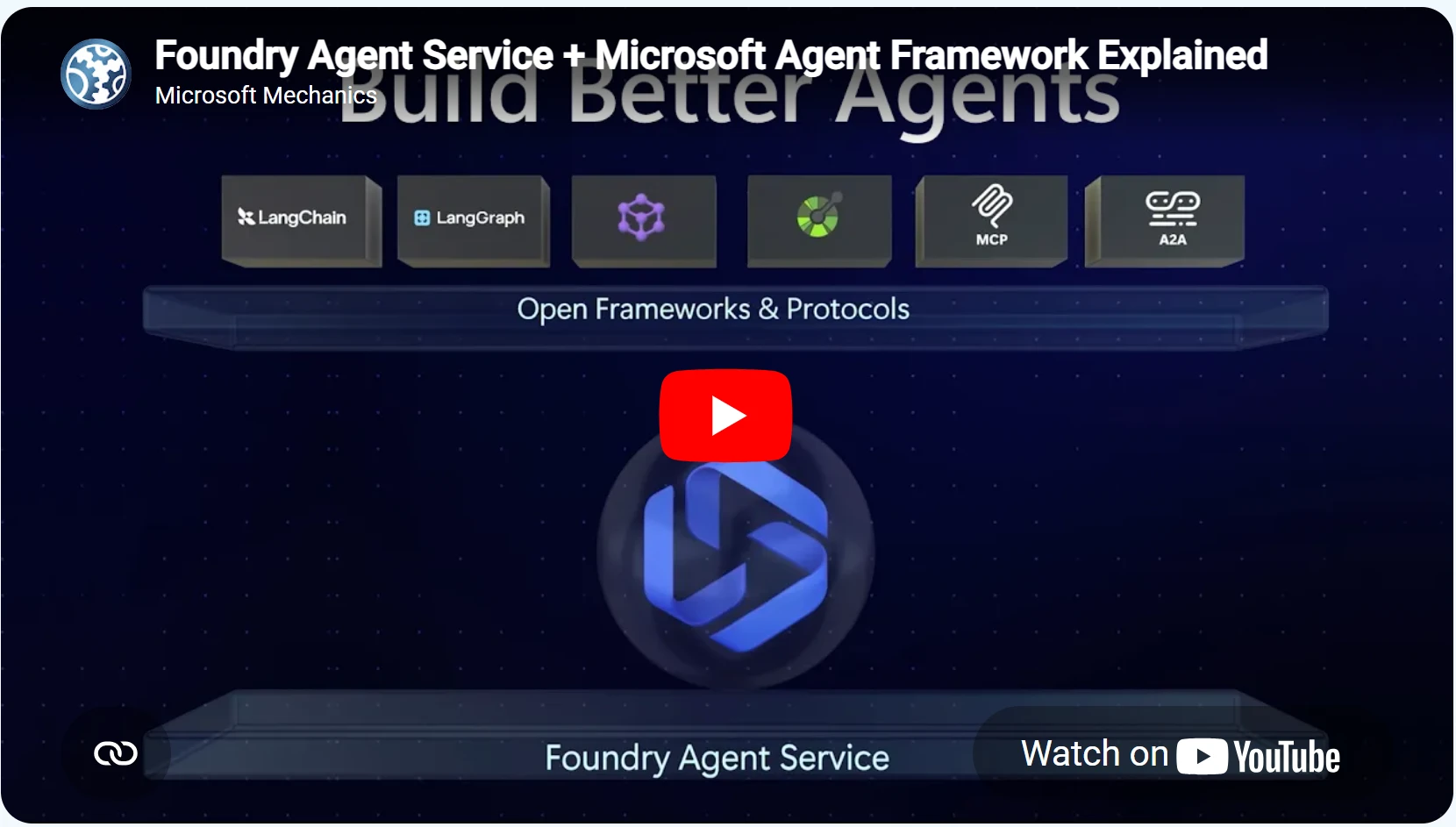
Foundry Agent Service and Microsoft Agent Framework video.

Learn more about Foundry Agent Service and Microsoft Agent Framework.

Pricing

ModelInput ($/M tokens)Cached Input ($/M tokens)Output ($/M tokens)
GPT-5.5$5.00$0.50$30.00
GPT-5.5 Pro$30.00$3.00$180.00

Get started with Microsoft Foundry

Stop experimenting and start building your next production AI workloads with GPT-5.5 in Microsoft Foundry.