

惯性聚合 高效追踪和阅读你感兴趣的博客、新闻、科技资讯
阅读原文 在惯性聚合中打开

推荐订阅源

T
ThreatConnect
酷 壳 – CoolShell
酷 壳 – CoolShell
Apple Machine Learning Research
freeCodeCamp Programming Tutorials: Python, JavaScript, Git & More
J
Java Code Geeks
Scott Helme
Scott Helme
阮一峰的网络日志
阮一峰的网络日志
WordPress大学
WordPress大学
Recorded Future
Recorded Future
有赞技术团队
有赞技术团队
雷峰网
雷峰网
V
V2EX - 技术
T
Threatpost
OSCHINA 社区最新新闻
OSCHINA 社区最新新闻
G
GRAHAM CLULEY
月光博客
月光博客
F
Future of Privacy Forum
S
Securelist
博客园 - 【当耐特】
Malwarebytes
Malwarebytes
A
Arctic Wolf
NISL@THU
NISL@THU
Attack and Defense Labs
Jina AI
Jina AI
Simon Willison's Weblog
奇客Solidot–传递最新科技情报
奇客Solidot–传递最新科技情报
E
Exploit-DB.com RSS Feed
cs.CL updates on arXiv.org
钛媒体:引领未来商业与生活新知
钛媒体:引领未来商业与生活新知
博客园 - Franky
T
Tailwind CSS Blog
T
The Exploit Database - CXSecurity.com
Schneier on Security
博客园 - 叶小钗
Security Latest
Security Latest
T
True Tiger Recordings
The Cloudflare Blog
博客园 - 聂微东
S
SegmentFault 最新的问题
Recent Commits to openclaw:main
宝玉的分享
宝玉的分享
CTFtime.org: upcoming CTF events
让小产品的独立变现更简单 - ezindie.com
C
Cyber Attacks, Cyber Crime and Cyber Security
F
Full Disclosure
小众软件
小众软件
T
Threat Research - Cisco Blogs
Threat Intelligence Blog | Flashpoint
V
Visual Studio Blog
量子位

Scientific American

How mathematicians use Minecraft to calculate pi Experts explain how sunscreen really works—and why better ones may be coming soon Tiny alien-like blue octopus discovered lurking off the Galapagos Islands Ocean census reveals more than 1,100 new species The universe could have 18 possible shapes SpaceX launches Starship V3—the world's most powerful and tallest rocket ever Far side moon photos reveal hidden lunar minerals in brilliant color Why lawyers keep citing fake cases invented by AI Earth’s molten outer core is behaving in chaotic, unexpected ways Rare Ebola-causing Bundibugyo virus is uniquely challenging to treat. Here’s why Span wants to turn homes into mini data centers What will happen if the Milky Way and Andromeda galaxies collide? What is E15 fuel? Why higher-ethanol gasoline could raise summer smog levels Bixonimania’—the fake illness that AI fell for SpaceX scrubs launch of Starship V3—the tallest and most powerful rocket ever built Hidden structural features inside Egypt’s Great Pyramid may have helped it withstand earthquakes, new study finds Hantavirus found in shocking number of Pacific Northwest rodents JWST sees partly cloudy skies on a distant, giant exoplanet A new study says you may need 10 hours of exercise a week. Can that really be possible? Scientists discover why gold doesn’t ‘rust’ NOAA predicts quieter Atlantic hurricane season for 2026—but the Pacific is another story Trial of next-gen weight-loss drug retatrutide brings it one step closer to FDA approval AI just solved an 80-year-old ‘Erdős problem,’ and mathematicians are amazed Can math predict the end of humanity? Inside the ‘doomsday argument’ Watch SpaceX launch Starship V3—the tallest and most powerful rocket yet Daddy longlegs are actually bloodthirsty killers—of frogs Startup reveals ‘artificial egg’ to resurrect extinct birds, but scientists say the work misses the point Screen time limits can protect children’s health, U.S. surgeon general advisory says An Ebola outbreak is spreading fast. Should you be worried? These bizarre fossils represent some of the earliest moving, sexually-reproducing life ever discovered Vaccines for Bundibugyo Ebola virus outbreak are being developed, but none are ready yet NASA’s Psyche captures gorgeous Mars crescent photo on way to asteroid The Colorado Avalanche is dominating the NHL—Denver’s high elevation could be the reason NASA’s plan for a nuclear reactor on the moon could change space exploration forever—if it works Did the last common ancestor of humans and apes walk like a gorilla? A new study offers a clue Summerlike heat is breaking records in the East. Here’s why The U.S. just experienced its hottest 12 months on record SpaceX punts Starship V3 launch to May 21 as investigation opens into Starbase worker’s death What it’s like being stuck in a hantavirus quarantine for six weeks ‘Sensational’ proof topples decades-old geometry problem New NASA Hubble image captures a rare, turbulent galaxy Scientists race to develop Ebola drugs as outbreak surges Math Puzzle: Fix the matchstick equation Female beast hunters battled leopards in ancient Rome A field guide to quantum computer qubits June 2026: Science history from 50, 100 and 150 years ago Which problems will quantum computers solve—and when? The Riemann hypothesis is a million-dollar math problem hardly anyone is trying to solve Poem: ‘Horseshoe Crab’ A real quantum leap New high‑resolution map transforms what we know about Roman roads and the Roman Empire Quantum computing is reaching its make-or-break moment NASA dreams of a nuclear power plant on the moon. Here’s why How commercial satellites are changing modern warfare Helion Energy is building a fusion power plant. Can its technology deliver? New ways to keep from losing muscle on Ozempic Readers respond to the February 2026 issue Science Crossword A lamp flickering on and off inspires the math mystery of Thomson's lamp Ebola outbreak triggers U.S. ban on travelers from three African nations How scientists developed a hantavirus PCR test in a weekend Inside the race to develop a hantavirus PCR test Hidden copy of the oldest known poem in the English language leaves researchers ‘speechless’ The world is less prepared for a pandemic than before COVID. Here’s why See a Lincoln Memorial-sized asteroid pass within just 56,000 miles of Earth today Trump administration ousts top NIH infectious disease leaders The programmer whose code underpins the Internet How marijuana rewires the teenage brain Hantavirus cruise ship, PCOS name change, a fish that hides in another animal’s ‘butthole’ Did Homo erectus and Denisovans mate? Tooth proteins hint at ancient trysts This small rodent is at the center of theories about the hantavirus outbreak These ants navigate with a compass tuned to the moon NASA reveals new clues to 2027’s Artemis III, the final test mission before a moon landing Scientists catalog the ‘fractal dimensions’ of more than 130,000 islands Hantavirus can persist in semen for years, but that doesn’t mean it remains contagious A real Mr. Snuffleupagus? Meet the ocean’s strangest new fish species This startup wants to make drugs in orbit. If it succeeds, it could transform the space economy How to arm yourself against hantavirus misinformation Can plants have consciousness? The film Silent Friend reimagines the science Asking AI to explain your medical results? What doctors want you to know Microbe ‘cities’ may solve a key ocean mystery Are astronomers ignoring some of the cosmos? Why Black women are at greater risk for fibroids and endometrial cancer To celebrate Endangered Species Day, meet the scaly-foot snail, the most metal animal in the world U.S. Supreme Court allows mifepristone by mail—for now There’s an 82 percent chance El Niño will ‘emerge soon,’ NWS says ‘Golden rule’ in abstract art just discovered by mathematicians Implantable ‘living materials’ that deliver drugs on demand could help fight infections Doubts grow over theory that bird-watchers' trip to Argentine landfill sparked hantavirus outbreak NASA’s Psyche mission is snapping photos of Mars on its way to an asteroid Can helium-3 create a ‘gold rush’ on the moon? The war in Iran is supercharging an ecological crisis in the Persian Gulf Deep-Earth diamonds reveal trove of never-before-seen minerals Depression scales may not work the same for highly intelligent people 2026 FIFA World Cup players and fans at risk of extreme heat, climate scientists warn Almost half of the objects in Earth's orbit is junk—and that's only the stuff we know about Can hantavirus spread through the air? What we do and don’t know Americans are increasingly open to using psychedelics for medical reasons 59,000-year-old Neanderthal tooth may be oldest evidence of dentistry Radar picks up on bird migration. But how do we tell birds and storms apart? Are attention spans really shrinking? What the science says
What is Mythos and why are experts worried about Anthropic’s AI model
2026-04-17 · via Scientific American

April 17, 2026

3 min read

Google Logo Add Us On GoogleAdd SciAm

What is Mythos, Anthropic’s unreleased AI model, and how worried should we be?

The company says Mythos is too dangerous to release publicly. Cybersecurity experts agree the model's capabilities matter, but not all of them are buying the most alarming claims

By Chris Stokel-Walker edited by Eric Sullivan
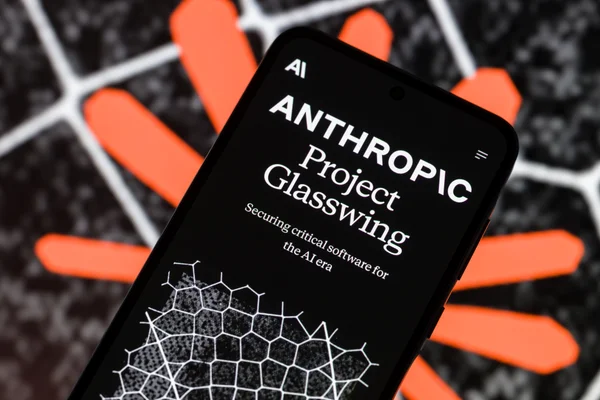
A close-up of a smartphone screen displaying the text 'Anthropic Project Glasswing' and 'Securing critical software for the AI era' over a geometric pattern, set against a blurred orange and black background.

Instead of a public rollout, Anthropic is using its Project Glasswing initiative to offer a small group of organizations access to its Mythos AI model for cybersecurity testing.

Jonathan Raa/NurPhoto via Getty Images

In the wake of Anthropic’s announcement of its latest artificial intelligence model, Mythos, on April 7, the company has stood by an unusual decision: refusing to release it to the public. Not since OpenAI temporarily withheld its GPT-2 model in 2019 has a major developer deemed a system too dangerous for the public. More than a week later, that choice is still reverberating through finance and regulatory circles.

“The fallout—for economies, public safety, and national security—could be severe,” Anthropic said on its website. But while officials scramble to gauge the implications of the model’s unprecedented hacking capabilities, cybersecurity experts are divided over whether Mythos marks a major break from what came before or an expected step down an already troubling path.

Anthropic did not respond to a request for comment from Scientific American.


On supporting science journalism

If you're enjoying this article, consider supporting our award-winning journalism by subscribing. By purchasing a subscription you are helping to ensure the future of impactful stories about the discoveries and ideas shaping our world today.


A 245-page technical document released alongside the announcement outlines what the company presents as a major leap in capability. The model operates like a senior software engineer, demonstrating an ability to spot subtle bugs and self-correct mistakes. It also scored 31 percentage points higher than Anthropic’s previous cutting-edge model, Opus 4.6, on the USAMO 2026 Mathematical Olympiad, a grueling, two-day proof-based competition.

But that same coding prowess makes Mythos a formidable offensive weapon, and Anthropic says it can outstrip all but the most skilled humans at identifying and exploiting software vulnerabilities. In tests, it found critical faults in every widely used operating system and web browser. Of those vulernabilities, 99 percent have not yet been patched. And Anthropic has disclosed only a fraction of what it says it has found. Independent evaluations suggest the danger is real, if more bounded than the company has implied: an assessment by the U.K.'s AI Security Institute (AISI), which was granted early access, found the model succeeded in expert-level hacking tasks 73 percent of the time. Prior to April 2025, no AI model could complete those tasks at all.

Instead of a public rollout, Anthropic is limiting access to a clutch of organizations to use defensively, allowing them to scan their networks and patch problems before the flaws become public knowledge. That initiative is called Project Glasswing. The initial group includes Microsoft, Google, Apple, Amazon Web Services, JPMorgan Chase and Nvidia.

Mythos is the first of a new crop of AI models that have been trained on next-generation graphics processing units (GPUs)—the advanced chips that power AI training—and its capabilities have continued to rattle financial firms well beyond the initial announcement: on Thursday, German banks said they were consulting authorities and cyber experts about the risks, while the Bank of England said AI risk testing had intensified after Mythos came into view.

Yet the cybersecurity community remains split on the true severity of the threat. “The Anthropic announcement was very dramatic and was a PR success, if nothing else,” says Peter Swire, a professor at the School of Cybersecurity and Privacy at the Georgia Institute of Technology and former advisor to the Clinton and Obama administrations. Swire notes that among his colleagues, “a large fraction of the cybersecurity professors believe this is pretty much what was expected, and pretty much more of the same.”

Ciaran Martin, professor of practice at the Blavatnik School of Government at the University of Oxford and former CEO of the U.K.'s National Cyber Security Center, shares that view. “It’s a big deal, but it’s unlikely to prove to be the end of the world,” he says. “I would not be at the more apocalyptic end of the scale.”

AISI acknowledged limits to the AI’s abilities. During testing, Mythos faced near-nonexistent software defenses that lacked many protections present in the real world—a scenario Martin compares to a soccer forward scoring a goal against the world’s worst goalkeeper.

Neither expert denies that Mythos is a significant advance, but suggest the decisive regulatory action is partly driven by institutional self-preservation. “CISOs [chief information security officers] and cybersecurity vendors have a rational incentive to point out the potentially very severe consequences of a new development,” Swire explains, even if their internal estimates assume the actual impact will be a fraction of what Anthropic’s press release claims. As Martin notes, it is rare for any organization “to suffer commercial detriment by predicting calamity.”

“One risk after Mythos is that it will be easier to turn a vulnerability, a known flaw, into an exploit, something that somebody actually takes advantage of,” Swire says. “Every cybersecurity defender should take Mythos seriously, but the expected harm to defense is likely to be far lower than the worst-case scenarios would suggest.”

It’s Time to Stand Up for Science

If you enjoyed this article, I’d like to ask for your support. Scientific American has served as an advocate for science and industry for 180 years, and right now may be the most critical moment in that two-century history.

I’ve been a Scientific American subscriber since I was 12 years old, and it helped shape the way I look at the world. SciAm always educates and delights me, and inspires a sense of awe for our vast, beautiful universe. I hope it does that for you, too.

If you subscribe to Scientific American, you help ensure that our coverage is centered on meaningful research and discovery; that we have the resources to report on the decisions that threaten labs across the U.S.; and that we support both budding and working scientists at a time when the value of science itself too often goes unrecognized.

In return, you get essential news, captivating podcasts, brilliant infographics, can't-miss newsletters, must-watch videos, challenging games, and the science world's best writing and reporting. You can even gift someone a subscription.

There has never been a more important time for us to stand up and show why science matters. I hope you’ll support us in that mission.