






June 16, 2026
The HBCU president on the role of academic institutions in American innovation
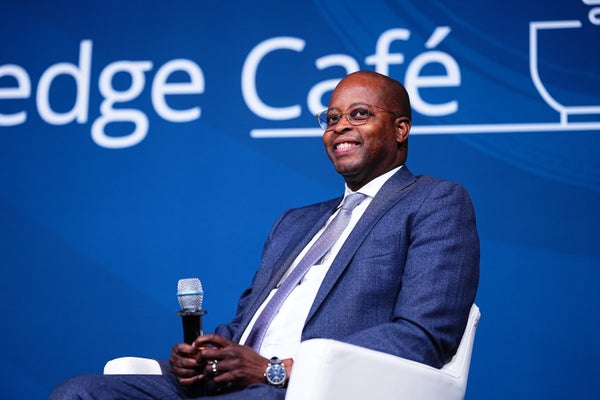
Aaron Schwartz/Bloomberg via Getty Images
Wayne A. I. Frederick is a surgeon, scholar and university leader who has served as interim president of Howard University since 2025. He previously served as its 17th president from 2014 to 2023. A cancer surgeon and professor, his work focuses on health care disparities and medical education
[This interview was edited for length and clarity.]
How would you describe the current state of American science?
If you're enjoying this article, consider supporting our award-winning journalism by subscribing. By purchasing a subscription you are helping to ensure the future of impactful stories about the discoveries and ideas shaping our world today.
I think American science is strong, fundamentally. We are making a lot of advances and continue to be a leader worldwide. I think what has changed more recently is how we use our American research universities to participate in that innovation and discovery process. After the 1960s, you had a lot of investments in our research universities, and they really led the way for innovation and served industry well. We’re now entering a place where the policy is suggesting that there’s some question as to how those research dollars should be used. That change in philosophy right now seems to be significant. But regardless of that, I’m not pulled into the pessimism. I think there are a lot of exciting things happening with American science, and I still think that American science is pretty strong.
What needs to change in American science?
I think the biggest thing that needs to change is for us to have a national discussion about direction and prioritization, and that discussion should lead to policy and investment.
So, for example, I have sickle cell disease. I came to this country primarily because there was a sickle cell center at Howard University, and so part of being there was also to live in an environment where I could be as healthy as possible. Today I have now met probably six to 10 people who have been cured of the disease I suffer from, either by transplantation or gene therapy. During my lifetime, American science has advanced that cure. We should celebrate that. The disease affects 100,000 Americans, on the lower end. And it would be great to see them cured. But then you look at the incidence of the disease in [the Democratic Republic of the] Congo, it’s [more than 600,000 people]. And what if we could export that technology, increase the life expectancy of their young people and ultimately affect their GDP?
So across American science, we should be thinking about policy. We should be thinking of how we could invest and where we will get the biggest bang for the buck. We need to determine the problems that American science should be solving, and we should be figuring out how to fund them.
What gives you optimism right now?
Young people. Young people are the catalyst around inquiry, around innovation, around discovery. Young people question what has gone before them. They bring an enthusiasm, a curiosity and, in some cases, an innocence and a naivety to problems that allows them to see problems differently. And if they do that, maybe we get better answers.
What’s your best advice for an early-career scientist?
Let your passion lead you. I think science is interesting and intriguing, but it really comes together when you combine your intellectual curiosity with passion. There’s nothing like it when a young person gets really passionate about a subject.
How has your field changed in the past few years?
It has changed dramatically. I’m a surgical oncologist; I operate on very complex cases, patients with complex cancers for which we often have very poor outcomes. And in some cases—for instance, when you look at patients with colorectal metastases to their liver—we actually have very encouraging results when we operate. I think we’re now embarking on an era where we will move away from saying that, when you turn 45 or 50, everybody should have a colonoscopy and rather [will look] at their specific genetic makeup, history and exposures.
Right now younger people are getting colorectal cancer. If we use our standard screening guidelines, we will continue to miss all of those cancers, because they’re occurring in their 30s, and we don’t recommend people get scoped before that. If we use all of the data and the technology the right way, we’ll start screening some of those people when they’re 25 and 30 instead. It’s exciting when you combine the information that’s out there and the ability to analyze it and use algorithms to predict what we should be doing.
If you enjoyed this article, I’d like to ask for your support. Scientific American has served as an advocate for science and industry for 180 years, and right now may be the most critical moment in that two-century history.
I’ve been a Scientific American subscriber since I was 12 years old, and it helped shape the way I look at the world. SciAm always educates and delights me, and inspires a sense of awe for our vast, beautiful universe. I hope it does that for you, too.
If you subscribe to Scientific American, you help ensure that our coverage is centered on meaningful research and discovery; that we have the resources to report on the decisions that threaten labs across the U.S.; and that we support both budding and working scientists at a time when the value of science itself too often goes unrecognized.
In return, you get essential news, captivating podcasts, brilliant infographics, can't-miss newsletters, must-watch videos, challenging games, and the science world's best writing and reporting. You can even gift someone a subscription.
There has never been a more important time for us to stand up and show why science matters. I hope you’ll support us in that mission.
此内容由惯性聚合(RSS阅读器)自动聚合整理,仅供阅读参考。 原文来自 — 版权归原作者所有。