






This announcement from the FBI came after President Donald Trump highlighted the recent deaths of several scientists and government workers who may have had access to sensitive information
By Claire Cameron edited by Jeanna Bryner
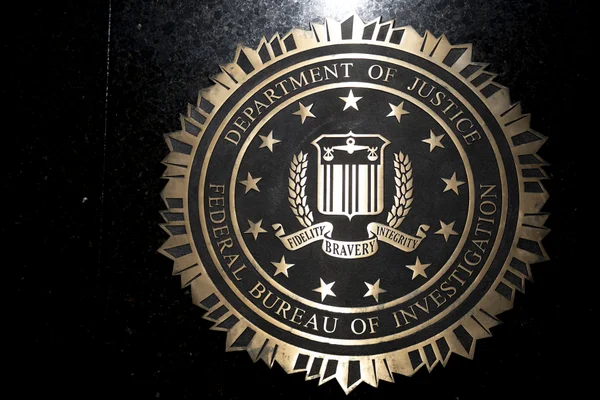
Photo by Celal Gunes/Anadolu via Getty Images
The FBI is looking for any connections among the recent deaths and disappearances of at least 10 scientists who had ties to government science projects or other sensitive information.
The announcement comes after the cases were highlighted by President Donald Trump and Republican lawmakers; growing online speculation hinted at a link between the incidents, although there is no known evidence of any connections among the individual researchers other than the nature of their respective jobs and the fact that none of the incidents occurred before 2022.
The most recent case involves retired Air Force Maj. Gen. William Neil McCasland, who disappeared, along with a gun and his wallet, from his Albuquerque, N.M., home in February, according to local law enforcement. Responding to speculation about her husband’s disappearance, McCasland’s wife wrote in a social media post that it was “quite unlikely that he was taken to extract very dated secrets from him.” McCasland retired about 13 years ago, she said.
If you're enjoying this article, consider supporting our award-winning journalism by subscribing. By purchasing a subscription you are helping to ensure the future of impactful stories about the discoveries and ideas shaping our world today.
Some of the online rumor mill appears to have been fueled by McCasland’s links to To the Stars, a celebrity-led organization that promotes theories about aliens and unidentified flying objects. In the same social media post, his wife dismissed the idea that his disappearance was linked to that work.
In the past, McCasland also reportedly worked with a former NASA scientist who went missing in 2025 and whose case is among those now being investigated for potential links.
The FBI said on Monday that it would coordinate its investigation with the Department of Energy, the Pentagon, and state and local law enforcement. The House Oversight Committee is also conducting an investigation and has asked for briefings from the Department of Defense, the Department of Energy, NASA and the FBI on the “disappearance and death of individuals with access to sensitive U.S. scientific information,” according to a press release.
NASA said in a social media post that “at this time, nothing related to NASA indicates a national security threat” and that the agency is cooperating with the investigation and committed to transparency. The Pentagon referred Scientific American to the FBI.
The DOE referred Scientific American to a Fox News interview conducted with Secretary of Energy Chris Wright on Sunday. In it, he said, “There’s a coordinated investigation across various branches of the government, but, yeah, a lot of the nuclear security, nuclear scientists are in DOE, so, yes, of course we are looking into this.”
If you enjoyed this article, I’d like to ask for your support. Scientific American has served as an advocate for science and industry for 180 years, and right now may be the most critical moment in that two-century history.
I’ve been a Scientific American subscriber since I was 12 years old, and it helped shape the way I look at the world. SciAm always educates and delights me, and inspires a sense of awe for our vast, beautiful universe. I hope it does that for you, too.
If you subscribe to Scientific American, you help ensure that our coverage is centered on meaningful research and discovery; that we have the resources to report on the decisions that threaten labs across the U.S.; and that we support both budding and working scientists at a time when the value of science itself too often goes unrecognized.
In return, you get essential news, captivating podcasts, brilliant infographics, can't-miss newsletters, must-watch videos, challenging games, and the science world's best writing and reporting. You can even gift someone a subscription.
There has never been a more important time for us to stand up and show why science matters. I hope you’ll support us in that mission.
此内容由惯性聚合(RSS阅读器)自动聚合整理,仅供阅读参考。 原文来自 — 版权归原作者所有。
