







June 16, 2026
The materials scientist describes how science is a contact sport
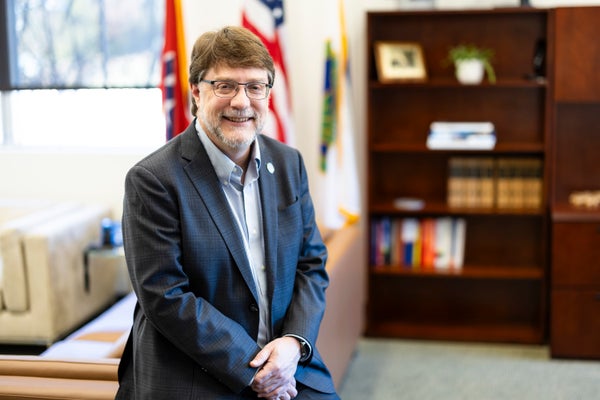
Oak Ridge National Laboratory, U.S. Department of Energy (CC BY-NC-ND 2.0)
Stephen Streiffer is director of Oak Ridge National Laboratory (ORNL) and a materials scientist specializing in nanostructured materials and advanced characterization techniques. Before joining ORNL in 2023, he held leadership roles at the SLAC National Accelerator Laboratory, Stanford University and Argonne National Laboratory.
[This interview was edited for length and clarity.]
How would you describe the current state of American science?
If you're enjoying this article, consider supporting our award-winning journalism by subscribing. By purchasing a subscription you are helping to ensure the future of impactful stories about the discoveries and ideas shaping our world today.
Science is a full-contact sport on a global scale. International competition is fierce, and the nation’s future success is tied to winning global races in artificial intelligence, quantum [technology], fusion energy, advanced nuclear energy and critical minerals. Through consistent investment over decades, America remains a scientific global leader and is positioned to succeed in those areas because of its expertise, facilities and institutions. As other nations continue to focus their investments on developing critical technologies and re-creating what has made America a scientific powerhouse, we have an opportunity to ensure our leadership for the next century by continuing to tackle the most complex challenges. We must invest and compete.
What needs to change in American science?
The problems facing the world right now place extreme urgency on discovery and innovation. We must find ways to dramatically accelerate scientific inquiry and time to solution. We also must remember that science requires time, and we need to maintain patience to allow our scientists to experiment and collaborate, for new facilities to be built and become operational and for public-private partnerships to move breakthroughs from the labs to our everyday lives. In today’s world of instant answers at your fingertips, patience is hard. By strategically planning and maintaining focus on our missions, we can continue American success in advancing innovation in medicine, basic science, energy, national security, and more.
What gives you optimism right now?
The Department of Energy’s Genesis Mission is an exciting opportunity for the nation to put its expertise and investments behind AI and quantum computing for the acceleration of discovery. AI, in particular, is rapidly changing everything. In scientific research, we can use AI to better understand massive, high-quality datasets and unleash the full potential of our nation’s most advanced scientific tools for new discoveries. The Genesis Mission brings together all 17 of the Department of Energy’s national laboratories—including Oak Ridge National Laboratory—alongside universities and industry to make this vision actionable at unprecedented scale. The potential is immense, and we are likely to look back in 50 years and be amazed how the Genesis Mission has helped us to solve challenges we’ve been working on for, in some cases, decades, like bringing fusion energy to the grid or scaling quantum computing far beyond classical computing systems.
What’s your best advice for an early-career scientist?
I encourage early-career scientists to connect through mentors, professional societies and other groups. This will allow them to begin to understand how their work fits within the bigger picture and why their research matters. This broader context and purpose will give scientists—no matter where they are in their careers—a pathway for meaningful contributions to their scientific field, institution and society.
How has your field changed in the past few years?
With more than 30 years of experience across the Department of Energy’s national lab system, I have had an opportunity to be part of multiple national missions and pursue emerging trends. What is happening currently in biology and medicine—with biomedical research accelerating the understanding of disease and developing new drugs—is fascinating and will revolutionize the approach to human health. Similar rapid advancements occurred with chemistry in the 19th century and physics in the 20th century, and the 21st century will go to biology and medicine.
If you enjoyed this article, I’d like to ask for your support. Scientific American has served as an advocate for science and industry for 180 years, and right now may be the most critical moment in that two-century history.
I’ve been a Scientific American subscriber since I was 12 years old, and it helped shape the way I look at the world. SciAm always educates and delights me, and inspires a sense of awe for our vast, beautiful universe. I hope it does that for you, too.
If you subscribe to Scientific American, you help ensure that our coverage is centered on meaningful research and discovery; that we have the resources to report on the decisions that threaten labs across the U.S.; and that we support both budding and working scientists at a time when the value of science itself too often goes unrecognized.
In return, you get essential news, captivating podcasts, brilliant infographics, can't-miss newsletters, must-watch videos, challenging games, and the science world's best writing and reporting. You can even gift someone a subscription.
There has never been a more important time for us to stand up and show why science matters. I hope you’ll support us in that mission.
此内容由惯性聚合(RSS阅读器)自动聚合整理,仅供阅读参考。 原文来自 — 版权归原作者所有。