





June 16, 2026
Building models to understand how self-organizing structures in cells lead to disease
Jessine Hein
Join Our Community of Science Lovers!
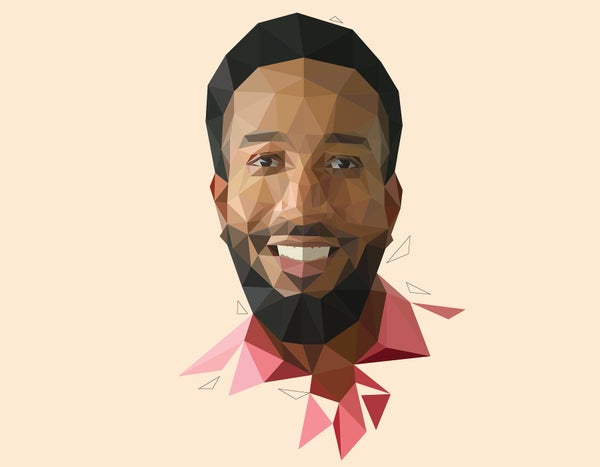
Trevor GrandPre started college aiming to be a physician, but after volunteering at a hospital he found that the job was a lot less like the TV show House than he had hoped—and he hated the sight of blood. Now he’s at Washington University in St. Louis, combining physics and biology in the study of biomolecular condensates, self-organizing blobs of RNA and proteins that band together and fall apart to protect cells and help them move, process nutrients, and more.
There are probably hundreds of these condensates; one of the first GrandPre studied helps to drive photosynthesis in plant cells, and another is important to immune cell activation. Some condensates do good work, he says—such as a cell’s nucleolus, which helps it make the machinery to build proteins—but others can be harmful, such as condensate-based protein aggregates associated with certain neurodegenerative diseases.
On supporting science journalism
If you're enjoying this article, consider supporting our award-winning journalism by subscribing. By purchasing a subscription you are helping to ensure the future of impactful stories about the discoveries and ideas shaping our world today.
GrandPre’s mission? “To understand the good ones,” he says, “and to reinforce what makes them function properly, but also to stop the bad ones from forming or dissolve the bad ones once they’ve formed.” He’s developing theories and building computational models to predict how condensates will function—and malfunction.
The field of biomolecular condensates is only growing, GrandPre says, and it will take an aggregation of theorists, biologists, engineers, chemists, and more to fully explore this fascinating area of study. “What draws me to this field is that there’s something in it for everybody,” he says.
But the current political climate is narrowing focuses and affecting budgets, so although the future of biomolecular condensates is bright, GrandPre emphasizes that the basic research needed to understand them still needs to be prioritized alongside growing applications. He says he has to “be more strategic at explaining why we need to understand the fundamentals.”
This article is part of “The Young American Scientists,” an editorially independent project that was produced with financial support from Regeneron.
It’s Time to Stand Up for Science
If you enjoyed this article, I’d like to ask for your support. Scientific American has served as an advocate for science and industry for 180 years, and right now may be the most critical moment in that two-century history.
I’ve been a Scientific American subscriber since I was 12 years old, and it helped shape the way I look at the world. SciAm always educates and delights me, and inspires a sense of awe for our vast, beautiful universe. I hope it does that for you, too.
If you subscribe to Scientific American, you help ensure that our coverage is centered on meaningful research and discovery; that we have the resources to report on the decisions that threaten labs across the U.S.; and that we support both budding and working scientists at a time when the value of science itself too often goes unrecognized.
In return, you get essential news, captivating podcasts, brilliant infographics, can't-miss newsletters, must-watch videos, challenging games, and the science world's best writing and reporting. You can even gift someone a subscription.
There has never been a more important time for us to stand up and show why science matters. I hope you’ll support us in that mission.