






The Trump administration warned that too much screen time for children has been linked to poor sleep, bad behavior, and less physical and social activity
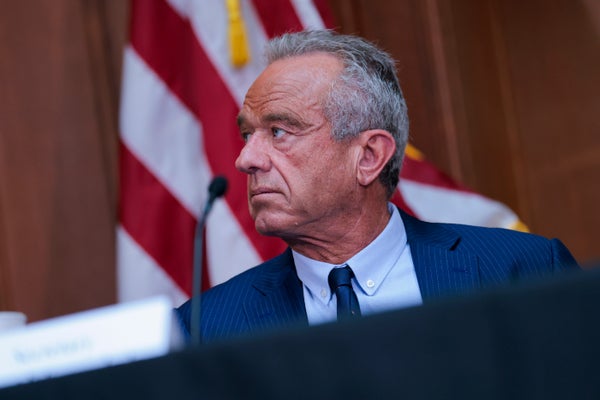
Photo by Heather Diehl/Getty Images
Too much screen time for children threatens their mental and physical health, a new U.S. surgeon general advisory warns. The report was published on Wednesday by Department of Health and Human Services officials; the Trump administration has yet to confirm a surgeon general after withdrawing its previous nominee.
Children in the U.S. tend to start watching screens before their first birthday, and by the time they are a teen, they are often spending more time on screens than they are attending school, according to the advisory.
Surgeon general advisories are not policy; rather they are designed as steering documents for lawmakers and other stakeholders.
If you're enjoying this article, consider supporting our award-winning journalism by subscribing. By purchasing a subscription you are helping to ensure the future of impactful stories about the discoveries and ideas shaping our world today.
“For many children, screens dominate daily life from the moment they wake up until the moment they fall asleep,” said Secretary of Health and Human Services Robert F. Kennedy, Jr., at a press conference on Wednesday. “At the same time, we are watching physical health, mental health, academic performance and social development deteriorate across an entire generation.”
Kennedy connected increased screen time with low physical activity among teens and children, as well as higher rates of mental health conditions such as depression and anxiety. The advisory contains a tool kit that includes guidelines for restricting screen time and other interventions, according to HHS officials. The American Academy of Pediatrics currently recommends setting limits around screens, especially for young children, such as no screen time except video calls for the first 18 months of a child’s life.
But some experts warn that blanket restrictions on screen time may not necessarily address any of the issues raised in the surgeon general advisory. There is some evidence that too much of certain kinds of screen time, such as scrolling on social media, watching TV or playing games, might result in some children experiencing negative effects, including higher anxiety and lower academic achievement. Using a screen in a classroom to complete a project is very different, experts point out.
Still, the advisory taps into growing anxiety around kids’ screen time. More schools are banning cell phones or otherwise limiting screens in classrooms, and globally, countries are moving to ban children under a certain age from accessing social media.
“Social media is only one aspect of this ongoing screen time problem. Behavior patterns involving gaming, online gambling and other forms of virtual interaction are emerging. While this report uses ‘screen time’ as a widely understood shorthand, we want people to understand that we are referring to the entire digital ecosystem of apps, smartphones, tablets, chatbots, and other screen-associated devices and interfaces,” Kennedy said in a statement included in the report.
The advisory suggests that parents create family media plans that lay out exactly how and when screens can be used in the home and urges health care providers to ask patients about their screen use. It also advocates for more research into the long-term effects of screen time and calls on tech companies to warn users about the dangers of too much screen time.
If you enjoyed this article, I’d like to ask for your support. Scientific American has served as an advocate for science and industry for 180 years, and right now may be the most critical moment in that two-century history.
I’ve been a Scientific American subscriber since I was 12 years old, and it helped shape the way I look at the world. SciAm always educates and delights me, and inspires a sense of awe for our vast, beautiful universe. I hope it does that for you, too.
If you subscribe to Scientific American, you help ensure that our coverage is centered on meaningful research and discovery; that we have the resources to report on the decisions that threaten labs across the U.S.; and that we support both budding and working scientists at a time when the value of science itself too often goes unrecognized.
In return, you get essential news, captivating podcasts, brilliant infographics, can't-miss newsletters, must-watch videos, challenging games, and the science world's best writing and reporting. You can even gift someone a subscription.
There has never been a more important time for us to stand up and show why science matters. I hope you’ll support us in that mission.
此内容由惯性聚合(RSS阅读器)自动聚合整理,仅供阅读参考。 原文来自 — 版权归原作者所有。