




Could blood filtering help treat one of pregnancy’s most deadly conditions?
Preeclampsia can be deadly in pregnancy, and aside from delivering the baby, the condition has no targeted treatment. A new study suggests blood filtering with antibodies could help
By Jackie Flynn Mogensen edited by Claire Cameron
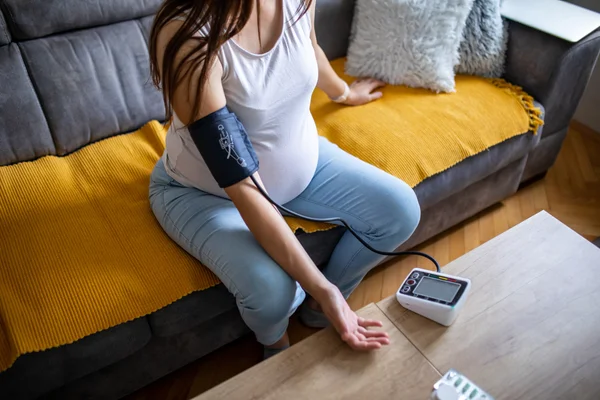
Marko Cvetkovic/Getty Images
Preeclampsia is a life-threatening condition that arises in pregnancy and is characterized by high blood pressure and protein in urine. It is also common: in the U.S. as many as about one out of every 12 pregnancies will be marked by preeclampsia. Despite its frequency, the condition has no cure aside from delivering the baby, which can, in turn, lead to premature birth and other complications. But new preliminary research points to a possible alternative: blood filtering.
In a pilot trial involving 16 women with preterm preeclampsia, researchers found that filtering out a protein called sFlt-1 from the pregnant women’s blood was both safe and could modestly reduce their blood pressure. More research is needed, but the results could one day lead to a long sought-after treatment for preeclampsia, the authors say.
“We’re excited about this. [It’s the] first time anyone has developed a targeted treatment for this condition,” says Ravi Thadhani, the study’s lead author and executive vice president of clinical affairs and chief medical officer at the Cedars-Sinai Medical Center and Cedars-Sinai Health System.
If you're enjoying this article, consider supporting our award-winning journalism by subscribing. By purchasing a subscription you are helping to ensure the future of impactful stories about the discoveries and ideas shaping our world today.
Some blood filtering techniques, such as for kidney disease, are well established. But such filtering has also gained attention in the wellness world, with celebrities and influencers such as Gwyneth Paltrow, Orlando Bloom and Simon Cowell touting blood “cleaning” or filtering as an antiaging therapy or as a way to rid one’s body of microplastics, for example—but these applications have not been fully clinically tested.
In the new study, which was published in the journal Nature Medicine on Monday, blood filtering served as something of a medical work-around: Thadhani and his team theorized that they might be able to target a protein linked to preeclampsia called sFlt-1 with an antibody, but they worried that adding it to a pregnant person’s blood could potentially harm the fetus. Instead they decided to filter the protein out of the participating women’s blood and then deliver it back.
“This way, we [didn’t] have to worry about anything crossing the placenta, and we could turn off the machine if a woman had a complication,” Thadhani says.
The team first tested the process in baboons and five nonpregnant volunteers before moving on to pregnant women who had been admitted to the hospital with preterm preeclampsia. In the first phase of the trial, seven of the women received one blood filtering cycle—which lasted for around an hour to two hours. In the second phase, nine women were eligible for multiple filtering cycles. Of those nine, three participants received one treatment, five women received two treatments, and one participant received three treatments.
In the second phase, the women saw their sFlt-1 levels drop by nearly 17 percent on average. At the same time, their blood pressure “stabilized,” Thadhani says, and their respective pregnancies lasted for about 10 days after hospital admission, or about twice as long as the researchers would expect from untreated pregnant people—suggesting the protocol could extend gestation time. “Extension is a key component, because if a woman is at 29 weeks or 32 weeks, the goal is to get her to 34 weeks, 36 weeks and let the baby grow,” he says.
The results need to be verified by a larger, randomized trial, says Hyagriv Simhan, a professor of obstetrics, gynecology and reproductive sciences at the University of Pittsburgh School of Medicine, who was also not involved with the study. Still, he adds, the findings are “intriguing and exciting.”
“I like the notion of bringing forward a possible evidence-based therapeutic in preeclampsia,” Simhan says. “It’s sorely needed, and there is, I think, a biological rationale for this intervention.”
“This is an important study that offers hope for a group of women with severe early preeclampsia. The results are consistent [with] our understanding of the pathophysiology of the disease,” says Kypros Nicolaides, a professor of fetal medicine at King’s College London, who was also not involved with the study.
Thadhani says the research team hopes to conduct a randomized controlled trial and to investigate other proteins that might be linked to preeclampsia that might also be filtered out in the same way. The researchers also hope to test the protocol earlier in pregnancy, before a pregnant person gets seriously sick.
“We have to understand safety better. We have to start earlier. We have to be more aggressive,” Thadhani says. “But this is the end of the beginning, as they say, in terms of finally developing a strategy to target this condition for which we’ve never had a treatment.”
If you enjoyed this article, I’d like to ask for your support. Scientific American has served as an advocate for science and industry for 180 years, and right now may be the most critical moment in that two-century history.
I’ve been a Scientific American subscriber since I was 12 years old, and it helped shape the way I look at the world. SciAm always educates and delights me, and inspires a sense of awe for our vast, beautiful universe. I hope it does that for you, too.
If you subscribe to Scientific American, you help ensure that our coverage is centered on meaningful research and discovery; that we have the resources to report on the decisions that threaten labs across the U.S.; and that we support both budding and working scientists at a time when the value of science itself too often goes unrecognized.
In return, you get essential news, captivating podcasts, brilliant infographics, can't-miss newsletters, must-watch videos, challenging games, and the science world's best writing and reporting. You can even gift someone a subscription.
There has never been a more important time for us to stand up and show why science matters. I hope you’ll support us in that mission.
此内容由惯性聚合(RSS阅读器)自动聚合整理,仅供阅读参考。 原文来自 — 版权归原作者所有。
