








June 16, 2026
Formulating software for the study of plant genomes
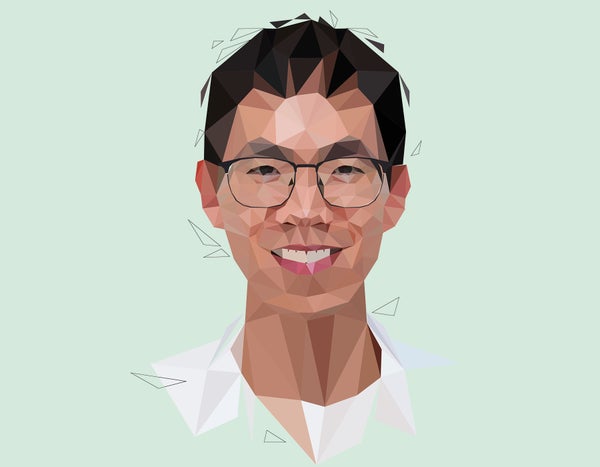
Jessine Hein
Join Our Community of Science Lovers!
In a single day, JianJun Jin might switch from writing code on his computer to experimenting at a lab bench or working under greenhouse lights as an assistant curator at the New York Botanical Garden. His research spans several fields—plant systematics, genomics and computational biology—and his aim is to better understand the inner workings of plants.
Jin is the developer of GetOrganelle, an AI software tool that helps biologists to disentangle the DNA of organelles—small cellular structures such as mitochondria and chloroplasts—from all the other DNA in a plant cell, making it easier for them to find and study the sequences they are interested in. It is one of the most accurate tools of its kind, with hundreds of stars on GitHub.
On supporting science journalism
If you're enjoying this article, consider supporting our award-winning journalism by subscribing. By purchasing a subscription you are helping to ensure the future of impactful stories about the discoveries and ideas shaping our world today.

Jeffery DelViscio
GetOrganelle started as a side project for Jin to practice his Python programming skills. Initially, he says, some colleagues were skeptical. It was only after GetOrganelle achieved some success on a difficult dataset of legume structures that his advisers and senior collaborators encouraged him to publish the work as an academic paper. That paper now has thousands of citations.
Although a botanical garden may not seem like the obvious place for a scientist, Jin says the garden is “not just a workplace; it is part of the research system. The living collections, herbarium collections, horticultural expertise and biodiversity knowledge at the NYBG provide an unusually rich foundation for studying plant evolution.” His new challenge is trying to decipher plant genetic mosaicism, a condition in which a single organism contains multiple genomes.
From one project to the next, movement has been crucial to Jin’s success as a researcher. “There is an old Chinese saying that roughly means ‘a tree dies when moved, but a person thrives when moved.’”
This article is part of “The Young American Scientists,” an editorially independent project that was produced with financial support from Regeneron.
It’s Time to Stand Up for Science
If you enjoyed this article, I’d like to ask for your support. Scientific American has served as an advocate for science and industry for 180 years, and right now may be the most critical moment in that two-century history.
I’ve been a Scientific American subscriber since I was 12 years old, and it helped shape the way I look at the world. SciAm always educates and delights me, and inspires a sense of awe for our vast, beautiful universe. I hope it does that for you, too.
If you subscribe to Scientific American, you help ensure that our coverage is centered on meaningful research and discovery; that we have the resources to report on the decisions that threaten labs across the U.S.; and that we support both budding and working scientists at a time when the value of science itself too often goes unrecognized.
In return, you get essential news, captivating podcasts, brilliant infographics, can't-miss newsletters, must-watch videos, challenging games, and the science world's best writing and reporting. You can even gift someone a subscription.
There has never been a more important time for us to stand up and show why science matters. I hope you’ll support us in that mission.